

When Do Mulberry Trees Fruit in Australia?
Introduction
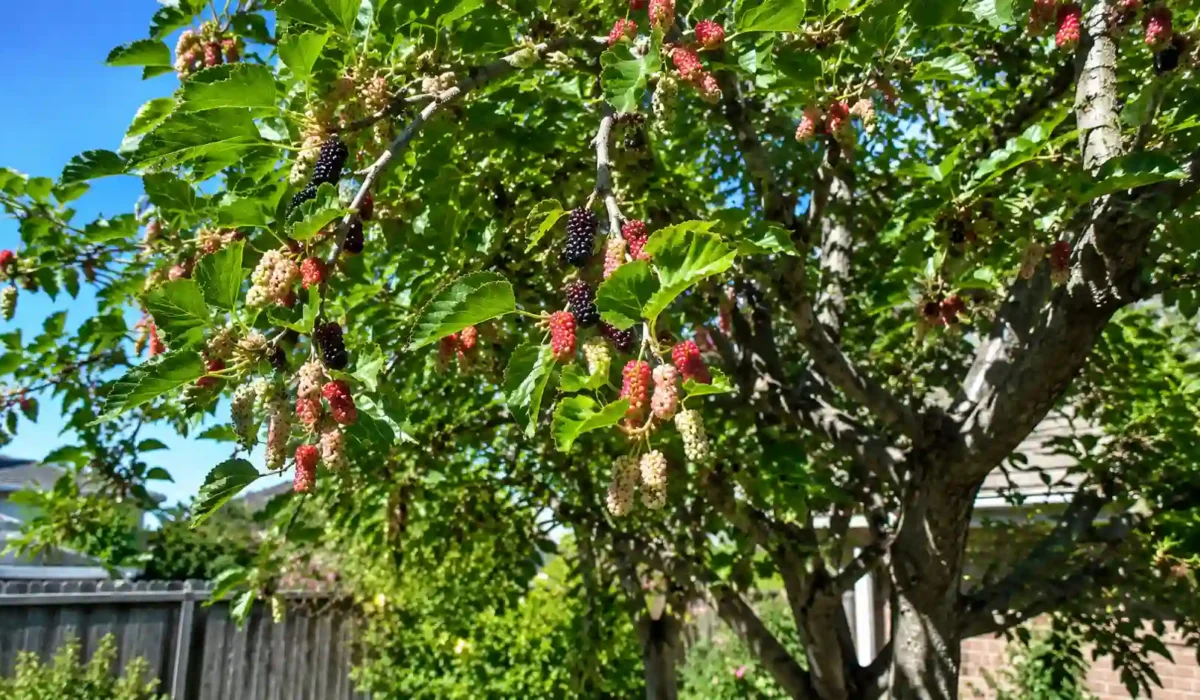
Mulberry trees in Australia typically fruit from late spring through summer, with most regions harvesting ripe fruit between October and January. If you’re wondering when do mulberry trees fruit, the exact timing depends on your local climate, the variety grown, and seasonal weather conditions. Mulberry trees are deciduous fruit trees that lose their leaves in winter before producing fresh spring growth, flowers, and fruit. The three main cultivated types—black mulberry (Morus nigra), white mulberry (Morus alba), and red mulberry (Morus rubra)—all have slightly different growth habits but follow a similar annual fruiting cycle. Across Australia, fruiting begins earlier in warmer northern regions and later in cooler southern states.
For readers interested in the botanical background and classification of mulberry species, the Mulberry (Morus) article on Wikipedia provides additional information.
Quick Summary
- Mulberry trees in Australia generally fruit between September and January, depending on the region.
- Mature trees usually produce one crop each year over a 4–6 week harvesting period.
- Trees grown from cuttings commonly bear fruit within 2–3 years, while seed-grown trees take longer.
- Full sun, balanced nutrition, proper pruning, and suitable winter dormancy all contribute to reliable fruit production.
- Most commonly grown mulberry varieties are self-fertile and do not require another tree for pollination.
When Do Mulberry Trees Fruit in Australia?
Mulberry trees in Australia usually fruit from late spring through summer, with most harvests occurring between October and January. Warmer regions experience earlier fruit development, while cooler climates delay flowering and harvest by several weeks.
Unlike many fruit trees that ripen nearly all at once, mulberries mature gradually. Individual berries ripen over several weeks, allowing repeated harvesting rather than a single large pick. This extended harvest period is commonly referred to as the mulberry season or mulberry fruit season.
Mulberry Fruiting Season by Region
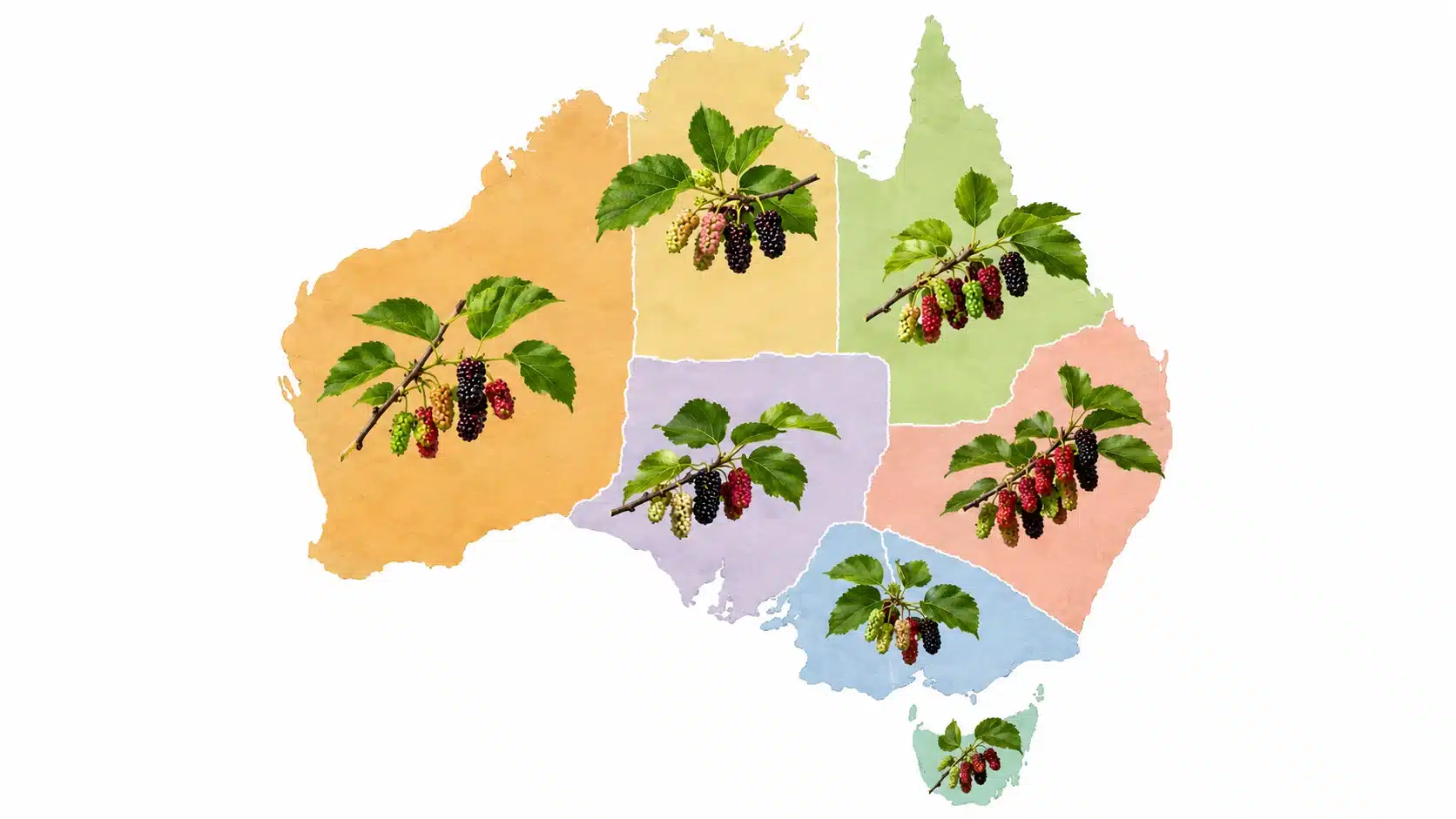
| Region | Typical Fruiting Period |
| Victoria | November–January |
| New South Wales | October–December |
| Queensland | September–November |
| Sydney | October–December |
| Brisbane | September–November |
Actual harvest dates vary with seasonal temperatures, rainfall, and the cultivar being grown.
Mulberry Tree Blooming vs Fruiting Timeline
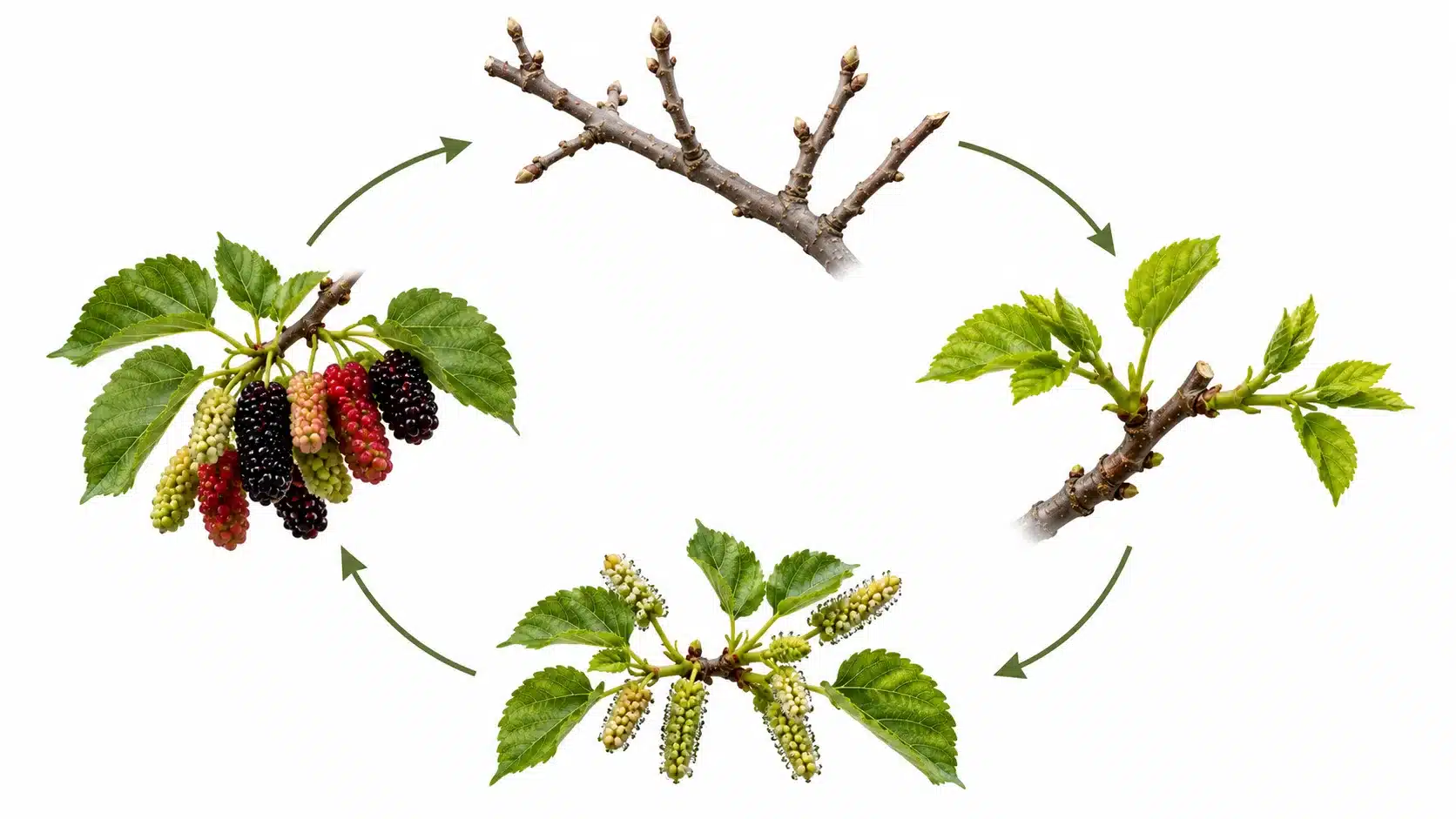
Mulberry trees bloom during spring before fruit begins developing. Small, inconspicuous flowers appear on new shoots, and after successful pollination, the flowers gradually enlarge into green fruit.
The typical timeline is:
- Winter: Dormancy
- Early spring: Bud burst and new shoots
- Mid spring: Flowering
- Several weeks later: Fruit development
- Late spring to summer: Progressive ripening and harvest
In our experience growing mulberries, warm spring weather encourages a more even flowering period, while unusually cold or wet springs can delay fruit development.
How Long Do Mulberry Trees Produce Fruit Each Season?
Most mulberry trees produce fruit for four to six weeks during each growing season. Since berries ripen progressively rather than simultaneously, harvesting is usually carried out every few days.
A healthy mature tree can continue producing annual crops for decades. Many established mulberry trees remain productive for 40–60 years or longer with proper care.
Although the harvest period each year is relatively short, the lifespan of the tree is exceptionally long, making mulberries an excellent long-term fruit tree for Australian gardens.
How Many Years Until a Mulberry Tree Bears Fruit?
Mulberry trees grown from cuttings generally begin fruiting within 2–3 years after planting. Trees propagated from seed usually require 5–10 years before producing their first crop because seedlings spend more time reaching maturity. If you’re also growing citrus, you may find our guide on Are Imperial Mandarins Seedless? helpful for understanding how fruit characteristics vary between popular backyard fruit trees.
Several factors influence how quickly a tree bears fruit:
- Propagation method
- Variety
- Sunlight exposure
- Water availability
- Soil fertility
- Overall tree health
Elemo Baker recommends purchasing grafted or cutting-grown trees for gardeners wanting earlier harvests.
Do Mulberry Trees Need a Pollination Partner to Fruit?
No. Most mulberry trees sold for home gardens are self-fertile, meaning a single tree can produce fruit without another nearby.
Some ornamental or less common cultivars may have separate male and female trees, but these are uncommon in Australian home gardens.
Planting a second tree may increase pollinator activity, but it is generally not required for fruit production.
Do Mulberries Fruit on Old or New Wood?
Mulberries primarily produce fruit on the current season’s new growth that develops from older branches.
Understanding this growth habit is important because excessive pruning immediately before spring growth can reduce that season’s fruit production by removing potential fruiting shoots.
How to Encourage a Mulberry Tree to Fruit
Healthy growing conditions are the most effective way to encourage reliable fruiting.
For best results:
- Plant in full sun for at least six hours daily.
- Water deeply during flowering and fruit development.
- Use well-drained soil with good organic matter.
- Apply balanced fertiliser rather than high-nitrogen products.
- Prune during winter dormancy.
- Avoid excessive vegetative growth caused by overfeeding.
As of the 2026 growing season, many Australian growers continue to favour moderate fertilisation over heavy feeding, as excessive nitrogen often encourages leafy growth at the expense of fruit production.
Why Is My Mulberry Tree Not Fruiting?
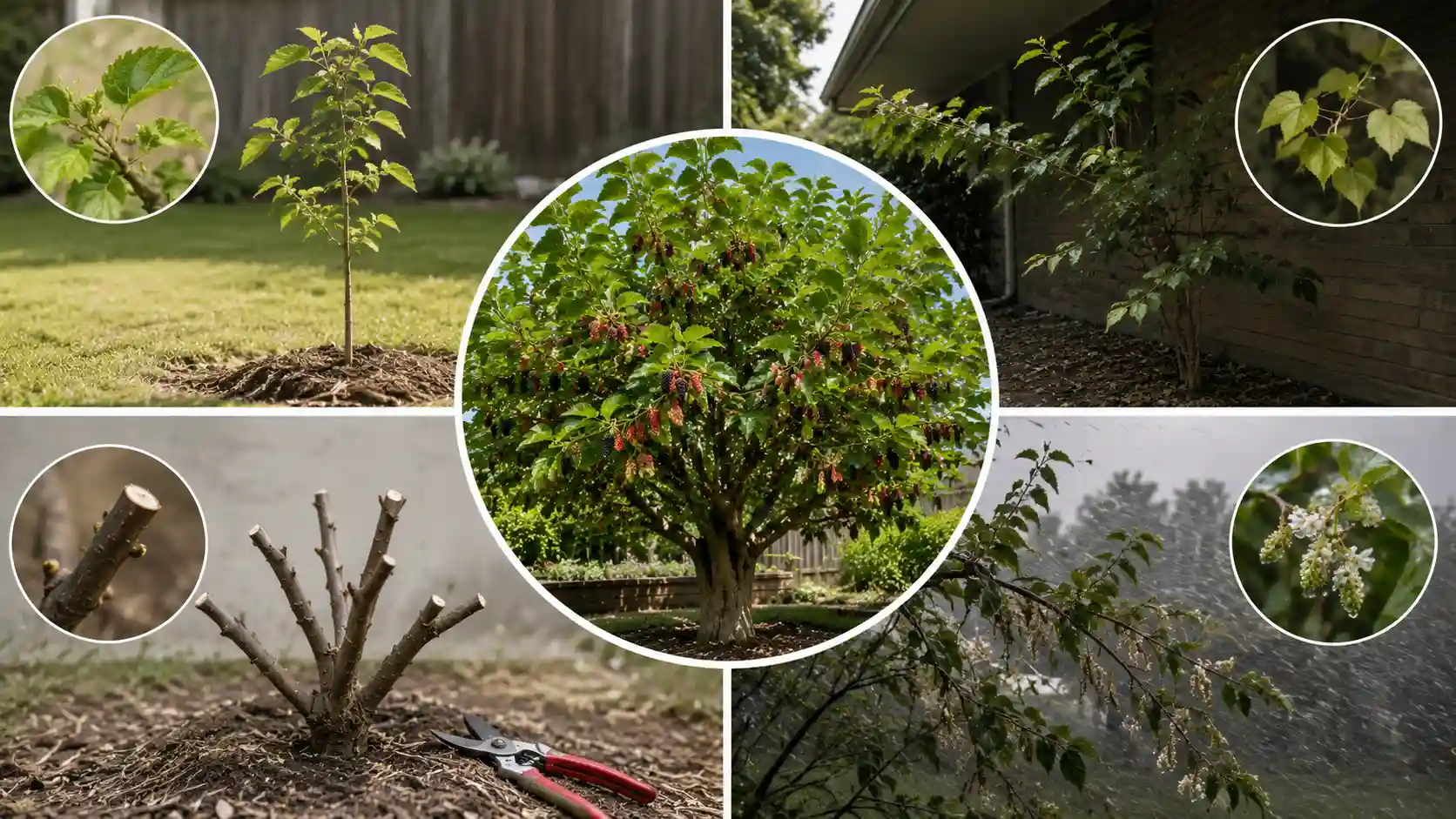
Several common problems can prevent fruit production.
Tree Too Young
Why: Young trees need time to mature.
Fix: Allow the tree to establish naturally.
Prevent: Purchase cutting-grown trees if earlier fruiting is preferred.
Insufficient Sunlight
Why: Limited sunlight reduces flower production.
Fix: Relocate young trees or remove competing shade where practical.
Prevent: Always plant in full sun.
Incorrect or Mistimed Pruning
Why: Heavy pruning before spring growth can reduce fruiting shoots.
Fix: Restrict major pruning to winter dormancy.
Prevent: Use light maintenance pruning rather than excessive cutting.
Poor Pollination or Weather Disruption
Why: Cold, windy, or wet conditions during flowering may reduce successful fruit set.
Fix: Maintain healthy growing conditions and encourage beneficial insects.
Prevent: Keep trees vigorous through consistent watering and balanced nutrition.
When and How to Prune Mulberry Trees in Australia
Mulberry trees are best pruned during winter dormancy, after leaf fall and before spring growth begins.
Winter pruning allows gardeners to:
- Remove dead or damaged branches.
- Improve air circulation.
- Maintain tree size.
- Shape young trees.
- Encourage balanced new growth.
Queensland gardeners often prune slightly earlier because dormancy finishes sooner than in southern states. In Victoria, Tasmania, and southern New South Wales, pruning is usually completed later in winter.
Avoid severe pruning every year. Light annual maintenance generally provides the best balance between healthy growth and consistent fruit production.
Mulberry Tree Care Guide
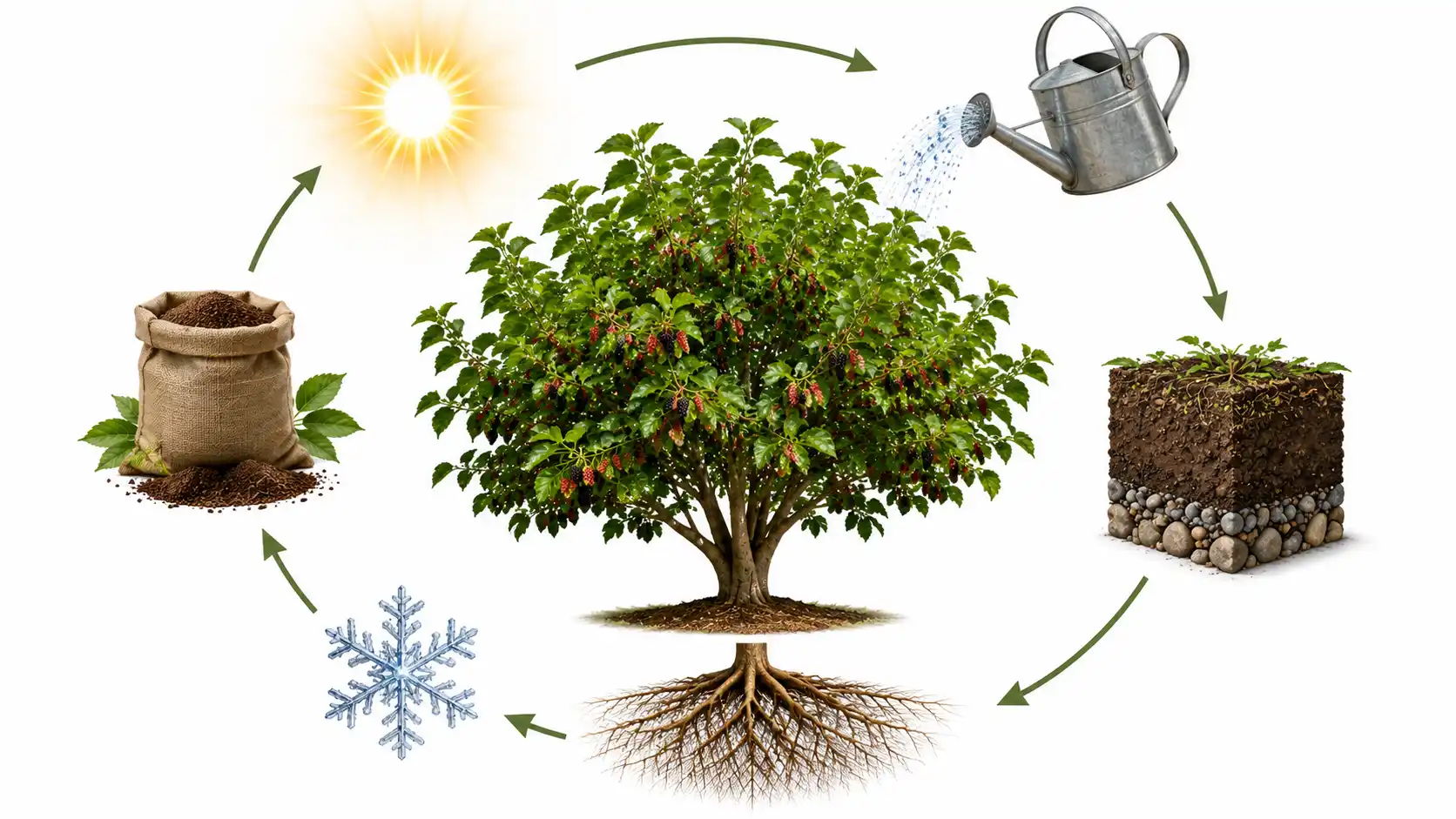
Keeping trees healthy also means recognising common garden pests early, which is covered in our Garden Pest Identification Guide for Australian Gardens.
| Care Factor | Recommendation |
| Watering | Deep watering weekly during dry periods, especially while fruit develops |
| Light | Full sun |
| Soil | Well-drained, slightly acidic to neutral |
| Fertiliser | Balanced fertiliser in late winter or early spring |
| Climate | Frost tolerant when dormant and highly heat tolerant once established |
In our experience, consistent deep watering during fruit development produces noticeably larger and juicier berries than frequent shallow watering. If you enjoy growing ornamental indoor plants alongside outdoor fruit trees, see our Money Tree Australia: Care, Meaning & Buying Guide for another easy-care favourite.
Mulberry Tree Size and Growth Rate
Mulberry trees are fast-growing once established.
Standard varieties commonly reach:
- Height: 8–15 metres
- Width: 6–12 metres
Dwarf cultivars remain much smaller, making them suitable for compact gardens. If you’re comparing growth rates with other landscape trees, our Fast Growing Evergreen Trees Australia Guide highlights several excellent options for Australian gardens.
The root system is deep and wide-spreading, so trees should be planted well away from building foundations, underground pipes, and paved areas. Mulberry trees need adequate space, while our guide to Low-Maintenance Plants for Fence Line in Australia explores compact alternatives for boundary planting.
Good spacing also improves sunlight penetration and airflow throughout the canopy. You can also compare root spread with our Poinciana Tree Root System: Growth, Problems & Care Guide before choosing planting locations.
Black vs White Mulberry Trees: What’s the Difference?
| Feature | Black Mulberry | White Mulberry |
| Fruit colour | Deep purple-black | White to pale pink |
| Flavour | Rich, tart-sweet | Mild, very sweet |
| Common use | Fresh eating, jam | Fresh eating, silkworm feed |
Black mulberries generally produce larger, richer-flavoured fruit preferred by home gardeners, while white mulberries are valued for their sweetness and historical importance as food for silkworms. If you enjoy comparing fruit varieties, you may also like our Soursop vs Custard Apple: Key Differences Explained article.
Can You Eat Mulberries Straight From the Tree?
Yes. Fully ripe mulberries can be eaten directly from the tree.
Signs of ripeness include:
- Full characteristic colour
- Slight softness
- Easy separation from the stem
- Sweet flavour
Although safe to eat fresh, washing the fruit before consumption helps remove dust, insects, and other surface contaminants.
In most Australian regions, harvesting begins between late spring and early summer depending on local climate.
Why Don’t Supermarkets Sell Mulberries?
Mulberries are rarely sold in supermarkets because they are extremely delicate.
Once picked, ripe berries:
- Bruise easily.
- Have a very short shelf life.
- Lose quality quickly during transport.
- Require careful handling.
These characteristics make commercial distribution difficult compared with firmer fruits such as apples or grapes.
As a result, mulberries are most commonly enjoyed from home gardens, farmers’ markets, or local orchards during the harvest season.
Propagating Mulberry Trees From Cuttings
Yes, mulberry trees can be propagated from cuttings.
Healthy hardwood cuttings taken during winter have the highest success rate.
Successful propagation requires:
- Healthy parent wood
- Well-drained propagation mix
- Consistent moisture
- Warm rooting conditions
- Patience while roots develop
Growing from cuttings also preserves the characteristics of the parent tree and usually produces fruit sooner than seed-grown plants.
Other Common Mulberry Tree Questions
What Animals Eat Mulberry Leaves?
Silkworms are the best-known animals that feed on mulberry leaves, particularly those of white mulberry trees.
Other animals that may browse the foliage include:
- Chickens
- Goats
- Sheep
- Deer in some regions
- Native wildlife where available
How to Tell if a Mulberry Tree Is Male or Female
Many modern mulberry cultivars grown in Australia are self-fertile.
Some older or ornamental varieties may be dioecious, meaning individual trees are either male or female.
Female trees produce fruit after flowering, while male trees produce pollen but no fruit. The most reliable way to determine the tree’s sex is by observing whether it consistently develops fruit during the growing season.
Conclusion
Knowing when mulberry trees fruit helps gardeners plan harvesting, pruning, and seasonal care more effectively. Across Australia, most mulberry trees produce fruit between late spring and summer, although exact timing varies by region and climate. Reliable fruit production depends on full sun, correct pruning, balanced fertilisation, and consistent watering during fruit development. Most trees begin bearing within a few years and continue producing for decades. By understanding regional fruiting times and following good horticultural practices, Australian gardeners can enjoy dependable harvests of fresh mulberries year after year.
FAQs
When do mulberry trees fruit in Australia?
Most mulberry trees fruit between September and January, with exact timing depending on the local climate and state.
How long do mulberry trees produce fruit for?
Individual trees generally produce fruit over a four to six week harvesting period each year.
Why does my mulberry tree have no fruit?
Common reasons include young age, insufficient sunlight, incorrect pruning, poor weather during flowering, or excessive nitrogen fertiliser.
Do I need two mulberry trees to get fruit?
No. Most mulberry trees grown for home gardens are self-fertile and produce fruit without a second tree.
What is the average lifespan of a mulberry tree?
Healthy mulberry trees commonly live for 40–60 years, with some surviving well beyond 100 years under favourable conditions.
What is the downside of mulberry trees?
Potential disadvantages include vigorous root systems, staining fruit that drops onto paving, and rapid growth that requires occasional pruning.
4 Comments