

Miniature Mulberry Tree Guide: Size, Care & Fruit
Introduction
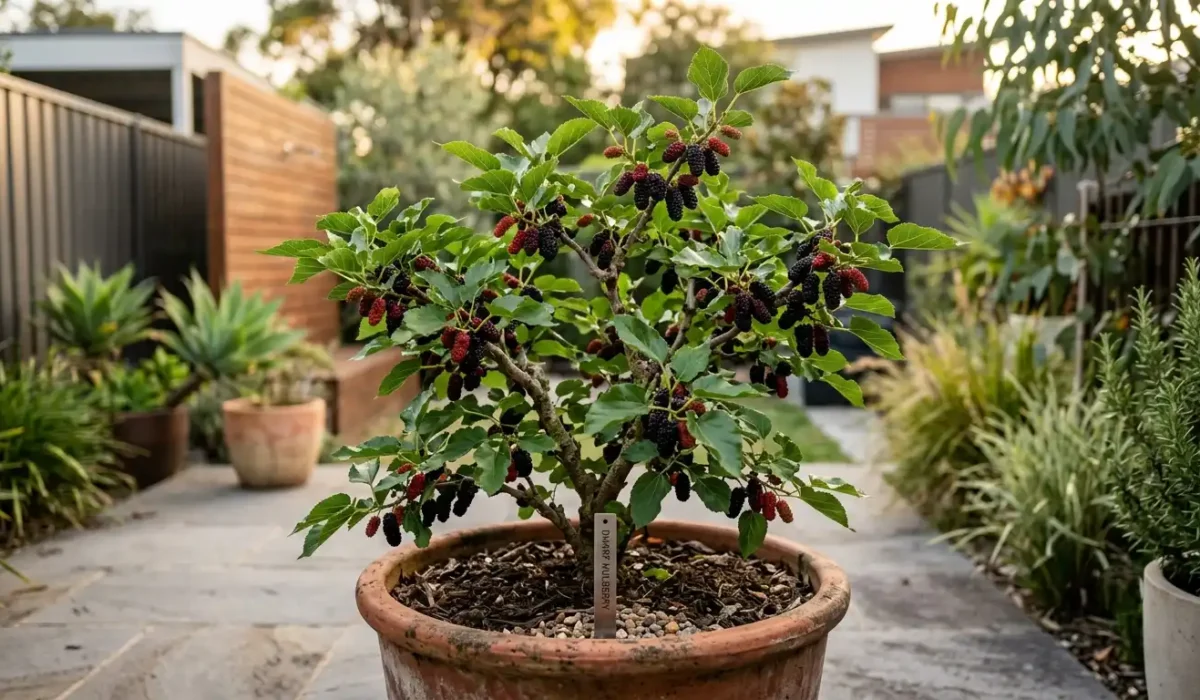
A miniature mulberry tree is a compact form of the mulberry species (Morus spp.), developed as a dwarf or grafted cultivar to remain small while still producing edible fruit. The miniature mulberry tree is popular in Australian gardens where space is limited but homegrown fruit is still desired.
These trees differ from standard mulberries in that they are either naturally compact varieties or trained through pruning and dwarfing rootstocks. The distinction is important because true dwarf cultivars maintain smaller growth long-term, while pruned standard trees may still attempt to grow large if not regularly managed.
In this guide, you’ll learn how big a dwarf mulberry grows, how fast it fruits, where to plant it, and how to successfully grow it in Australian conditions, including pots and small courtyards.
Quick Summary
- Miniature mulberry trees typically grow 1–2.5 metres tall, making them ideal for small spaces and pots
- Most dwarf varieties begin fruiting within 1–2 years, sometimes producing multiple harvests per season
- Root systems are less aggressive than standard mulberries but still require thoughtful placement
- Full sun and seasonal pruning are essential for healthy growth and good fruit production
What Is a Miniature Mulberry Tree?
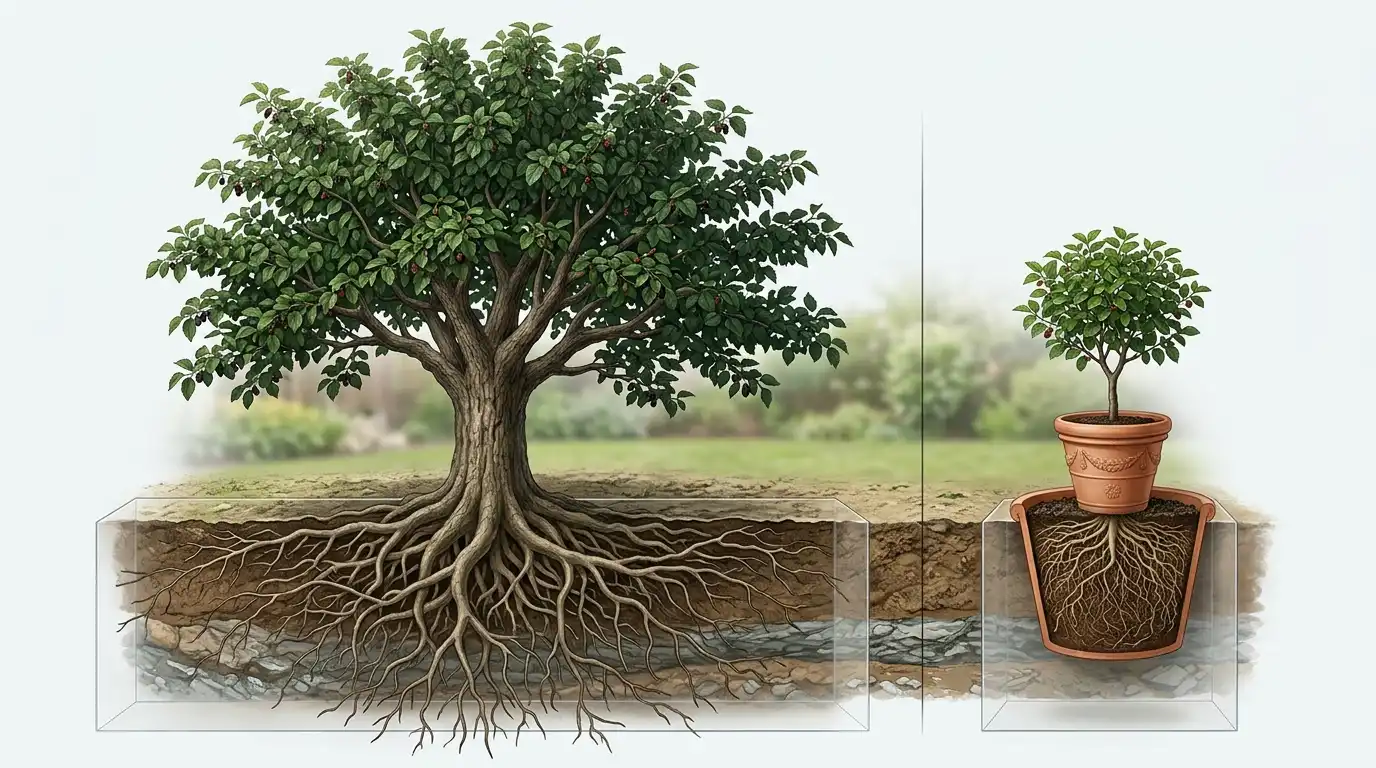
A miniature mulberry tree is a dwarf or compact cultivar of the Morus genus bred to maintain a smaller size while still producing full-sized edible fruit. These trees are designed for home gardens, courtyards, and container growing, especially where space is restricted.
Dwarf vs Standard Mulberry Trees
Dwarf mulberry trees differ from standard mulberries in several key ways. Standard trees can grow very large and develop wide-spreading root systems, while dwarf types remain compact and manageable.
- Size difference: Dwarf types stay under 2.5 m; standard trees can exceed 10 m
- Root behaviour: Dwarfs are less aggressive but still spread over time
- Maintenance: Dwarfs require less heavy pruning to control size
- Suitability: Dwarfs are ideal for pots and small gardens
In our experience growing fruit trees in compact Australian backyards, dwarf forms are significantly easier to manage and harvest from without ladders or heavy pruning equipment.
Morus nigra Dwarf Explained
Morus nigra, commonly known as black mulberry, is one of the most valued species for dwarf cultivation. A morus nigra dwarf retains its rich, dark purple fruit with a sweet-tart flavour while staying compact.
Elemo Baker recommends this type for gardeners focused on flavour quality, as Morus nigra is widely regarded as producing the most intense and aromatic mulberries.
Miniature Mulberry Tree Varieties
Gardeners often compare dwarf fruiting trees with other compact species such as mulberry varieties in Australia, feijoas, and ornamental dwarf cherries when planning productive small gardens.
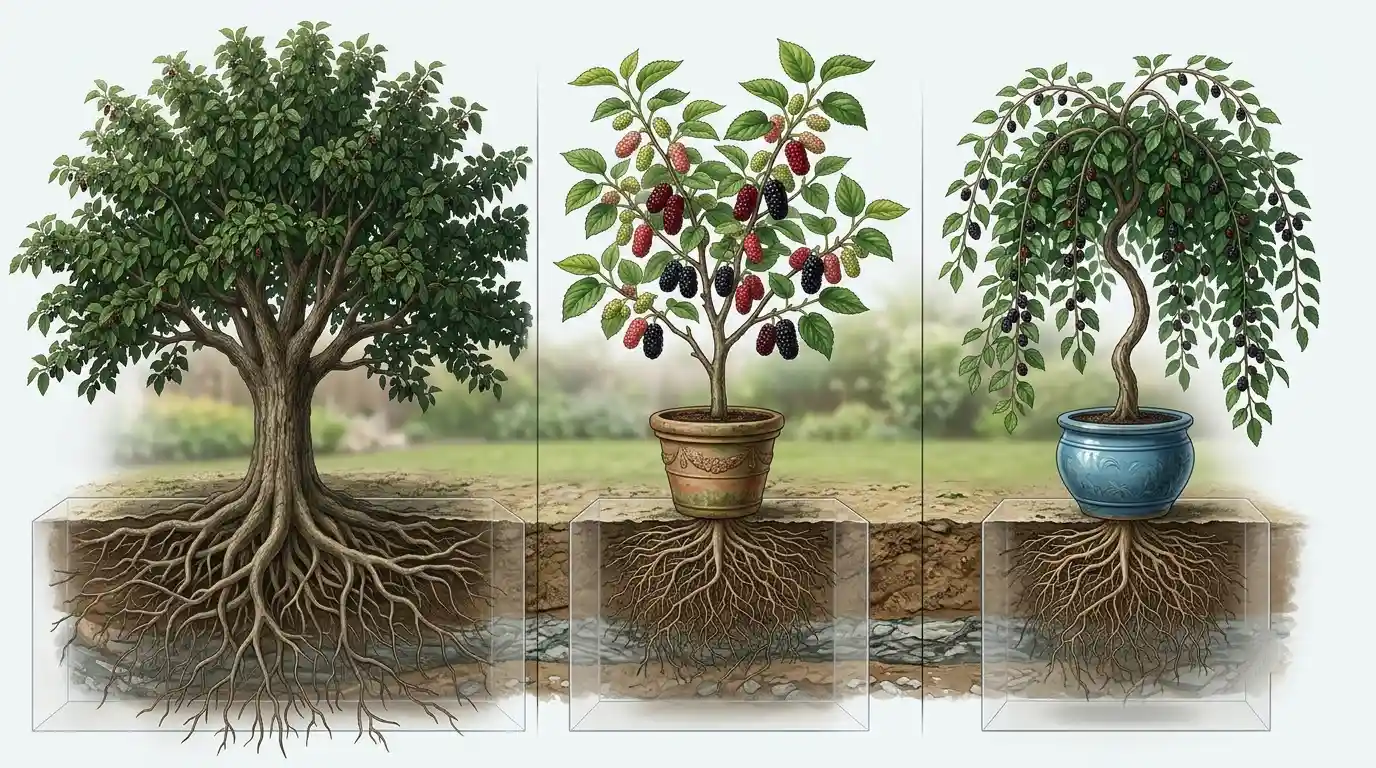
Dwarf Weeping Mulberry Tree
The dwarf weeping mulberry tree is primarily ornamental, featuring gracefully cascading branches. While it does produce fruit, its main appeal is aesthetic, often used in landscaping or feature pots.
Dwarf Everbearing Mulberry
The dwarf everbearing mulberry tree produces fruit in multiple cycles throughout the warmer months rather than one single harvest. This makes it highly productive for home gardeners who want continuous picking.
Dwarf Black Mulberry
The dwarf black mulberry is typically based on Morus nigra and produces deep purple to black fruit with a rich flavour profile. It is one of the most popular edible dwarf varieties.
| Variety | Mature Size | Fruiting Habit | Purpose | Sun Needs |
| Dwarf Weeping Mulberry | 1–2 m | Light seasonal fruiting | Ornamental | Full sun |
| Dwarf Everbearing Mulberry | 1.5–2.5 m | Multiple crops per season | Edible | Full sun |
| Dwarf Black Mulberry | 2–2.5 m | Heavy seasonal crop | Edible | Full sun |
How Big Does a Dwarf Mulberry Tree Grow?
Mature Height and Width
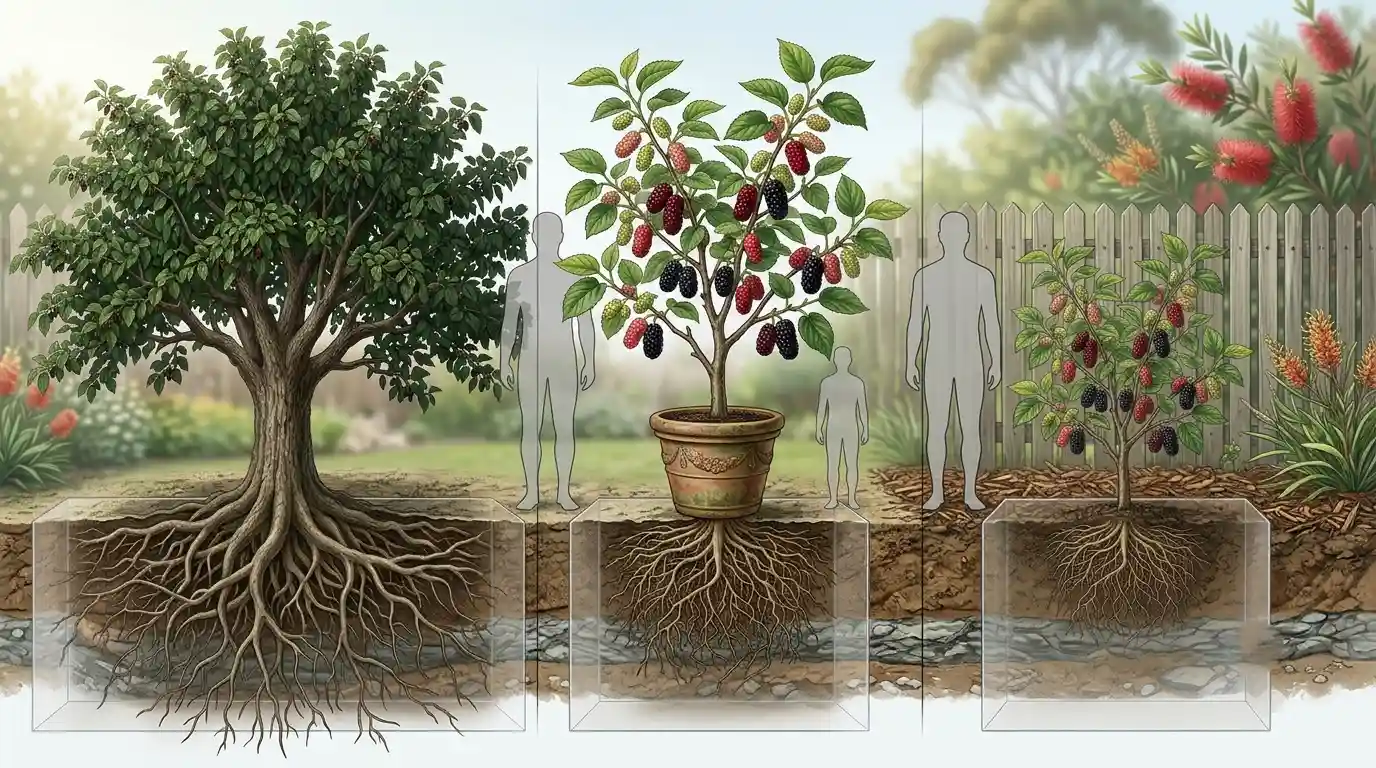
A full grown dwarf mulberry tree typically reaches:
- Height: 1 to 2.5 metres
- Width: 1 to 3 metres
Actual size depends on pruning, soil quality, and whether the tree is grown in a container or in the ground.
Container vs Outdoor Size
Container-grown dwarf mulberries remain smaller due to restricted root space, while in-ground plants grow more vigorously.
- Pots: Compact canopy, slower growth
- Ground: Faster growth, slightly larger spread
In practice, consistent pruning is the key factor in maintaining a compact shape regardless of planting method.
Growth Rate
Dwarf mulberry trees are considered moderate to fast growers, especially during spring and summer. Growth speed is influenced by climate, watering, and fertilisation. In broader landscaping planning, dwarf fruit trees like mulberry are often grouped with other fast-growing evergreen and semi-deciduous species used in Australian gardens for quick establishment.
In our experience, trees given balanced feeding and consistent moisture produce stronger fruiting wood rather than excessive leafy growth.
Key growth drivers include:
- Full sun exposure
- Regular deep watering during establishment
- Seasonal fertilising in spring and summer
How Long Does It Take to Fruit?
Most dwarf mulberry trees begin fruiting within 1 to 2 years, particularly if they are grafted rather than grown from seed.
Do I Need Two Mulberry Trees?
No. Most mulberry varieties are self-fertile, meaning a single tree can produce fruit without a pollination partner.
Fruiting Season
In Australia, mulberry fruiting varies by climate:
- Queensland (including Brisbane): late spring to early summer
- Southern states: summer to early autumn
The mulberry tree fruiting season is strongly influenced by temperature, with warmer regions producing earlier harvests.
Do Dwarf Mulberry Trees Have Invasive Roots?
Dwarf mulberry trees have less aggressive root systems compared to full-sized mulberries, but they are still capable of spreading over time.
How Close to a House Can You Plant a Mulberry Tree?
A safe planting distance is:
- At least 2–3 metres from structures
- Ideally 3–5 metres to allow canopy and root expansion
This reduces the risk of surface lifting and keeps fruit drop away from paved areas.
Where Is the Best Place to Plant a Dwarf Mulberry Tree?
The best location for a miniature mulberry tree is a sunny, well-drained position with enough space for canopy growth.
- Full sun exposure (6–8 hours daily)
- Well-drained soil
- Away from driveways or paving due to fruit staining
If you’re designing a productive garden layout, dwarf mulberries also pair well with ideas from low-maintenance planting strategies used along fence lines and small urban gardens in Australia.
How Much Sun Does a Dwarf Mulberry Need?
Dwarf mulberry trees require full sun for optimal fruit production. At least 6 hours of direct sunlight daily is ideal, although light shade is tolerated with reduced yield.
Do Mulberry Trees Do Well in Pots?
Yes, dwarf mulberry trees perform very well in containers when properly managed.
Recommended pot conditions:
- Minimum 40–60 litre container
- Excellent drainage holes
- Regular pruning to maintain shape
- Consistent watering during warm months
Do Dwarf Fruit Trees Grow Well in Pots?
Yes. Many dwarf fruit trees, including mulberries, thrive in pots because root restriction naturally controls size and encourages earlier fruiting when properly fertilised.
Care Guide for Miniature Mulberry Trees
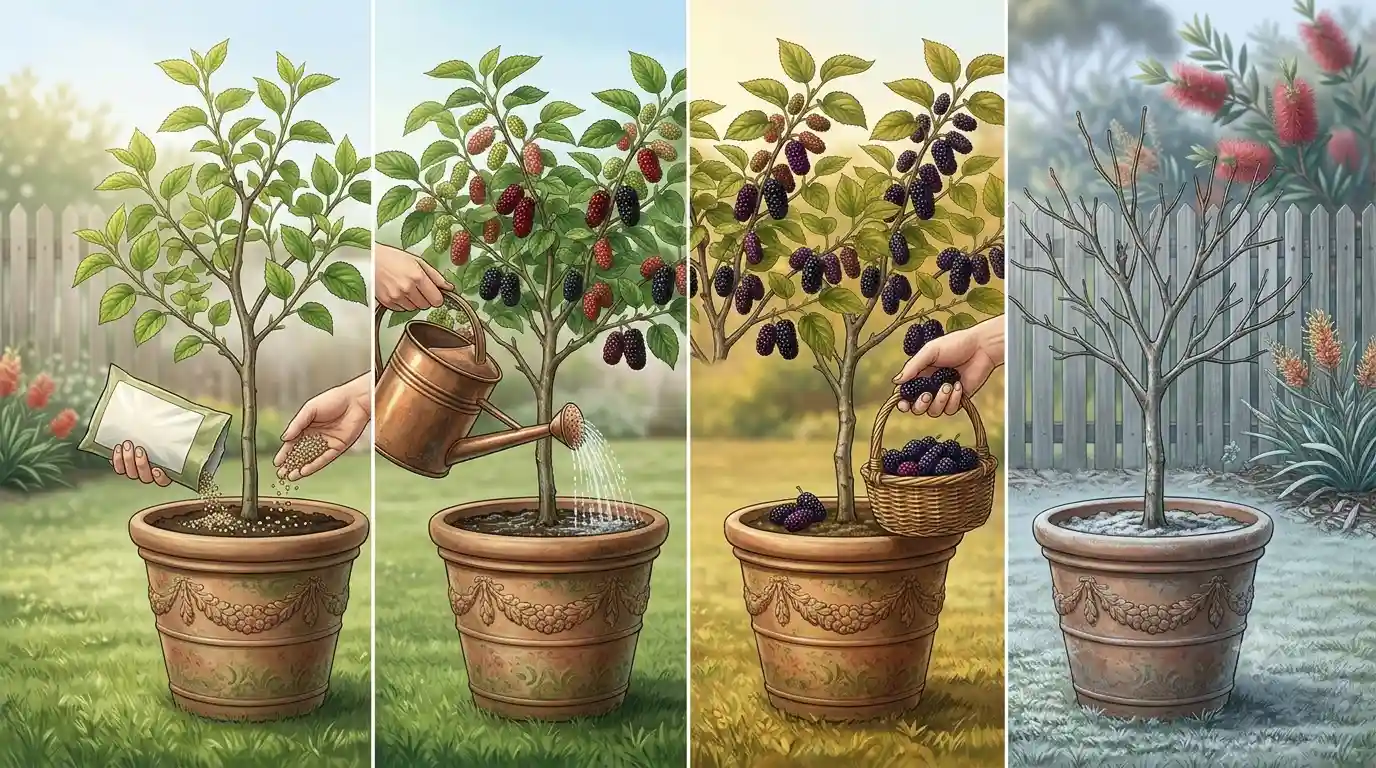
Caring for a dwarf mulberry tree is straightforward when basic needs are met.
- Water deeply 1–2 times per week during warm months
- Reduce watering in winter when dormant
- Use balanced fertiliser in spring and summer
- Prune in winter to maintain shape and size
- Protect young trees from frost in colder regions
Do Dwarf Mulberry Trees Lose Their Leaves in Winter?
Yes. Mulberry trees are deciduous, meaning they shed leaves in winter and regrow fresh foliage in spring.
This seasonal leaf drop is normal and supports healthy annual growth cycles.
Common Problems With Miniature Mulberry Trees
Common issues include fruit drop, bird damage, and occasional root rot in poorly drained soils.
Are Dwarf Mulberry Trees Messy?
Yes, moderately. Fallen fruit can stain surfaces, but this can be managed by:
- Planting away from paving
- Harvesting fruit regularly
- Using netting to reduce bird damage
What Animal Feeds on Mulberry Leaves?
Silkworms are the most well-known feeders of mulberry leaves. Birds and insects may also interact with the tree, especially during fruiting.
What Is the Downside of Mulberry Trees?
While highly productive, mulberry trees do have some drawbacks:
- Fruit can stain surfaces and paths
- Regular pruning is needed to control shape
- Non-dwarf varieties can become very large
- Some regions have planting restrictions or guidelines
Why Are Mulberry Trees Restricted in Some Areas?
In certain Australian regions, mulberry trees are monitored or discouraged due to their vigorous growth and historical weed concerns. Always check local council regulations before planting.
Benefits of Miniature Mulberry Trees
Miniature mulberry trees offer several advantages:
- Ideal for small gardens and courtyards
- Suitable for pots and containers
- Produce edible, nutrient-rich fruit
- Offer ornamental varieties like weeping forms
- Relatively fast to establish and fruit
For gardeners comparing edible ornamentals, mulberries are often evaluated alongside other productive small trees such as feijoa and flowering dwarf fruiting species in Australian climates.
Miniature Mulberry Tree vs Other Dwarf Fruit Trees
| Tree Type | Space Requirement | Fruiting Frequency | Maintenance Level |
| Dwarf Mulberry | Low | Multiple or seasonal | Moderate |
| Dwarf Peach | Medium | Seasonal | High |
| Dwarf Mango | Medium | Seasonal | High |
| Dwarf Papaya | Medium | Continuous in warm climates | Moderate |
Unlike many dwarf fruit trees, mulberries often provide more frequent harvests and require less intensive care once established.
Where to Buy a Miniature Mulberry Tree in Australia
Miniature mulberry trees are available through:
- Local nurseries
- Specialty fruit tree growers
- Seasonal stock at large garden retailers
Availability varies across Australia, and some varieties may sell out quickly in peak planting seasons. Checking local nurseries is the most reliable method to find suitable stock.
Conclusion
A miniature mulberry tree is one of the most practical fruiting trees for small Australian gardens, offering compact growth, reliable fruit production, and adaptability to both pots and ground planting. With proper sun, pruning, and watering, a dwarf mulberry tree can provide years of seasonal harvests without requiring large garden space. For a broader overview of how dwarf mulberries fit into Australian planting design systems, see related guidance on integrated home garden planning.
Choosing the right variety—whether ornamental weeping, everbearing, or Morus nigra—ensures the best balance between space, fruit yield, and garden design goals.
FAQs
How big does a dwarf mulberry tree grow?
A dwarf mulberry tree typically grows between 1 and 2.5 metres tall, depending on pruning, pot size, and growing conditions.
How long does it take for a dwarf mulberry tree to fruit?
Most dwarf mulberry trees fruit within 1 to 2 years, especially grafted varieties grown in full sun with proper care.
Do dwarf mulberry trees have invasive roots?
No, they are less invasive than standard mulberries, but their roots still spread and require adequate spacing from structures.
Do I need two mulberry trees to get fruit?
No, mulberry trees are self-fertile and can produce fruit without another tree nearby.
Do mulberry trees do well in pots?
Yes, dwarf mulberries grow very well in pots if given a large container, regular watering, and seasonal pruning.
Are dwarf mulberry trees messy?
They can be moderately messy due to falling fruit, but this is manageable with placement and regular harvesting.
Do dwarf mulberry trees lose their leaves in winter?
Yes, they are deciduous and naturally drop leaves during winter before regrowing in spring.
1 Comment