

Citrus Tree Guide Australia: Varieties, Care & Size
Every citrus growing guide for Australia should cater for one point that is overlooked by most guides; climate zone. The same variety, pot and maintenance are not suitable for tropical Queensland, Melbourne and frost-prone Canberra. For those who wish to delve deeper into a particular aspect, this guide combines variety selection, sizing expectations, seedless varieties and core care requirements all in one.
By Elemo Baker | Plant Care & Gardening Expert
Last Updated: August 2026
Quick Summary
- Match citrus variety to climate zone first — tropical, temperate, or cool/frost-prone — before choosing based on taste alone.
- Most citrus reach productive maturity within 2–5 years when grafted, while seed-grown citrus can take 7+ years and won’t grow true to variety.
- “Seedless” citrus, including many lemons and mandarins, are more accurately low-seed and can develop more seeds near compatible flowering citrus.
- Standard citrus trees reach 3–6 metres in the ground; dwarf and potted varieties typically stay under 2–2.5 metres.
- Sunlight (6+ hours daily), free-draining soil, and a citrus-specific fertiliser are the three non-negotiables across every variety.
Which Citrus Tree Suits Your Australian Garden?
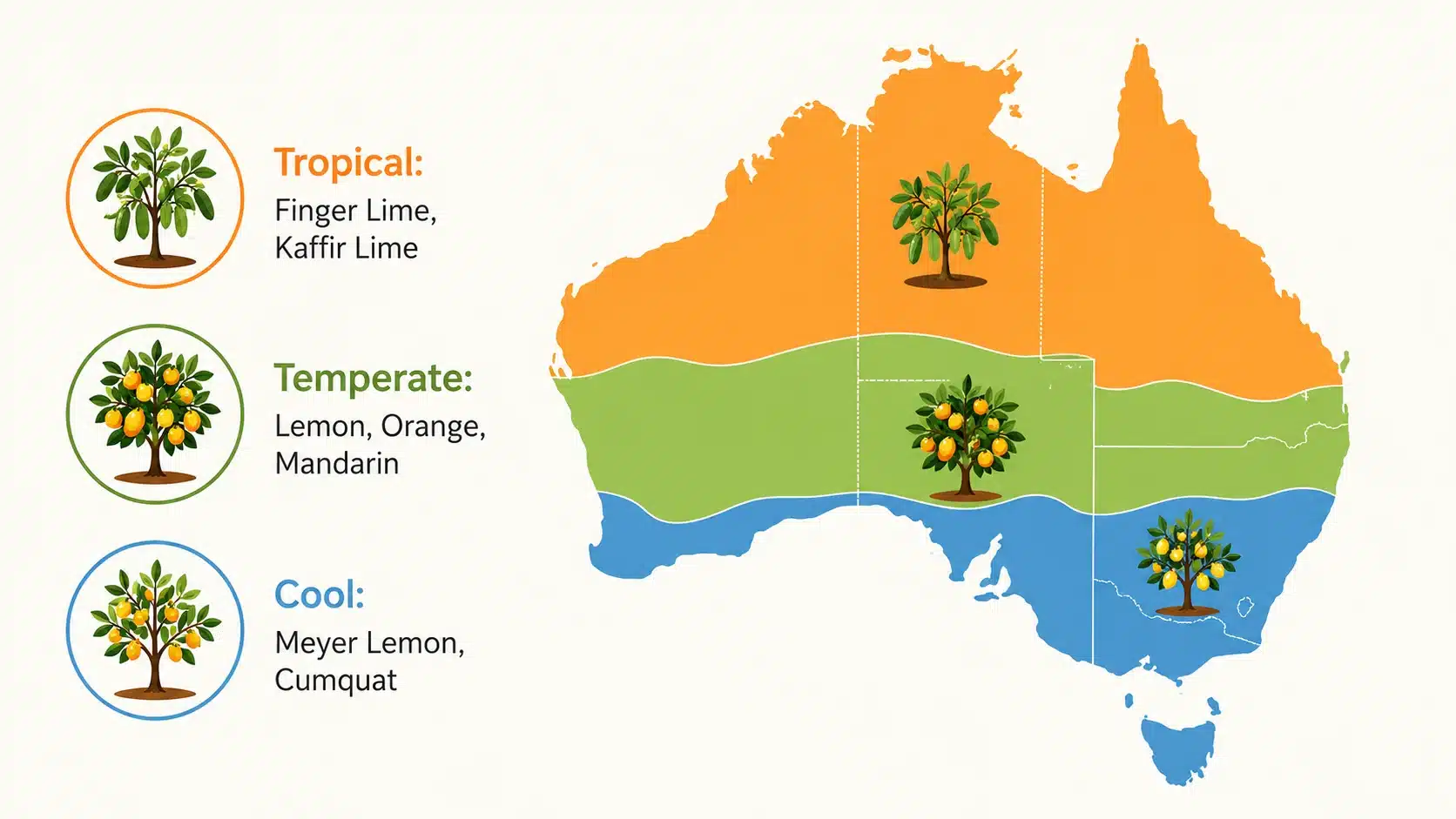
Citrus performs differently depending on region because a home garden offers far less thermal buffering than a commercial orchard. Cold sensitivity, heat tolerance, and humidity needs all matter more for backyard trees than general variety popularity does.
| Climate Zone | Well-Suited Varieties | Key Consideration |
| Tropical & subtropical (Cairns, Darwin, Brisbane) | Finger lime, kaffir lime, pomelo | Humidity can encourage fungal leaf issues |
| Temperate (Sydney, Melbourne, Adelaide, Perth) | Lemon, lime, orange, mandarin (most varieties) | Full sun and shelter from wind improve results |
| Cool & frost-prone (Canberra, Tasmania, highlands) | Meyer lemon, cumquat | Needs frost protection or a moveable pot |
Meyer lemon and cumquats tolerate the widest temperature range of any common citrus, making them the closest thing to an “anywhere in Australia” choice. Cold-hardiness varies significantly between citrus types, which is why the same variety that thrives on the coast can struggle on the tablelands. According to the NSW Department of Primary Industries, citrus grow well across most of NSW but generally fail on frost-prone tablelands.
Popular Citrus Varieties in Australia
Four citrus groups (lemons, limes, mandarins and oranges) dominate the Australian home garden. Both are part of the same plant genus Citrus and most modern varieties are grafted onto a rootstock that is selected for vigour, disease resistance and size. Each belongs to the genus Citrus, and most modern varieties are grafted onto a rootstock chosen for vigour, disease resistance, and size control.
- The ones most commonly seen are Lemons: Eureka, Lisbon and Meyer (a lemon-mandarin hybrid).
- Limes: Tahitian and Bearss lime suit temperate areas; finger lime and kaffir lime prefer warm climates.
- Australia’s main commercial varieties are mandarins—Imperial, Afourer and Murcott, which are prized for their sweetness and ease of peeling.
- Home orchards typically are dominated by oranges (Navel, Valencia) with Valencia being a little more tolerant of warmer growing conditions.
For a full breakdown of which citrus performs best in containers by region, see our guide to the best citrus trees for pots in Australia.
Seeded vs Seedless Citrus: What to Expect
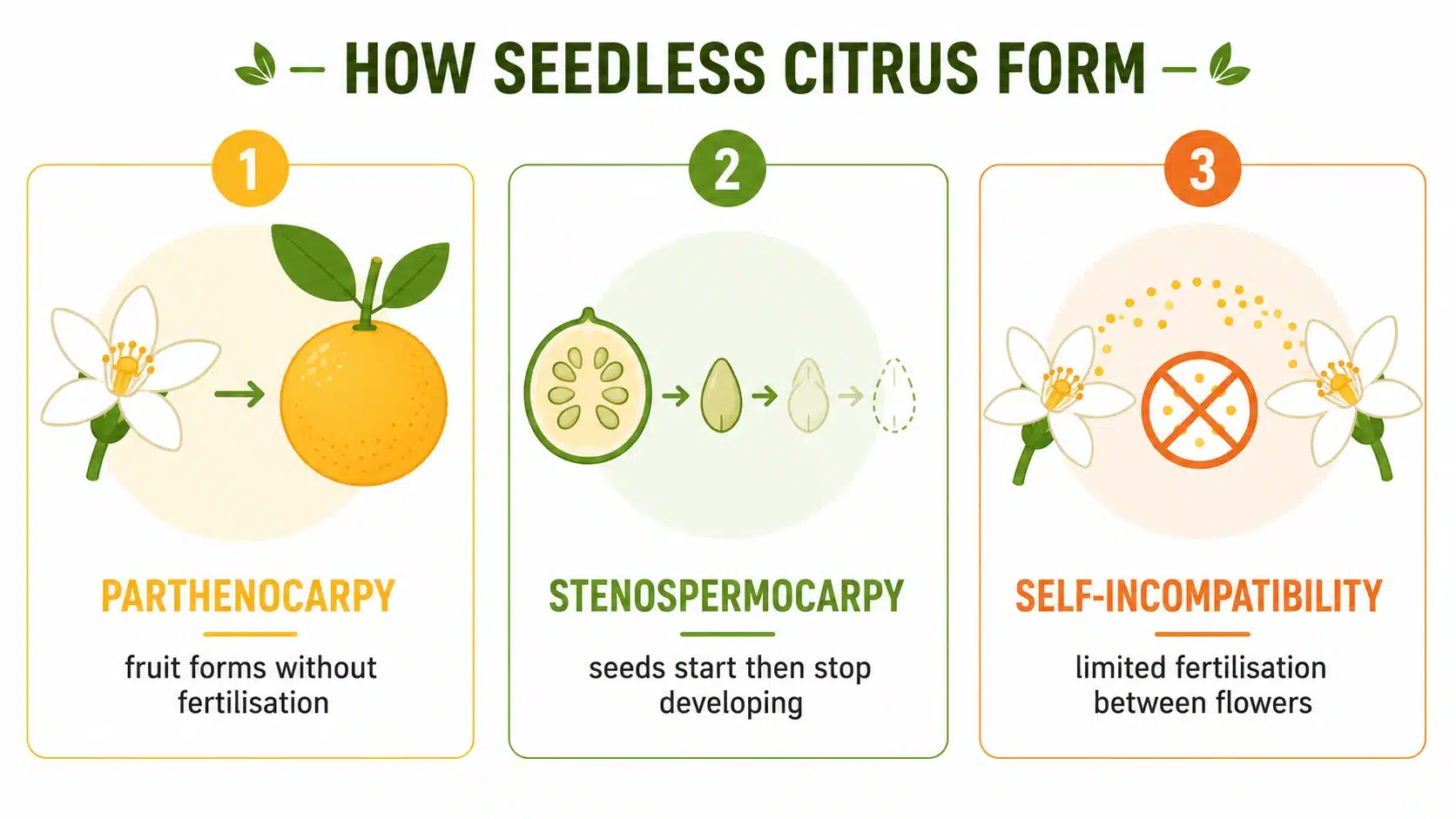
The majority of the citrus being sold as “seedless” is rather a low-seed variety than seedless. Seedlessness is typically the result of one of three natural processes: parthenocarpy (fruits develop without pollination); stenospermocarpy (seeds begin to form but cease development); or, self-incompatibility, which only allows limited pollination between flowers.
The most variable is the possibility of cross pollination from adjacent flowering citrus. A tree which is not planted near other flowering citrus plants will generally have a much lower seed production due to the movement of pollen between compatible plants by the bees.
- Lisbon and Eureka Seedless lemons are among the lowest-seed lemon varieties available.
- Imperial mandarins usually carry zero to four seeds when grown away from cross-pollinating citrus.
- Meyer lemon is not seedless — it commonly contains several seeds due to its hybrid origin.
For a deeper look at how this plays out in specific fruit, see our guides on the seedless lemon tree and whether Imperial mandarins are truly seedless.
Growing Citrus in Pots vs in the Ground
Ground-grown citrus generally becomes larger and more vigorous because roots have unrestricted access to soil and moisture. Potted citrus stays naturally smaller due to root restriction but can still fruit reliably with the right pot size, potting mix, and feeding schedule.
Contrary to common advice, dwarfing rootstock matters less in a container than in open ground — the pot itself does most of the size-limiting work. A dwarf citrus generally needs a minimum 100L pot, while standard rootstock needs closer to 200L for healthy long-term growth. A container under 100L is generally too small to support a mature tree long-term. ABC Gardening Australia recommends a minimum 100L pot (roughly 60cm wide by 50cm deep) with a quality potting mix and good drainage.
Our full guide to citrus trees for pots in Australia breaks down pot sizing, potting mix, drainage, and cold protection by climate zone in more detail.
Citrus Tree Size and Growth Rate
Plant Size
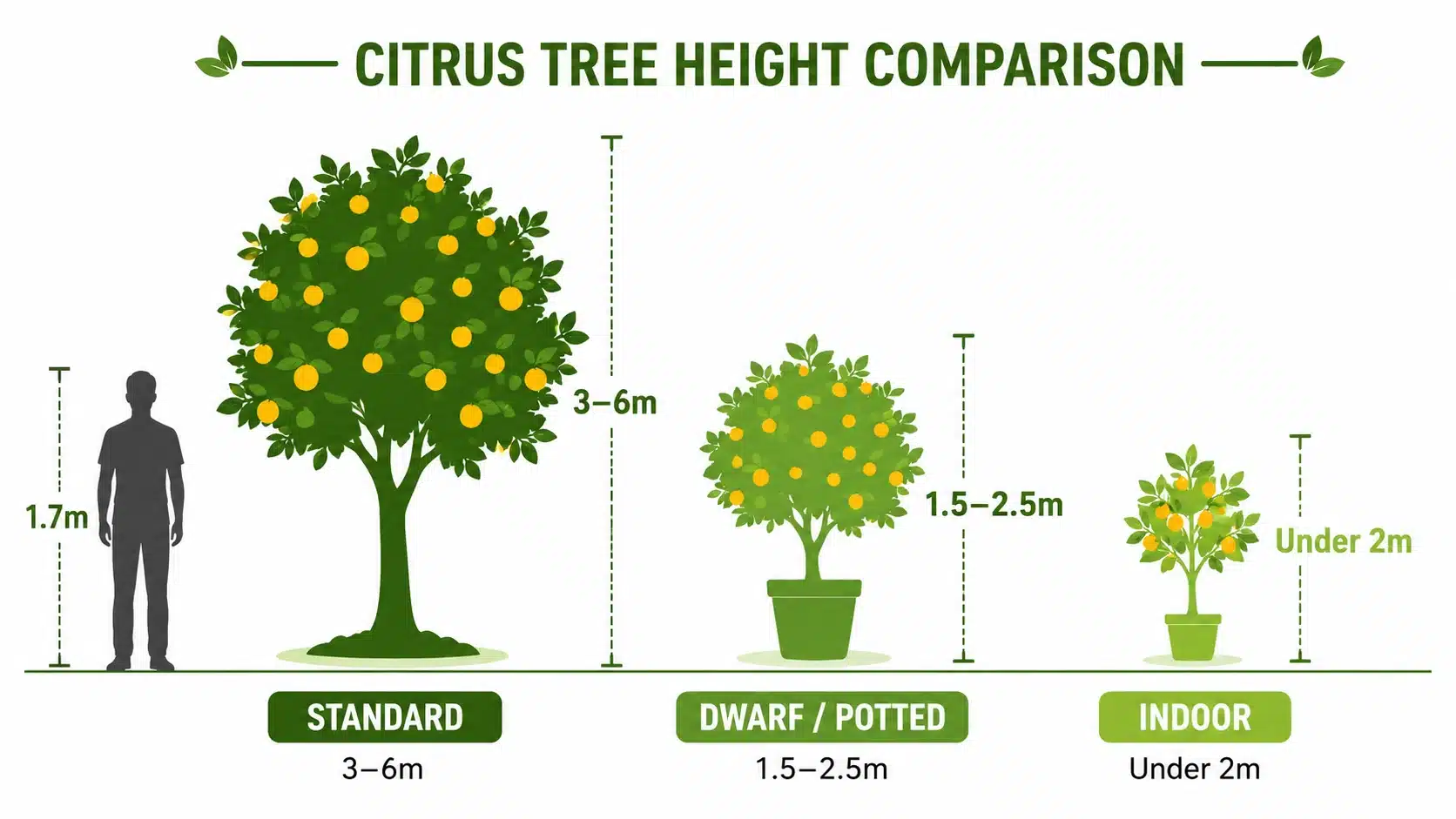
Standard citrus trees typically mature at 3–6 metres tall, with canopy width equal to roughly 60–75% of height. Dwarf and container-grown varieties usually stay between 1.5 and 2.5 metres. Indoor citrus remains smaller again, generally under 2 metres, due to limited light and root space.
Growth Rate
Citrus is a moderate grower under good conditions, producing strong growth flushes in spring and summer and slowing noticeably over winter. Most grafted trees begin fruiting within 2–3 years, while seed-grown citrus can take 7 or more years and won’t reliably reproduce the parent variety’s traits.
For a variety-by-variety size breakdown, particularly for lemons, see how large lemon trees get by variety and growing method.
Citrus Tree Care Guide
| Care Requirement | Recommendation |
| Watering | Deep, even watering; allow the top layer to dry slightly between waterings |
| Light | 6–8 hours of direct sunlight daily |
| Soil | Free-draining, citrus-specific mix with added organic matter |
| Fertiliser | Citrus-specific fertiliser every 4–6 weeks in the growing season, tapering off in winter |
| Pruning | Light pruning after harvest to manage shape and airflow; avoid heavy pruning in late autumn/winter |
| Climate | Most citrus prefer frost-free conditions; move potted trees to shelter during cold snaps |
In our experience growing citrus across different Australian climates, root stress from poor drainage — not underfeeding — is the most common reason a healthy-looking tree declines.
Common Citrus Tree Problems in Australia
- Yellowing leaves: Usually overwatering/poor drainage or a nitrogen or magnesium deficiency; check soil moisture before assuming a feeding issue.
- Poor fruit set: Often caused by insufficient sun, inconsistent feeding during flowering, or limited pollinator access.
- Root-bound decline: Common in pots; roots circling the container base restrict water and nutrient uptake — the fix is repotting, not more fertiliser.
- Citrus leafminer and scale: More likely on stressed or overcrowded trees; healthy, unstressed growth is the best prevention.
Citrus Comparison: Lemons vs Limes vs Mandarins vs Oranges
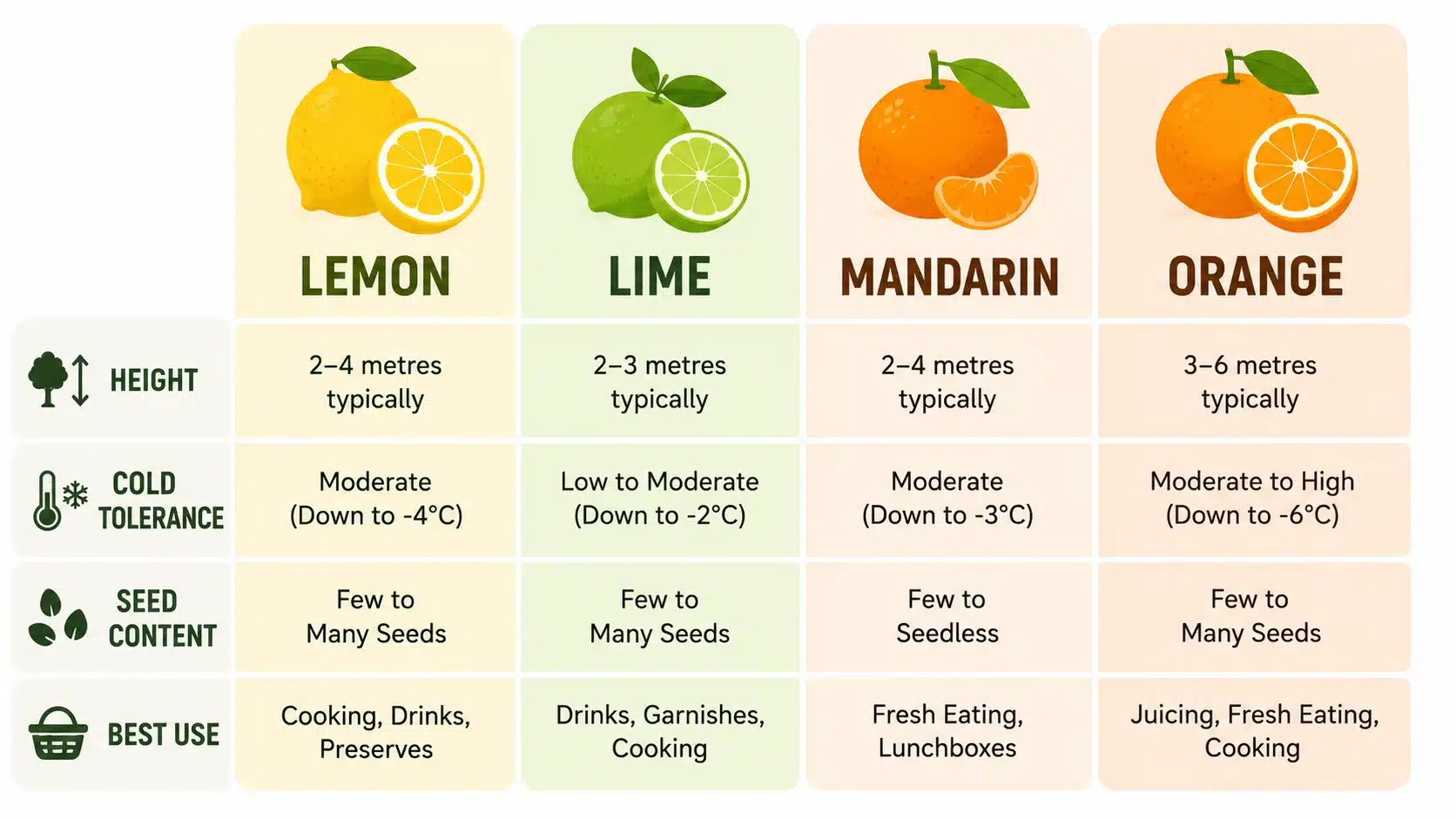
| Type | Typical Height | Cold Tolerance | Seed Content | Best For |
| Lemon | 1.5–6 m | Moderate–high (Meyer, Lisbon) | Low–moderate | Juicing, all-purpose use |
| Lime | 1.5–4 m | Low–moderate | Variable | Cooking, cocktails |
| Mandarin | 2–4 m | Moderate | Low (Imperial, Afourer) | Fresh eating, easy peeling |
| Orange | 3–6 m | Moderate | Moderate (Navel is low-seed) | Juicing, fresh eating |
Conclusion
There is no single “best” citrus tree for Australia — the right choice depends on your climate zone, available space, and whether you’re planting in the ground or a pot. Matching variety to climate first, sizing your pot or planting site correctly, and maintaining consistent sun, water, and citrus-specific feeding will keep almost any citrus tree productive for a decade or more. For deeper detail on any one of these areas, the linked guides above cover pot growing, lemon sizing, and mandarin seed counts in full.
If you’re expanding beyond citrus, our full fruit trees and tropical plants guide covers tropical varieties and harvest planning across the whole orchard.
FAQs
What is the easiest citrus tree to grow in Australia?
Meyer lemon and cumquat are generally the easiest, tolerating a wider range of temperatures and conditions than lime or mandarin varieties.
How long does a citrus tree take to fruit in Australia?
A grafted citrus tree typically fruits within 2–3 years; seed-grown citrus can take 7 or more years and won’t grow true to the parent variety.
Do citrus trees need full sun?
Yes, most citrus need at least 6 hours of direct sunlight daily to flower and fruit well.
Can citrus trees grow in pots in Australia?
Yes, most citrus varieties can be grown successfully in pots with a large enough container, free-draining potting mix, and regular feeding.
Are seedless citrus trees genetically modified?
No. Low-seed and seedless citrus varieties result from natural traits and selective breeding, not genetic modification.
How big do citrus trees get in Australia?
Standard citrus trees typically reach 3–6 metres, while dwarf and potted varieties usually stay between 1.5 and 2.5 metres.