

How Large Do Lemon Trees Get? Height & Size Guide
Introduction
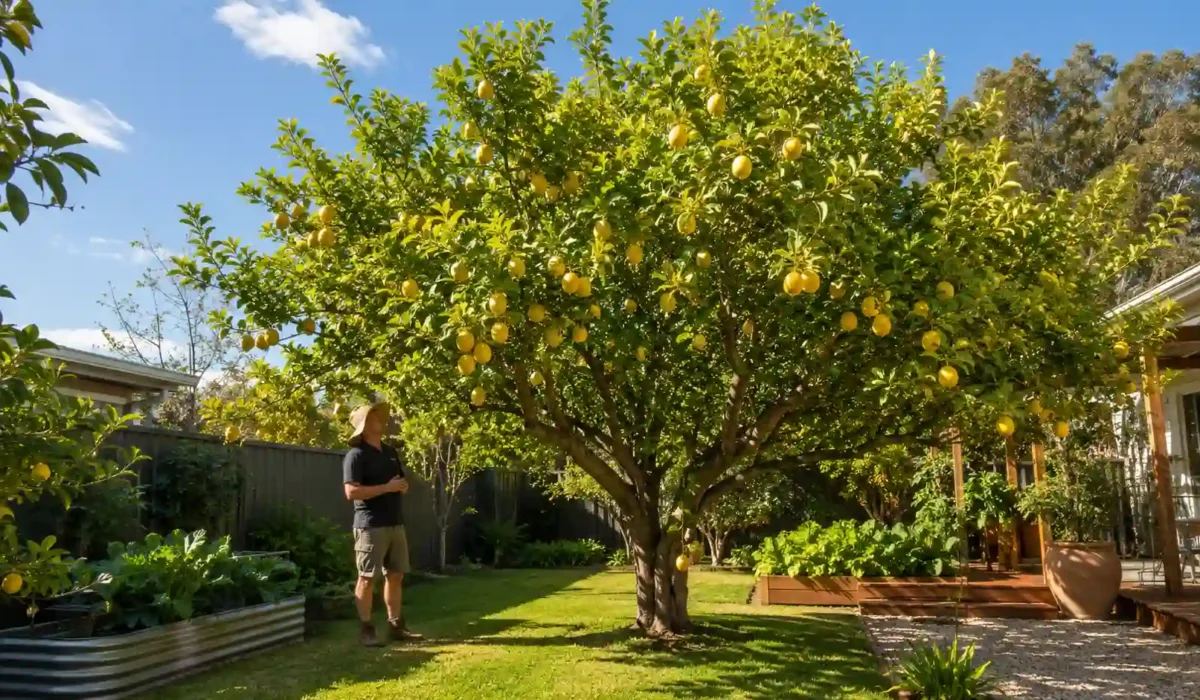
Lemon trees in Australian gardens typically grow 3–6 metres tall at maturity, although their final size depends on the variety, rootstock, climate, and how they are maintained. If you’re wondering how large do lemon trees get, the answer varies between standard trees, dwarf cultivars, and container-grown plants. Full-sized varieties such as Eureka and Lisbon become much larger than dwarf Meyer lemons, while pruning and growing in pots naturally limit height. This guide explains mature lemon tree dimensions, growth rates, spacing requirements, and common factors that influence size so you can choose the right tree for your garden.
Quick Summary
- Standard lemon trees usually reach 3–6 metres tall in Australian gardens.
- Dwarf and Meyer lemon trees generally stay between 1.5–2.5 metres, making them ideal for pots.
- Most lemon trees reach productive maturity within 3–5 years, with fruit often appearing after 2–3 years.
- Variety, pruning, pot size, and climate are the biggest factors controlling mature tree size.
How Large Do Lemon Trees Get? (Average Height and Width)
Most standard lemon trees mature between 3 and 6 metres tall, with canopy width varying according to variety and pruning. Under ideal frost-free conditions, vigorous cultivars can become even larger if left unpruned.
Height vs Width — What to Expect
Most lemon trees develop a canopy spread equal to about 60–75% of their mature height.
- Height: approximately 3–6 metres
- Width: approximately 2–4.5 metres
- Dwarf varieties: around 1.5–2.5 metres tall and wide
- Regular pruning keeps both height and spread manageable.
In our experience growing citrus, annual light pruning maintains better airflow while preventing trees from becoming too large for home gardens.
How Big Is a Lemon (the Fruit) vs How Big Is the Tree
People often confuse the size of the fruit with the size of the tree. A typical lemon fruit measures 7–12 cm long, depending on the variety, while the tree itself may reach several metres in height. Large fruits do not necessarily indicate a larger tree.
Lemon Tree Size by Variety (Comparison Table)
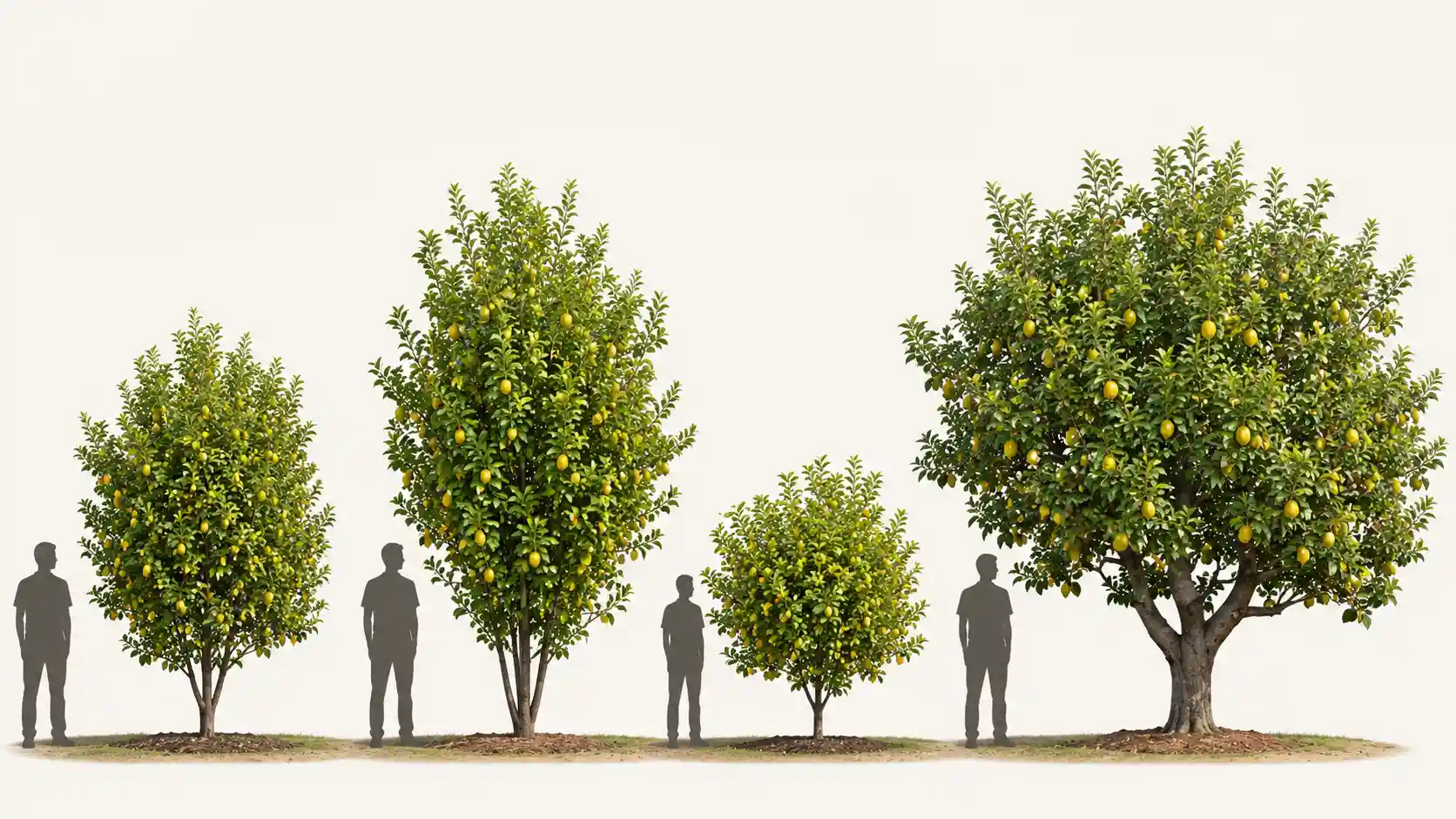
Different lemon varieties naturally grow to different sizes.
| Variety | Typical Mature Height | Typical Width | Notes |
| Eureka | ~4 m | Spreading, near-thornless | Common in Australian gardens |
| Lisbon | 3–4 m | Dense, thorny | More cold-tolerant |
| Meyer | 2–4 m (dwarf types ~2 m) | Compact, bushy | Excellent for pots |
| Bonnie Brae | Small to medium | Compact | Historic variety, rarely available |
| Ponderosa | Can exceed 6 m | Wide-spreading | Mostly ornamental |
Eureka Lemon Tree Height
Eureka lemons usually grow to about 4 metres when planted in the ground. They are valued for their reliable fruit production, relatively open canopy, and fewer thorns than many other varieties. If you are choosing between popular home garden varieties, understanding the differences between Eureka Lemon vs Meyer Lemon can help you select a tree that matches your available space, climate, and fruiting expectations.
Lisbon Lemon Tree Height and Cold Hardiness
Lisbon lemon trees commonly mature between 3 and 4 metres. They tolerate cooler conditions better than Eureka lemons and produce dense foliage that benefits from occasional thinning.
What Is the Bonnie Brae Lemon?
Bonnie Brae is a historic thin-skinned lemon first cultivated in California during the late 1800s. Although important in citrus history, it is rarely sold by Australian nurseries today and is mainly of historical interest.
Lemon trees belong to the citrus group within the genus Citrus, which includes many commercially important fruit species. More botanical information about citrus classification can be found through Wikipedia’s page on Citrus.
How Big Do Dwarf Lemon Trees Get?
Dwarf lemon trees are bred or grafted to remain compact without sacrificing fruit quality. Most mature between 1.5 and 2.5 metres, making them suitable for patios, courtyards, and balconies.
Dwarf Lemon Tree Height and Width
A typical dwarf lemon tree develops a rounded canopy of roughly the same width as its height. Regular pruning helps maintain a balanced shape while improving sunlight penetration.
Do Lemon Trees Do Better in Pots or in the Ground?
Ground-grown trees generally become larger because their roots have unrestricted access to soil and moisture. Potted trees remain naturally smaller due to root restriction, yet they can still produce excellent fruit when provided with quality potting mix, regular watering, and fertiliser. Elemo Baker recommends choosing dwarf varieties for containers to reduce maintenance over the long term.
How Large Do Lemon Trees Get Indoors?
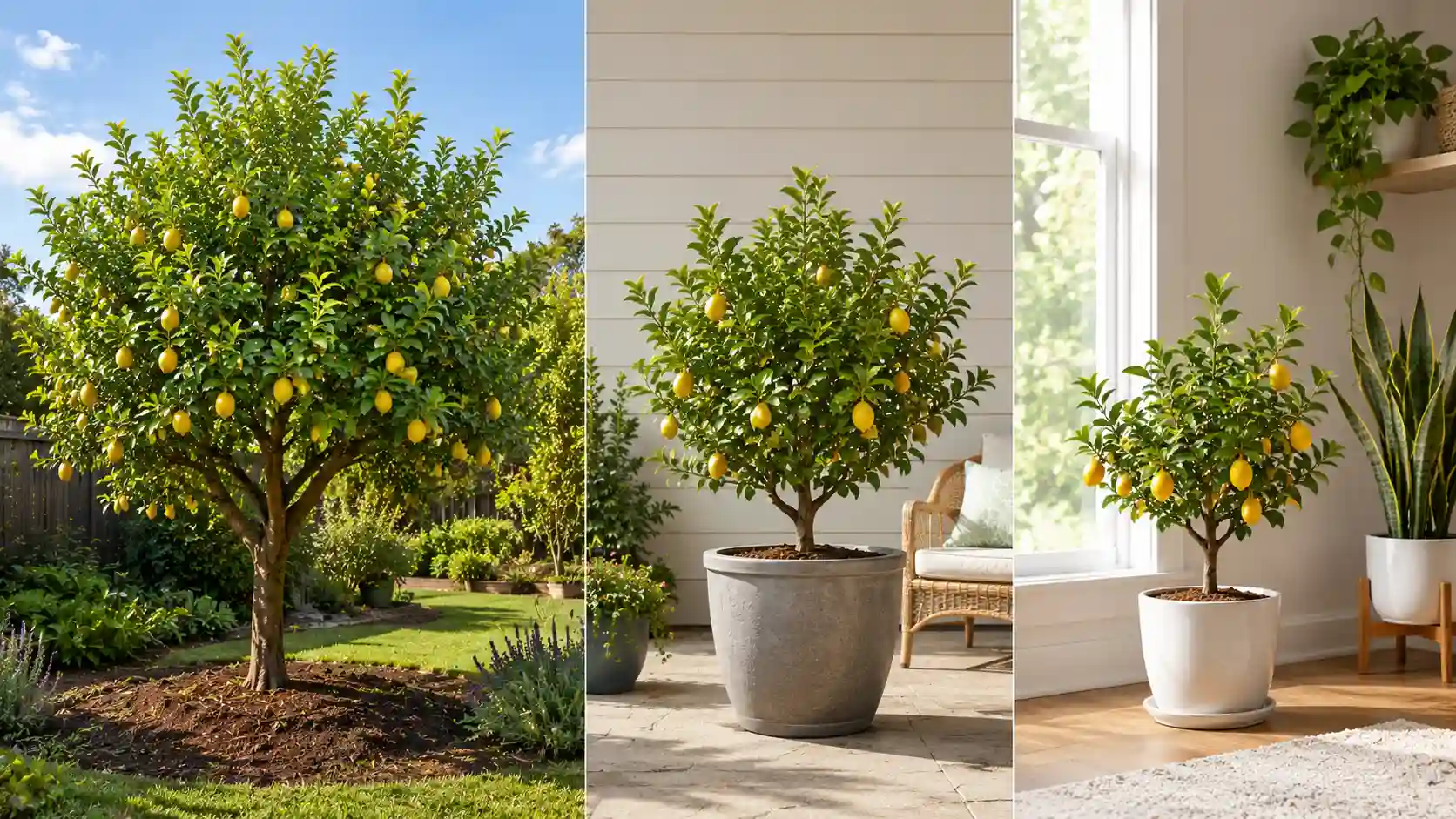
Indoor lemon trees remain significantly smaller than outdoor specimens because available light and container size restrict growth. Most indoor trees stay below 2 metres when properly maintained.
- Place trees where they receive at least 6–8 hours of bright sunlight daily.
- Dwarf Meyer lemons are among the best choices for indoor growing.
- Larger pots encourage healthier root development but will not produce full outdoor-sized trees.
- Rotate containers regularly to promote even growth.
Small-space gardeners can also explore other compact edible plants, such as the Super Dwarf Cavendish banana, which is suited to container growing and smaller gardens.
How Long Does It Take for a Lemon Tree to Reach Full Size?
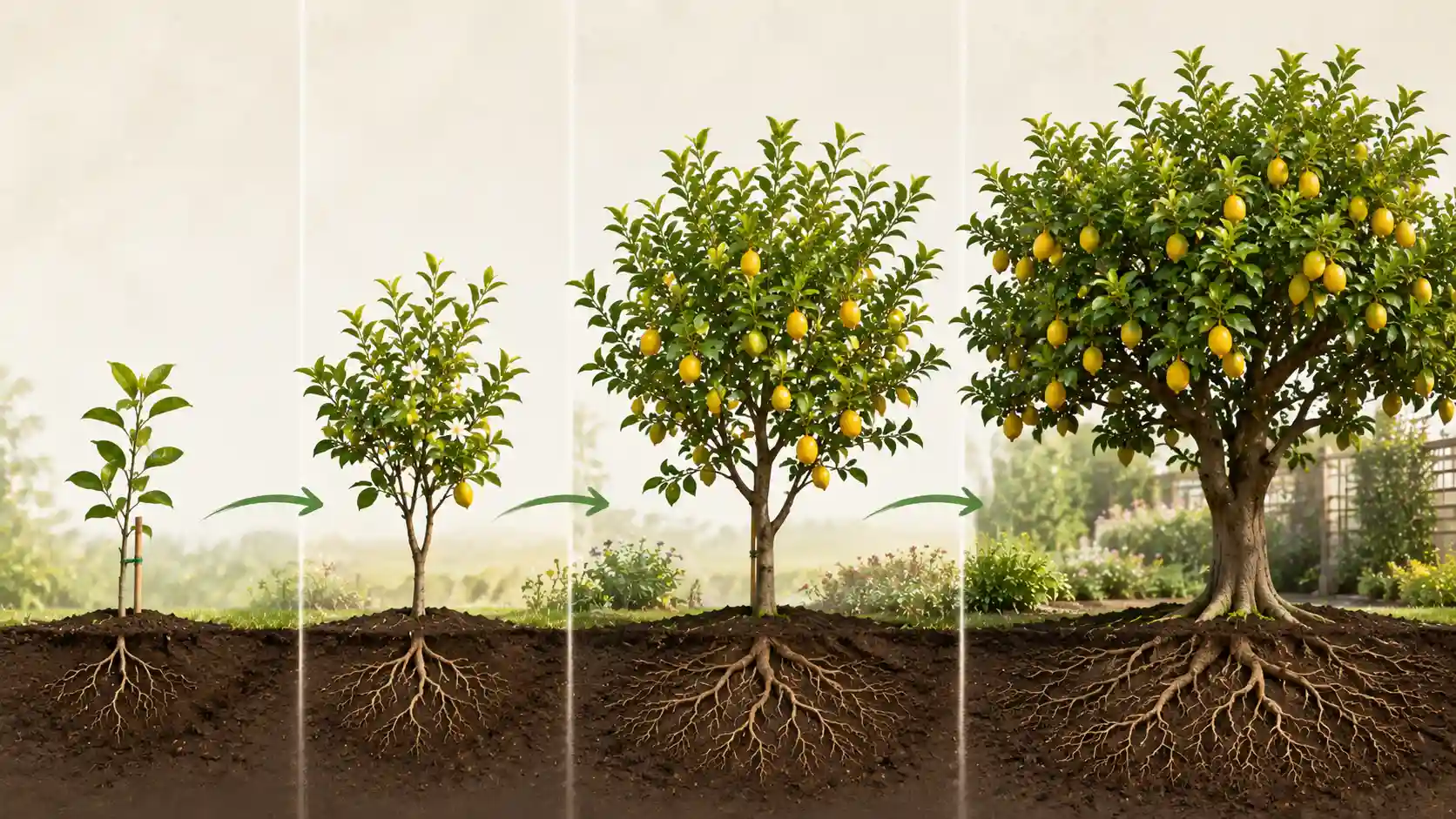
Most lemon trees require 3–5 years to develop into productive, well-shaped trees, although complete maturity may take longer depending on variety and growing conditions.
Lemon Tree Growth Rate by Year
- Year 1: Establishes roots and early branching.
- Years 2–3: Rapid canopy growth and first fruit on many grafted trees.
- Years 4–5: Strong structure with increasing harvests.
- Beyond 5 years: Growth slows while fruit production continues.
As of the 2026 growing season, gardeners continue to achieve the best growth by combining balanced citrus fertiliser with consistent watering rather than excessive feeding.
When Do Lemon Trees Start and Stop Producing Fruit?
Many grafted lemon trees begin fruiting within 2–3 years after planting. Mature trees often flower and produce fruit multiple times each year in warm climates, with productivity continuing for decades when properly cared for.
How Much Space Does a Lemon Tree Need?
Proper spacing allows sunlight, airflow, and healthy root development.
- Plant standard trees 3–5 metres away from buildings.
- Leave at least 2–3 metres from fences where possible.
- Avoid planting directly beside large trees that compete for water and nutrients.
- Keep surrounding vegetation low to improve airflow and reduce disease risk.
Before planting a lemon tree, it is useful to compare its mature size with other options available in fruit trees for Australian gardens, especially when planning backyard spacing.
What Affects How Large a Lemon Tree Grows?
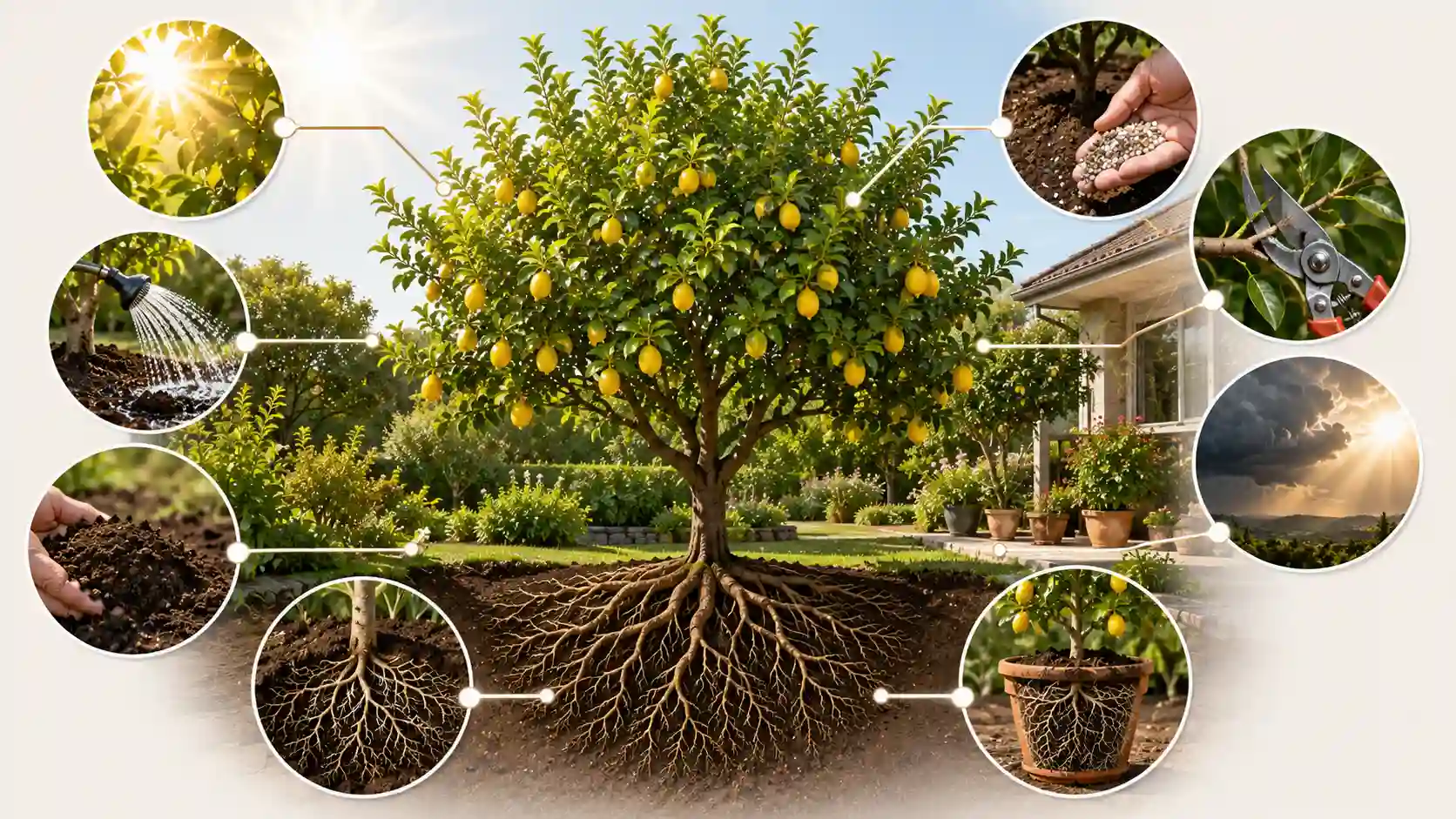
Several environmental factors determine final size.
- Sunlight availability
- Soil fertility and drainage
- Consistent watering
- Balanced fertilising
- Correct pruning
- Frost exposure and local climate
Do Coffee Grounds Help Lemon Trees?
Coffee grounds contribute organic matter and small amounts of nutrients but should not replace balanced citrus fertiliser. Applying excessive quantities may alter soil conditions without providing complete nutrition.
What Does Epsom Salt Do for Lemon Trees?
Epsom salt supplies magnesium, which can help correct a confirmed magnesium deficiency. It should only be used when appropriate rather than as a routine treatment for every lemon tree.
Common Lemon Tree Problems Affecting Size and Growth
Several common issues can reduce growth and overall vigour.
- Stunted growth: Often caused by poor soil, restricted roots, or insufficient sunlight. Improve drainage, soil quality, and light exposure.
- Yellowing leaves: Frequently linked to nutrient deficiencies or watering imbalance. Apply suitable citrus fertiliser and adjust watering.
- Overwatering and root rot: Waterlogged soil damages roots. Ensure excellent drainage and avoid constantly wet soil.
- Pests: Aphids, scale insects, and citrus leaf miners weaken trees by reducing healthy foliage. Regular monitoring and timely treatment help maintain vigorous growth.
What Happens When You Cut the Top of a Lemon Tree?
Cutting the top of a lemon tree limits vertical growth and encourages lateral branching. However, excessive topping may temporarily reduce fruit production while the tree redirects energy into new shoots. Selective pruning is generally preferable to severe topping because it maintains both structure and productivity.
Similar pruning principles are used across many citrus plants, and learning correct citrus pruning methods through guides such as how to prune a kumquat tree can help gardeners maintain healthier shapes and better airflow.
Lemon Tree Lifespan and Long-Term Size Considerations
A healthy lemon tree can live 40–50 years or longer under favourable conditions. Because mature trees become permanent landscape features, selecting the right variety before planting is important. In our experience, gardeners who match tree size to available space spend less time correcting overcrowding through heavy pruning later.
For gardeners planning a long-term edible landscape, comparing lemon trees with other productive options such as the Feijoa tree in Australia can help create a diverse and sustainable backyard garden.
Conclusion
The answer to how large do lemon trees get depends mainly on variety, rootstock, climate, and growing method. Standard lemon trees commonly reach 3–6 metres, while dwarf and container-grown varieties usually stay around 1.5–2.5 metres. Indoor trees remain even more compact due to limited light and root space. Choosing the appropriate variety, allowing sufficient planting space, and following good pruning practices will help your lemon tree remain healthy, productive, and suited to your garden for many years.
FAQs
How tall is a 5-year-old lemon tree?
A healthy five-year-old lemon tree is commonly 2.5–4 metres tall, depending on its variety, growing conditions, and pruning.
How big do lemon trees get in pots compared to the ground?
Potted lemon trees generally remain 1.5–2.5 metres tall, while ground-grown standard trees often reach 3–6 metres.
Do lemon trees grow better in pots or in the ground?
They generally grow larger and faster in the ground, but dwarf varieties perform very well in pots with proper care.
How much space does a lemon tree need in an Australian backyard?
Allow approximately 3–5 metres from buildings and sufficient space for the canopy to develop without crowding nearby plants.
How tall do dwarf Meyer lemon trees grow?
Most dwarf Meyer lemon trees mature between 1.5 and 2 metres, making them suitable for patios and container gardening.
How long does it take for a lemon tree to reach full size?
Most lemon trees become well established and productive within 3–5 years, although complete maturity may take longer.
What is the lifespan of a lemon tree?
With proper care, a lemon tree can remain healthy and productive for 40–50 years or more.