

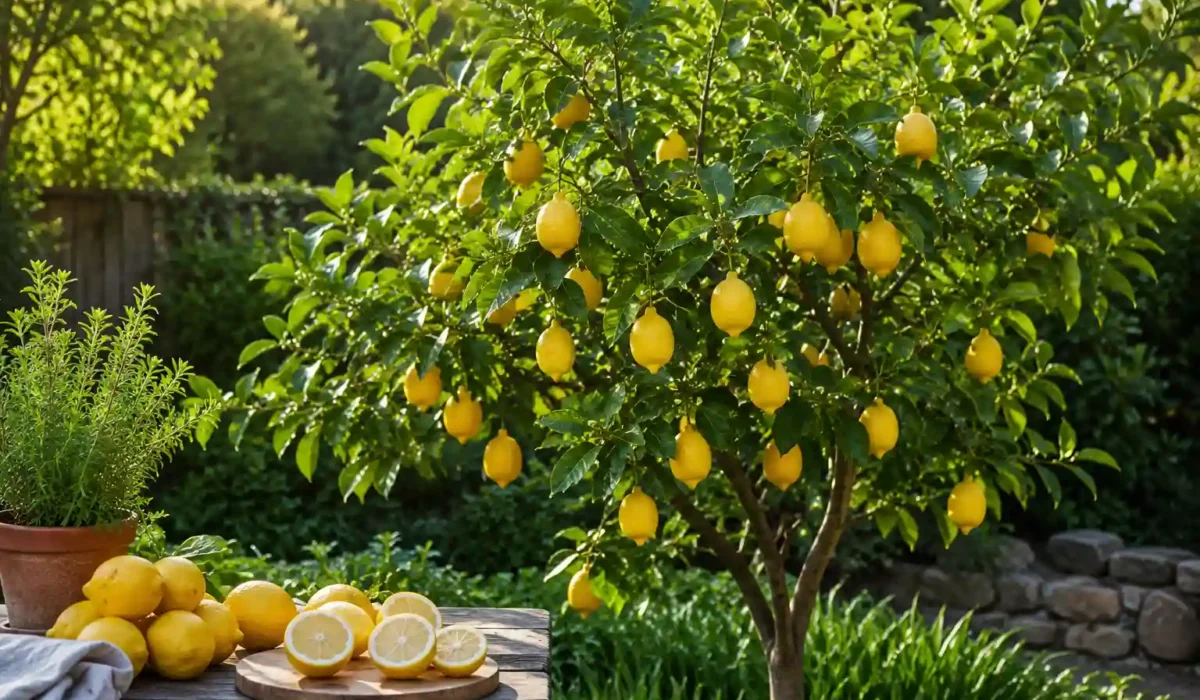
Seedless Lemon Tree: Varieties, Size, Care & Growing Guide
Introduction
A seedless lemon tree is a lemon variety that naturally produces fruit with very few or no seeds due to specific botanical traits such as self-incompatibility, reduced seed development, or selective breeding. Seedless does not always mean completely seed-free; most varieties produce low-seed fruit rather than eliminating seeds entirely. Common examples include Lisbon and Eureka Seedless lemons, which are valued for easier eating and juicing. This guide explains what makes lemons seedless, which varieties qualify, how seedless lemons develop, their growth habits, and how to grow and care for a productive lemon tree in Australian gardens.
By Elemo Baker | Plant Care & Gardening Expert
Last Updated: July 2026
Quick Summary
- Lisbon and Eureka Seedless are among the most common low-seed lemon varieties available to home growers.
- Seedlessness usually occurs through natural plant traits, selective breeding, or limited seed development rather than genetic modification.
- Seedless lemon trees can reach 3–6 metres when grown as standard trees but remain around 1–2 metres as dwarf grafted varieties.
- Lemon trees can produce fruit several times each year, with the strongest harvest often occurring during cooler months in Australian climates.
What Is a Seedless Lemon Tree?
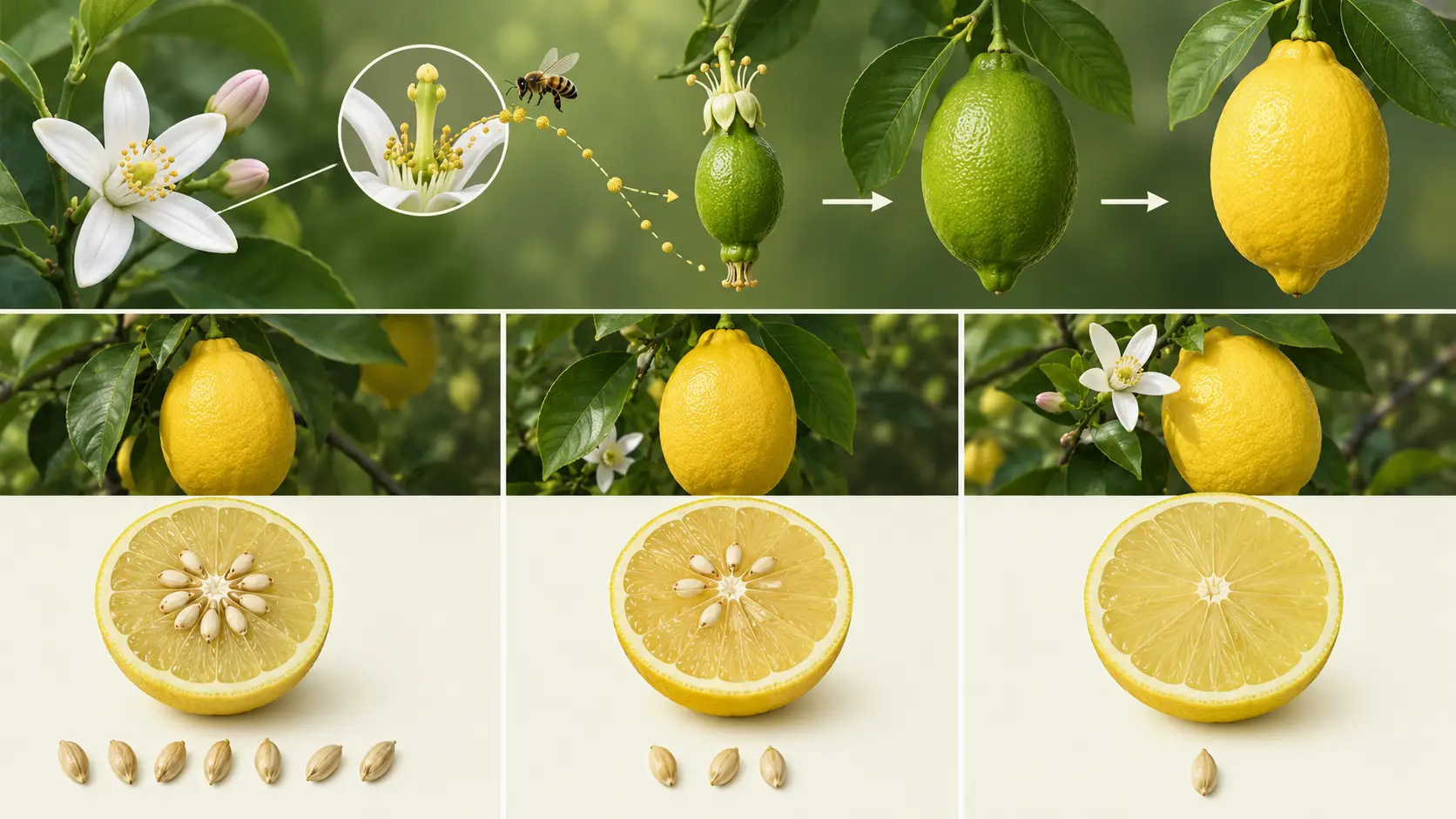
A seedless lemon tree is a lemon variety that produces fruit with minimal seed development. In botanical terms, “seedless” usually refers to lemons containing few or no noticeable seeds rather than fruit that can never produce a seed under any condition. Varieties marketed as seedless often have naturally reduced seed formation caused by factors such as self-incompatibility, lack of fertilisation, or selective breeding.
Lemons belong to the citrus group of flowering fruit plants, with their classification and botanical history connected to the wider genus Citrus.
The question “is there a seedless lemon tree?” has a simple answer: yes, but most are technically low-seed varieties rather than perfectly seed-free plants. Lisbon and Eureka Seedless lemons are two examples commonly grown for their reliable fruit quality and reduced seed content.
Seedless lemon plants can develop fruit through different botanical processes:
- Parthenocarpy: Fruit develops without fertilisation, meaning seeds are not formed.
- Stenospermocarpy: Fruit begins developing seeds, but the seeds stop growing and remain small or undeveloped.
- Self-incompatibility: The plant has difficulty producing seeds because fertilisation between compatible pollen and flowers is limited.
In commercial and home gardening situations, seedless lemons are usually the result of natural traits combined with careful variety selection rather than laboratory modification.
How Do Seedless Lemons Form Without Seeds?
Seedless lemons form because the fruit can develop successfully even when normal seed production is limited. Lemon trees such as Lisbon and Eureka are largely self-fertile, meaning a single tree can produce fruit without pollen from another citrus variety.
When cross-pollination is limited, fewer fertilised seeds develop inside the fruit. This is why many lemon varieties naturally produce fruit with low seed numbers.
To grow seedless lemons without planting seeds, growers usually propagate established varieties through methods such as:
- Grafting onto suitable citrus rootstock.
- Buying nursery-grown grafted trees.
- Using cuttings in controlled propagation systems.
Growing a seedless lemon tree from a seed is generally unreliable because the offspring may not maintain the same seedless characteristics as the parent plant.
Are Seedless Lemons Genetically Modified?
No, commercially available seedless lemon varieties are not genetically modified organisms (GMOs). Seedlessness in lemons comes from naturally occurring characteristics or traditional horticultural selection over many years.
Plant breeders select trees that consistently produce low-seed fruit and propagate them through grafting to maintain those traits. This is the same approach commonly used for many fruit tree cultivars.
Which Lemon Varieties Are Seedless (or Nearly Seedless)?
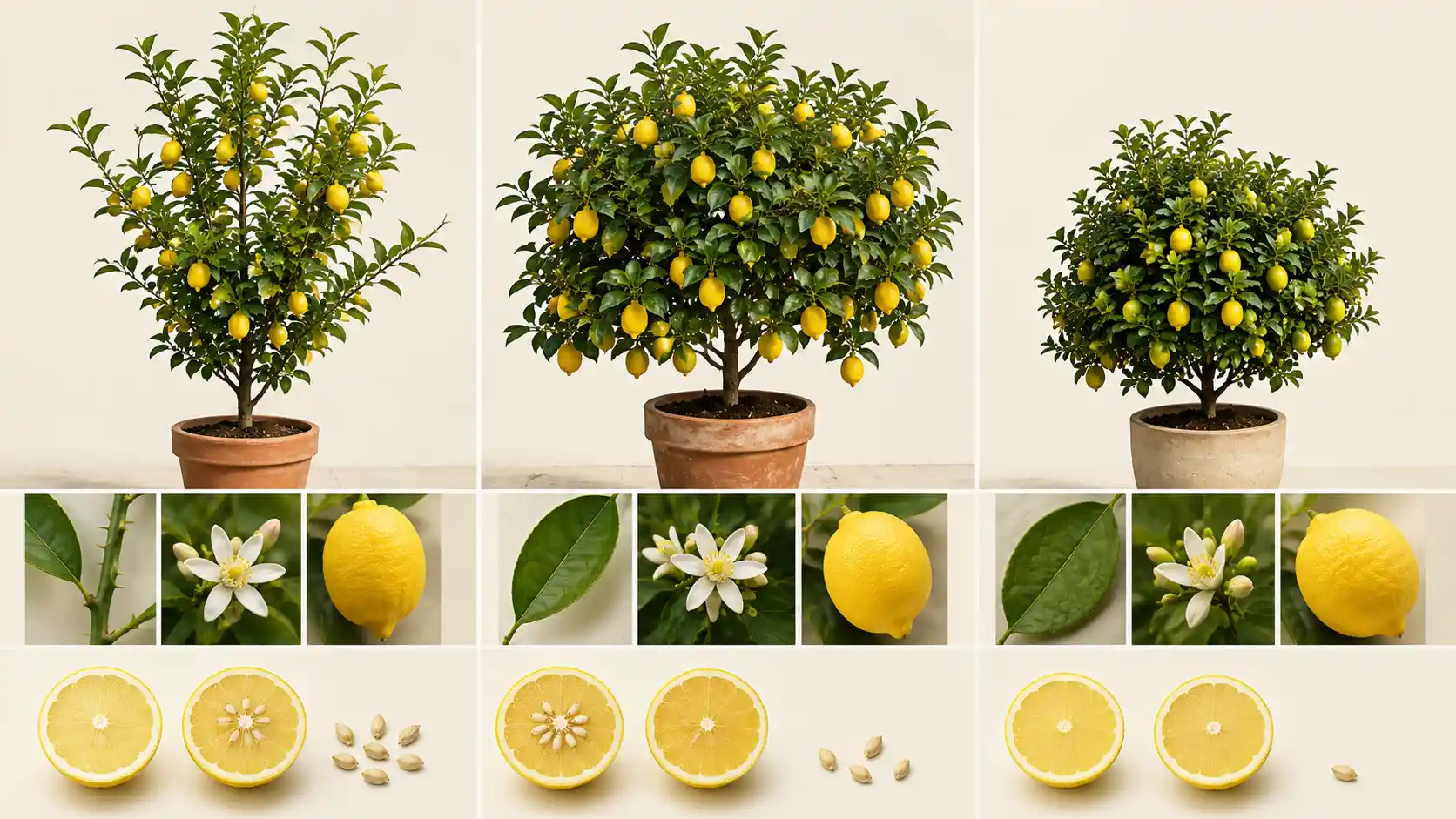
Several lemon varieties are considered low-seed or nearly seedless, but the amount of seed production varies depending on growing conditions, pollination, and the specific cultivar. Seedlessness is a common feature explored across different citrus crops. You can also learn how seedless characteristics occur in mandarins in our article Are Imperial Mandarins Seedless?
The most recognised types include Lisbon, Eureka Seedless, and Meyer lemon. However, they differ in flavour, tree structure, climate tolerance, and seed content.
Lisbon Lemon
The Lisbon lemon is one of the most popular lemon varieties grown in Australia and is known for producing fruit with very few seeds. It is a vigorous citrus variety with good adaptability to different climates.
Key characteristics include:
- Nearly seedless fruit under suitable conditions.
- Thorny, upright growth habit.
- Thin, smooth skin.
- Strong tolerance to heat and cold compared with many other lemon varieties.
- Excellent suitability for juicing and general kitchen use.
A full-grown Lisbon lemon tree can become large if left unpruned, making it suitable for gardens with enough space. Regular pruning can maintain a manageable size while improving airflow and fruit production.
Eureka Lemon (and Eureka Seedless)
Traditional Eureka lemons are popular worldwide and are known for their heavy fruit production. Standard Eureka lemons can contain some seeds, but the Eureka Seedless cultivar has been selected specifically for reduced seed formation.
Eureka characteristics include:
- Low seed content, especially in Eureka Seedless selections.
- Thicker and more textured skin than Lisbon.
- Open growth habit with fewer thorns.
- Excellent all-purpose lemon use.
- Lower cold tolerance compared with Lisbon.
In our experience growing citrus varieties, Eureka lemons often perform best in warm, sunny positions where they receive consistent moisture and protection from extreme cold.
Meyer Lemon — Is It Seedless?
No, a Meyer lemon tree is not completely seedless. Meyer lemons can contain several seeds, although some fruits may have very few or no visible seeds.
Meyer lemon is not a true lemon species; it is a natural hybrid believed to be a cross between a lemon and a mandarin or orange-type citrus. It produces sweeter, less acidic fruit compared with traditional lemons.
Meyer lemons are valued for:
- Thin, smooth skin.
- Compact growth habit.
- Sweeter flavour.
- Suitability for containers and smaller gardens.
Lisbon vs Eureka vs Meyer Lemon
| Feature | Lisbon | Eureka | Meyer |
| Seeds | Few to none | Few (Eureka Seedless = very few) | 0–10, hybrid |
| Skin | Thin, smooth | Thicker, textured | Very thin, smooth |
| Cold tolerance | High | Lower | Moderate |
| Tree form | Thorny, upright | Open, fewer thorns | Compact, bushy |
| Best for | Juicing, general use | Zesting, all-purpose | Sweeter recipes |
If you are comparing Meyer lemons with other popular citrus varieties, our guide on Eureka Lemon vs Meyer Lemon: Key Differences Explained covers differences in flavour, seed content, growth habits, and growing requirements.
How to Tell If a Lemon Is Seedless
A lemon’s seed level can usually be identified by the variety label provided when purchasing a tree. Nursery descriptions such as “Eureka Seedless” indicate that the cultivar has been selected for reduced seed production.
The most reliable ways to check include:
- Cutting a ripe lemon open and examining the segments.
- Checking the cultivar name before planting.
- Understanding that even seedless varieties may occasionally contain a stray seed.
The question “can you get seedless lemons?” has a practical answer: yes, but completely seed-free fruit is uncommon in natural citrus production.
Do You Need Two Lemon Trees to Get Fruit?
No, you do not need two lemon trees to produce fruit. Lemon trees are generally self-fertile, meaning one healthy tree can produce lemons without another citrus plant nearby.
A single seedless lemon tree, including Lisbon and Eureka varieties, can reliably set fruit when it receives:
- Full sunlight.
- Proper watering.
- Suitable soil drainage.
- Adequate nutrients.
Planting multiple citrus trees can increase garden diversity, but it is not required for normal lemon production.
How Many Times a Year Does a Lemon Tree Produce Fruit?
A lemon tree can produce fruit several times a year because citrus plants can flower and develop fruit in multiple growth cycles. In warm Australian climates, lemons may produce a main crop during cooler months along with smaller secondary harvests.
Fruit production depends on:
- Climate conditions.
- Tree maturity.
- Water availability.
- Fertiliser management.
- Sun exposure.
In many Australian gardens, established lemon trees produce their heaviest harvest from late autumn through winter, although flowering and fruiting can continue outside this period.
Seedless Lemon Tree Size and Growth Habits
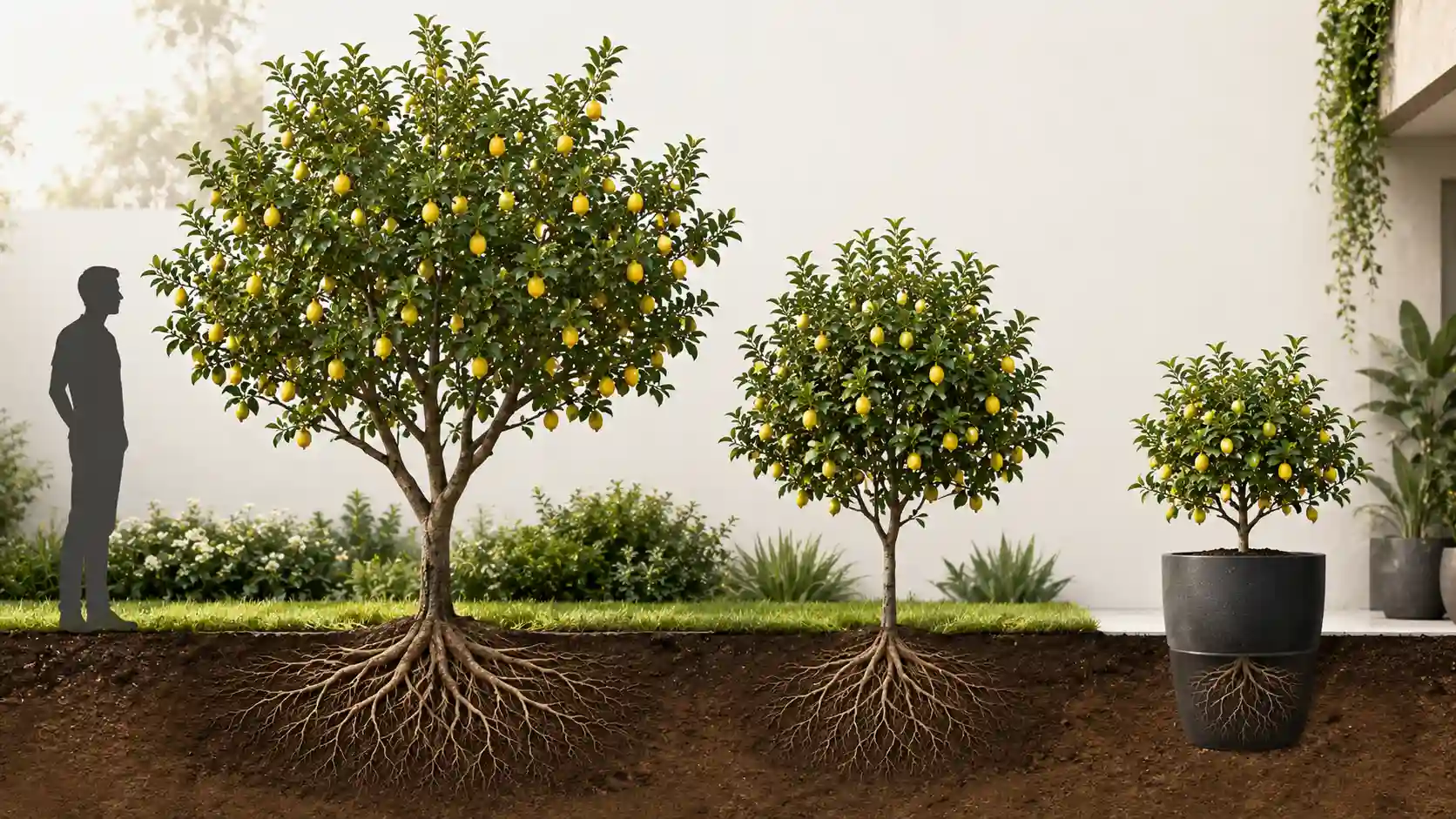
Seedless lemon tree size depends on the variety, rootstock, growing environment, and pruning routine. Standard Lisbon and Eureka lemon trees can become medium-sized citrus trees, while dwarf grafted forms remain suitable for containers and smaller gardens. Lemon tree size varies significantly depending on the variety, rootstock, and growing conditions. For more details on mature citrus dimensions, see our guide on How Large Do Lemon Trees Get? Height & Size Guide.
Typical sizes include:
| Tree Type | Mature Height | Width |
| Standard Lisbon/Eureka | 3–6 metres | 3–5 metres |
| Semi-dwarf grafted lemon | 2–3 metres | 1.5–3 metres |
| Dwarf container lemon | 1–2 metres | 1–2 metres |
Indoor or container-grown lemon trees usually remain smaller because root space limits growth. Environmental factors such as sunlight, pot size, pruning, and nutrition strongly influence final size.
Growth Rate
Seedless lemon trees are generally moderate-to-fast growers when planted in suitable conditions. They produce strong growth flushes during spring and summer when temperatures increase and sunlight levels are higher.
Growth speed improves with:
- At least 6–8 hours of direct sunlight daily.
- Well-draining soil.
- Regular citrus fertilising.
- Correct watering practices.
Young trees usually focus on root and branch development before reaching their strongest fruit production stage. Regular pruning helps maintain shape, improve airflow, and encourage healthier growth.
Caring for a Seedless Lemon Tree
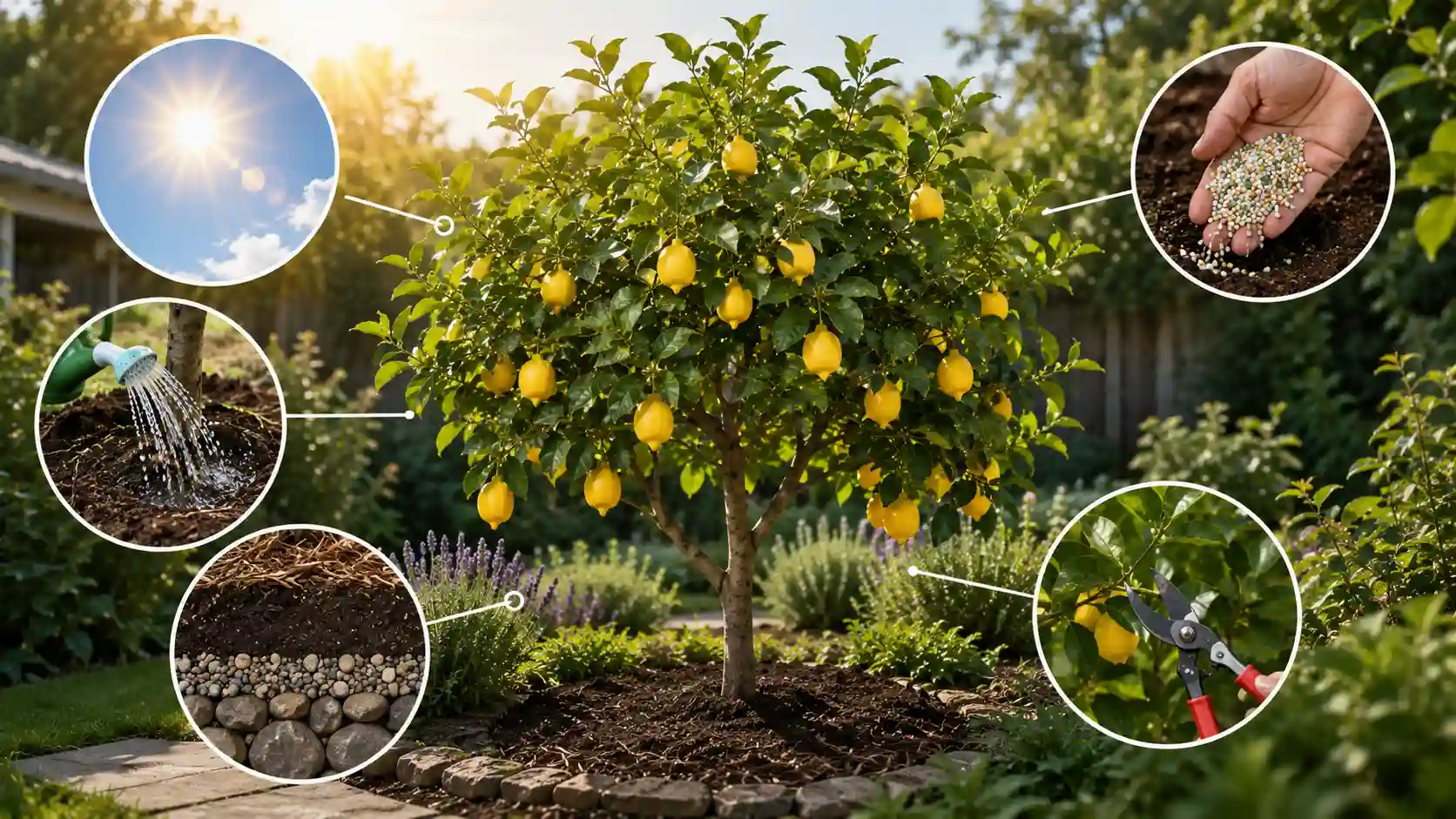
A seedless lemon tree grows best when its basic citrus requirements are consistently met. Proper care focuses on sunlight, water management, soil quality, nutrition, pruning, and protection from extreme weather. Whether growing a Lisbon lemon, Eureka Seedless, or another low-seed variety, healthy growing conditions are essential for reliable fruit production.
Citrus trees benefit from regular pruning to maintain airflow and encourage healthy growth. Similar pruning principles are explained in our guide on How to Prune a Kumquat Tree: Timing & Methods.
Key seedless lemon tree care requirements include:
- Sunlight: Lemon trees require full sun, ideally 6–8 hours of direct sunlight each day.
- Watering: Keep the soil evenly moist but avoid waterlogging. Deep watering is better than frequent shallow watering.
- Soil: Use well-draining soil with good organic matter. Citrus trees perform poorly in heavy, compacted soils.
- Fertiliser: Apply a citrus-specific fertiliser during active growth periods to provide nitrogen and essential minerals.
- Pruning: Remove dead, damaged, or overcrowded branches to improve airflow and maintain a manageable shape.
Elemo Baker recommends avoiding excessive watering because root stress caused by poor drainage is one of the most common reasons lemon trees decline in home gardens. In Australian climates, watering frequency should be adjusted depending on rainfall, temperature, and soil type.
What Does Epsom Salt Do for Lemon Trees?
Epsom salt provides magnesium sulphate, which can help correct magnesium deficiency in lemon trees. Magnesium is an important nutrient involved in chlorophyll production, and a deficiency may cause yellowing between the leaf veins while the veins remain green.
Epsom salt should be used as a targeted treatment rather than a general fertiliser. It is useful when a soil or leaf analysis suggests magnesium deficiency, but applying it routinely will not replace a balanced citrus fertiliser.
Signs that may indicate magnesium deficiency include:
- Yellow areas between leaf veins.
- Older leaves showing colour changes first.
- Reduced plant vigour.
Before applying Epsom salt, gardeners should check whether yellow leaves are caused by other issues such as overwatering, poor drainage, nitrogen deficiency, or root problems.
Cold Hardiness and Climate Considerations
Lisbon lemons are among the more cold-tolerant lemon varieties, making them suitable for many Australian regions. However, young trees are more sensitive to frost than established plants.
Cold protection methods include:
- Planting lemons in a sheltered location near walls or fences.
- Covering young trees during frost events.
- Avoiding exposed windy areas.
- Maintaining healthy soil moisture before cold weather arrives.
Although Lisbon lemon cold hardiness is relatively strong, prolonged freezing temperatures can damage flowers, leaves, and young branches. In cooler areas, dwarf trees grown in containers can be moved into protected positions during extreme cold.
Common Seedless Lemon Tree Problems (Problem–Solution Coverage)
Seedless lemon trees are generally hardy, but they can experience problems caused by incorrect watering, nutrient issues, pests, or unsuitable growing conditions. Identifying the cause early helps prevent long-term damage.
Yellowing Leaves
Yellow leaves are commonly caused by nutrient deficiencies, overwatering, or root stress. The solution depends on the underlying problem.
Possible causes and fixes include:
- Nutrient deficiency: Apply a balanced citrus fertiliser according to label instructions.
- Overwatering: Allow soil to partially dry between watering sessions.
- Poor drainage: Improve soil structure or move container plants into better-draining conditions.
- Magnesium deficiency: Consider targeted magnesium correction if symptoms match.
Healthy citrus leaves should generally have strong green colour and firm growth.
Poor Fruit Set or Few Lemons
Poor fruit production may occur when the tree lacks sufficient sunlight, receives too much nitrogen, or experiences environmental stress.
Common solutions include:
- Providing full sun exposure.
- Avoiding excessive high-nitrogen fertilisers that encourage leaves instead of fruit.
- Maintaining consistent watering during flowering and fruit development.
- Allowing young trees time to mature.
A young lemon tree may take several years before reaching full production.
Pest Issues
Common citrus pests in Australian gardens include citrus leaf miner, scale insects, and aphids. These pests can affect leaves, shoots, and overall tree health.
Management approaches include:
- Inspecting new growth regularly.
- Removing heavily affected leaves.
- Encouraging beneficial insects.
- Using appropriate horticultural treatments when necessary.
Early pest detection is usually easier to manage than severe infestations.
Slow Growth
Slow growth may result from restricted roots, poor soil drainage, insufficient nutrients, or inadequate sunlight.
To improve growth:
- Repot container trees when roots become crowded.
- Refresh old potting mix.
- Apply citrus fertiliser during active growing periods.
- Ensure the tree receives enough direct sunlight.
Beginner Mistakes and Practical Tips
Many problems with seedless lemon trees come from avoidable care mistakes. Understanding common errors helps beginners establish healthier citrus plants.
Common mistakes include:
- Overwatering: More common than underwatering, especially in heavy soils or containers without drainage holes.
- Planting in poor-draining soil: Citrus roots require oxygen and can suffer in waterlogged conditions.
- Skipping citrus fertiliser: Lemon trees are heavy feeders and need regular nutrient support.
- Ignoring frost protection: Young trees can be damaged quickly in colder Australian regions.
- Assuming seedless means zero seeds forever: Even low-seed varieties may occasionally produce an unexpected seed.
A practical approach is to observe the tree regularly rather than following a fixed watering schedule. Soil moisture, weather conditions, and seasonal growth should guide care decisions.
Why Some Growers Avoid Seedless Fruit Varieties
Some growers choose not to grow seedless fruit varieties because of concerns related to propagation, biodiversity, and traditional gardening practices.
Common reasons include:
- Reduced ability to save and grow plants from seeds.
- Preference for traditional seeded varieties.
- Interest in preserving broader genetic diversity among cultivated plants.
Seedless varieties are not necessarily inferior; they are simply selected for different purposes, such as easier eating, processing, and consumer convenience. Home gardeners may choose between seedless and seeded varieties depending on their goals.
Where to Buy a Seedless Lemon Tree in Australia
When choosing a seedless lemon tree in Australia, gardeners should focus on plant quality, correct identification, and suitable growing conditions rather than simply selecting the cheapest option.
Important factors to check include:
- Purchase from reputable nurseries or trusted plant suppliers.
- Choose grafted trees for reliable fruit characteristics.
- Confirm the cultivar name, such as Eureka Seedless or Lisbon.
- Look for healthy plants with strong root systems.
- Check that planting material comes from reliable, disease-managed sources.
A grafted seedless lemon tree is usually preferred over a seed-grown plant because grafting maintains the characteristics of the selected variety.
For gardeners searching terms such as seedless lemon tree for sale, where can I find seedless lemons, or indoor lemon tree for sale, the most important step is confirming the variety and growing requirements before purchase.
Choosing the right fruit tree depends on your climate, available space, and gardening goals. Our guide to Fruit Trees for Australian Gardens: Complete 2026 Guide explains other suitable edible trees for Australian conditions.
The best seedless lemon tree depends on the garden environment. Lisbon is often preferred for durability and climate tolerance, while Eureka Seedless can suit gardeners wanting productive fruit with reduced seeds.
Conclusion
A seedless lemon tree provides an excellent option for Australian gardeners who want productive citrus fruit with fewer seeds. Varieties such as Lisbon and Eureka Seedless achieve low seed production through natural plant traits and selective breeding, not genetic modification.
The most important factors for success are choosing the right variety, providing full sunlight, maintaining well-draining soil, applying appropriate citrus nutrition, and protecting trees from environmental stress.
With suitable care, a seedless lemon tree can become a reliable, low-maintenance fruiting plant that provides fresh lemons for many years.
FAQs
Is there such a thing as a truly seedless lemon tree?
A truly 100% seedless lemon tree is uncommon. Most seedless lemon varieties produce fruit with very few or no noticeable seeds, but occasional seeds can still appear due to natural variation.
Which lemon variety has the fewest or no seeds?
Eureka Seedless and Lisbon lemons are among the varieties with the lowest seed content. Eureka Seedless has been specifically selected for reduced seeds, while Lisbon naturally produces nearly seedless fruit.
Do seedless lemon trees need a second tree to produce fruit?
No. Seedless lemon trees such as Lisbon and Eureka are generally self-fertile and can produce fruit when grown alone. A second lemon tree is not required for pollination.
How tall does a seedless lemon tree grow?
A standard seedless lemon tree can grow around 3–6 metres tall, while dwarf grafted varieties usually remain around 1–2 metres. Pruning, rootstock, climate, and growing conditions influence final size.
Is a Meyer lemon tree seedless?
No. Meyer lemons are not completely seedless. They are a lemon-mandarin hybrid and may contain several seeds, although some fruits have very few.
Are seedless lemons genetically modified?
No. Commercial seedless lemons are not genetically modified. Their low-seed characteristics come from natural variation and traditional plant breeding methods.
What does Epsom salt do for a lemon tree?
Epsom salt supplies magnesium sulphate, which can help correct magnesium deficiency in lemon trees. It should only be used when deficiency symptoms are present and not as a replacement for balanced citrus fertiliser.
1 Comment