

Fruit Trees & Tropical Plants: Complete Australian Guide
Walk into any Australian nursery and you’ll find citrus, mango, feijoa and apple trees sitting side by side, all labelled as if they’d grow equally well in any backyard in the country. They won’t. The single biggest reason home-grown fruit trees fail in Australia isn’t bad watering or the wrong fertiliser — it’s a climate mismatch that was decided the moment the tree went into the trolley, months before it ever touched soil.
This guide exists to fix that decision before you make it. We’ll start with the one filter that matters more than any other — your climate zone — then work through every major category of fruit tree and tropical plant grown in Australian backyards: citrus, tropical and subtropical fruit, deciduous trees, and the overlooked backyard classics like feijoa and mulberry. From there, we’ll cover the practical basics every grower needs regardless of category: growing in pots, general care, pollination, and realistic timeframes for your first harvest.
This is the central hub for our fruit-growing content. Where a topic goes deeper — exact fertiliser rates, full variety comparisons, harvest calendars — we’ll point you to the dedicated guide rather than repeat it here. Think of this article as the map, and the linked guides as the destinations.
By Elemo Baker | Plant Care & Gardening Expert
Quick Summary
- Climate zone comes first. Whether you’re in a temperate, subtropical or tropical zone determines what will actually fruit for you — before variety, taste, or looks.
- Citrus is the most forgiving category for most of Australia, and it’s the category most suited to pot growing.
- Genuinely tropical fruit (mango, papaya, soursop) needs real warmth. Further south, pots, microclimates and protected positions are the workaround, not a guarantee.
- Feijoa and mulberry are two of the easiest, most cold-hardy backyard fruit trees in the country — and two of the most overlooked.
- Most fruit trees need 6+ hours of direct sun and well-drained soil, regardless of category.
- Time to first fruit ranges from as little as 1–3 years for citrus and fast-growing tropical species to considerably longer for some deciduous and seed-grown trees.
- Check pollination requirements before you buy — some trees are self-fertile, others need a second tree nearby to set fruit at all.
What Counts as a Fruit Tree or Tropical Plant in Your Backyard
“Fruit trees and tropical plants” covers more ground than it first appears. In an Australian gardening context, it generally splits into four working categories:
- Citrus — lemons, limes, oranges, mandarins and their hybrids. Evergreen, widely adaptable, and the default starting point for most Australian gardens.
- Tropical and subtropical fruit — mango, papaya, banana, soursop, sapodilla, avocado and similar species that originate in genuinely warm, humid climates.
- Deciduous fruit trees — apples, pears and stonefruit, which lose their leaves in winter and need a minimum number of cold hours (“chill hours”) to fruit reliably.
- Other backyard fruit — trees like feijoa and mulberry that don’t fit neatly into the categories above but are grown widely across Australian climates.
Ornamental tropical plants (palms, philodendrons, elephant ears and the like) sit adjacent to this topic but aren’t the focus here — this guide is about plants that produce something you can eat. The category a tree belongs to matters less than which of Australia’s climate zones it needs to actually fruit, which is where we’ll start.
Matching Fruit Trees to Your Australian Climate Zone
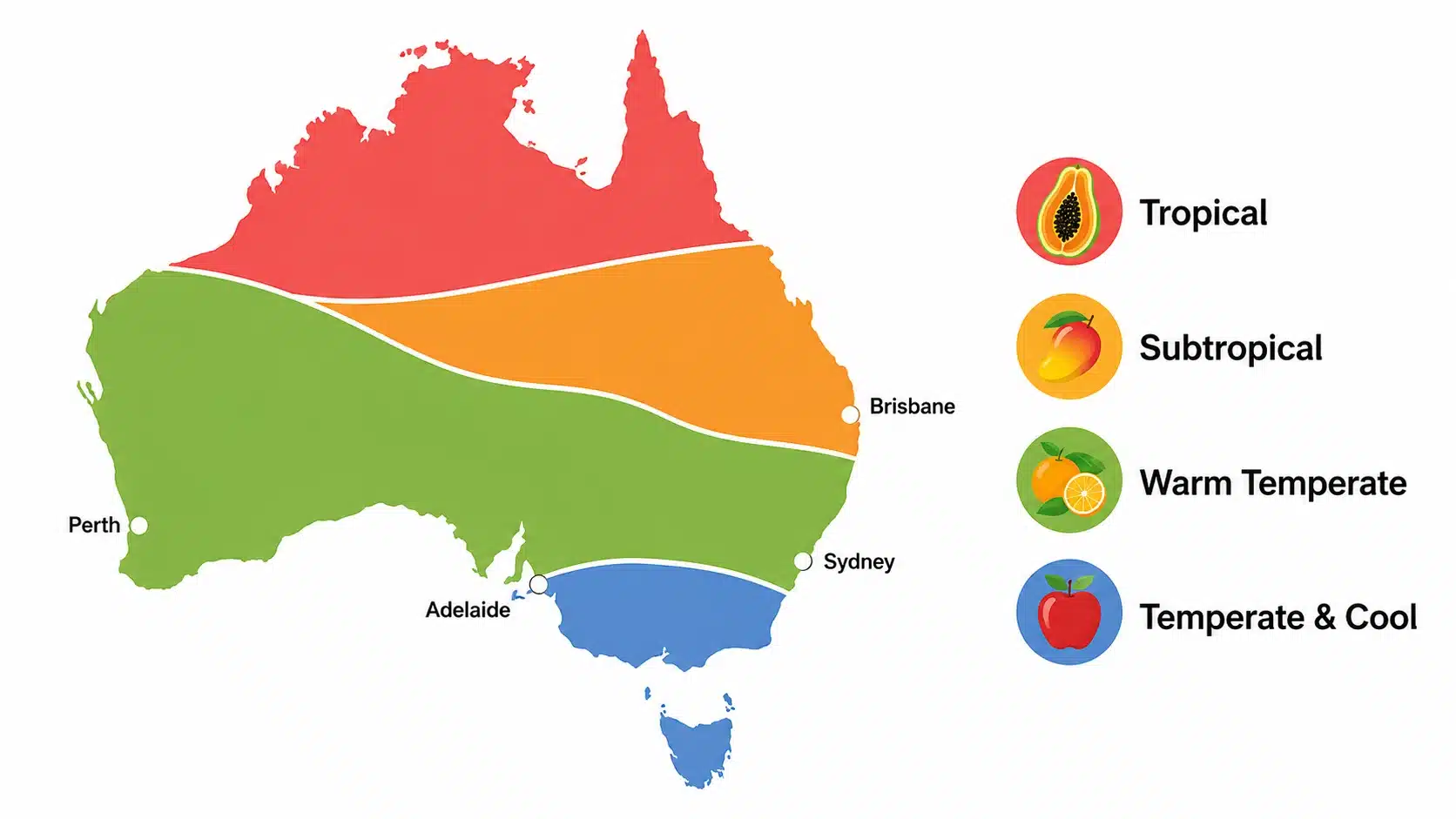
Before you fall in love with a particular tree, work out which of these broad zones you’re gardening in. Nearly every other decision in this guide flows from this one.
Temperate and cool climates (Melbourne, Hobart, inland NSW, the Adelaide Hills, cooler parts of WA) suit deciduous fruit trees best, since apples, pears and most stonefruit need a set number of chill hours — time spent below around 7°C while dormant — to flower and fruit properly. Citrus also grows here, though it’s slower and more frost-sensitive than in warmer zones, and genuinely tropical fruit is largely off the table outdoors.
Warm temperate climates (Sydney, Perth, Adelaide, much of coastal NSW) are the most flexible zone in the country. Citrus thrives here, most deciduous fruit still gets enough chill, and some of the hardier subtropical species — feijoa, some avocado varieties, tamarillo — will grow successfully, especially in a sheltered, sunny spot.
Subtropical climates (Brisbane, northern NSW, coastal Queensland) are where the tropical-vs-subtropical distinction starts to matter. Frost-free or nearly so, these areas support a genuinely wide range of tropical and subtropical fruit — mango, banana, avocado, feijoa, many citrus varieties — while still growing some lower-chill deciduous fruit.
Tropical climates (Far North Queensland, the Top End) are the only zones where the full range of true tropical fruit — papaya, soursop, jackfruit, mangosteen in the right microclimate — grows without special protection. Deciduous fruit trees generally struggle here; the lack of a genuine winter means many varieties won’t get enough chill to fruit reliably.
These four zones are a simplified version of the classifications used by the Bureau of Meteorology, which maps Australia’s climate in more granular detail if you want to check exactly where your suburb sits.
If you’re outside a tropical zone but still want to grow tropical fruit, you’re not necessarily out of luck — pots, greenhouses and warm microclimates against a north-facing wall can bridge the gap for some species, though not all. Our complete guide to tropical fruits in Australia breaks this down further with a tiered framework — true tropical, subtropical-tolerant, and container-only — so you can see exactly which fruits are realistic for your zone and which are a stretch.
Citrus Trees for Australian Backyards
Citrus is where most Australian fruit-growing journeys start, and for good reason. It’s evergreen, relatively low-maintenance once established, tolerant of a wide range of climates from warm temperate through to subtropical, and — critically for smaller gardens — it grows well in pots without much fuss.
Lemons, limes, oranges and mandarins all fall under this umbrella, along with increasingly popular hybrids and seedless varieties bred specifically for home gardens rather than commercial orchards. Size is one of the most common questions new citrus growers have — a full-sized lemon tree can eventually reach several metres, while dwarf and semi-dwarf grafted varieties stay compact enough for a courtyard or large pot. Seedlessness is another frequent point of confusion, since not every citrus variety marketed as “seedless” is completely free of pips in every growing condition.
Because citrus depth deserves its own space, we’ve covered variety selection, pot-friendly options, size expectations and seedless varieties in full in our citrus tree guide for Australia — that’s the place to go once you’ve decided citrus is the right starting category for your garden.
Tropical and Subtropical Fruit Trees
This is where most of the “can I actually grow that here?” questions live. Mango, papaya, banana, soursop, sapodilla and their relatives capture a lot of imagination — and a lot of unrealistic expectations from gardeners outside genuinely tropical zones.
The honest answer is that some tropical fruit is far more flexible than people assume, and some genuinely isn’t. Bananas, for instance, will grow (though not always fruit well) into warm temperate zones with the right shelter. Papaya and soursop are much fussier about sustained warmth and humidity, and outside the tropics or subtropics they’re realistically a pot-and-greenhouse project rather than an in-ground one. Avocado sits somewhere in the middle, with variety choice making a real difference to how far south it will crop reliably.
Rather than repeat that breakdown here, our tropical fruits guide does the heavy lifting: a full comparison across climate zone needed, frost tolerance, years to fruit and pot suitability for every major tropical and subtropical fruit grown in Australian backyards, plus a tiered “can you actually grow this?” framework built specifically for gardeners outside the tropics.
Deciduous and Other Backyard Fruit Trees
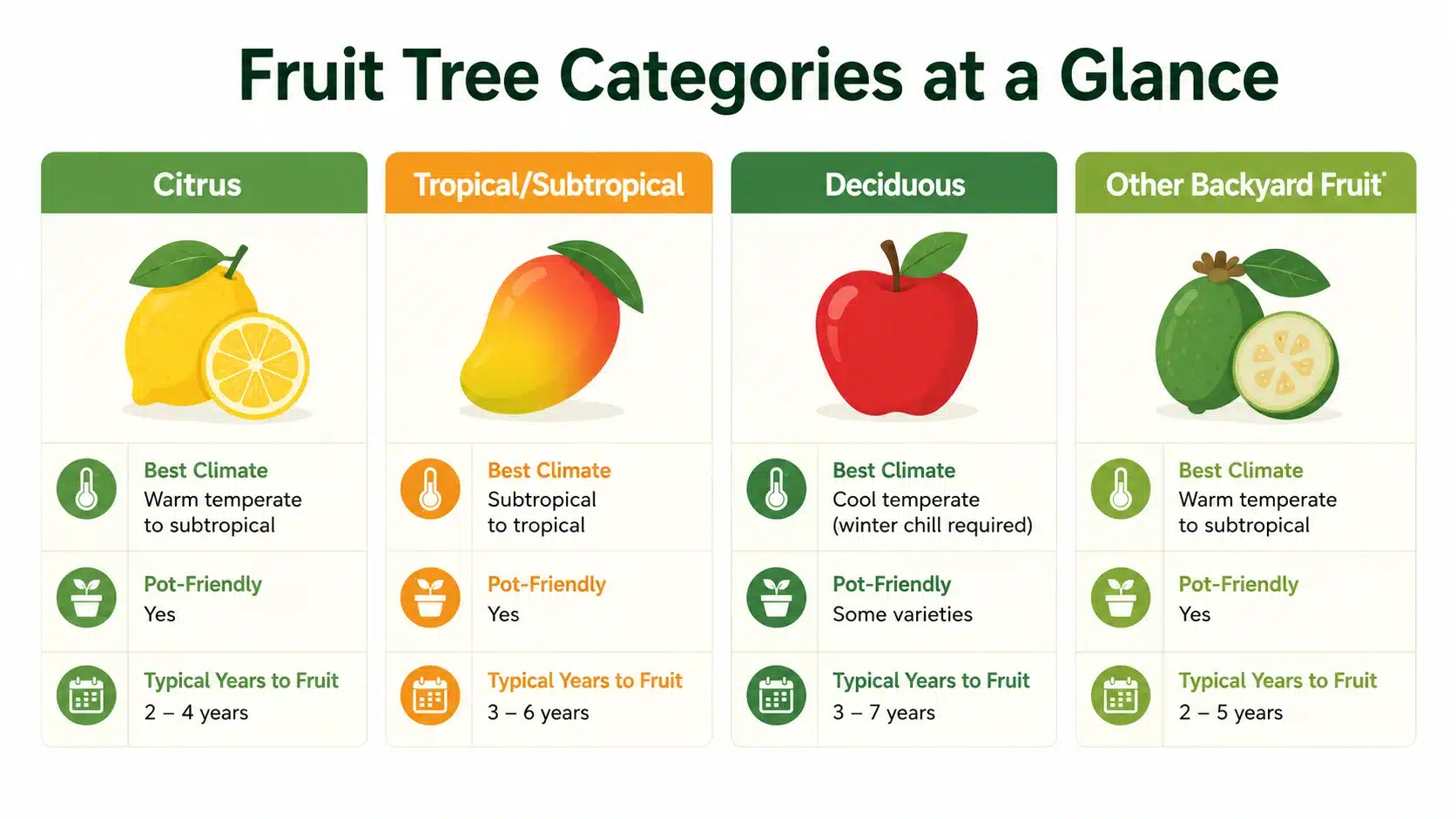
Not every worthwhile backyard fruit tree is citrus or tropical. Deciduous fruit — apples, pears, and stonefruit like peaches, nectarines and plums — dominates cooler and temperate gardens, where their winter dormancy and chill-hour requirement actually work in their favour rather than against them. Choosing the right variety for your local chill hours matters more here than almost any other single decision, since a low-chill climate paired with a high-chill variety is one of the most common reasons a deciduous tree flowers poorly or not at all.
Two other backyard fruit trees deserve a mention precisely because they’re so often overlooked in favour of citrus and mango: feijoa and mulberry. Both are remarkably easy, both tolerate a wide range of Australian climates including genuinely cold ones, and neither demands the fussing that tropical fruit does. Feijoa, with its guava-pineapple flavour, is attractive enough to double as a hedge or screening plant while still producing a reliable autumn crop — our feijoa tree guide covers growing conditions and care in full. Mulberry is faster still, fruiting within a couple of years in many cases, with black, white and red-fruited varieties suited to different tastes and climates — see our comparison of mulberry varieties for Australia if you’re weighing up which to plant. Deciduous fruit trees have a dormant winter period and need a minimum number of cold hours to break dormancy properly the following spring — a requirement NSW DPI covers in detail for pome fruit growers, and one that matters just as much to a backyard apple as it does to a commercial orchard.
Growing Fruit Trees and Tropical Plants in Pots and Small Spaces
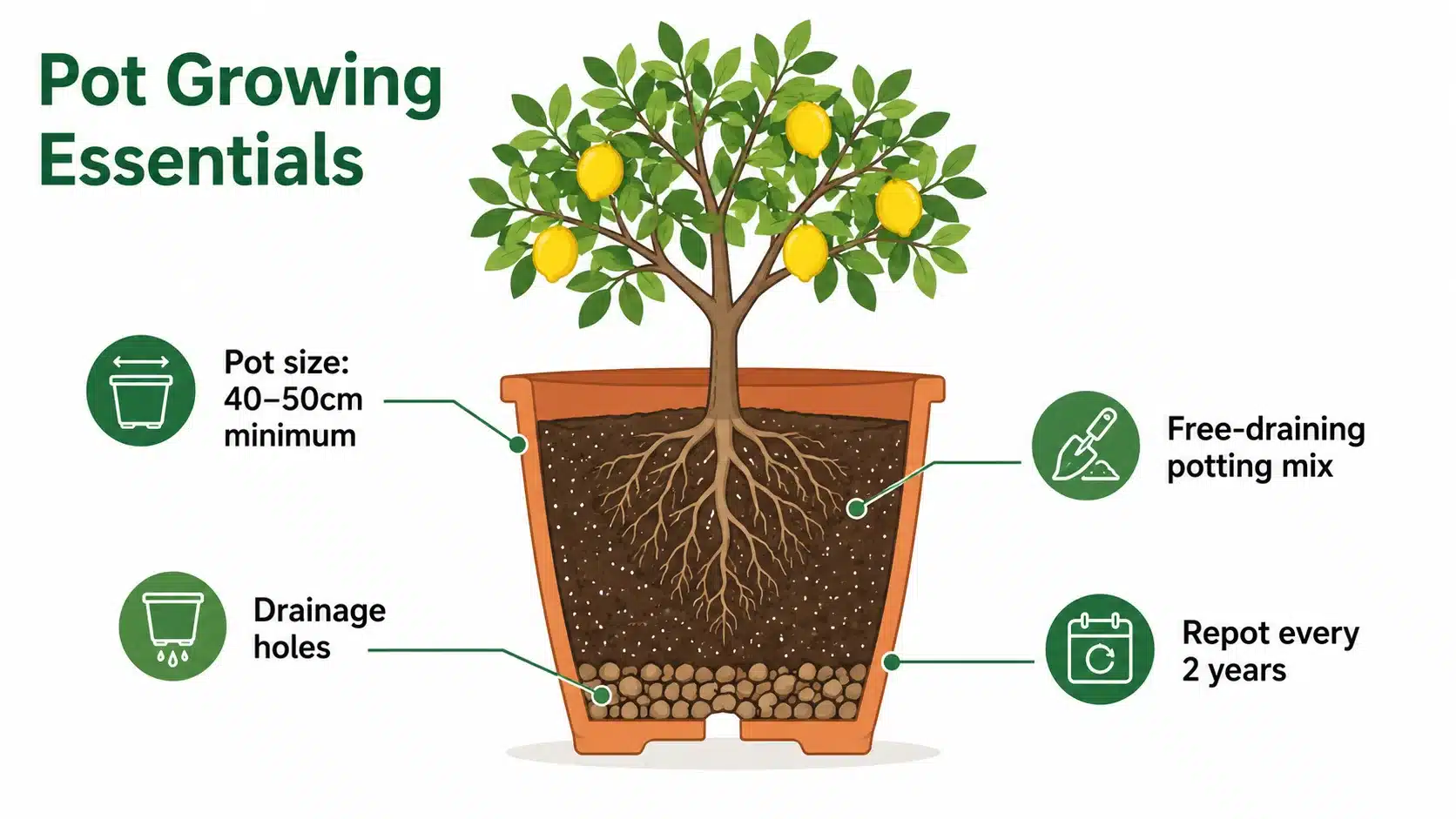
You don’t need a backyard to grow fruit — a sunny balcony, courtyard or even a large windowsill can support a surprising range of species, provided you choose the right variety and pot size from the start.
Citrus handles container growing better than almost any other fruit tree category, thanks to a wide range of dwarf and semi-dwarf grafted varieties bred specifically for pots. Some tropical species — particularly dwarf banana and certain avocado varieties — also do reasonably well in large containers, though they’re more demanding about consistent warmth and root space than citrus is. Deciduous fruit can be grown in pots too, but chill-hour requirements and eventual root size make it a less forgiving option long-term than citrus.
The general rules that apply across categories: start with a pot at least 40–50cm in diameter for anything beyond a first-year sapling, use a free-draining potting mix rather than garden soil, and expect to repot every couple of years as the tree grows. Our dedicated guide to dwarf fruit trees for pots in Australia goes deeper on variety selection across categories, and if citrus specifically is your focus, best citrus trees for pots in Australia breaks it down by climate zone.
Fruit Tree Care Basics: Sun, Soil, Water and Fertiliser
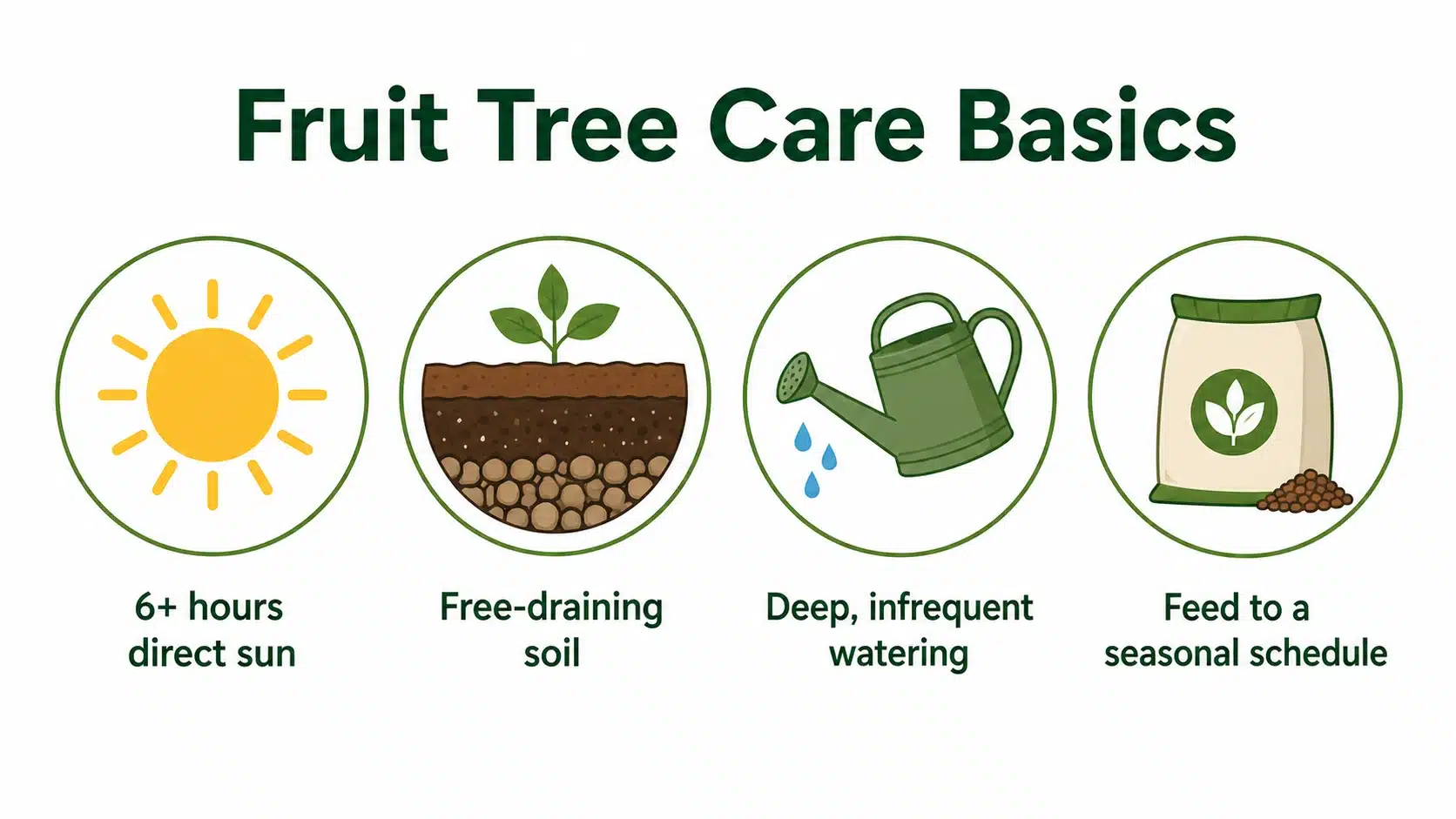
Care requirements vary by category, but a few fundamentals hold true across nearly every fruit tree and tropical plant grown in Australian backyards.
Sun: aim for a minimum of six hours of direct sun a day. Fewer than that and you’ll typically see reduced flowering and fruit set even on an otherwise healthy tree, regardless of category.
Soil: free-draining soil is non-negotiable. Waterlogged roots are one of the fastest ways to kill a fruit tree, particularly citrus and stonefruit. If your soil is heavy clay, raised beds or large containers are often more reliable than fighting the ground you’ve got.
Water: deep, less-frequent watering generally beats a light daily sprinkle, encouraging roots to grow down rather than staying shallow. Newly planted trees need considerably more consistent moisture than established ones, particularly through their first summer.
Fertiliser: this is the area with the most variation between categories and seasons, and it’s genuinely worth getting right rather than guessing — under- or over-fertilising both show up as poor fruiting, and the correction takes a full season to fix. Rather than give a rough, one-size-fits-all rule here, our full fruit tree fertiliser schedule breaks down exact timing and rates across citrus, deciduous, and subtropical fruit trees, for both young and mature trees, across Australia’s climate zones.
Pollination and Fruit Set
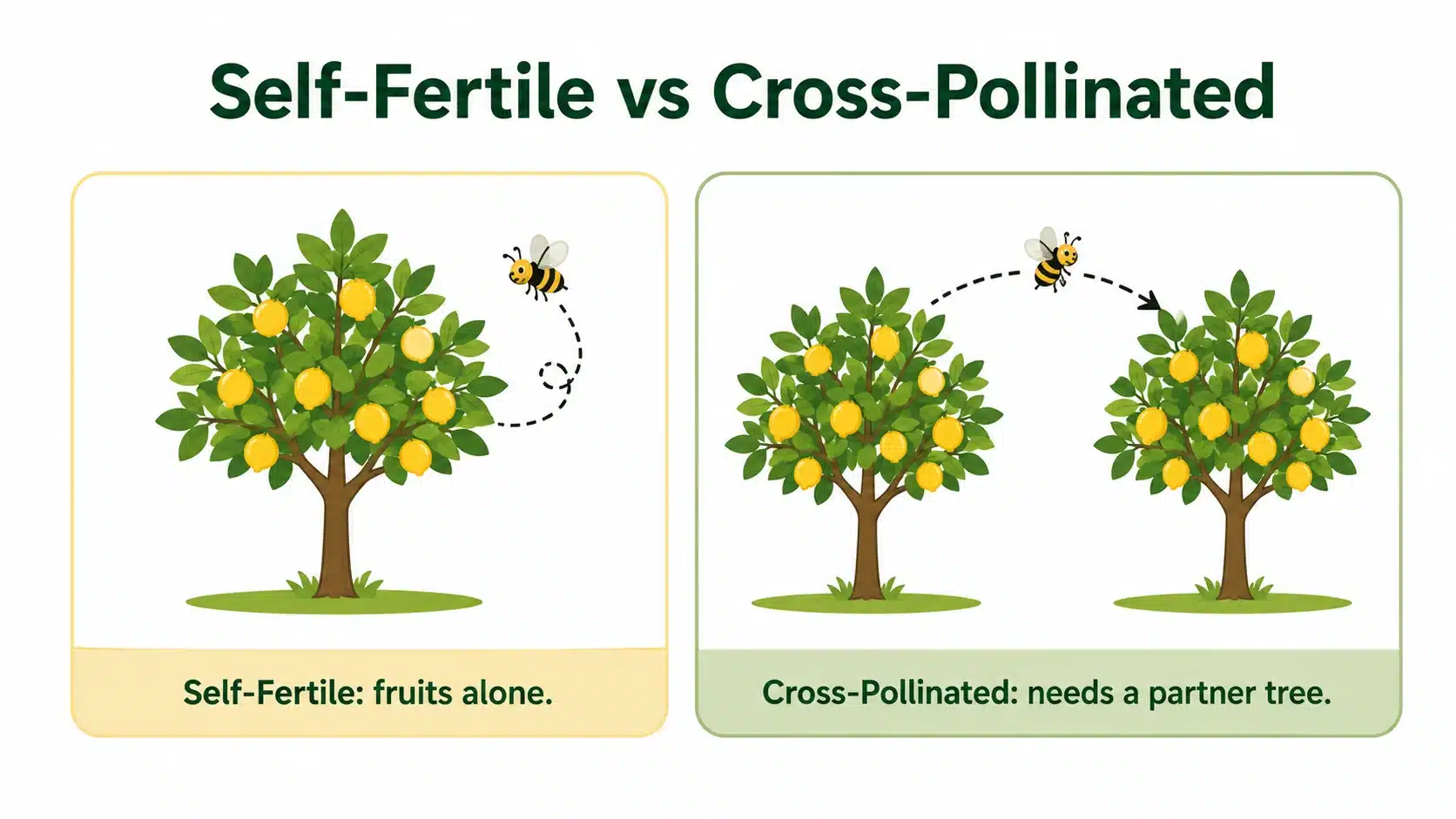
Not every fruit tree needs a second tree nearby to produce fruit, but plenty do — and finding this out after you’ve already planted a lone tree is one of the more common (and avoidable) disappointments in home fruit growing.
Many citrus varieties, along with a number of stonefruit cultivars, are self-fertile and will set fruit on their own. Others — many apple varieties in particular, along with some stonefruit — need a compatible second variety flowering at the same time to cross-pollinate. Bees do most of the physical work, which is one more reason a sunny, sheltered position that attracts pollinators tends to outperform a shaded one even when soil and water are equal. Before you commit to a single tree of any given variety, it’s worth checking compatibility — our fruit tree pollination chart for Australia lays out which common varieties are self-fertile and which need a pollinator partner.
It’s worth understanding just how much weight bee activity carries here — BeeAware tracks pollinator reliance across Australian fruit crops, and for many varieties, poor bee activity is a more common cause of low fruit set than any care mistake a grower makes.
When Will Your Fruit Tree or Tropical Plant Actually Fruit?
This is the question every new grower eventually asks, usually somewhere around year two, standing in front of a healthy-looking tree with no fruit on it.
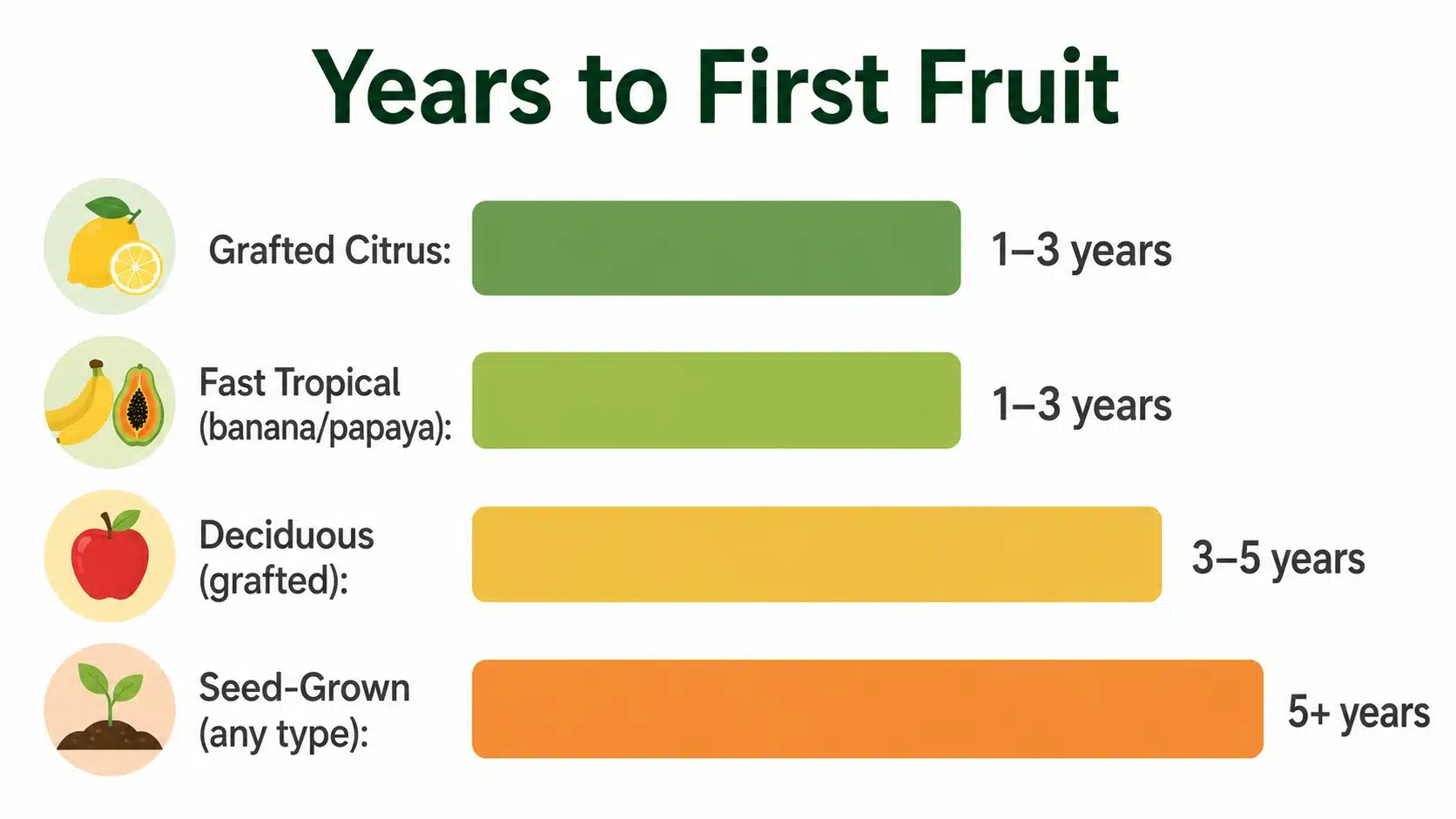
Timeframes vary considerably by category and by how the tree was propagated. Grafted citrus is among the fastest, often producing a first, modest crop within one to three years. Fast-growing tropical species like banana and papaya can fruit within a similar window in the right climate. Deciduous fruit trees and some tropical species grown from seed rather than grafted onto established rootstock typically take longer — sometimes considerably longer — and seed-grown trees in particular can take years longer than a grafted equivalent of the same variety, with no guarantee the fruit will match the parent tree at all.
A tree that’s well past its expected first-fruit window without producing anything usually points to one of a handful of causes: insufficient sun, a missing pollinator partner, incorrect or inconsistent fertilising, or — particularly for deciduous trees in warmer zones — simply not enough winter chill. Our fruit tree harvest and fruiting guide for Australia is built specifically to work through this: it covers a full cross-species fruiting and harvest calendar, a years-to-first-fruit comparison across grafted and seed-grown trees, and a dedicated troubleshooting section for exactly this “why isn’t my tree fruiting” scenario. If you’re wondering when to actually pick what you’ve grown, when to harvest fruit trees in Australia covers timing and ripeness cues once fruit does appear.
Conclusion
Every recommendation in this guide comes back to the same starting point: match the tree to your climate zone first, and choose the specific variety second. Get that order right and citrus, tropical fruit, deciduous trees and backyard classics like feijoa and mulberry are all genuinely achievable in an Australian garden — get it backwards, and no amount of fertiliser or careful watering will make up the difference.
From here, where you go next depends on what you’re growing. If citrus is your starting point, our citrus tree guide for Australia covers variety selection and care in full. If you’re drawn to mango, papaya, banana or another tropical species, our tropical fruits guide will tell you exactly how realistic that is for your zone. And if your question is really about timing — when to expect fruit, or why a tree you already have isn’t producing — our harvest and fruiting guide is the place to go next.
Frequently Asked Questions
What’s the easiest fruit tree to grow in an Australian backyard?
Citrus is generally the most forgiving starting point for most of the country, thanks to its wide climate tolerance and suitability for pots. Mulberry and feijoa are close runners-up, particularly in cooler climates where tropical fruit isn’t an option.
Can I grow tropical fruit trees if I don’t live in the tropics?
Some, yes — particularly in pots, greenhouses or warm, sheltered microclimates — but not all tropical fruit responds equally well to this workaround. Species like banana are more flexible; others, like soursop, are genuinely difficult outside subtropical or tropical zones.
What’s the difference between subtropical and tropical fruit trees?
Tropical fruit generally needs consistent warmth and humidity year-round with no frost at all, while subtropical fruit tolerates some seasonal cooling and the occasional light frost. The distinction matters most for gardeners in zones like Sydney or Perth, who sit right on the boundary.
Do fruit trees need a pollinator tree, or are they self-fertile?
It depends entirely on the variety. Many citrus and some stonefruit are self-fertile, while a number of apple and other stonefruit varieties need a second, compatible tree nearby to set fruit.
How long does it take for a fruit tree to produce its first crop?
Grafted citrus and fast tropical species can fruit within one to three years; deciduous trees and seed-grown trees of any category typically take longer, sometimes considerably so.
Can fruit trees and tropical plants be grown in pots?
Yes, particularly citrus and some dwarf tropical varieties. Deciduous fruit can also be grown in containers but is generally less forgiving long-term as the tree’s root system grows.
How much sun and space do fruit trees need?
Most need at least six hours of direct sun daily. Space requirements vary hugely by category and rootstock, from a large pot on a balcony through to several metres of clearance for a full-sized, in-ground tree.
What’s the biggest mistake people make when choosing a fruit tree in Australia?
Choosing based on taste or appearance before checking whether the tree actually suits the local climate zone — chill hours, frost risk and humidity are the factors that determine whether a tree fruits at all, regardless of how well it’s cared for afterwards.
2 Comments