

Bonsai Asam Jawa: Care, Styles & Growing Guide
Introduction
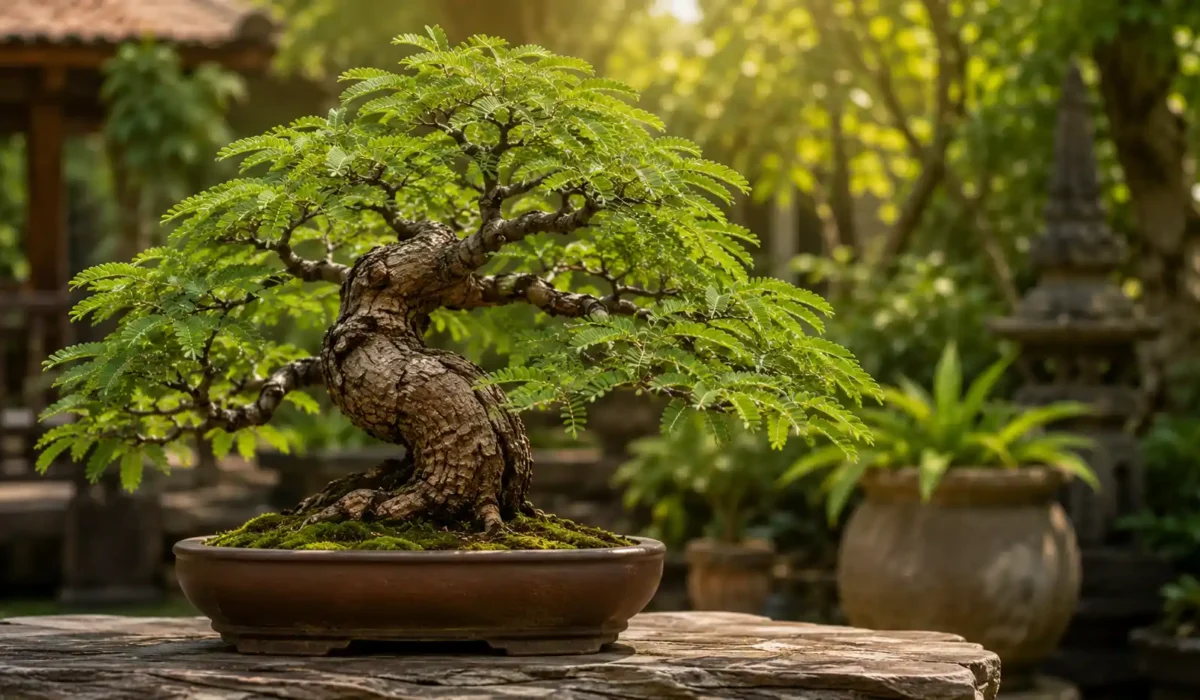
Bonsai asam jawa, also known as tamarind bonsai or asem jawa bonsai, is the miniature cultivation of the tropical tamarind tree (Tamarindus indica) using traditional bonsai techniques. It is valued for its tiny compound leaves, thick textured bark, strong trunk character, and ability to develop an aged appearance in a small form. Unlike Japanese bonsai species such as pine and juniper, tamarind is a tropical fruiting tree widely appreciated in Indonesian, Malay, and South-East Asian bonsai communities. This guide explains bonsai asam jawa care, styling methods, growing techniques, repotting, value, and common questions, including advice for growers in warm Australian climates.
By Elemo Baker | Plant Care & Gardening Expert
Last Updated: July 2026
Quick Summary
- Bonsai asam jawa (Tamarindus indica) is a tropical bonsai species known for fine foliage, rugged bark, and natural miniature proportions.
- It performs well in informal upright, slanting, and forest-style bonsai designs.
- Tamarind bonsai prefers full sun, warm temperatures between 15–29°C, and moist but well-draining soil.
- Repotting is generally needed every 1–3 years depending on the tree’s age and root growth.
- Record-breaking bonsai sales can reach millions, but tamarind bonsai value usually depends on age, trunk quality, styling, and care history.
What Is Bonsai Asam Jawa (Tamarind Bonsai)?
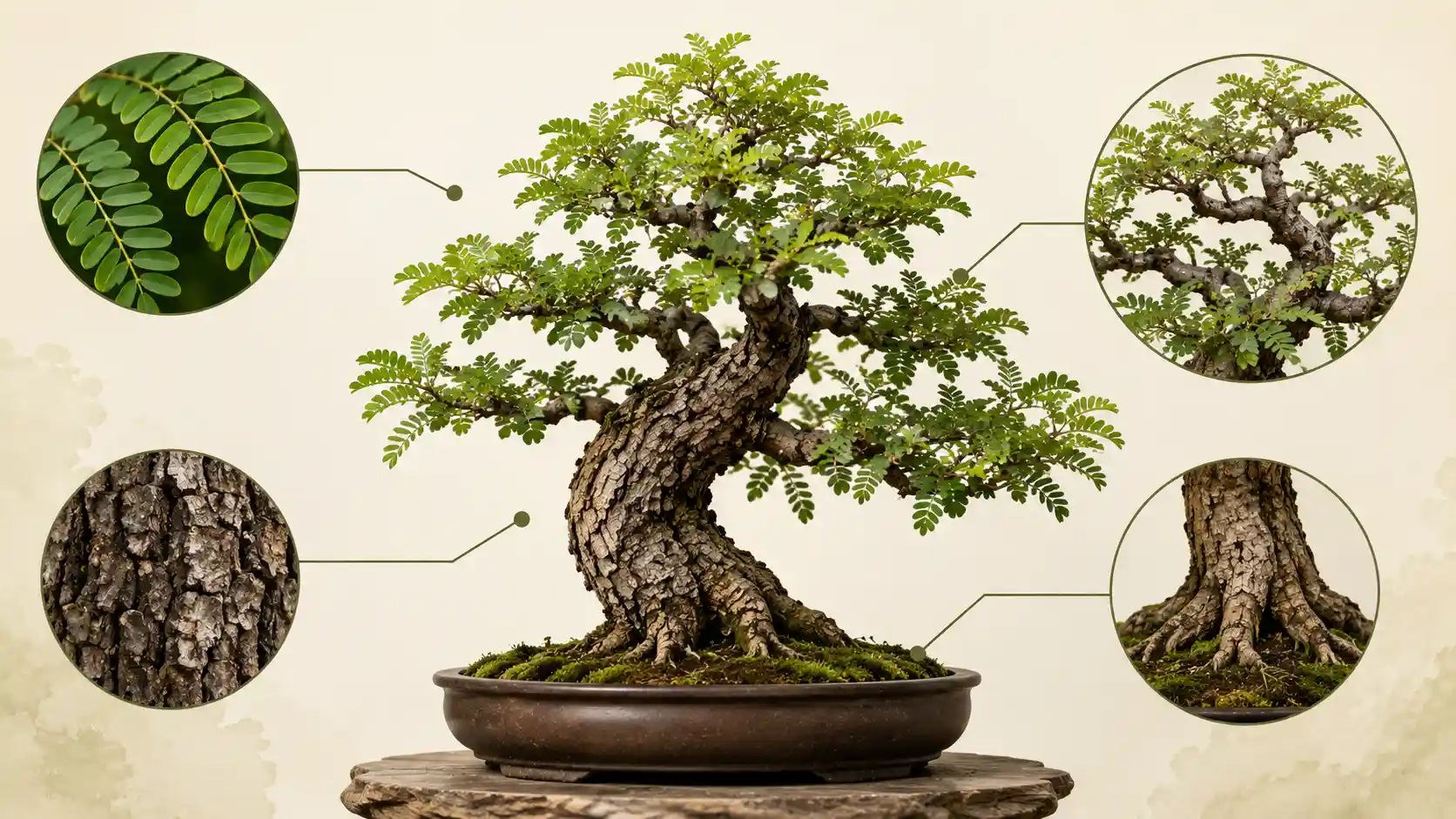
Bonsai asam jawa is the Indonesian and Malay name commonly used for a tamarind bonsai created from Tamarindus indica, a tropical evergreen or semi-evergreen tree belonging to the Fabaceae (legume) family. The species naturally grows across tropical regions and is cultivated for its edible pods, attractive foliage, and durable wood. Tamarind is also valued as an edible tropical tree, making it a suitable addition to broader collections of fruit trees and edible plants for Australian gardens, especially in warm climates where tropical species can thrive.
The tamarind tree is especially suitable for bonsai because it naturally develops many characteristics desired in miniature trees:
- Small leaflets arranged in delicate compound leaves
- Strong branching ability after pruning
- Thick, rugged bark that gives an aged appearance
- Good tolerance of dry periods once established
- A strong trunk structure suitable for dramatic styling
Regional names include asam jawa, asem jawa, and asem, particularly in Indonesian and Malay gardening communities. The word “jawa” refers to Java, where tamarind has long been used as a cultural and culinary plant.
Unlike many traditional Japanese bonsai species that tolerate cold winters, tamarind is a warm-climate bonsai. It is particularly suitable for tropical and subtropical growers, including gardeners in northern and coastal parts of Australia.
Why Tamarind Suits Bonsai Cultivation
Tamarind’s natural growth characteristics make it a rewarding bonsai subject. Its leaves reduce well with proper pruning, allowing the tree to maintain realistic proportions. The bark also becomes rough and mature-looking as the tree ages, creating the appearance of a much older specimen.
In our experience growing tropical bonsai species, tamarind responds well when growers focus on developing trunk thickness before heavily refining branches. Allowing controlled growth periods helps create a stronger bonsai structure.
Key advantages include:
- Excellent trunk development: Tamarind can develop a powerful base and textured bark.
- Good pruning response: New shoots emerge readily after trimming.
- Natural tropical appearance: The fine foliage creates a balanced miniature canopy.
- Fruit potential: Mature bonsai may produce flowers and fruit when grown under suitable conditions.
However, growers should remember that tamarind is not a naturally slow-growing tree. Regular pruning and root management are needed to maintain bonsai proportions.
Common Style Names and Terms (Gaya Bonsai Asem Jawa)
In Indonesian bonsai communities, tamarind styling is often described using local terms such as gaya bonsai asem jawa. These styles follow traditional bonsai principles while adapting to the natural growth habit of the tree.
Common terms include:
- Informal upright (Moyogi): A curved trunk style that reflects natural tree growth.
- Slanting (Shakan): A design where the trunk leans strongly to one side.
- Literati (Bunjingi): A minimal style focusing on elegant trunk movement and simplicity.
- Forest/group style (Yose-ue or hutan): Multiple trees planted together to represent a natural woodland scene.
Popular Styles for Bonsai Asam Jawa (Gaya Bonsai Asem Jawa)
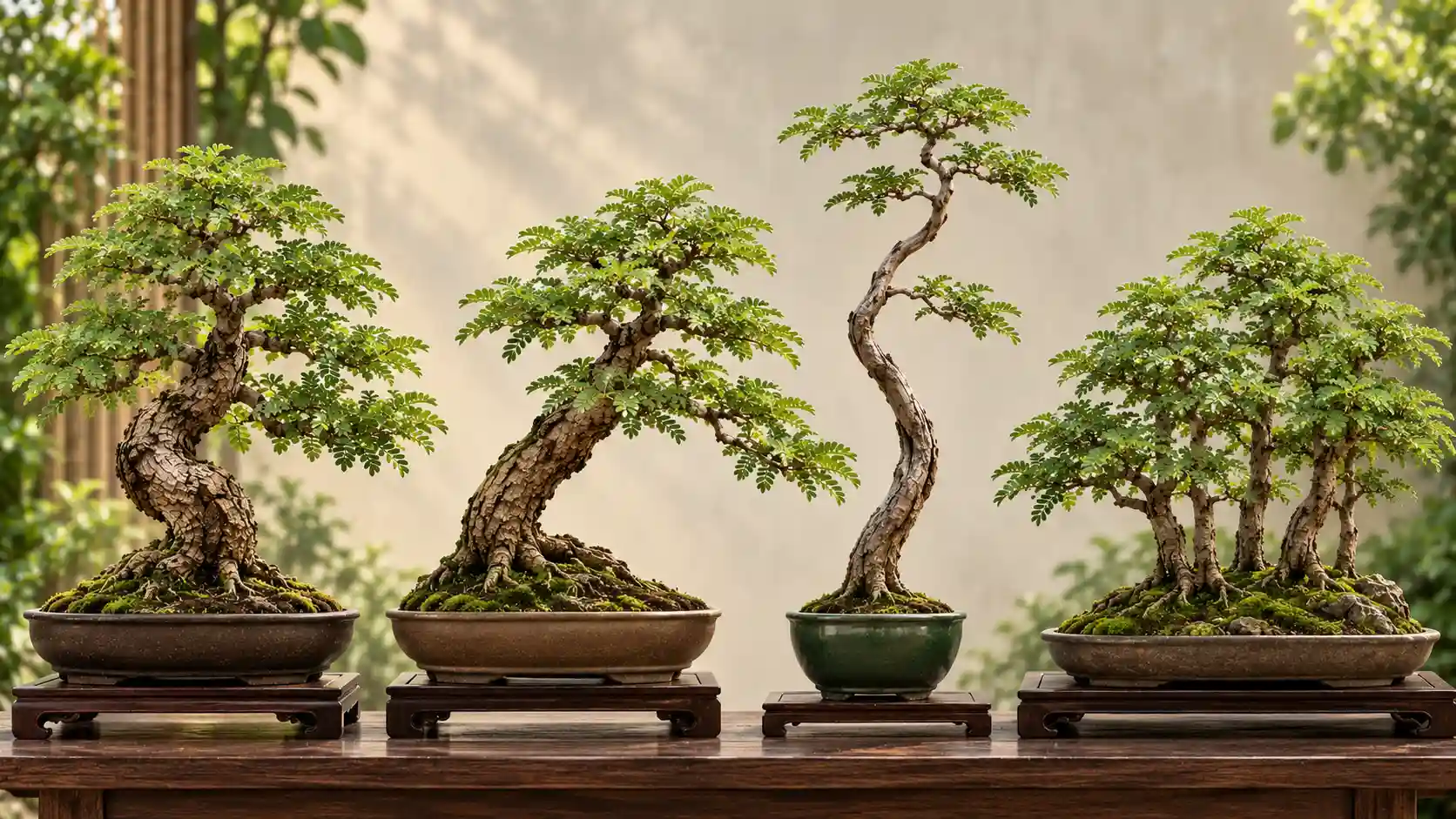
Bonsai asam jawa works well with styles that highlight its rugged trunk and fine foliage. The species naturally develops strong taper and branch density, making it suitable for both beginner and advanced bonsai designs.
Informal Upright Style
The informal upright style is one of the most suitable choices for tamarind bonsai. The trunk gently curves while maintaining an upright direction, creating a natural tree-like appearance.
This style works well because mature tamarind trees often have irregular but balanced growth patterns. Branches can be positioned to create depth while maintaining a realistic canopy.
Slanting Style
The slanting style uses a trunk that grows at an angle, often representing a tree shaped by wind or environmental conditions.
Tamarind’s strong trunk and flexible young branches allow growers to create attractive movement during early training stages.
Literati Style
Literati styling focuses on simplicity, movement, and an elegant trunk line. While less common for tamarind, specimens with interesting trunk shapes can be adapted to this design.
The naturally textured bark can create contrast against the minimal foliage arrangement.
Group or Forest Style
Forest-style bonsai uses several tamarind trees planted together at different heights. This approach highlights the species’ small leaves and creates a natural tropical woodland appearance.
When creating a forest planting, growers should consider:
- Different trunk thicknesses for depth
- Uneven tree heights for realism
- Open spaces between branches for airflow
Tropical species with naturally smaller foliage, such as pigeon pea bonsai, can also be styled using similar principles of pruning, branch selection, and canopy development.
The Rule of 3 in Bonsai Design
The Rule of Three is a traditional bonsai design principle that divides the tree visually into three main sections: lower, middle, and upper trunk areas. It helps create balance, depth, and natural movement rather than a flat arrangement of branches.
For bonsai asam jawa, this principle helps organise the canopy and prevent excessive branching in one area.
The lower section usually contains the strongest branch because it establishes visual stability. Middle branches create depth, while upper branches form the tree’s crown.
| Trunk Third | Branch Placement | Purpose | Visual Effect |
| Lower third | Strong primary branch placement | Creates foundation and balance | Gives the tree stability and mature appearance |
| Middle third | Secondary branches placed alternately | Builds depth and structure | Creates natural spacing and movement |
| Upper third | Smaller branches forming canopy | Completes the crown | Produces a refined miniature tree shape |
The Rule of Three should guide design decisions rather than act as an unchangeable rule. Natural-looking bonsai often require adjustment based on trunk movement, species characteristics, and individual tree structure.
How to Grow Bonsai Asam Jawa From Seed
Growing bonsai asam jawa from seed (bonsai asem jawa dari biji) is a rewarding process, but it requires patience because developing a mature bonsai trunk takes several years. Tamarind seeds usually germinate successfully when provided with warmth, moisture, and suitable growing conditions.
Before sowing, tamarind seeds benefit from preparation because the hard outer seed coat can slow water absorption. Many growers gently scarify the seed surface or soak seeds in warm water for several hours before planting.
A suitable seed-starting process includes:
- Use a free-draining substrate such as a mixture of coarse sand, perlite, and quality potting material.
- Keep the growing medium consistently moist but avoid waterlogging.
- Maintain warm temperatures around 20–30°C for better germination.
- Provide humidity during early growth while ensuring airflow.
Seedlings usually develop quickly during warm seasons. In the early years, the focus should be on trunk thickening rather than creating a finished bonsai shape. Allowing the young tamarind to grow freely before heavy pruning helps create a stronger base and better trunk movement.
In practical bonsai cultivation, growers often spend several years developing trunk thickness before beginning detailed branch refinement. A trainable bonsai structure may take multiple growing seasons depending on climate, feeding, and the desired final size.
Care Guide for Tamarind Bonsai
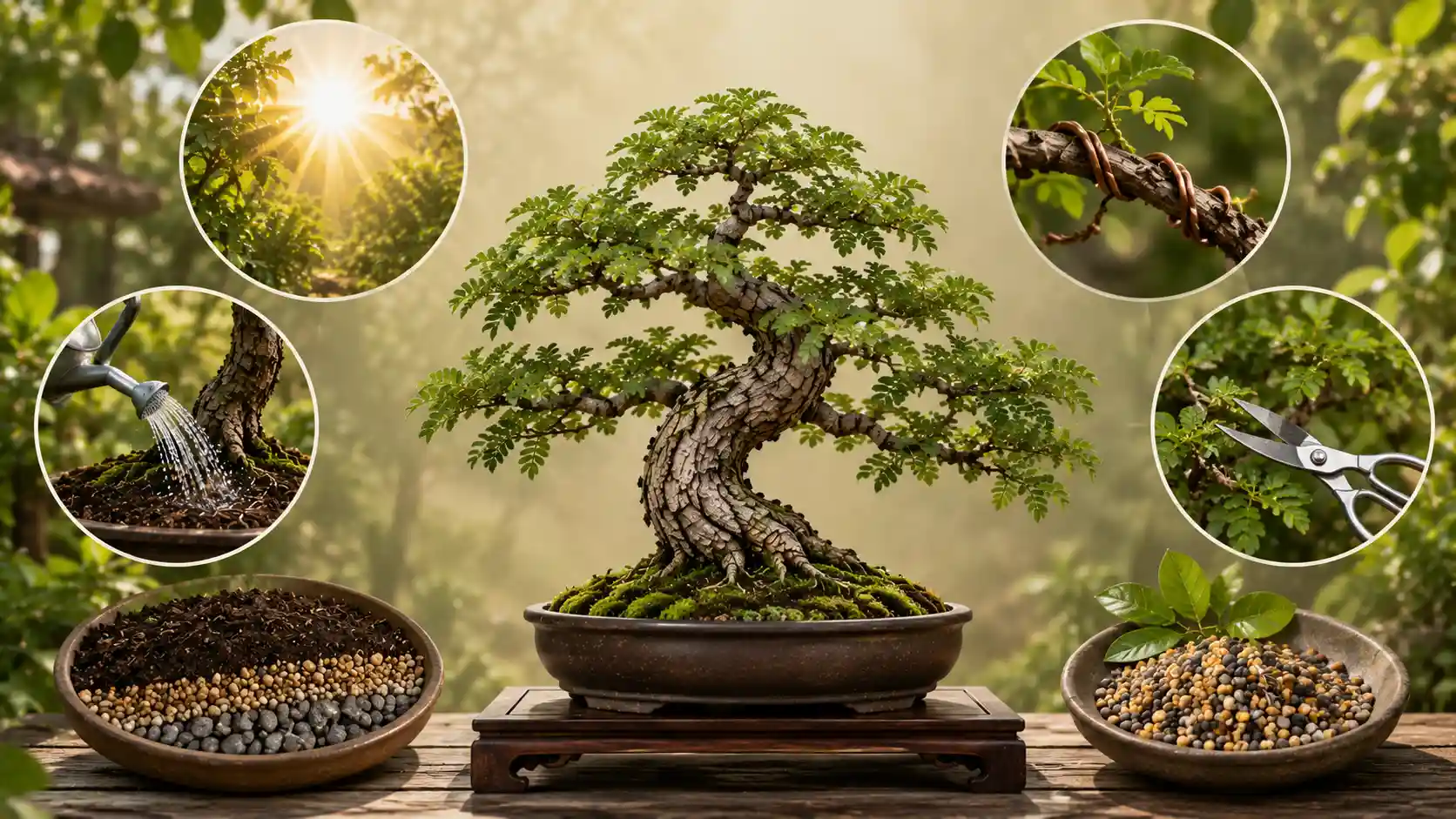
Bonsai asam jawa requires tropical growing conditions, regular maintenance, and careful balance between vigorous growth and bonsai control. Although tamarind is considered relatively hardy, it performs best when its natural environment is closely replicated.
Watering
Tamarind bonsai prefers soil that remains slightly moist but drains quickly. The roots need oxygen, so constantly wet soil can lead to root problems.
Watering requirements vary depending on:
- Temperature
- Pot size
- Soil type
- Season
- Amount of sunlight received
During hot Australian summers, bonsai asam jawa may require more frequent watering because shallow bonsai pots dry out faster than garden soil.
A practical watering approach is:
- Check the top layer of soil daily.
- Water thoroughly when the surface begins to dry.
- Allow excess water to drain completely.
- Reduce watering frequency during cooler periods.
Although mature tamarind trees tolerate some drought, bonsai specimens have limited root space and cannot withstand prolonged dryness.
Light Requirements
Tamarind bonsai thrives in full sun because it naturally grows in tropical regions with strong sunlight. Bright light encourages compact foliage, stronger branches, and healthier overall growth.
The ideal conditions include:
- Several hours of direct morning or afternoon sunlight
- Protection from extreme midday heat during heatwaves
- Gradual acclimatisation when moving an indoor-grown tree outdoors
In very hot climates, afternoon shade can prevent leaf scorch, especially for young trees growing in small pots.
Soil and Fertilising
A well-draining bonsai soil mix is essential because tamarind roots require both moisture and airflow.
A suitable mix may include:
- Akadama or similar bonsai substrate
- Pumice or perlite for drainage
- Organic material for nutrient retention
Fertilising should be focused on active growth periods. During warmer months, regular feeding supports leaf production, branching, and trunk development.
General fertilising guidelines:
- Feed more frequently during active growth.
- Reduce feeding during cooler dormant periods.
- Avoid excessive nitrogen, which can create large leaves and weak growth.
Pruning and Wiring
Pruning maintains the miniature form of bonsai asam jawa and encourages branching. Tamarind responds well to trimming because it produces new shoots after pruning.
Important pruning practices include:
- Remove unwanted shoots early.
- Maintain balance between roots and foliage.
- Avoid removing too much foliage at once.
- Allow some branches to strengthen before refinement.
Soft aluminium bonsai wire is commonly used for shaping young branches. Because tamarind bark can become attractive and textured with age, wire should be monitored carefully.
Remove wire before it begins cutting into the bark, as marks can remain permanently on the trunk and branches.
Climate Tolerance
Tamarind bonsai prefers tropical and subtropical climates. It grows best in warm conditions and may struggle in areas with prolonged frost or cold winters.
For Australian growers:
- Northern Australia and warm coastal areas are generally suitable.
- Cooler southern regions may require winter protection.
- Indoor growing is possible temporarily, but outdoor sunlight is usually better for long-term health.
As seasonal conditions change, growers should adjust watering and protection methods rather than maintaining the same routine throughout the year.
When to Repot Tamarind Bonsai
Tamarind bonsai should generally be repotted every 1–3 years depending on its age, root growth, and container size. Repotting refreshes the soil, improves drainage, and prevents the roots from becoming overcrowded.
The best time to repot is usually early spring, just before strong new growth begins. This timing allows the tree to recover quickly and rebuild fine feeder roots.
During repotting:
- Remove the tree carefully from the pot.
- Inspect roots for circling or damaged sections.
- Trim moderately rather than removing excessive roots.
- Replace old soil with fresh bonsai substrate.
| Tree Age | Repotting Frequency | Approach |
| Young tree | Every 1–2 years | More frequent root management to encourage healthy structure |
| Established bonsai | Every 2–3 years | Moderate root pruning and soil replacement |
| Mature specimen | Every 3+ years when needed | Minimal disturbance to preserve developed root system |
Is Tamarind Good for Bonsai? (Suitability Comparison)
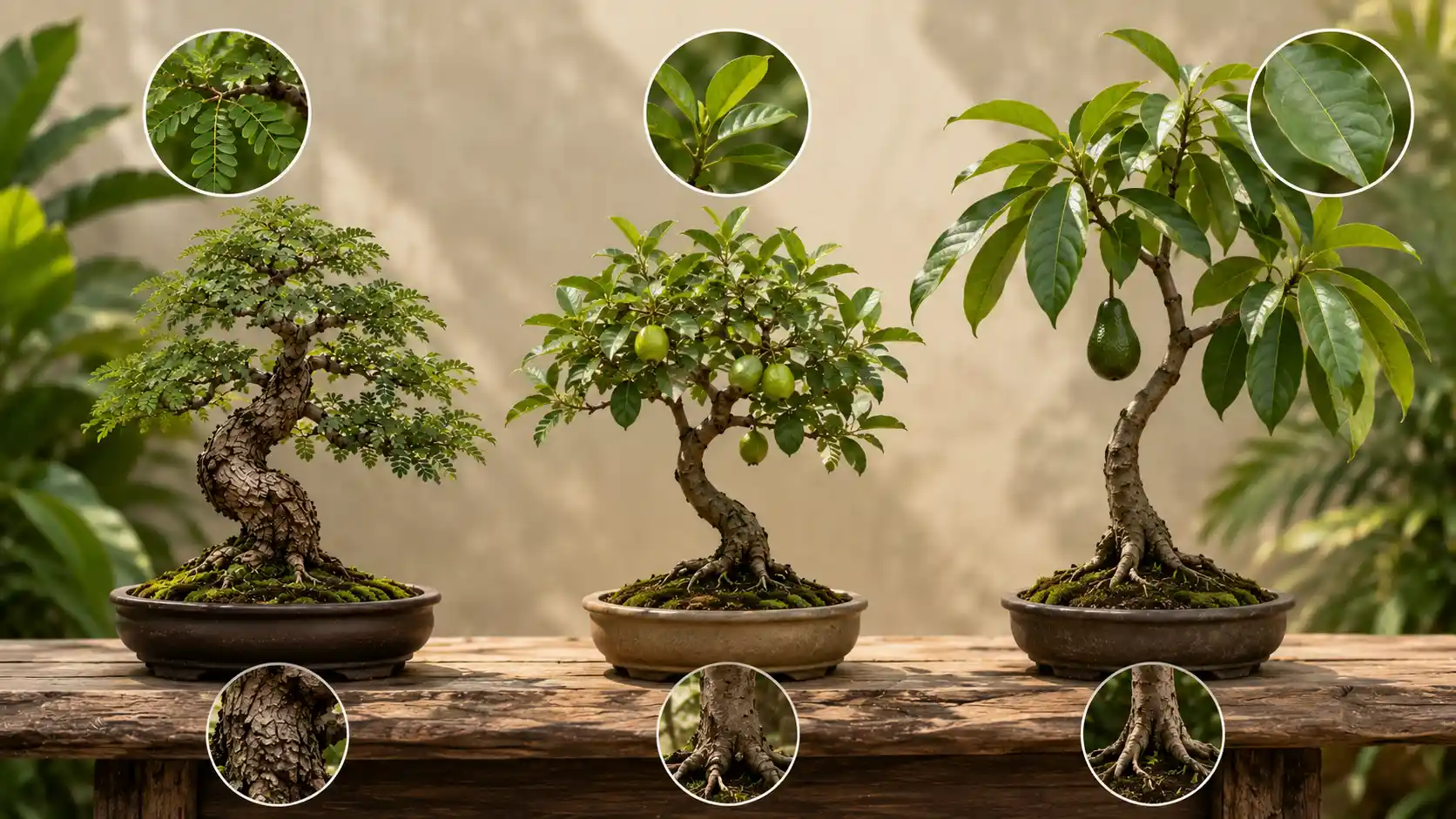
Yes, tamarind is a good bonsai candidate because it develops attractive bark, responds well to pruning, and has naturally small leaflets. It is especially suitable for growers who want a tropical bonsai with a rugged, aged appearance. Similar to tamarind bonsai, other fruiting species such as miniature mulberry trees can also be trained into compact forms while producing attractive foliage and seasonal fruit.
Compared with other fruiting bonsai options, tamarind offers a balance between hardiness and visual character.
Can I Bonsai a Guava Tree?
Yes, guava trees can be grown as bonsai. Guava (Psidium guajava) is popular because it develops attractive bark, produces flowers, and may produce small edible fruits.
However, guava usually has larger leaves than tamarind, requiring careful pruning and leaf management.
Can You Bonsai an Avocado?
Yes, avocado trees can technically be trained as bonsai, but they are more challenging. Avocado (Persea americana) naturally produces very large leaves and grows vigorously, making it difficult to maintain traditional bonsai proportions.
| Feature | Tamarind Bonsai | Guava Bonsai | Avocado Bonsai |
| Leaf size | Small leaflets, naturally suitable | Medium leaves | Very large leaves |
| Growth speed | Moderate to fast | Fast | Very vigorous |
| Trunk development | Strong and attractive | Good | Possible but challenging |
| Difficulty | Beginner to intermediate | Intermediate | Advanced |
Although avocado trees are challenging for traditional bonsai due to their large leaves, their foliage and other plant characteristics are often discussed separately in guides covering avocado leaves, uses, and safety considerations.
Common Problems With Tamarind Bonsai
Like all bonsai trees, tamarind can experience problems when growing conditions are unsuitable. Most issues can be corrected by improving watering, light, soil, or maintenance practices.
Yellowing Leaves
Yellow leaves are commonly caused by overwatering, poor drainage, or root stress.
Possible solutions:
- Allow soil to dry slightly between watering.
- Check drainage holes.
- Repot if roots show signs of rot.
- Remove damaged leaves.
Slow Growth
Slow growth may occur when tamarind receives insufficient sunlight, lacks nutrients, or grows in compacted soil.
Common fixes include:
- Increase sunlight exposure.
- Refresh old bonsai soil.
- Feed during active growing periods.
- Check whether roots have filled the pot.
Pest Issues
Common tamarind bonsai pests include aphids, scale insects, and spider mites.
Signs include:
- Sticky residue on leaves
- Distorted new growth
- Small insects on stems
- Fine webbing around foliage
Treatment options include:
- Washing leaves with water.
- Removing visible pests manually.
- Using appropriate horticultural oils or insect treatments when necessary.
Beginner Mistakes to Avoid With Bonsai Asam Jawa
Many beginners damage bonsai by applying techniques too aggressively. Tamarind is resilient, but it still requires balanced care. Understanding species-specific pruning and wiring techniques is important for all bonsai trees, including other bonsai subjects such as the locust bonsai tree.
Common mistakes include:
- Removing too much foliage during pruning.
- Leaving wire on branches for too long.
- Treating the Rule of Three as a strict formula rather than a design guide.
- Overwatering because bonsai pots appear small.
- Ignoring signs of root congestion.
Elemo Baker recommends focusing on healthy growth first before attempting advanced styling techniques. A strong tree always produces better bonsai results than a stressed tree forced into shape too quickly.
Value and Rarity of Bonsai Trees
The value of a bonsai depends on several factors, including age, trunk development, artistic design, species rarity, historical importance, and cultivation quality.
Most tamarind bonsai are valued based on:
- Trunk thickness and character
- Natural-looking structure
- Root formation
- Branch refinement
- Age and care history
While exceptional bonsai can reach very high prices, most tamarind bonsai remain much more accessible.
What Bonsai Tree Sold for $2 Million?
The famous bonsai tree reported to sell for around USD $2 million was a rare Japanese white pine specimen. Its value came from its age, artistry, reputation, and historical significance rather than simply its species.
What Is the Rarest Type of Bonsai?
Some of the rarest bonsai include ancient Japanese specimens with exceptional age, unique shapes, and documented histories. Rare species and trees with cultural importance may command higher values.
How Old Is the Oldest Bonsai?
Some bonsai specimens are believed to be several hundred years old, with certain famous Japanese trees estimated at more than 500 years.
How Much Is a 20-Year-Old Bonsai Tree Worth?
A 20-year-old bonsai can vary widely in price. Value depends on species, size, styling quality, health, and training history. A well-developed specimen may be worth hundreds or thousands of dollars, while simpler trees may sell for much less.
Tamarind Tree Folklore — Why Avoid Sleeping Underneath at Night
In some South and South-East Asian traditions, tamarind trees are associated with folklore about spirits or negative energy, leading to beliefs that people should avoid sleeping beneath them at night.
These ideas are cultural traditions rather than scientific facts.
From a practical perspective, sleeping under any dense-canopied tree overnight is generally discouraged because:
- Air movement may be reduced beneath thick foliage.
- Falling branches or debris may create hazards.
- Insects and wildlife activity may increase at night.
The tamarind tree itself is not scientifically proven to cause supernatural harm. Its reputation comes from cultural stories passed through generations.
Conclusion
Bonsai asam jawa is a distinctive tropical bonsai choice valued for its fine foliage, rugged bark, strong trunk development, and ability to create natural-looking miniature landscapes. With correct watering, sufficient sunlight, suitable bonsai soil, regular repotting, and thoughtful styling principles such as the Rule of Three, tamarind can become a beautiful long-term bonsai specimen.
For beginners, the best approach is to develop a healthy tree first and gradually progress into advanced shaping techniques. Understanding the natural growth habits of Tamarindus indica is the foundation for creating successful bonsai asam jawa.
FAQs
Can bonsai survive two weeks without water?
Most bonsai cannot survive two weeks without water, especially trees growing in shallow pots. Tamarind bonsai has some drought tolerance, but extended dryness can severely damage roots and foliage.
Can I cut all the leaves off my bonsai?
No, removing all leaves is usually harmful unless performed as a specialised technique on suitable species. Bonsai trees need foliage to produce energy through photosynthesis.
How many years does it take a guava tree to produce fruit?
A guava tree commonly produces fruit within 2–4 years from seed or sooner when grown from grafted plants under suitable conditions.
What fruit trees make good bonsai?
Good fruiting bonsai choices include tamarind, guava, citrus, pomegranate, olive, and fig because they respond well to pruning and can develop attractive miniature forms.
What not to do with bonsai?
Avoid overwatering, excessive pruning, poor lighting, leaving wire on too long, and repotting unnecessarily. Bonsai care requires balance rather than constant intervention.
When should I repot my tamarind bonsai?
The best time to repot tamarind bonsai is usually early spring before active growth begins. Young trees may need repotting every 1–2 years, while mature trees require less frequent disturbance.