

Butterscotch Sapodilla: Taste, Care & Growing Guide
Introduction
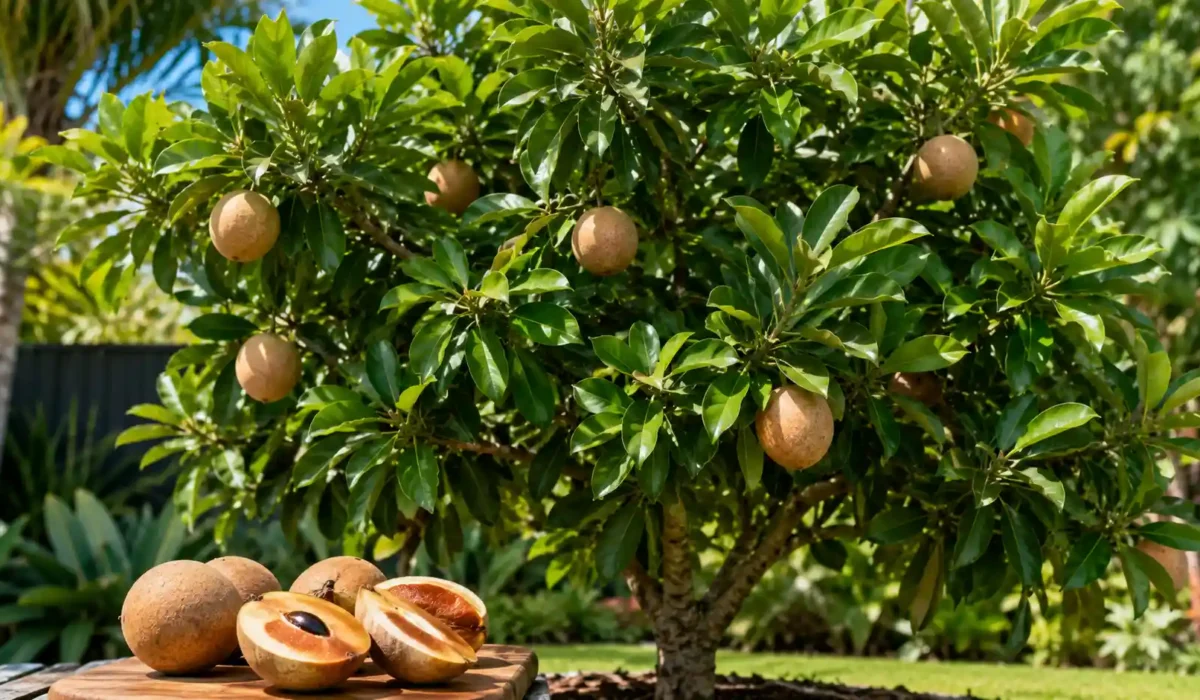
Butterscotch sapodilla is a named cultivar of the sapodilla tree (Manilkara zapota) valued for its exceptionally sweet fruit with a flavour similar to caramel, brown sugar, and butterscotch candy. This tropical evergreen fruit tree is becoming increasingly popular among Australian gardeners in warm, frost-free regions because of its creamy fruit texture, reliable production, and ability to grow in large containers. Unlike some traditional sapodilla varieties, butterscotch sapodilla is known for smoother flesh with less gritty texture. It is a self-pollinating cultivar that can provide fruit without requiring a second tree, making it suitable for home gardens.
Quick Summary
- Butterscotch sapodilla is a premium Manilkara zapota cultivar known for caramel-like sweetness and creamy fruit texture.
- The tree is self-pollinating, making it suitable for smaller home gardens.
- Grafted trees can produce fruit within 1–3 years under suitable growing conditions.
- It grows best in warm subtropical and tropical Australian climates with protection from frost.
- The slow-growing evergreen tree can also be maintained in large pots.
What Is Butterscotch Sapodilla?
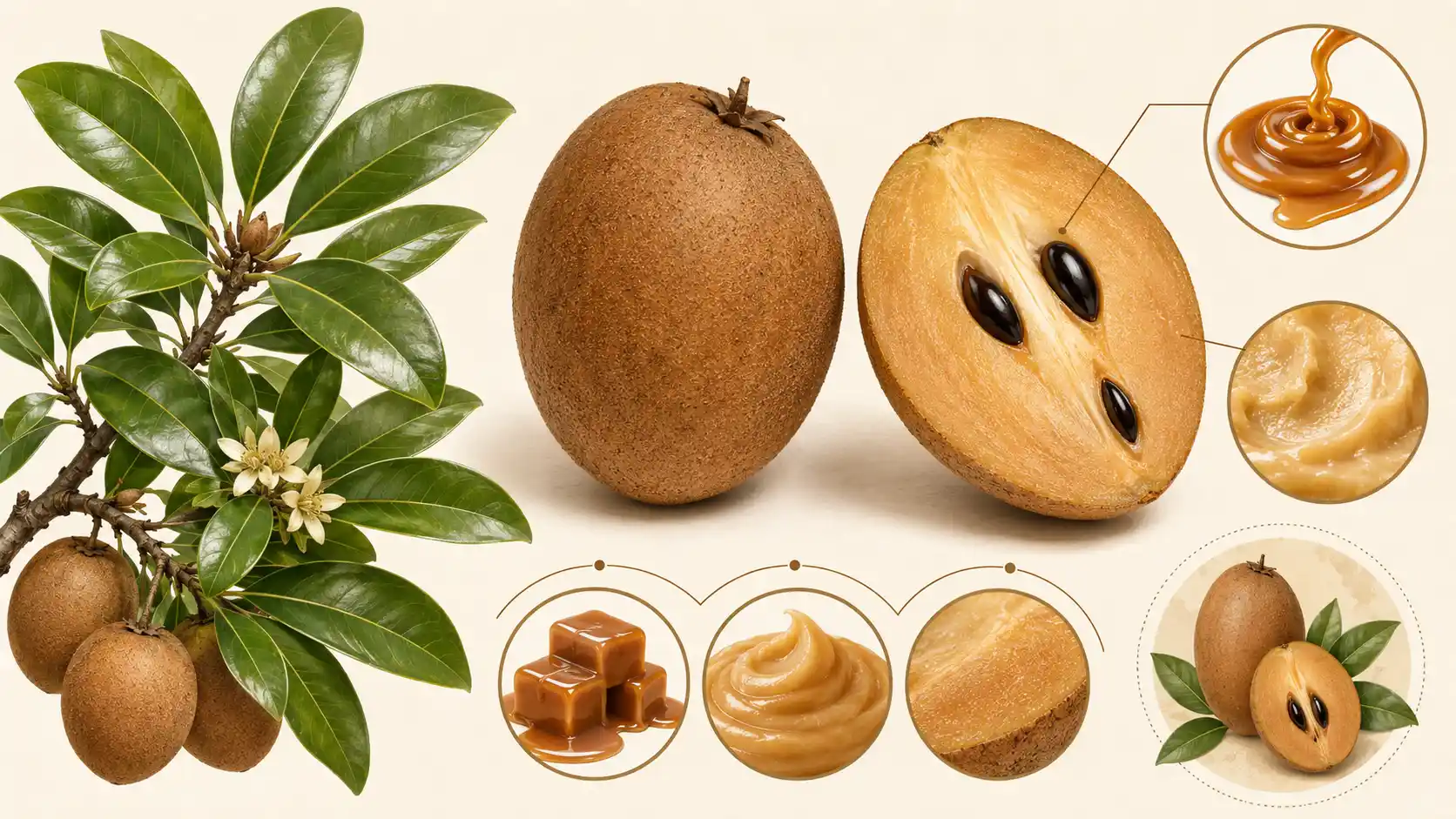
Butterscotch sapodilla is a selected cultivar of Manilkara zapota, commonly known as sapodilla, sapota, or chikoo. It is recognised for producing fruit with a rich dessert-like flavour and improved eating quality compared with many older sapodilla types. Butterscotch sapodilla belongs to the sapodilla species (Manilkara zapota), a tropical evergreen fruit tree widely cultivated for its sweet edible fruit.
This cultivar is often associated with breeding selections from tropical fruit growers, including work linked with Zill Nursery in Florida. The fruit typically has thin russet-brown skin, golden-brown flesh, and a smooth creamy texture when fully ripe.
The butterscotch tree grows as an evergreen tropical fruit tree with dense foliage and small white flowers. Its main attraction is the fruit, which combines sweetness, aroma, and a soft texture suitable for fresh eating.
How Butterscotch Sapodilla Differs From Standard Sapodilla
Butterscotch sapodilla differs from traditional sapodilla varieties in several important ways:
- Texture: Butterscotch usually has smoother, less gritty flesh compared with some older grainier sapodilla types.
- Sweetness: It offers a stronger caramel and brown sugar flavour profile.
- Fruit quality: Fruit size can vary depending on growing conditions and plant source.
Traditional sapodilla remains popular, but many gardeners prefer butterscotch sapodilla for its refined dessert-like taste.
Why Is It Called the “Tree That Smells Like Butterscotch”?
The phrase “tree that smells like butterscotch” comes from the unique sensory experience associated with this sapodilla cultivar. The small white flowers produce a mild sweet fragrance, while the ripe fruit develops aromatic compounds that resemble caramel, brown sugar, and butterscotch.
The tree itself does not release a strong candy-like smell from its leaves or bark. Instead, the name mainly refers to the flavour and aroma of the mature sapodilla fruit.
What Does Butterscotch Sapodilla Taste Like?
Butterscotch sapodilla has a sweet flavour often compared with brown sugar, caramel, vanilla, and a pear soaked in syrup. The ripe fruit has a creamy texture that makes it popular as a fresh dessert fruit. Gardeners who enjoy comparing tropical fruit flavours may also find Do Tropical Avocados Taste the Same? useful for understanding how climate influences fruit quality and taste.
The flavour profile includes:
- Caramel-like sweetness
- Mild vanilla notes
- Brown sugar richness
- Soft, creamy flesh
Some sapodilla varieties can have a slightly grainy texture due to natural compounds in the fruit, but butterscotch sapodilla is generally considered smoother.
Can You Eat the Skin of a Sapodilla?
No, sapodilla skin is generally not eaten. Although it is thin, the russet-brown skin has a rough texture and is usually peeled away before consuming the soft inner flesh.
Butterscotch Sapodilla vs Other Popular Sapodilla Varieties
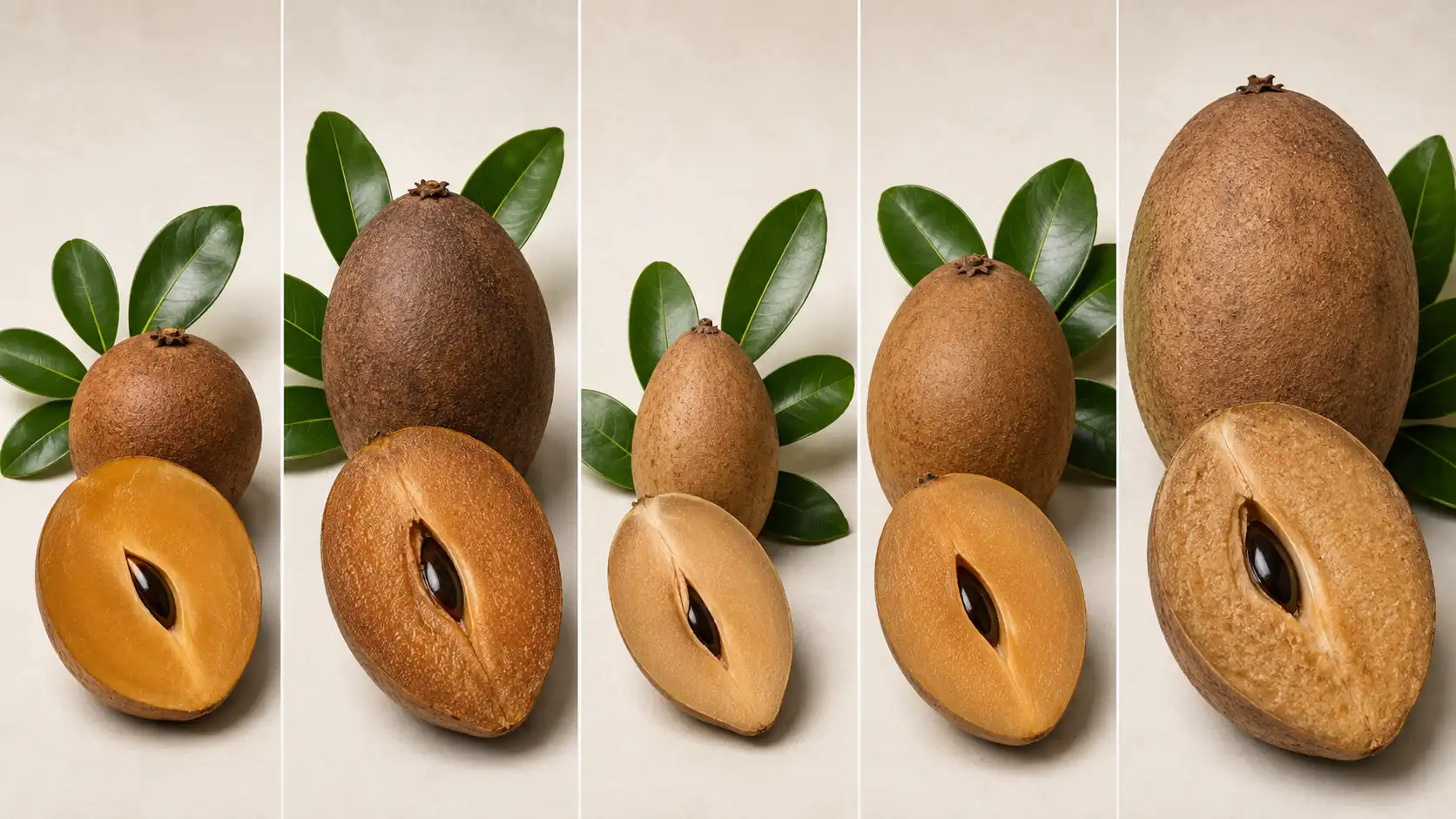
Different sapodilla varieties vary in sweetness, texture, fruit size, and growing behaviour.
| Variety | Fruit Size | Flavour Profile | Texture | Self-Pollinating |
| Butterscotch | Medium to large | Caramel, brown sugar, sweet | Smooth creamy | Yes |
| Hasya | Medium-large | Very sweet, classic sapodilla | Soft, slightly grainy | Generally yes |
| Makok | Medium | Sweet tropical flavour | Soft | Variable |
| Alano | Medium | Mild sweet flavour | Smooth to slightly grainy | Yes |
| Ox Sapodilla | Large | Rich traditional flavour | Dense flesh | Variable |
The “best” sapodilla variety depends on personal taste, climate, and available garden space. Butterscotch is often preferred by gardeners seeking a sweeter, smoother fruit.
Is Butterscotch Sapodilla Self-Pollinating?
Yes, butterscotch sapodilla is considered self-pollinating because its flowers contain both male and female reproductive structures close together. A single tree can produce fruit without another sapodilla nearby.
However, insect activity, especially bees, may improve pollination and increase fruit production. Not every sapodilla cultivar behaves identically, and some varieties may perform better when grown with another compatible tree.
Growing Butterscotch Sapodilla in Australian Gardens
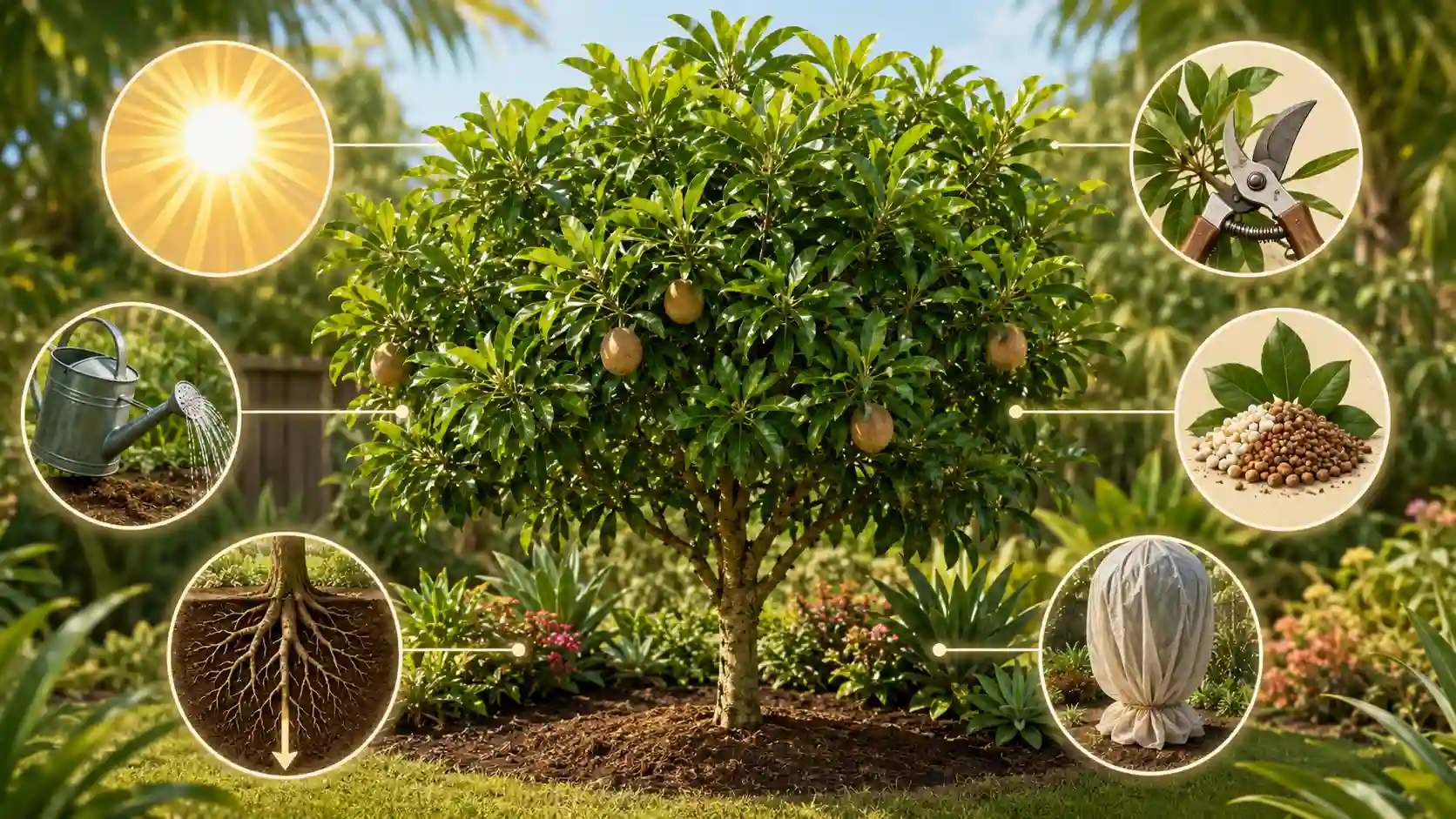
Butterscotch sapodilla grows best in warm Australian regions, especially subtropical and tropical coastal areas such as northern New South Wales and Queensland. Choosing the right fruit tree depends on climate, available space, and maintenance needs. Our guide to Fruit Trees for Australian Gardens: Complete 2026 Guide provides more options for different Australian regions.
It prefers:
- Warm temperatures
- Full sunlight
- Frost-free conditions
- Protection when young
In our experience growing tropical fruit trees, young sapodillas establish more successfully when they receive consistent moisture and protection from cold winds during their early years. Australian gardeners interested in growing more unusual edible trees can also explore options such as the Feijoa Tree Australia: Growing, Care, Varieties & Fruit Guide, which covers another productive fruit tree suited to home gardens.
Plant Size
A mature butterscotch sapodilla tree can reach approximately 9–15 metres or more in ideal tropical conditions. With regular pruning, home gardeners can maintain a more manageable height of around 3.5–4.5 metres.
Tree size depends on:
- Soil depth
- Climate
- Root space
- Container size
- Pruning routine
Growth Rate
Butterscotch sapodilla is a slow to moderate-growing evergreen tree.
Growth is influenced by:
- Warm temperatures
- Regular watering
- Soil quality
- Fertiliser availability
In tropical climates, flowering may occur throughout the year, while cooler regions usually experience stronger seasonal growth patterns.
Care Guide
Watering: Young trees need regular watering while establishing. Mature trees tolerate some drought but perform better with consistent moisture during fruit development.
Light: Full sun is recommended for healthy growth and better fruit production.
Soil: Use well-draining soil. Slightly acidic soil conditions are generally preferred.
Fertilisation: Apply a balanced fruit-tree fertiliser with micronutrients to support flowering and fruit quality.
Pruning: Sapodilla responds well to pruning, which helps control size and improves garden suitability.
Climate tolerance: Established trees handle heat and moderate dry periods but young plants are sensitive to frost.
Can Butterscotch Sapodilla Be Grown in Pots?
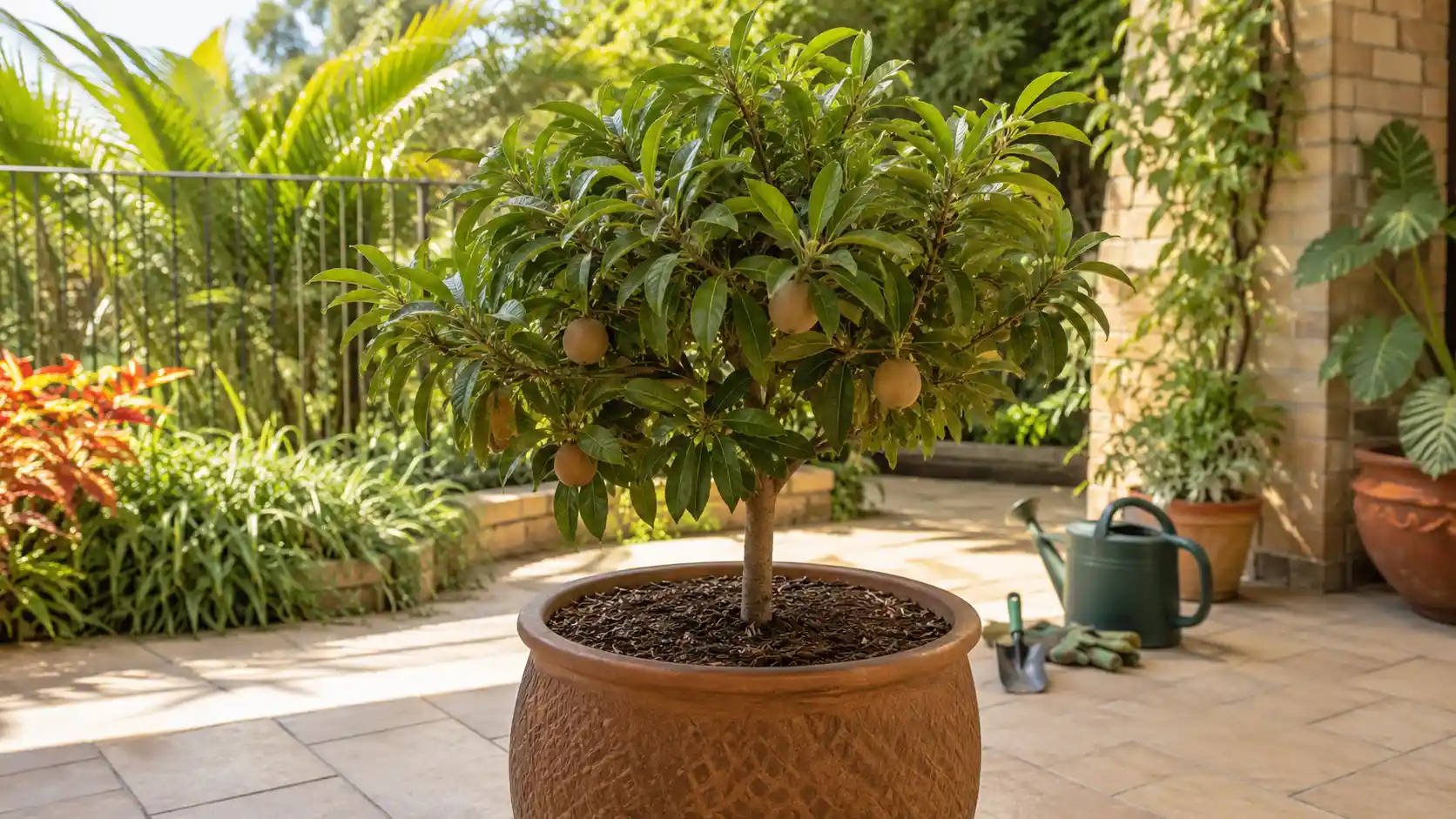
Yes, butterscotch sapodilla can be grown in large pots. Its naturally slow growth rate makes it more suitable for container growing than many large tropical fruit trees.
For container success:
- Use a large pot with drainage holes.
- Choose a quality fruit-tree potting mix.
- Repot when roots become crowded.
- Prune regularly to maintain size.
Container-grown trees remain smaller and may produce less fruit than trees planted in the ground.
What Is the Best Fertiliser for a Sapodilla Tree?
A balanced fruit-tree fertiliser containing nitrogen, phosphorus, potassium, and trace minerals is suitable for sapodilla trees.
General recommendations include:
- Fertilising during active growth periods.
- Providing micronutrients such as magnesium and iron if deficiencies appear.
- Avoiding excessive nitrogen, which can encourage leaves instead of fruit.
Australian gardeners commonly fertilise during warmer growing months when the tree is actively developing.
How Many Years Does It Take for a Sapodilla Tree to Bear Fruit?
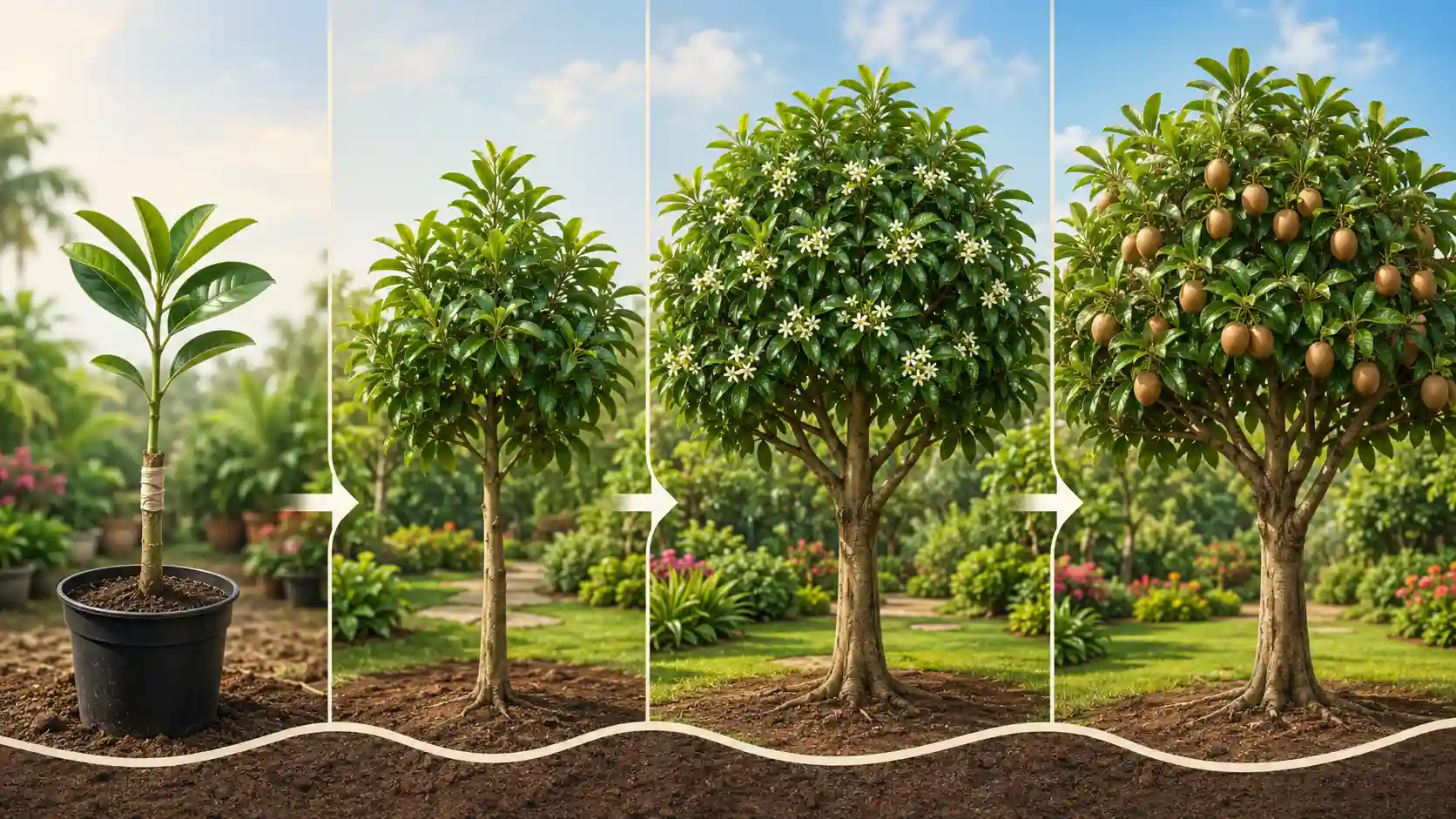
A grafted sapodilla tree usually takes around 1–3 years to produce fruit, depending on its size at planting and growing conditions. Seed-grown trees generally take much longer and may require several years before fruiting. Like sapodilla, other long-term fruiting trees such as Mulberry Varieties Australia: Best Types, Care & Fruiting can reward gardeners with reliable seasonal harvests once established.
This relatively early fruiting period is one reason grafted sapodilla trees are preferred by home gardeners.
Does Sapodilla Ripen After Picking?
Yes, sapodilla ripens after picking. Fruit is normally harvested while firm and allowed to soften at room temperature.
A ripe sapodilla usually:
- Feels slightly soft when pressed.
- Develops stronger sweetness.
- Loses some firmness.
Picking fruit too early can result in poor flavour development.
Common Problems When Growing Butterscotch Sapodilla
Fruit Drop or Failure to Set
Fruit drop may occur due to poor pollination, water stress, temperature changes, or nutritional imbalance.
Solutions include:
- Maintaining consistent watering.
- Encouraging pollinator activity.
- Avoiding sudden environmental stress.
Yellowing Leaves
Yellow leaves are often linked to overwatering, poor drainage, or nutrient deficiencies.
Fixes include:
- Improving drainage.
- Adjusting watering frequency.
- Checking soil nutrients.
Slow Growth or Lack of Fruiting
Young sapodilla trees often grow slowly while establishing roots. Lack of fruiting may be normal during early years.
Pest Pressure
Sapodilla can experience common tropical fruit pests. Regular monitoring and good garden hygiene help reduce problems.
Is Sapodilla Good for You?
Sapodilla fruit contains natural carbohydrates, dietary fibre, vitamins, minerals, and plant compounds. Its fibre content supports general digestive health as part of a balanced diet.
Some people describe sapodilla as a natural laxative because of its fibre content, but individual responses vary.
People managing conditions such as diabetes should consider the fruit’s natural sugar content and seek personalised dietary advice from a qualified healthcare professional.
Is Sapodilla Worth Growing? Pros and Cons
Pros
- Self-pollinating fruit tree.
- Distinctive caramel-like flavour.
- Drought tolerant once established.
- Suitable for large containers.
- Relatively low maintenance.
Cons
- Slow growth compared with some fruit trees.
- Sensitive to frost when young.
- Requires warm climates.
- Large in-ground trees need space.
For smaller gardens with limited space, compact fruiting plants such as Super Dwarf Cavendish Banana Growing Guide Australia can also be considered alongside container-friendly fruit trees like sapodilla.
Is Butterscotch Sapodilla the “Yuckiest Fruit in the World”?
No, butterscotch sapodilla is not considered one of the world’s “yuckiest” fruits. This misconception usually comes from confusion with strongly scented fruits such as durian, which some people find challenging because of its aroma.
Sapodilla is generally recognised as a sweet tropical fruit with dessert-like qualities rather than an unpleasant fruit.
Conclusion
Butterscotch sapodilla is a standout cultivar of Manilkara zapota valued for its caramel-like flavour, creamy texture, and reliable self-pollinating habit. It is well suited to warm Australian gardens, especially subtropical and tropical regions, and can also be grown successfully in large pots. With proper sunlight, watering, soil management, and pruning, this slow-growing fruit tree can become a productive addition to a home garden. For gardeners exploring more edible options, our guide to Fruit Trees and Edible Plants for Australian Gardens covers a wider range of fruiting plants suitable for Australian climates.
FAQs
What is butterscotch sapodilla?
Butterscotch sapodilla is a cultivar of Manilkara zapota known for its sweet caramel-like flavour, smooth texture, and dessert-quality fruit.
Is butterscotch sapodilla self-pollinating?
Yes, butterscotch sapodilla is self-pollinating and can produce fruit without another sapodilla tree nearby.
How long does it take for a sapodilla tree to bear fruit?
Grafted sapodilla trees usually bear fruit within 1–3 years, while seed-grown trees typically take much longer.
Can sapodilla trees be grown in pots?
Yes, sapodilla trees can grow in large pots because of their slow growth habit. Regular pruning helps maintain a manageable size.
Does sapodilla ripen after picking?
Yes, sapodilla ripens after picking. Fruit is harvested firm and allowed to soften before eating.
What is the best-tasting sapodilla variety?
Taste preferences vary, but butterscotch sapodilla, Hasya, and Alano are often considered among the best varieties because of their sweetness and texture.
Is sapodilla good for diabetics?
Sapodilla contains natural sugars and carbohydrates, so people with diabetes should consider portion size and seek advice from healthcare professionals for individual dietary decisions.