

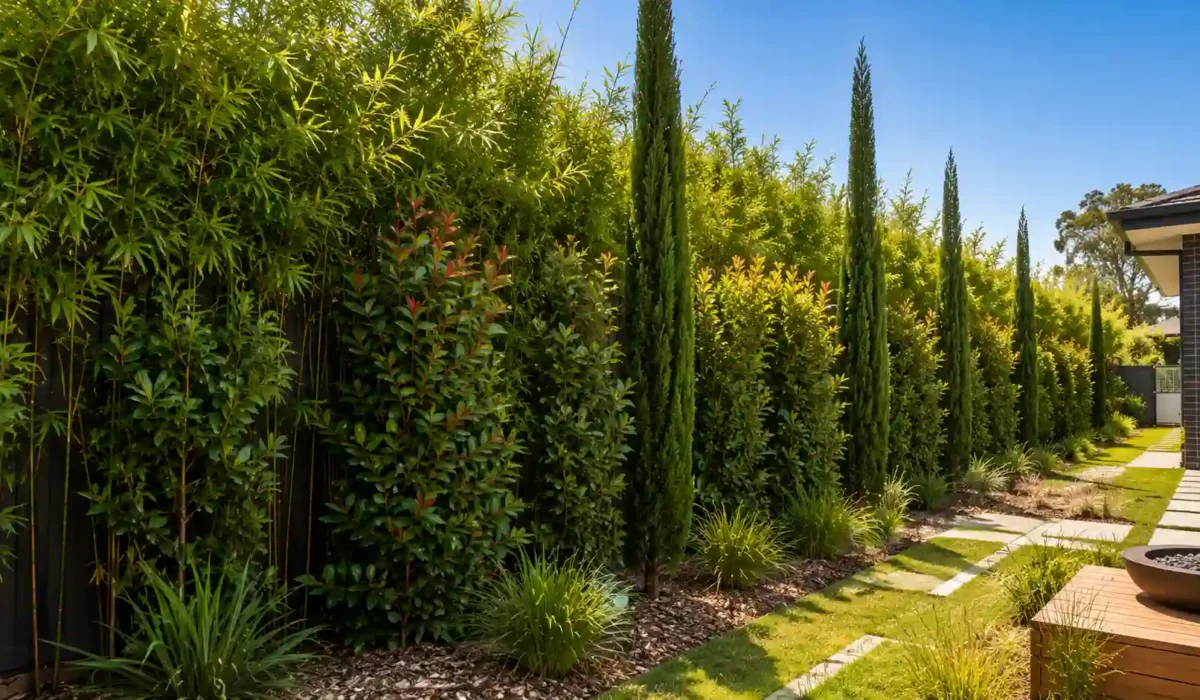
Tall Landscaping Plants Australia Guide
Introduction
Tall landscaping plants are a core feature of modern Australian garden design, used to create privacy, structure, and natural boundaries in outdoor spaces. In practical terms, tall landscaping plants include trees, shrubs, and hedging species that develop significant vertical height and are commonly used for screening, fence coverage, wind protection, and spatial division. Their importance has increased across Australia due to smaller residential blocks, high-density housing, and the need for efficient privacy solutions without heavy structural fencing.
In Australian conditions, these plants must tolerate intense sun, variable rainfall, and diverse soil types. They are widely used to block overlooking neighbours, soften boundary fences, and create layered garden aesthetics. Evergreen, narrow-growing, and drought-tolerant species are especially valued because they provide year-round screening with minimal maintenance requirements.
By Elemo Baker | Plant Care & Gardening Expert
Last Updated: June 2026
Quick Summary
- Tall landscaping plants in Australia are primarily used for privacy screening, fence coverage, and vertical garden structure.
- Evergreen species are preferred because they maintain year-round foliage and consistent screening.
- Narrow or columnar plants are ideal for tight fence lines, balconies, and compact urban gardens.
- Native tall plants offer strong drought tolerance and adaptability to Australian climates.
What Are Tall Landscaping Plants and Why Are They Used?
Tall landscaping plants are trees, shrubs, and hedging species that grow vertically to provide height and structure in garden landscapes. They are selected for their ability to create privacy, define boundaries, reduce wind exposure, and improve visual composition in outdoor environments. In landscape design, tall screening structures are often grouped under broader horticultural systems such as hedging and boundary planting, which are commonly used in urban planning and residential garden design Hedge (plant) overview.
The main function of tall landscaping plants is practical screening. In many Australian gardens, they act as living fences, replacing or complementing built structures such as timber or metal fencing. They also divide garden zones, soften harsh architectural lines, and improve the sense of enclosure in outdoor living areas. These plants can be categorised into tall hedging plants, screening plants, and ornamental trees. Tall hedging plants are typically dense and regularly pruned to form structured privacy walls. Screening plants are more natural in form and used for broader coverage. Tall trees, on the other hand, provide vertical emphasis and shade.
In our experience working with residential landscapes, homeowners often underestimate how quickly tall landscaping plants define usable outdoor space. Elemo Baker recommends selecting evergreen screening species when year-round privacy is essential, especially in suburban settings where overlooking is common.
Best Tall Landscaping Plants for Australian Gardens
Evergreen Options for Year-Round Privacy
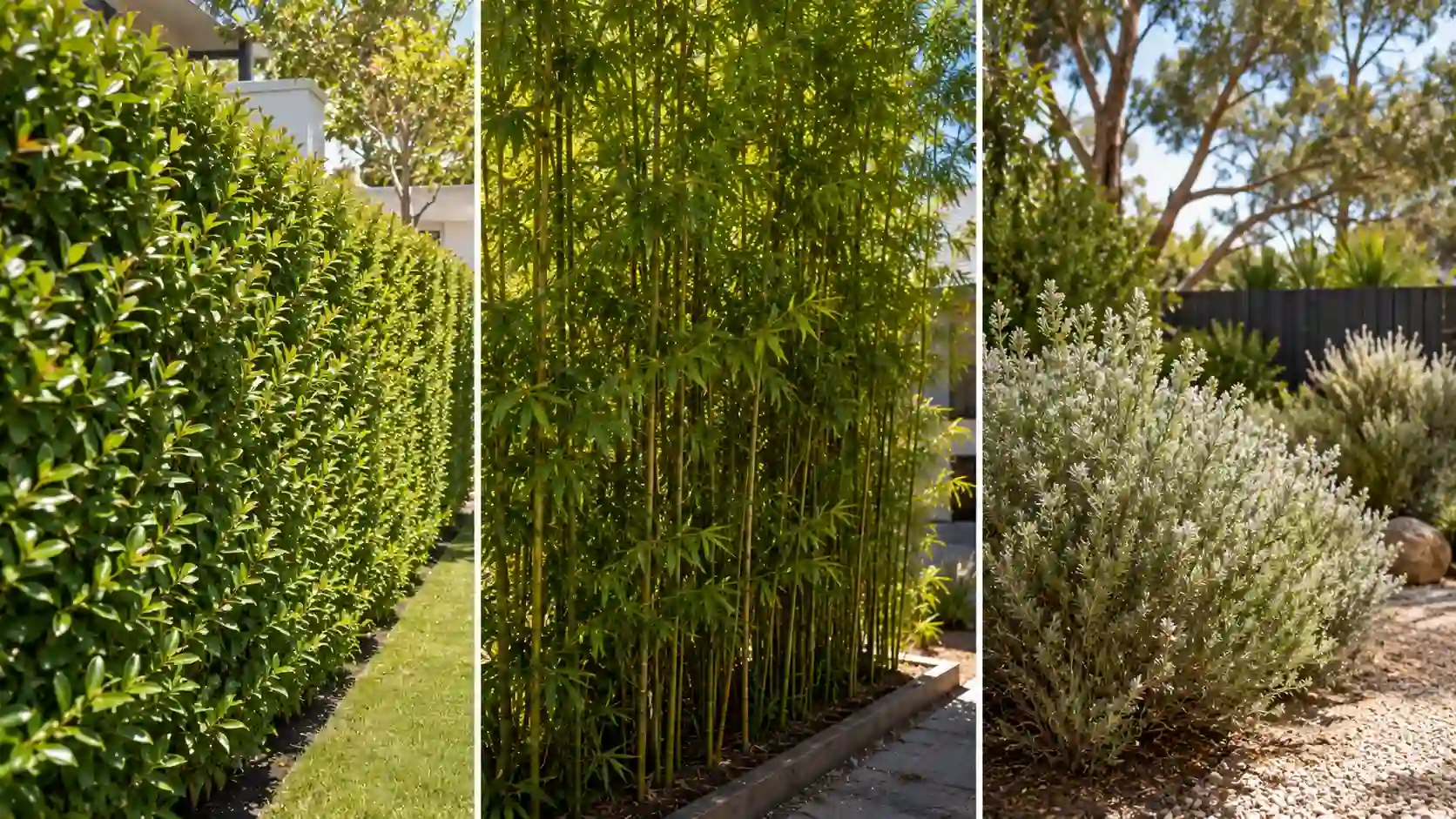
Evergreen tall landscaping plants are the most reliable choice for Australian gardens because they retain foliage throughout the year, ensuring continuous privacy and wind protection. These species are widely used along fences, driveways, and property boundaries where consistent screening is required. Another widely used screening option in formal Australian hedging systems is Ficus Hillii ‘Flash’, which is often discussed in detail in structured hedge performance breakdowns like the Ficus Hillii ‘Flash’ Care, Growth & Hedge Guide.
Common evergreen options include Lilly Pilly (Syzygium australe and related cultivars), Viburnum odoratissimum, Photinia ‘Red Robin’, Murraya paniculata, and clumping bamboo varieties such as Bambusa textilis. These plants develop dense foliage structures that block sightlines effectively while maintaining a natural aesthetic.
Evergreen hedge plants in Australia are especially valued in coastal and temperate regions where seasonal leaf drop would otherwise reduce privacy. In practice, dense canopy formation is the key factor that determines long-term screening success. For a deeper understanding of growth performance and hedge density, many gardeners also compare species such as Pittosporum Silver Sheen in dedicated growth analyses like the Pittosporum Silver Sheen Growth Rate Guide.
Fast-Growing Options for Quick Coverage
Fast-growing tall landscaping plants are used when rapid privacy is required, particularly in new developments or exposed properties. These species can typically reach effective screening height within 2–3 years under good soil and watering conditions.
Key fast-growing options include Acmena smithii, Viburnum odoratissimum, Slender Weavers Bamboo, and Photinia ‘Red Robin’. In favourable climates, bamboo species can grow 1–2 metres per year, making them one of the fastest natural screening solutions available.
While fast growth is desirable, it often comes with increased maintenance needs. Regular pruning is required to control shape and prevent overcrowding. Establishment care is critical to ensure strong root development and long-term stability. For broader species selection and comparative growth performance across Australian climates, fast establishment plants are also covered in resources such as the Fast Growing Evergreen Trees Australia Guide.
Low-Maintenance Tall Screening Plants
Low-maintenance tall landscaping plants are ideal for homeowners seeking minimal upkeep once plants are established. These species typically require less pruning, reduced watering, and minimal fertilisation after the first establishment phase.
Australian natives such as Westringia, Lomandra hystrix, and selected Acacia species perform well in this category. Hardy exotics like Viburnum and mature Lilly Pilly cultivars also offer reliable low-maintenance performance.
In our experience, the biggest success factor for low-maintenance screening is proper mulching and deep watering during the first 8–12 weeks after planting. After establishment, many of these species thrive with minimal intervention.
Tall Narrow Plants for Tight Spaces and Fence Lines
What Makes a Plant “Narrow” or Columnar?
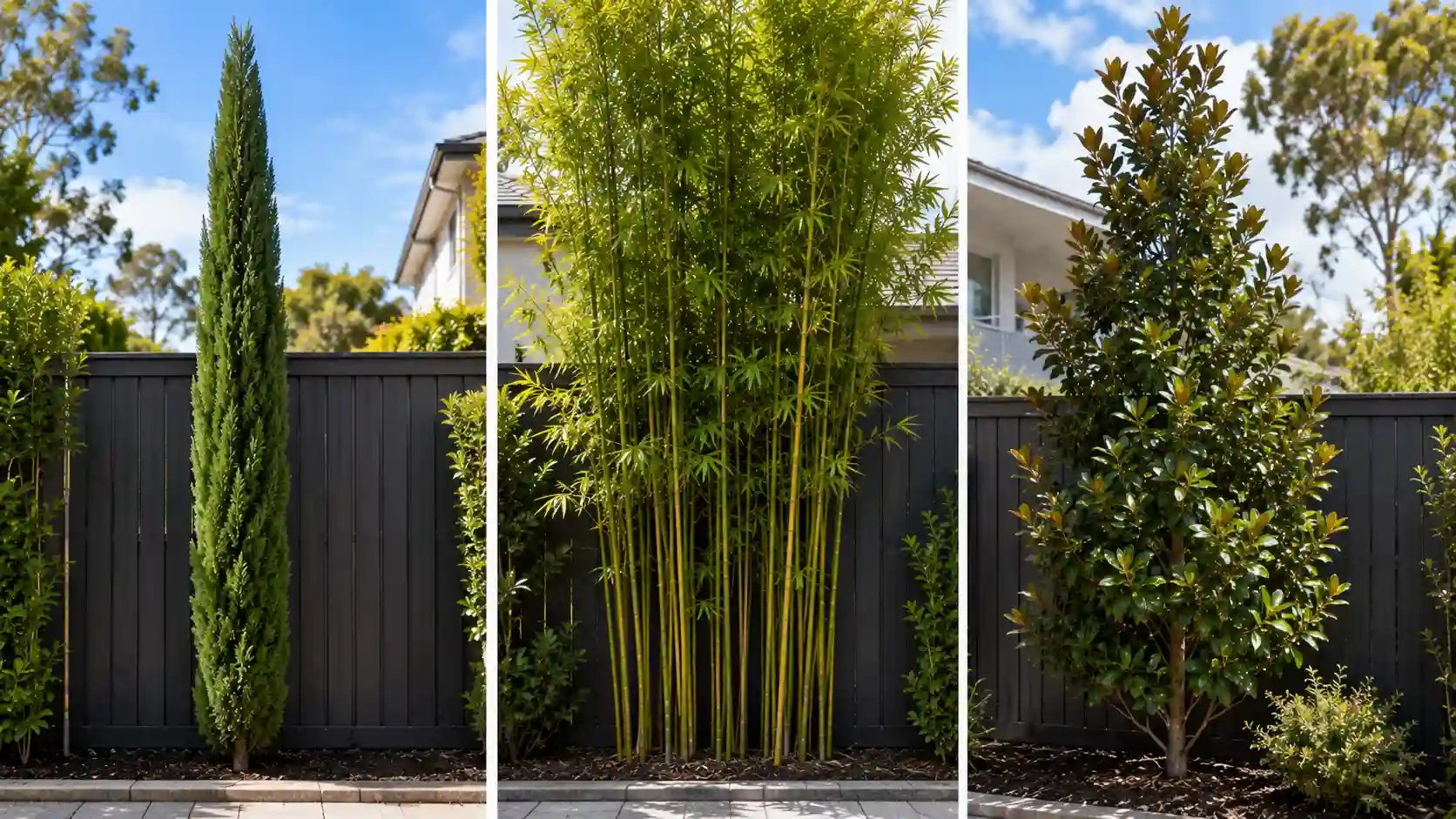
Narrow or columnar plants are defined by their upright growth habit and limited lateral spread. These plants grow vertically with minimal width expansion, making them ideal for tight garden spaces and boundary lines.
Columnar plants maintain a consistent narrow profile, while fastigiate forms grow upright with slightly broader bases. Clumping plants expand slowly outward but remain contained when mature. Understanding these growth forms is essential when selecting plants for confined spaces.
Root spread is also a critical consideration near fences, pathways, and paved areas, as aggressive root systems can impact structures over time.
Best Narrow Screening Plants for Australian Gardens
- Slender Weavers Bamboo (Bambusa textilis): 6–8m tall, ~1m wide, fast growth, full sun, moderate water
- Camellia ‘Narrow Leaf’: 3–5m tall, 1–1.5m wide, moderate growth, part shade, moderate water
- Italian Cypress (Cupressus sempervirens): 8–12m tall, 0.5–1m wide, moderate growth, full sun, low water
- Magnolia ‘Teddy Bear’: 4–6m tall, ~1–1.5m wide, slow–moderate growth, full sun to part shade
- Acmena ‘Allyn Magic’: 4–5m tall, 1–1.5m wide, moderate growth, full sun/part shade, low–moderate water
- Tristaniopsis laurina ‘Luscious’: 3–5m tall, ~1.5m wide, slow growth, full sun, low water
These species are widely used for narrow hedging and screening plants in Australia due to their compact growth habit and adaptability.
Fence Line Screening Plants for Narrow Spaces
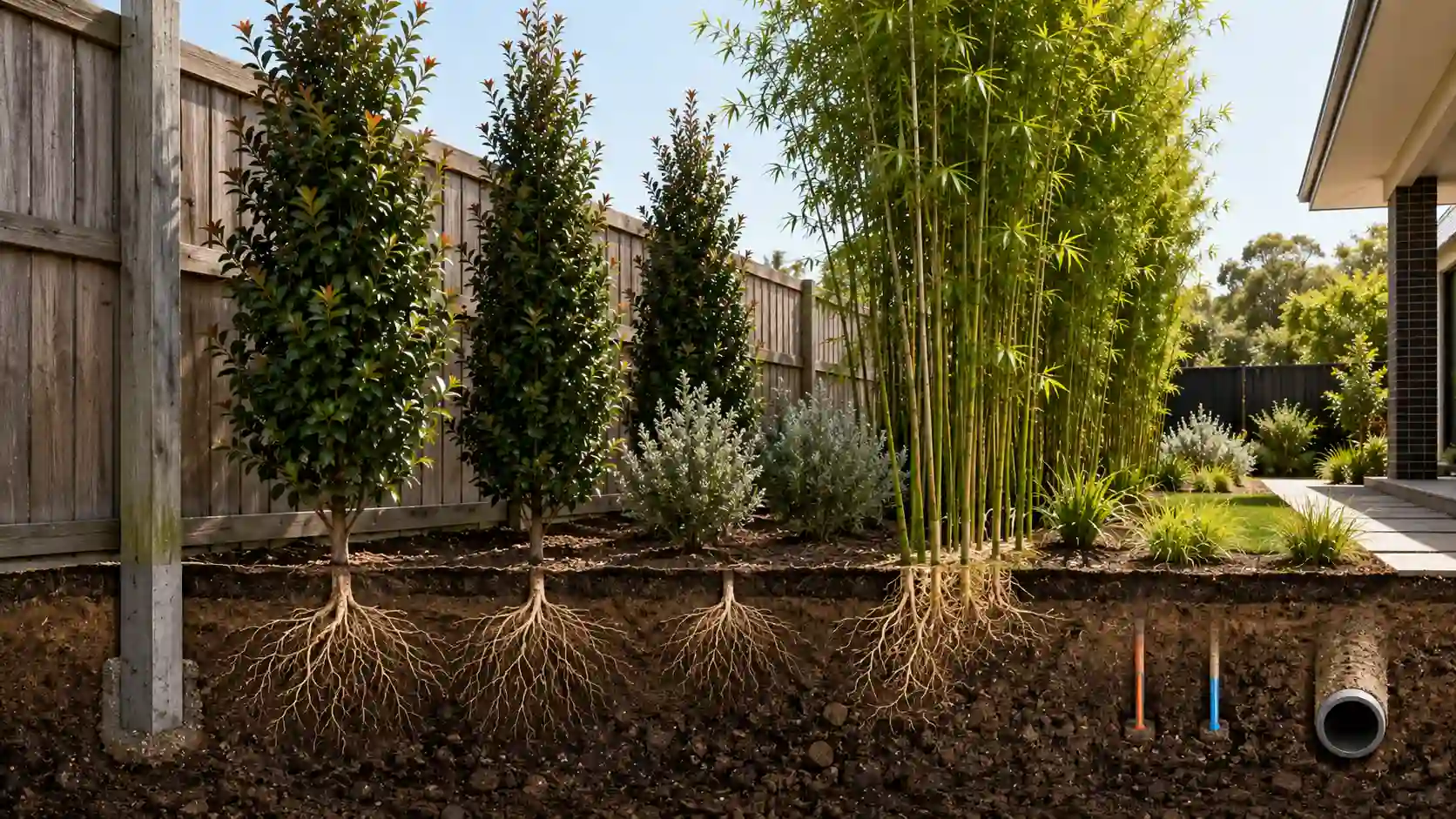
Fence line planting requires careful spacing to prevent overcrowding and structural interference. A general guideline is to plant at least 600mm away from boundary fences to allow root development and airflow.
Species such as Lilly Pilly, Westringia, and Italian Cypress are commonly used because they maintain vertical growth without excessive lateral spread. Root management is especially important near retaining walls, plumbing lines, and paved surfaces.
Proper spacing ensures long-term plant health and reduces maintenance issues associated with overcrowding and poor airflow. For homeowners prioritising minimal upkeep along boundaries, low-input planting strategies are explored further in guides such as Low-Maintenance Plants for Fence Line in Australia.
Tall Native Plants for Screening in Australia
Native tall landscaping plants are highly valued in Australian gardens due to their natural adaptation to local climates, reduced water requirements, and support for native wildlife. These plants perform well across tropical, temperate, and arid regions when properly selected.
Common native screening species include Callistemon viminalis (Weeping Bottlebrush), Westringia fruticosa, Grevillea ‘Robyn Gordon’, Lomandra hystrix, Acacia species, and Melaleuca linariifolia. These species are widely used in both formal and informal landscaping designs.
In tropical northern regions, Melaleuca and Grevillea perform well due to humidity tolerance. In temperate southern areas, Westringia and Callistemon are more reliable. In arid inland regions, Acacia and Lomandra species provide strong drought resistance.
Comparison Table
| Plant Name | Height | Width | Growth Rate | Sun | Water Needs | Native? |
| Slender Weavers Bamboo | 6–8m | 1m | Fast | Full sun | Moderate | No |
| Acmena ‘Allyn Magic’ | 4–5m | 1–1.5m | Moderate | Full/Part | Low–Mod | Yes |
| Italian Cypress | 8–12m | 0.5–1m | Moderate | Full sun | Low | No |
| Lilly Pilly (standard) | 4–8m | 1.5–2m | Fast | Full/Part | Moderate | Yes |
| Westringia | 1.5–2m | 1–1.5m | Moderate | Full sun | Low | Yes |
Tall Landscaping Plants for Full Sun Positions
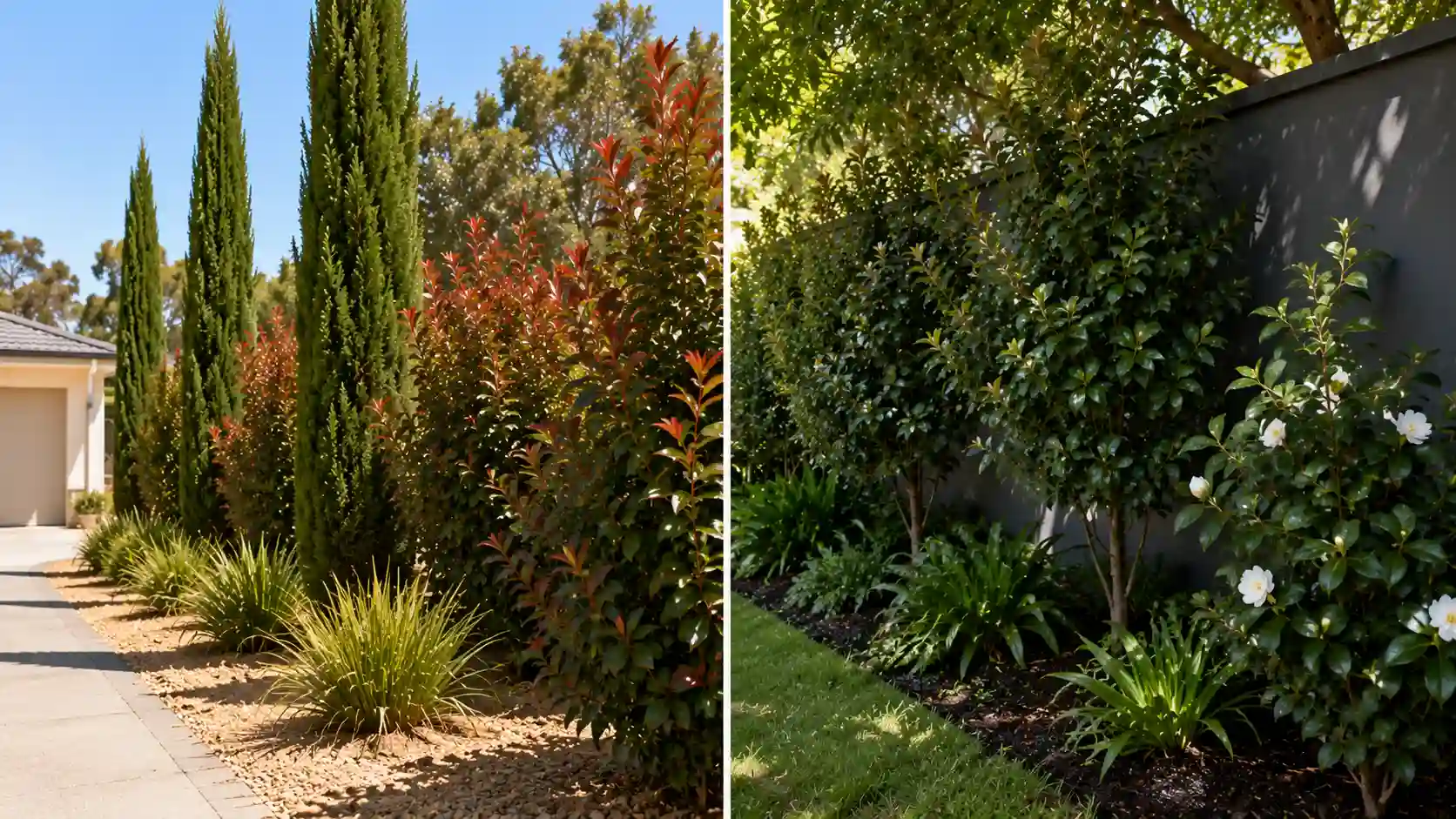
Full sun positions in Australian gardens require heat-tolerant tall landscaping plants that can withstand intense UV exposure and reflected heat from surfaces such as driveways and walls. These conditions are common in western-facing gardens and open suburban blocks.
Suitable species include Lilly Pilly, Photinia, Italian Cypress, Westringia, and clumping bamboo varieties. Once established, these plants demonstrate strong drought tolerance and maintain healthy foliage even in high-temperature environments. In high-exposure areas such as driveways and street-facing boundaries, plant selection often overlaps with design-focused layouts discussed in Driveway Plants Ideas for Australian Homes.
In our experience, adequate soil preparation and deep watering during establishment are critical for success in full sun locations. Mulching also helps retain soil moisture and reduce heat stress.
Tall Landscaping Plants for the Front Yard
Front yard planting requires a balance between privacy, kerb appeal, and compliance with local council guidelines. In many Australian suburbs, height restrictions apply near footpaths, driveways, and overhead powerlines.
Tall hedging plants such as clipped Lilly Pilly, Westringia hedges, and ornamental screening trees are commonly used to enhance street appeal while maintaining visibility and safety.
Formal designs often use symmetrical hedging, while informal styles rely on mixed native plantings. The key is selecting species that remain visually appealing while respecting boundary constraints.
Tall Plants for Pots, Balconies, and Small Spaces
Growing Tall Plants in Pots in Australia
Tall plants can be successfully grown in pots when container size, drainage, and watering are properly managed. Large, stable pots with high-quality potting mix are essential for supporting root development and preventing toppling in windy conditions.
Species such as bamboo, clipped Lilly Pilly, and Italian Cypress adapt well to container environments when regularly maintained. Watering frequency must be increased compared to in-ground planting, especially during hot Australian summers.
Best Tall Plants for Balconies and Courtyards
Balcony and courtyard planting requires wind-tolerant, compact species that perform well in restricted root environments. Italian Cypress, bamboo, and standard topiary forms are commonly used for vertical screening in elevated spaces.
These plants provide privacy without occupying large floor areas, making them ideal for urban apartments and small courtyards.
Common Mistakes When Planting Tall Screening Plants
One of the most common mistakes in Australian gardens is underestimating mature plant width, leading to overcrowding and maintenance issues.
Mistake: Choosing the wrong width → Fix: Always check mature spread, not just height
Mistake: Planting too close to structures → Fix: Allow at least 600mm clearance from fences
Mistake: Skipping establishment watering → Fix: Deep water 2–3 times per week for first 12 weeks
Mistake: Buying for fast growth only → Fix: Prioritise long-term low-maintenance species
Mistake: Selecting deciduous plants → Fix: Use evergreen species for year-round privacy
How to Choose the Right Tall Landscaping Plant for Your Space
Selecting the right tall landscaping plants depends on environmental conditions, space constraints, and maintenance expectations. Width availability is often the most important factor in narrow Australian gardens.
Sun exposure, soil type, drainage quality, and desired screening speed also influence plant selection. Low-maintenance gardeners should prioritise hardy evergreen or native species.
| Situation | Recommended Plant Type |
| Narrow fence line (<1m) | Columnar/fastigiate species |
| Full sun, dry soil | Drought-tolerant native |
| Balcony or pot | Slow-growing compact form |
| Fast coverage needed | Fast-growing evergreen |
| Low maintenance | Established native or Lilly Pilly |
Conclusion
Tall landscaping plants play a vital role in Australian garden design, offering privacy, structure, and natural boundary definition across a wide range of climates. The most successful plantings combine evergreen foliage, appropriate mature width, and suitability to local environmental conditions.
Choosing the right species ensures long-term performance, especially in narrow or high-sun Australian settings. Ultimately, the best tall landscaping plants are those that balance growth habit, maintenance needs, and spatial constraints while delivering consistent year-round screening.
Frequently Asked Questions
What are the best tall narrow plants for screening in Australia?
The best tall narrow plants include Slender Weavers Bamboo, Italian Cypress, Acmena ‘Allyn Magic’, and Lilly Pilly cultivars. These species provide vertical growth with minimal width expansion.
How close to a fence can I plant a screening plant?
Most screening plants should be planted at least 600mm from fences to allow root development and airflow. Local council rules may also apply depending on the region.
What is the fastest-growing tall screening plant in Australia?
Slender Weavers Bamboo, Viburnum odoratissimum, and Lilly Pilly are among the fastest-growing options, with some bamboo species growing up to 1–2 metres per year.
Can I grow tall screening plants in pots?
Yes, tall plants can grow in pots if the container is large, stable, and well-drained. Regular watering and pruning are required for long-term success.
What are the best low-maintenance tall hedging plants in Australia?
Westringia, Lilly Pilly, and several native species are low-maintenance options once established, requiring minimal pruning and watering.
Are there native tall screening plants suitable for narrow spaces?
Yes, Acmena smithii, Westringia, and Callistemon species are excellent native options for narrow spaces due to their adaptability and low water needs.
2 Comments