

Money Tree Australia: Care, Meaning & Buying Guide
Introduction
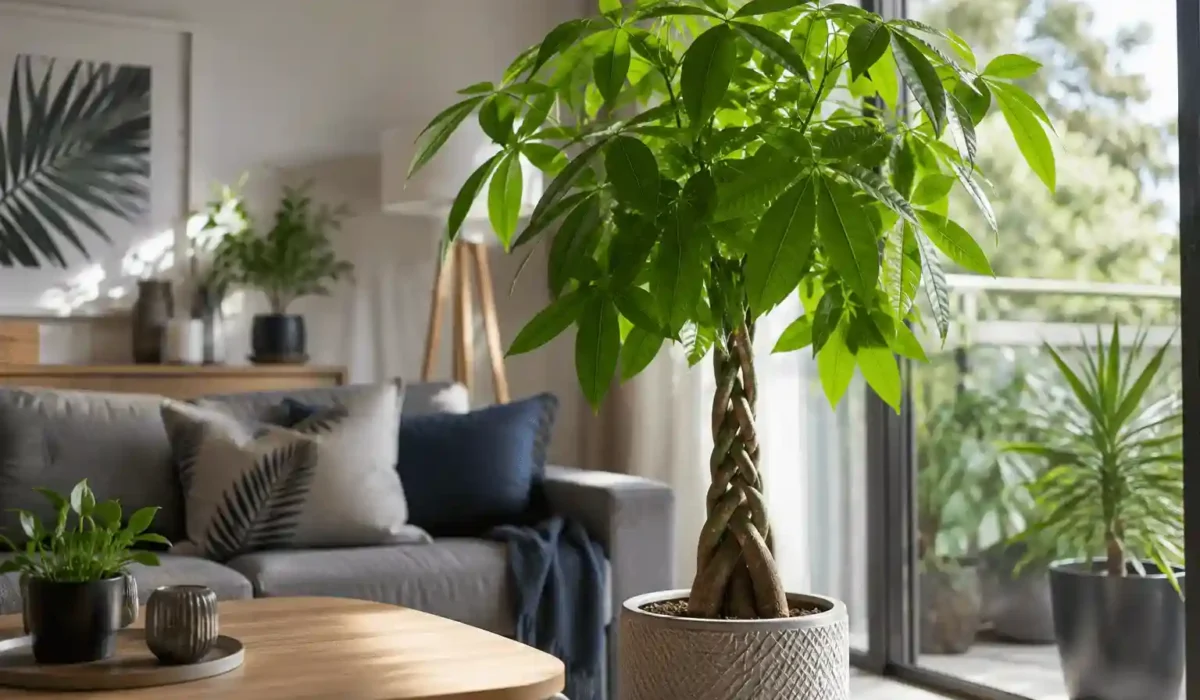
The money tree Australia gardeners and indoor plant enthusiasts commonly refer to is Pachira aquatica, a tropical tree native to Central and South America. Also known as the Guiana chestnut or Malabar chestnut, it has become one of Australia’s most popular indoor plants due to its attractive braided trunk, glossy green foliage, and reputation for bringing good fortune. Its popularity is also linked to Feng Shui traditions, where the plant symbolizes prosperity and positive energy. Whether you are interested in its meaning, care requirements, growth habits, or availability across Australia, this guide explains everything you need to know about growing and maintaining a healthy money tree.
Quick Summary
- The money tree (Pachira aquatica) is a tropical indoor plant widely available across Australia, including nurseries and major retailers.
- Its braided trunk and lush leaves are associated with Feng Shui beliefs about luck, wealth, and prosperity.
- It grows best in bright, indirect light with infrequent watering and well-draining soil.
- Several different species are sold as “money plants” in Australia, including jade plants and Chinese money plants.
What Is the Money Tree? (Pachira Aquatica Explained)
Scientific Name and Common Names in Australia
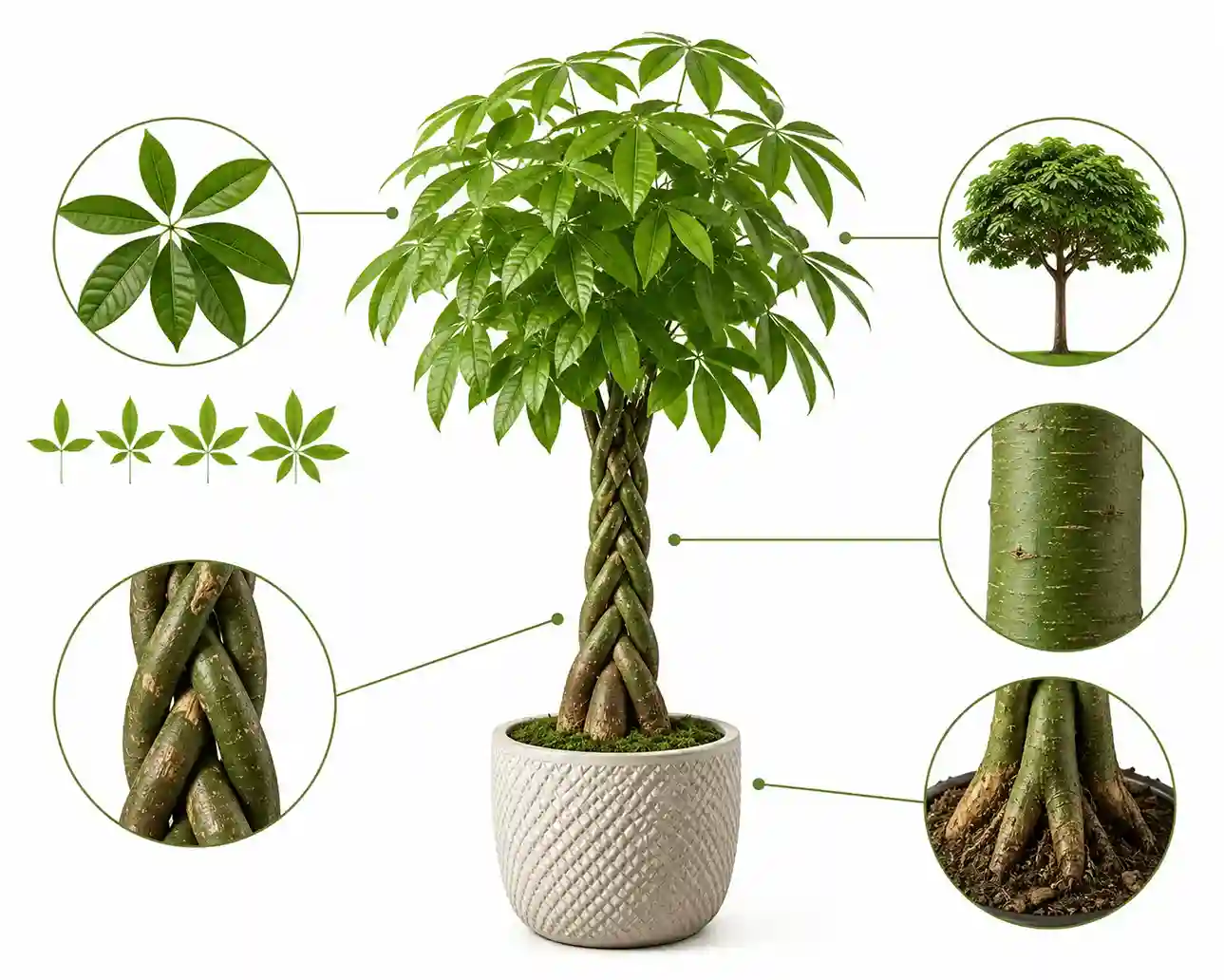
The money tree most commonly sold in Australia is Pachira aquatica, a tropical species belonging to the Malvaceae family. It is also widely known as the Guiana chestnut, Malabar chestnut, or simply the Pachira tree.
Australian nurseries sometimes also sell Pachira glabra, a closely related species that looks very similar to Pachira aquatica. Because the two species share many visual characteristics, they are frequently marketed under the same “money tree” label.
Common names used in Australia include:
- Money tree
- Pachira tree
- Guiana chestnut
- Malabar chestnut
- Braided money tree
For most Australian buyers, the terms money tree and Pachira aquatica are used interchangeably.
What Does the Money Tree Look Like?
The money tree is valued for its distinctive appearance and tropical foliage.
Key visual features include:
- Palmate leaves with 5–7 leaflets
- Bright green, glossy foliage
- Smooth green or brownish bark
- Thick trunk base
- Braided trunk on most commercially sold plants
One important detail is that the braided trunk is not naturally occurring. Growers braid several young stems together while the plants are still flexible, creating the decorative trunk that has become the plant’s signature feature.
What Does the Money Tree Mean in Australia?
The money tree in Australia symbolizes prosperity, good fortune, and positive energy. This meaning comes primarily from Feng Shui traditions and is shared internationally rather than being uniquely Australian.
According to Feng Shui beliefs, the money tree’s leaves represent the five elements:
- Earth
- Water
- Fire
- Metal
- Wood
These elements are believed to create balance and harmony within a home or workplace.
Because of these associations, money trees are commonly given as:
- Housewarming gifts
- Business opening gifts
- Birthday presents
- Corporate gifts
In Australia, both Chinese-Australian communities and mainstream plant enthusiasts appreciate the money tree for its symbolism. While there is no scientific evidence that the plant attracts wealth, many people enjoy it as a decorative reminder of growth, success, and prosperity.
Many homeowners combine symbolic plants such as the money tree with fragrant species discussed in our Benefits of Lavender Plant at Home guide to create a calming indoor environment.
Money Tree vs Other “Money Plants” in Australia — Which Is Which?
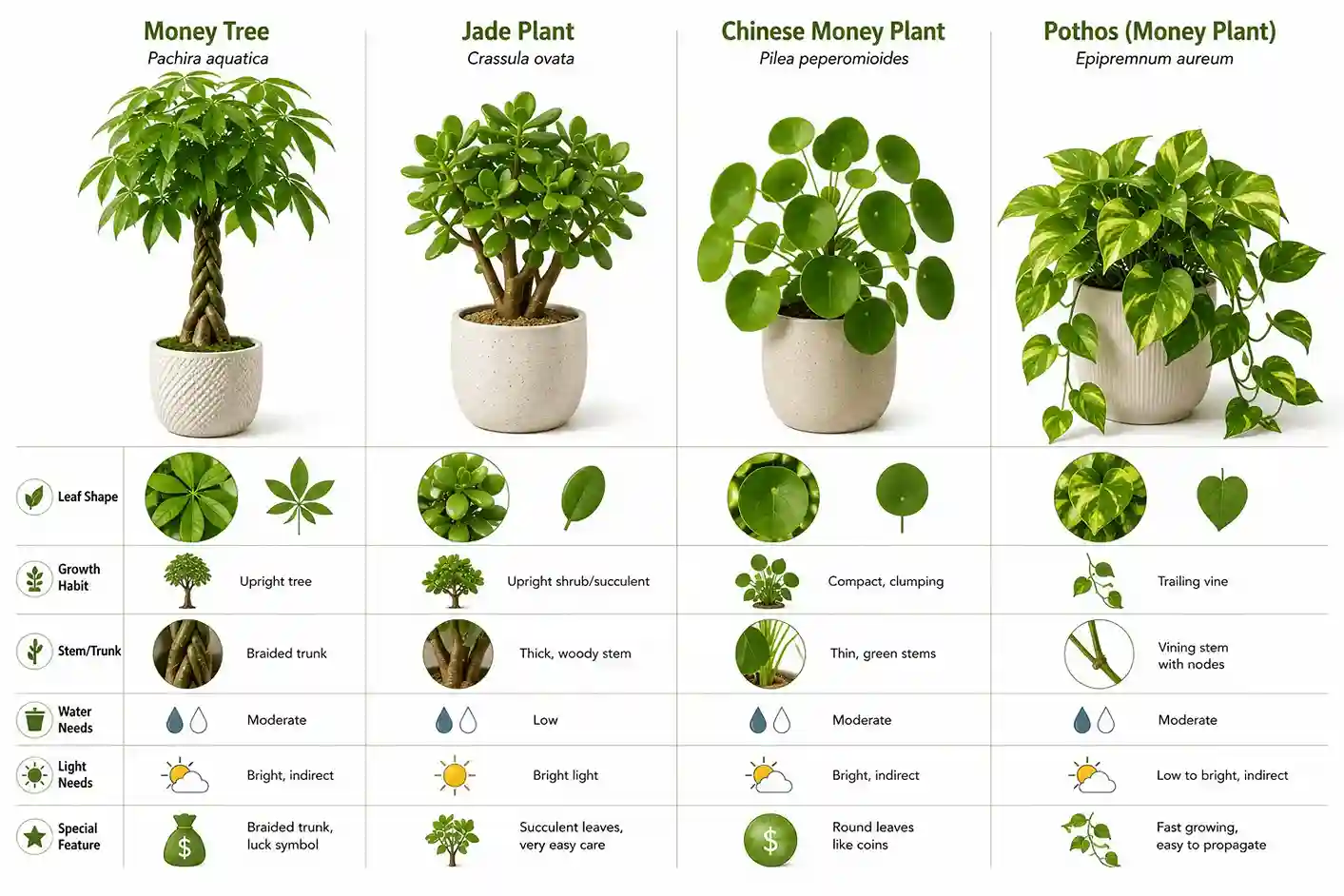
Many Australian buyers confuse several completely different plants that share the “money plant” name. Understanding the differences helps ensure you purchase the correct species.
| Common Name | Scientific Name | Key Feature | Care Level |
| Money Tree | Pachira aquatica | Braided trunk, palmate leaves | Moderate |
| Jade Plant / Money Plant | Crassula ovata | Succulent stems and leaves | Easy |
| Chinese Money Plant | Pilea peperomioides | Coin-shaped leaves | Easy–Moderate |
| Indian Money Plant | Epipremnum aureum | Trailing vine | Very Easy |
| Money Tree Succulent | Portulacaria afra or Crassula species | Thick fleshy leaves | Easy |
If you’d rather filter by light, watering trigger, or pet safety instead of scrolling a static table, try our interactive money plant comparison finder. It lets you sort all twenty money-labelled and prosperity-linked plants side by side in seconds.
Is Pachira Aquatica the Same as a Jade Plant?
No, Pachira aquatica and jade plants are completely different species.
Pachira aquatica is a tropical tree that prefers moderate moisture and indirect light. In contrast, Crassula ovata, commonly called the jade plant, is a succulent that stores water in its leaves and requires less frequent watering.
The confusion exists because both plants are associated with prosperity and are commonly marketed as money plants.
What Is the Chinese Money Plant?
The Chinese money plant is Pilea peperomioides, a species native to southern China.
It is easily recognized by its:
- Round coin-shaped leaves
- Compact growth habit
- Smooth green stems
Unlike the money tree, Pilea does not develop a braided trunk. It remains much smaller and is popular for desks, shelves, and small indoor spaces. It is commonly stocked by Australian nurseries and major garden retailers.
Indoor gardeners looking to diversify their collection may also enjoy reading about Purple Passion Plant Benefits: Health, Care & Uses, a uniquely coloured houseplant with very different care requirements.
Money Tree Australia Care Guide
Light Requirements for Pachira Aquatica in Australia
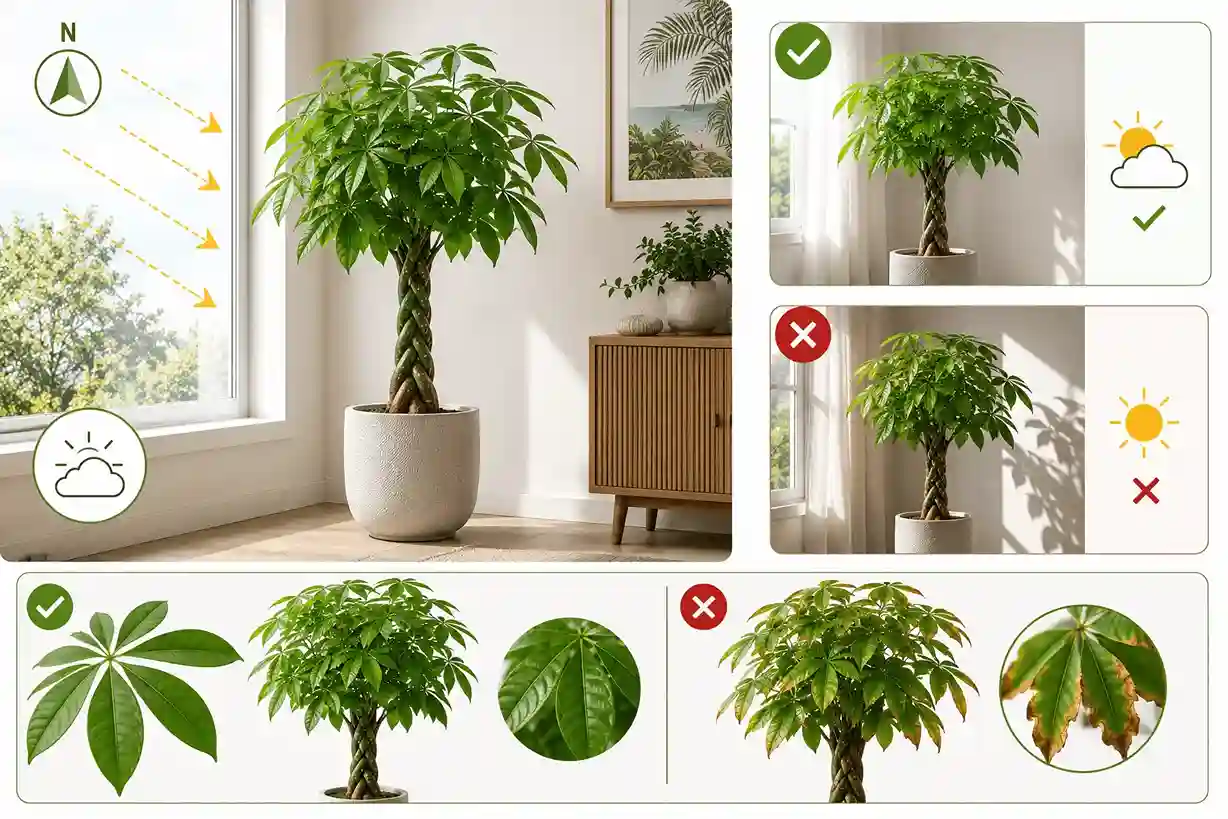
Bright, indirect light is ideal for Pachira aquatica.
Australian summer sunlight can be intense, particularly through north-facing windows. While the plant appreciates good light, prolonged exposure to harsh direct sun may scorch leaves.
For most Australian homes:
- Place near a bright window
- Filter strong afternoon sunlight
- Rotate the plant occasionally for even growth
In our experience growing indoor money trees, plants positioned near bright indirect light maintain denser foliage and stronger growth. If you enjoy easy-care indoor foliage plants, you may also be interested in our guide to Dracaena Plant Indoor Benefits, Care, Meaning & Propagation, another popular choice for Australian homes and offices.
Like the money tree, the 10 Benefits of Snake Plant for Home and Health highlight why low-maintenance indoor plants continue to grow in popularity among Australian plant owners.
Watering the Money Tree — How Often and How Much
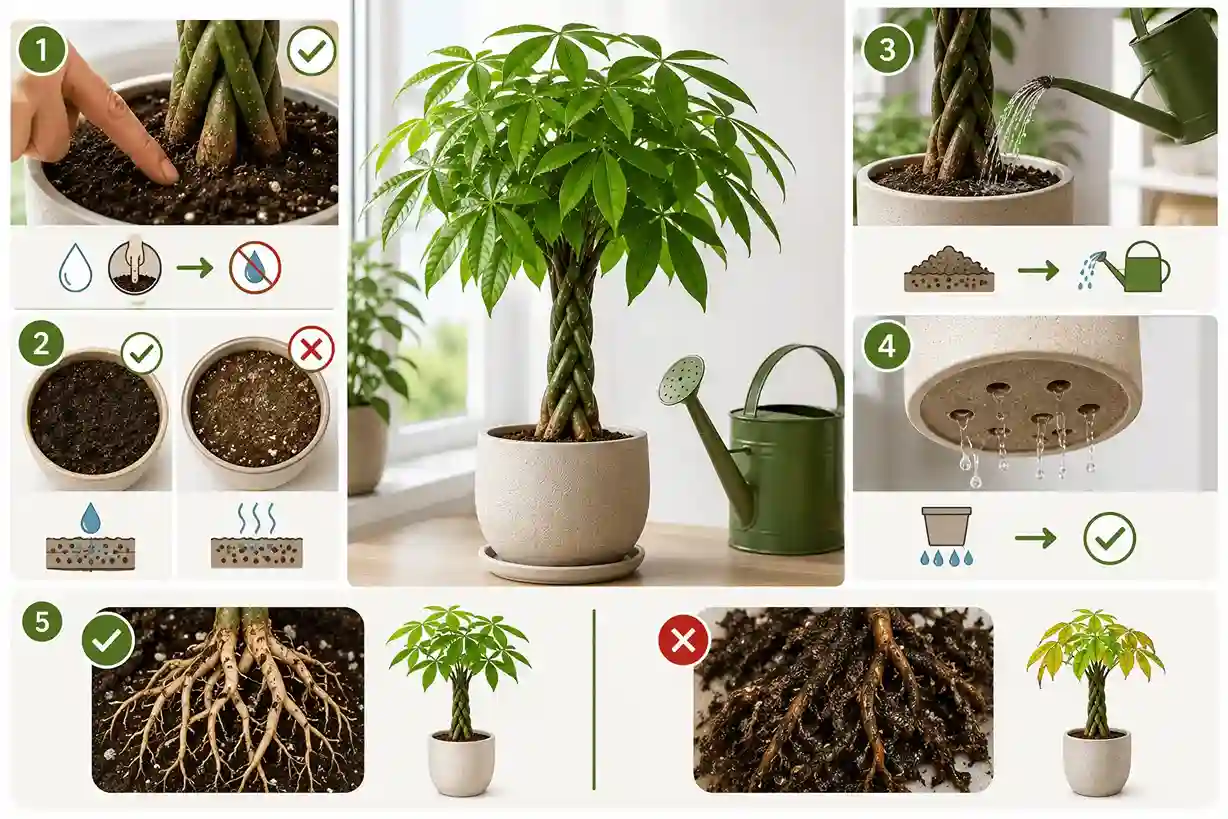
Money trees prefer thorough but infrequent watering.
Allow the top 2–3 cm of soil to dry before watering again. Overwatering is the most common cause of money tree decline in Australia.
Watering guidelines:
- Water deeply when soil partially dries
- Empty drainage trays after watering
- Reduce watering during winter
- Increase monitoring during warm summer months
Humid coastal regions may require less frequent watering than dry inland locations.
Soil, Potting Mix, and Fertilisation
A well-draining potting mix is essential.
Suitable soil characteristics include:
- Good drainage
- Moderate moisture retention
- Aeration around roots
Avoid heavy soils that remain wet for long periods.
Feed with a balanced liquid fertiliser during spring and summer. Reduce or stop fertilising during winter when growth naturally slows.
Elemo Baker recommends using indoor plant fertiliser at half strength initially to avoid overfeeding newly purchased specimens.
Temperature and Humidity Tolerance
Pachira aquatica is a tropical species that performs best above 15°C.
Climate suitability across Australia includes:
- Tropical North Queensland: Excellent
- Northern Territory: Excellent
- Coastal New South Wales: Good
- Brisbane: Good
- Melbourne: Suitable indoors
- Tasmania: Best grown indoors
Cool temperatures can slow growth significantly, particularly during southern Australian winters.
Pruning and Repotting
Pruning helps maintain shape and encourages compact growth.
Pruning tips:
- Remove damaged leaves
- Trim overly long stems
- Prune during active growth periods
Repot every 2–3 years or when roots become crowded.
To maintain the braided appearance, growers typically braid stems while young. Mature trunks become woody and difficult to reshape.
Choosing the right position is easier when you understand how different plants suit Australian homes, so explore our Australian Plants Guide: Indoor Houseplants & Garden Design.
Money Tree Size — How Big Does It Grow Indoors in Australia?
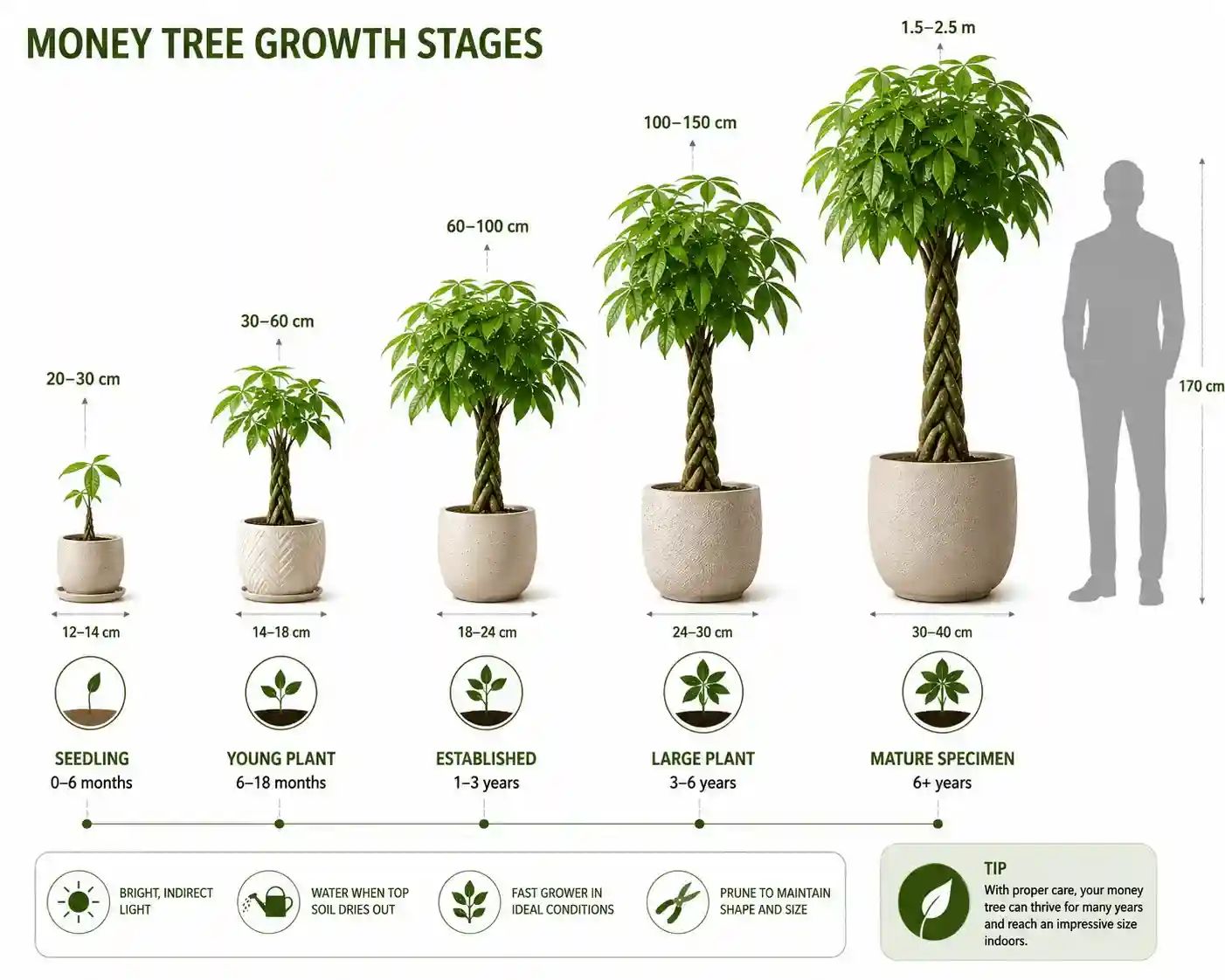
Indoors, money trees typically grow between 1.5 and 2.5 metres tall in Australian homes.
Several factors influence final size:
- Pot size
- Light levels
- Root space
- Fertilisation
- Indoor climate
Outdoors in suitable tropical environments, Pachira aquatica can become a substantial tree. In its native habitat, specimens may reach up to 18 metres tall. Most indoor plants remain significantly smaller because container growth naturally restricts root expansion and overall size.
Gardeners comparing indoor plants with larger landscape species may also find our Photinia Fraseri Robusta: Growth, Care & Hedge Guide useful for understanding long-term plant growth and size management.
Money Tree Growth Rate
Money trees are considered moderate growers indoors.
Under favourable conditions, plants commonly produce between 30 and 60 cm of new growth per year.
Growth is fastest during:
- Spring
- Summer
- Early autumn
Growth slows considerably during winter, especially in cooler Australian cities.
Factors affecting growth rate include:
- Light availability
- Temperature
- Watering consistency
- Fertiliser use
- Pot size
If you’re interested in comparing growth habits across different species, see our Pittosporum Silver Sheen Growth Rate Guide for a detailed look at another fast-growing ornamental plant.
Where to Buy a Money Tree in Australia
Is the Money Tree Available at Bunnings?
Yes, money trees are often available at Bunnings stores, although availability varies by location and season.
Australian stores may stock:
- Pachira aquatica
- Jade plants
- Chinese money plants
- Other plants marketed as money plants
Stock levels change throughout the year, so checking with your local store is recommended.
Other Places to Buy a Money Tree in Australia
Money trees are widely available through:
- Independent nurseries
- Garden centres
- Indoor plant specialists
- Online plant retailers
Braided money trees are usually easier to find than rare variegated forms.
Buyers seeking specialty varieties may need to purchase through specialist collectors or premium indoor plant suppliers.
How Much Does a Money Tree Cost in Australia?
Money tree prices vary depending on size, age, and trunk style.
Typical ranges include:
- Small plants: $15–$35
- Medium plants: $40–$80
- Large specimens: $100–$300+
Braided trunks generally cost more than standard forms. Variegated varieties can command significantly higher prices due to limited availability. For raw pricing and stock data pulled together from Australian retailers, check our money tree and indoor plants Australia spreadsheet. It’s a working reference sheet you can filter by plant size and price bracket.
Money Tree Varieties Available in Australia
Several forms of money trees are available in the Australian market.
- Standard Pachira aquatica – traditional green foliage.
- Braided Money Tree – the most common retail form.
- Pachira glabra – closely related species frequently misidentified as Pachira aquatica.
- Variegated Money Tree – uncommon and often more expensive.
For a deeper breakdown of each variety with care notes side by side, browse our Money Plants Australia comparison and care database. It’s organised so you can compare standard, braided, and variegated forms at a glance.
Braided specimens remain the most popular because of their ornamental appearance and strong association with Feng Shui traditions.
Common Money Tree Problems and How to Fix Them
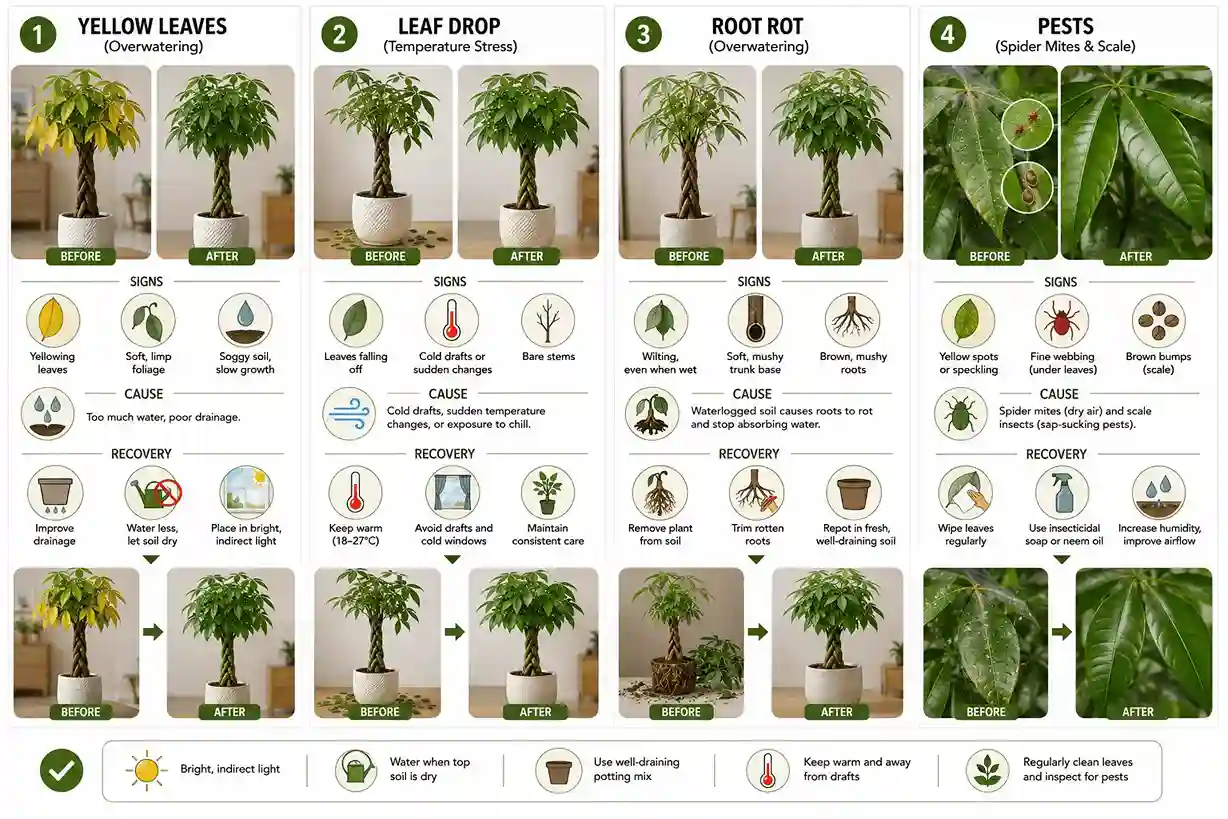
Yellow Leaves on a Money Tree
Yellow leaves are most commonly caused by overwatering.
Signs of overwatering include:
- Soggy soil
- Soft trunk base
- Yellow leaves throughout the plant
Signs of underwatering include:
- Dry soil
- Crispy leaf edges
- Wilting foliage
To fix yellowing:
- Check soil moisture
- Improve drainage
- Adjust watering frequency
- Remove damaged leaves
Dropping Leaves
Leaf drop is often caused by environmental stress.
Common causes include:
- Sudden temperature changes
- Drafts
- Relocation shock
- Air conditioner exposure
- Heater vents
In our experience, moving a money tree frequently can trigger temporary leaf loss while the plant adjusts.
Root Rot
Root rot occurs when roots remain wet for extended periods.
Symptoms include:
- Yellow leaves
- Soft roots
- Unpleasant odour
- Wilting despite wet soil
Treatment involves:
- Removing affected roots
- Repotting into fresh soil
- Improving drainage
- Adjusting watering habits
Pests — Fungus Gnats, Spider Mites, and Scale
Common Australian indoor plant pests include:
Fungus Gnats
- Small flying insects around soil
- Usually linked to excess moisture
Spider Mites
- Fine webbing on leaves
- Tiny speckling damage
Scale
- Brown or white bumps on stems
- Sap-sucking pests
Treatment options include insecticidal soaps, neem oil, improved airflow, and regular inspection.
Common Beginner Mistakes With Money Trees in Australia
Common mistakes include:
- Confusing Pachira aquatica with jade plants or Chinese money plants
- Overwatering due to generic tropical plant advice
- Exposing the plant to harsh Australian summer sun
- Purchasing without considering mature size
- Using decorative pots without drainage holes
- Fertilising excessively during winter
- Ignoring seasonal growth changes
Avoiding these mistakes greatly improves long-term success. Understanding species-specific care is important because plants such as the money tree and those featured in Vicks Plant Benefits: What This Fragrant Herb Can Do for You have very different watering and environmental needs.
Is Pachira Aquatica Safe? What to Know Before You Buy
What Are the Disadvantages of a Money Tree?
The main disadvantages of a money tree include:
- Sensitivity to overwatering
- Susceptibility to root rot
- Limited cold tolerance
- Potentially large indoor size
- Slower winter growth
- Limited availability of specialty varieties
As of 2026, indoor plant growers continue to recommend careful watering management as the single most important factor for long-term success.
Is the Money Tree Toxic to Pets or Children?
- Pachira aquatica is generally considered non-toxic to cats and dogs.
- For most households, it is regarded as a pet-friendly indoor plant. However, large quantities of seeds or plant material should not be consumed.
- Pet owners should still discourage chewing on houseplants to prevent digestive upset and potential choking hazards.
For gardeners interested in plants with traditional cultural uses, our Leaf of Life Plant Benefits, Uses, Tea & Care Guide explores another well-known plant grown in warm climates.
Conclusion
The money tree Australia plant market knows as Pachira aquatica remains one of the most attractive and rewarding indoor trees available. Its braided trunk, lush foliage, and association with prosperity make it a popular choice for homes, offices, and gift-giving. Successful care depends on a few key principles: provide bright indirect light, water only when the soil begins to dry, and use a well-draining potting mix. Buyers should also verify the species they are purchasing, as several different plants are marketed as money plants throughout Australia. With proper care, a money tree can thrive for many years while adding a distinctive tropical presence to indoor spaces.
Frequently Asked Questions About Money Trees in Australia
What does the money tree mean in Australia?
The money tree symbolizes luck, prosperity, balance, and positive energy. Its meaning originates from Feng Shui traditions and is widely recognized throughout Australia and internationally. It is commonly given as a housewarming or business gift.
What are the disadvantages of a money tree?
Money trees can be sensitive to overwatering, susceptible to root rot, intolerant of prolonged cold temperatures, and capable of growing quite large indoors. Specialty varieties can also be difficult to source.
How expensive is a money tree in Australia?
Small money trees typically cost $15–$35, medium plants $40–$80, and larger specimens over $100. Braided trunks and variegated varieties generally command higher prices.
Is Pachira aquatica the same as a jade plant?
No. Pachira aquatica is a tropical tree, while Crassula ovata is a succulent. Although both are associated with prosperity and may be called money plants, they are botanically unrelated.
Can I grow a money tree outdoors in Australia?
Yes, but only in suitable climates. Outdoor cultivation is most successful in tropical and subtropical regions such as Queensland, the Northern Territory, and parts of coastal New South Wales. Cooler regions generally require indoor growing.
Which tree is famous in Australia?
Australia’s most iconic native trees include eucalyptus species (gum trees), the Moreton Bay fig, and the boab. The money tree is not native to Australia, but it has become one of the country’s most popular indoor plant species.
7 Comments