
Garden Pest Identification Guide for Australian Gardens
Introduction
Garden pest identification is the process of recognising insects, mites, snails, and other organisms that damage plants so the correct control method can be chosen. For gardeners dealing with garden pests Australia, accurate identification helps prevent unnecessary pesticide use, protects beneficial insects, and improves plant health. Rather than treating every damaged plant the same way, identifying the exact pest allows targeted, effective action. This guide explains how to recognise common Australian garden pests, understand the signs they leave behind, and use practical methods to identify them before deciding on the most appropriate solution.
Quick Summary
- Identify garden pests by examining the insect, the type of plant damage, and where the pest is found.
- Australian gardens commonly experience aphids, caterpillars, snails, slugs, scale insects, whiteflies, mites, and mealybugs.
- Check leaves, stems, buds, flowers, and soil regularly for early warning signs.
- Correct identification is the first step towards safe and effective pest management.
What Is Garden Pest Identification?
Garden pest identification is the process of determining which organism is damaging a plant by examining its appearance, behaviour, life stage, and the symptoms it causes. The goal is to identify garden insects and other pests accurately before selecting any treatment.
Correct identification matters because different pests require different management methods. Aphids respond differently to treatment than caterpillars, while fungal diseases may resemble insect damage despite having entirely different causes.
It is also important to distinguish harmful pests from beneficial insects. Many insects found in gardens help control pest populations or pollinate flowers. Removing these beneficial species can unintentionally make pest problems worse.
In our experience growing ornamental and edible plants, taking a few extra minutes to identify the pest first often prevents unnecessary spraying and protects helpful insects already working in the garden.
Signs Your Garden Has a Pest Problem
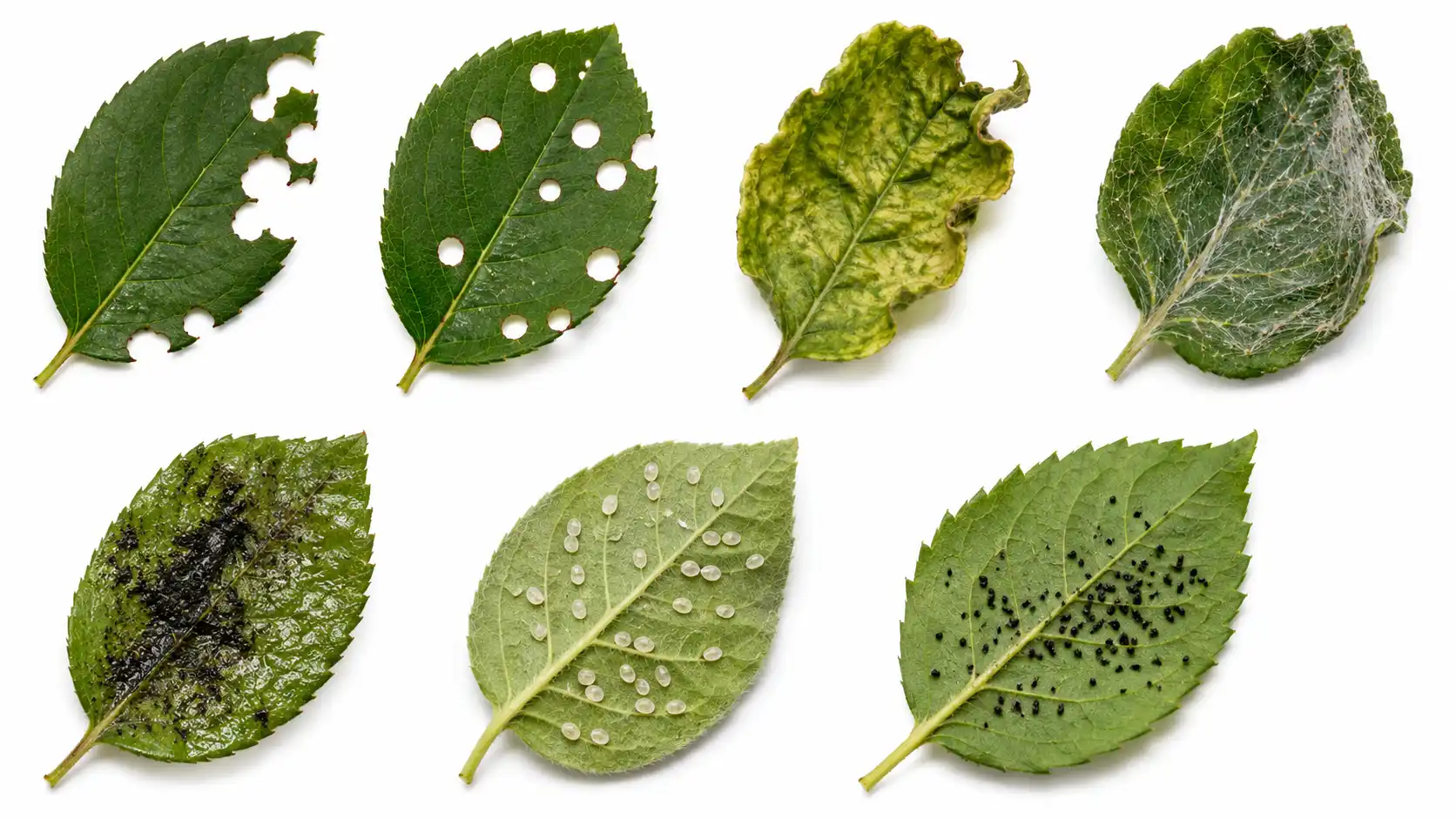
Plants usually provide visible clues long before severe damage occurs. Learning to recognise these early signs makes pest management easier.
Common indicators include:
- Holes in leaves
- Chewed leaf edges
- Yellow or distorted foliage
- Sticky residue (honeydew)
- Fine webbing
- Black sooty mould
- Small eggs beneath leaves
- Insect droppings (frass)
- Wilt despite adequate watering
- Soil disturbance around roots
Regular inspection of new growth is especially important because many pests prefer young, tender foliage.
What Is Eating My Plants’ Leaves? (Australia)
Leaf damage often reveals the type of pest responsible.
| Damage Pattern | Likely Pest |
| Large irregular holes | Caterpillars |
| Smooth semicircular bites | Leafcutter bees |
| Ragged edges overnight | Snails and slugs |
| Tiny pinholes | Flea beetles |
| Skeletonised leaves | Beetle larvae |
| Curled leaves | Aphids or psyllids |
Australian gardens frequently experience caterpillar feeding during warmer months, while snails and slugs become more active after rainfall and in cool, damp conditions.
Common Garden Pests in Australia
Australian gardens support a wide variety of insects and other pests that feed on ornamental plants, vegetables, shrubs, and fruit trees. Indoor favourites such as the Money Tree can also attract aphids and mealybugs, making regular inspections an important part of routine plant care. Read our Money Tree Australia: Care, Meaning & Buying Guide for more tips.
Common garden pests include:
- Aphids
- Whiteflies
- Scale insects
- Mealybugs
- Spider mites
- Thrips
- Caterpillars
- Snails
- Slugs
- Earwigs
- Grasshoppers
- Leaf miners
- Fungus gnats
- Root-feeding grubs
Some pests feed on leaves, while others attack stems, flowers, roots, or developing fruit. Knowing where they feed helps narrow down identification. Many common pests, including spider mites, mealybugs, and scale insects, also affect indoor plants. If you grow houseplants, see our Dracaena Plant Indoor Benefits, Care, Meaning & Propagation guide to learn how to spot and prevent these infestations.
Common Garden Insects vs Common Garden Bugs
Although people often use the terms interchangeably, they are not identical.
Garden insects include all six-legged insects, such as beetles, butterflies, bees, flies, and aphids.
The word “bug” is commonly used to describe almost any small crawling creature in the garden, including spiders, mites, slugs, and insects. Scientifically, however, true bugs belong to a specific insect order called Hemiptera.
Understanding this distinction improves communication when researching garden insects in Australia or searching for garden insects by name. Flowering ornamental trees can occasionally attract aphids, caterpillars, and scale insects. Our Tree With Pink Flowers Australia: Identification Guide introduces popular species and their growing habits.
How to Identify Garden Pests by Appearance
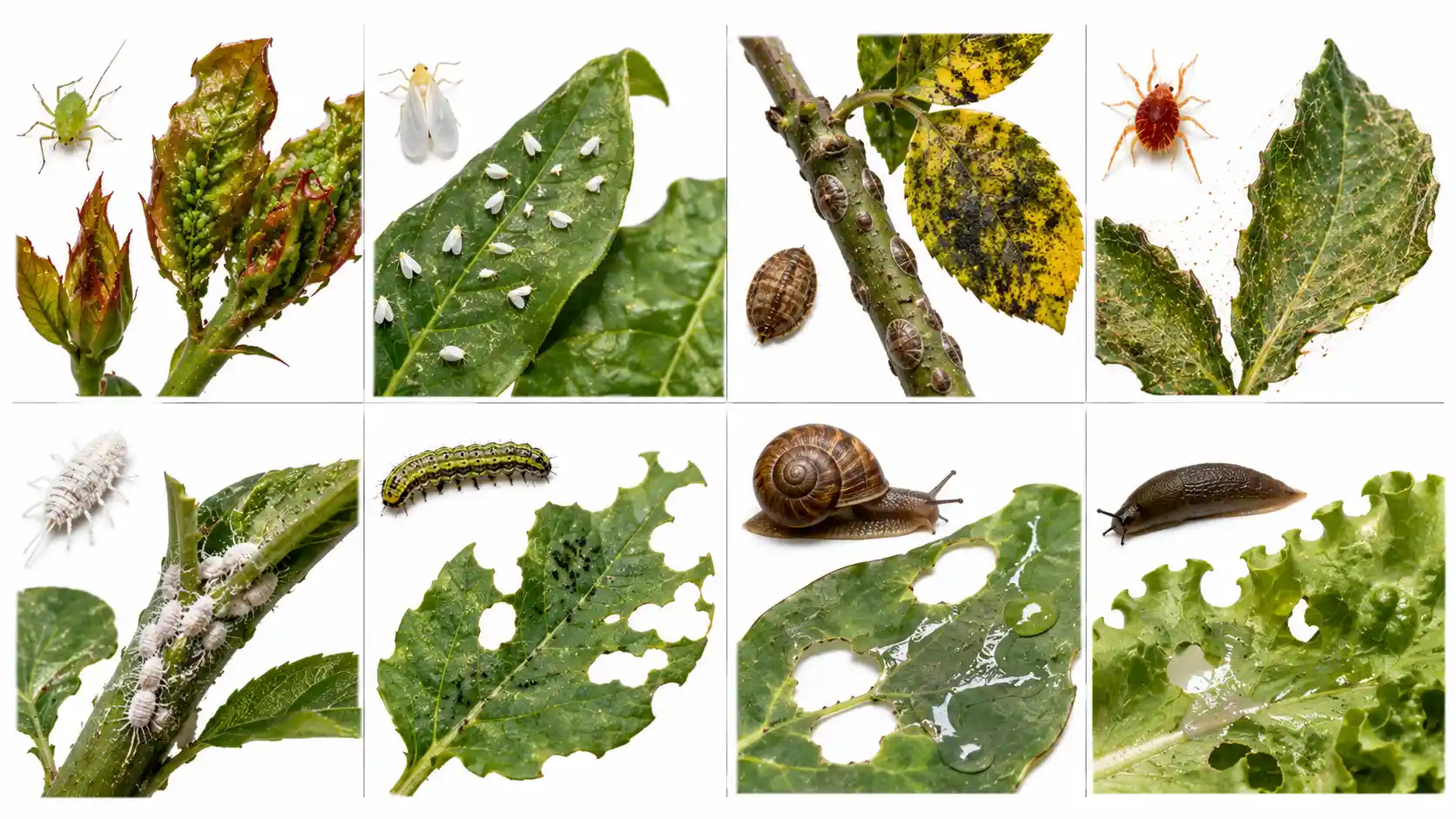
Successful identification combines several observations rather than relying on colour alone.
Consider:
- Body colour
- Body shape
- Overall size
- Wings or wingless appearance
- Number of legs
- Damage pattern
- Plant species affected
- Location on the plant
- Time of day when active
Garden Pest Identification Chart
| Pest Name | Appearance | Common Damage | Plants Affected |
| Aphids | Small green, black or brown insects | Curled leaves, sticky honeydew | Roses, vegetables, fruit trees |
| Whiteflies | Tiny white flying insects | Yellow leaves, honeydew | Tomatoes, herbs, ornamentals |
| Scale insects | Small waxy bumps | Weak growth, yellowing | Citrus, shrubs |
| Spider mites | Tiny red or yellow mites | Fine webbing, speckled leaves | Indoor and outdoor plants |
| Mealybugs | White cotton-like insects | Sticky residue, poor growth | Indoor plants, succulents |
| Caterpillars | Soft-bodied larvae | Large holes in leaves | Vegetables, flowers |
| Snails | Shelled molluscs | Ragged leaf damage | Seedlings, leafy vegetables |
| Slugs | Shell-less molluscs | Large holes and slime trails | Herbs and vegetables |
Elemo Baker recommends observing both the pest and the damage together rather than relying solely on photographs, as appearance can vary between life stages. For a more detailed, browsable reference beyond this table, our Australian Garden Pest Identification Lookup catalogues pest entries by appearance, host plant, and damage type. It’s a handy companion tool when you need to cross-check a pest you’ve spotted against multiple visual examples at once.
Soil-Dwelling Garden Pests
Not all garden pests are visible on foliage. Many live beneath the soil surface, feeding on roots and underground stems.
Common soil pests include:
- Root-feeding beetle larvae
- Wireworms
- Fungus gnat larvae
- Root mealybugs
- Root aphids
Plants affected by soil pests often show:
- Poor growth
- Wilting
- Yellow leaves
- Weak root systems
- Reduced flowering
Because these pests remain hidden, gardeners sometimes mistake their damage for watering or nutrient problems.
Vegetable Garden Pests in Australia
Vegetable gardens attract a diverse range of pests due to their soft, nutrient-rich growth.
Common vegetable garden pests include:
- Cabbage white butterfly caterpillars
- Aphids
- Whiteflies
- Leaf miners
- Tomato fruitworms
- Cutworms
- Slugs
- Snails
Unlike ornamental gardens, vegetable gardens require extra care when selecting treatments to ensure edible crops remain safe for harvest. If you’d prefer a printable or exportable format, our Garden Pest Identification Spreadsheet lists common Australian pests alongside affected crops and control notes. It’s especially useful for tracking vegetable-specific pests season by season in your own garden log.
As of the current growing season, many gardeners continue to favour integrated pest management techniques that combine monitoring, beneficial insects, physical barriers, and selective treatments instead of relying solely on chemical sprays.
Garden Moths and Other Flying Pests
Many flying insects are harmless or beneficial, but some are responsible for significant plant damage.
Garden moths themselves often cause little harm as adults. Their caterpillar larvae, however, can rapidly consume leaves, flowers, and vegetables.
Other common flying pests include:
- Whiteflies
- Fungus gnats
- Leaf miner flies
- Thrips
- Fruit flies
Understanding the insect’s life cycle is important because effective identification may require recognising both larval and adult stages.
Good Bugs vs Bad Garden Bugs
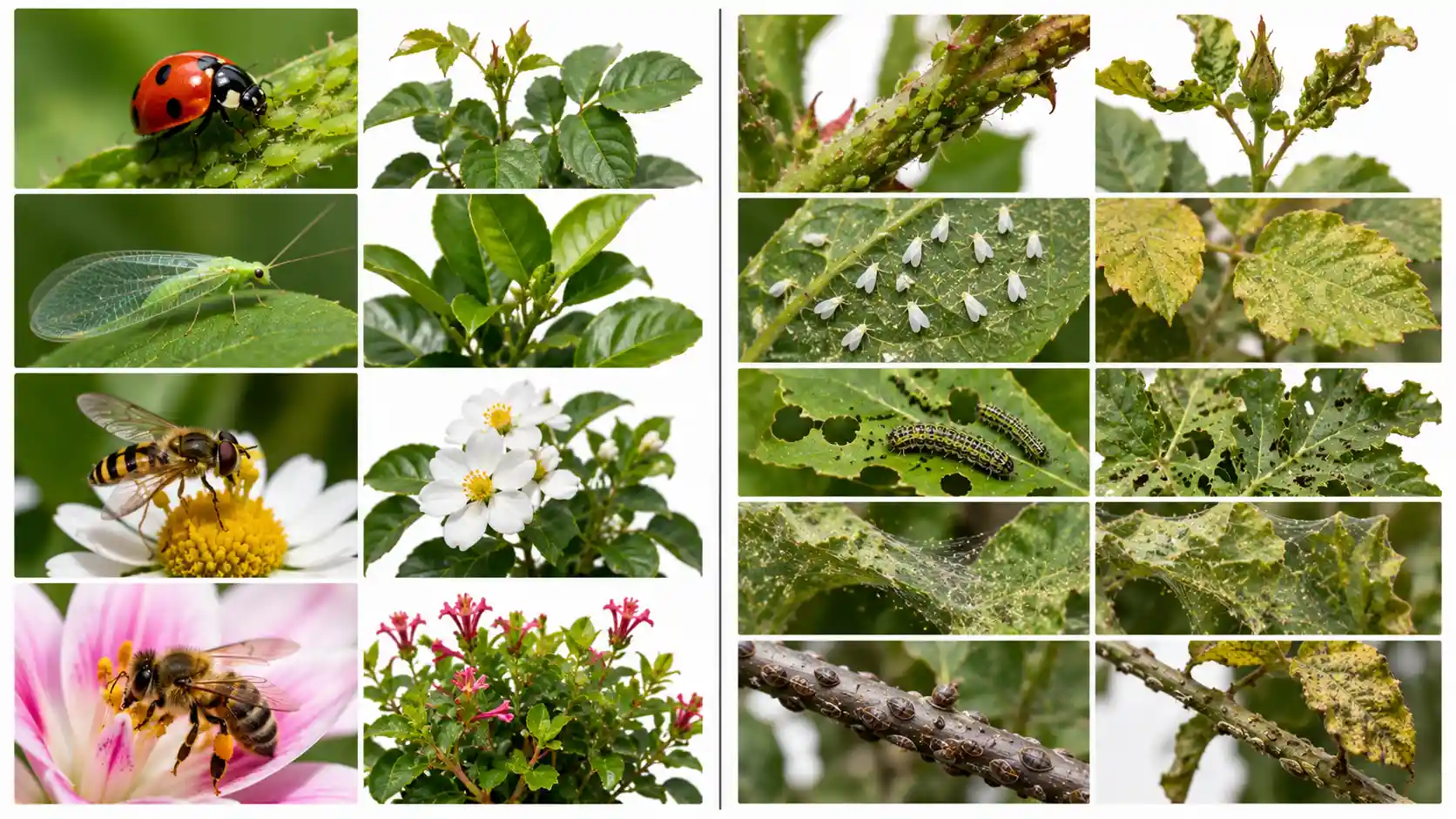
Not every insect found in a garden is harmful. Growing flowers throughout the year provides nectar for beneficial insects such as hoverflies and native bees. See our All Year Round Flowering Plants Australia Guide for suitable flowering plants. Many Australian native flowering plants attract beneficial pollinators and predatory insects that help reduce pest outbreaks naturally. Discover suitable species in our Australian Native Purple Flowers: Types, Care & Guide.
| Beneficial Insects | Harmful Garden Pests |
| Ladybirds | Aphids |
| Lacewings | Whiteflies |
| Hoverflies | Scale insects |
| Native bees | Caterpillars |
| Predatory wasps | Spider mites |
Beneficial insects naturally reduce pest populations and improve pollination. Treating every insect as a pest can disrupt the garden ecosystem. In our experience, preserving ladybirds, lacewings, and hoverflies often reduces aphid populations without additional intervention. Creating a diverse landscape with evergreen trees encourages birds and beneficial insects that naturally help keep pest populations under control. Explore suitable species in our Fast Growing Evergreen Trees Australia Guide.
Tools and Methods for Identifying Garden Pests
Accurate identification becomes easier when multiple resources are used together.
Helpful methods include:
- Visual inspection
- Magnifying lenses
- Identification charts
- Garden field guides
- University extension publications
- Local gardening groups
- Digital identification tools
Regular inspections allow problems to be detected before infestations become widespread. We’ve also compiled our findings into the Australian Garden Pest Identification Database, an organised reference covering pest behaviour, life cycles, and treatment notes. It’s designed to complement visual charts by adding deeper context gardeners can search through when identification apps fall short.
For a broader understanding of sustainable pest control strategies after correct identification, read about Integrated Pest Management (IPM) on Wikipedia, which explains how biological, cultural, physical, and chemical controls work together to minimise pest damage while protecting beneficial organisms.
Using a Garden Pest Identification App or Bug Identifier
Garden pest identification apps allow users to photograph insects and receive possible matches using image recognition technology.
These tools can be useful for narrowing down possibilities, but they are not always accurate. Lighting, insect life stage, and image quality can affect results.
For best accuracy, compare app suggestions with trusted identification guides before deciding on treatment.
Insect Identification Resources in Queensland and Other States
Australia’s climate varies considerably, meaning pest species differ between regions.
Queensland commonly experiences tropical and subtropical pests that are less common in southern states, while cooler regions may experience seasonal outbreaks of different insects.
Useful identification resources include:
- State agriculture departments
- Botanical gardens
- Local councils
- Community gardening organisations
- University entomology resources
Local information often provides the most accurate guidance because pest distribution varies across Australia.
Common Beginner Mistakes in Garden Pest Identification
Many pest problems become worse because the initial diagnosis is incorrect.
Common mistakes include:
- Assuming every insect is harmful.
- Treating plants before identifying the pest.
- Ignoring eggs or juvenile insects.
- Confusing disease symptoms with insect damage.
- Overlooking pests hiding beneath leaves.
- Forgetting to inspect stems and roots.
- Applying broad-spectrum pesticides unnecessarily.
Careful observation usually saves time, money, and beneficial insects.
Common Garden Pest Problems — Why They Happen and How to Fix Them
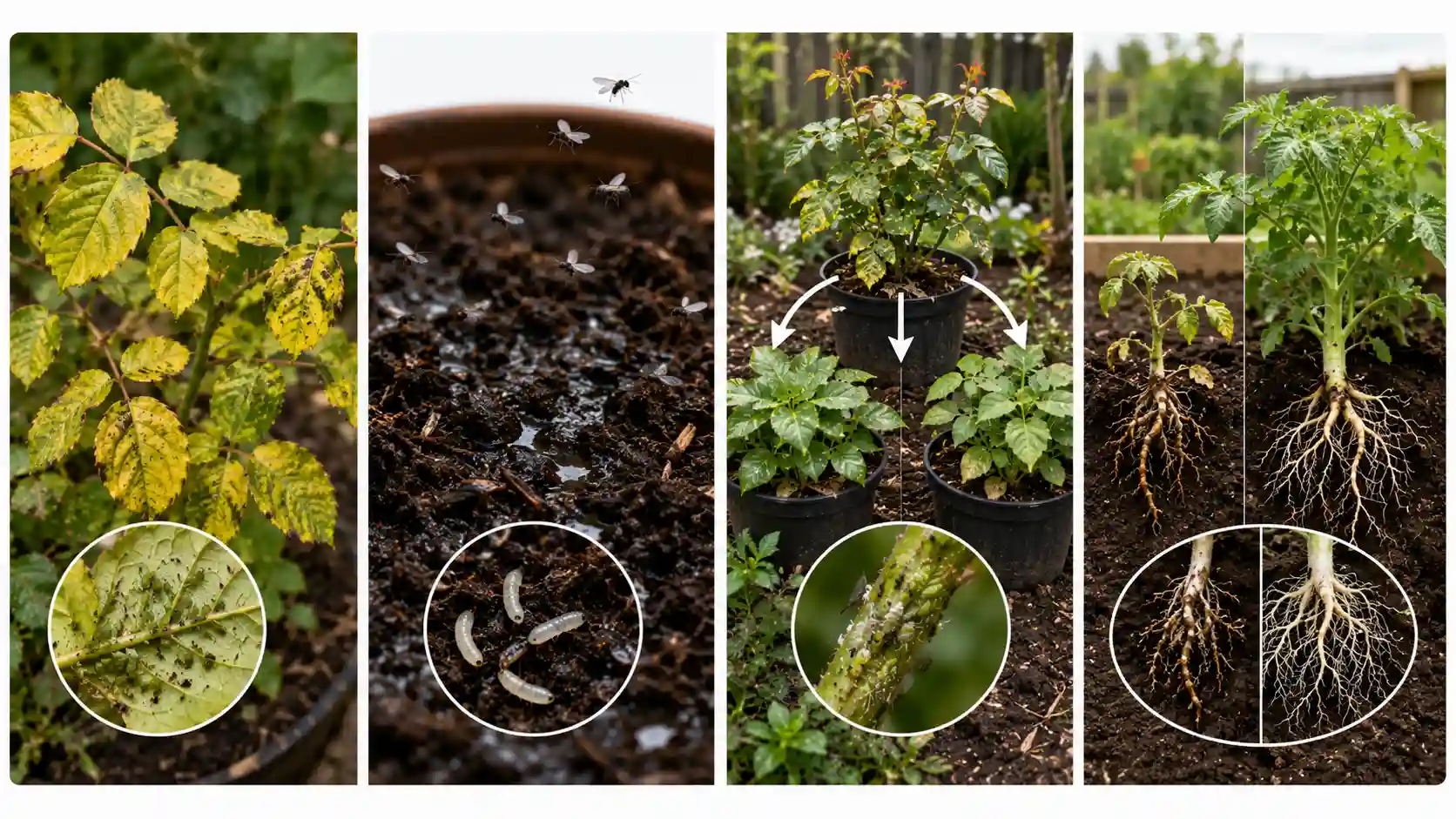
Regular hedge maintenance reduces pest hiding places. Our Photinia Fraseri Robusta: Growth, Care & Hedge Guide explains how healthy hedges naturally resist many common pests
Yellowing Leaves from Pest Damage
Why it happens:
Sap-feeding insects remove plant nutrients and weaken foliage.
How to fix it:
- Inspect both sides of leaves.
- Remove heavily infested foliage.
- Encourage beneficial insects.
- Apply targeted treatment if required.
How to prevent it:
- Inspect plants weekly.
- Maintain healthy plant growth.
- Avoid excessive nitrogen fertiliser.
Fast-growing screening plants also benefit from regular pest inspections. Learn more in our Pittosporum Silver Sheen Growth Rate Guide.
Overwatering Creating Pest-Friendly Conditions
Why it happens:
Constantly wet soil encourages fungus gnats and weakens plant roots.
How to fix it:
- Reduce watering frequency.
- Improve drainage.
- Allow the soil surface to dry slightly between watering.
How to prevent it:
- Water according to plant needs.
- Use well-draining soil.
Pest Infestations Spreading
Why it happens:
Many pests reproduce rapidly and spread between nearby plants.
How to fix it:
- Isolate affected plants.
- Remove heavily infested material.
- Monitor neighbouring plants closely.
How to prevent it:
- Inspect new plants before planting.
- Keep gardens clean.
- Encourage natural predators.
Slowed Plant Growth from Pest Stress
Why it happens:
Continuous feeding reduces photosynthesis and diverts plant energy away from growth.
How to fix it:
- Remove the pest.
- Improve watering and nutrition.
- Prune damaged growth if appropriate.
How to prevent it:
- Monitor regularly.
- Maintain healthy growing conditions.
- Act early when pests first appear.
Conclusion
Accurate garden pest identification is the foundation of effective plant care. By recognising damage patterns, understanding the appearance and behaviour of common Australian garden pests, and distinguishing harmful species from beneficial insects, gardeners can choose targeted control methods that protect both plants and the wider garden ecosystem. Careful observation, regular monitoring, and correct identification before treatment lead to healthier gardens and more sustainable pest management over the long term.
Frequently Asked Questions
How do I identify a garden pest in Australia?
Inspect the plant carefully, note the type of damage, examine the insect’s appearance, check where it is feeding, and compare your observations with reliable identification charts or local resources.
What are the most common garden pests in Australian backyards?
Common pests include aphids, caterpillars, whiteflies, spider mites, mealybugs, scale insects, snails, slugs, earwigs, and thrips.
Is there a free app to identify garden bugs?
Yes. Several free mobile apps use image recognition to identify insects. They are useful starting points but should be verified with trusted gardening or entomology references.
How can I tell the difference between a beneficial insect and a garden pest?
Beneficial insects usually prey on pests or pollinate flowers, while harmful pests feed directly on plants and leave visible damage such as holes, yellowing, webbing, or distorted growth.
What’s eating the leaves on my plants?
The most common causes include caterpillars, snails, slugs, beetles, grasshoppers, and leaf-feeding larvae. The shape and pattern of the damage often help identify the responsible pest.
Are soil bugs harmful to my garden?
Some soil-dwelling organisms are beneficial, while others damage plant roots. Identifying the specific soil pest is important before deciding whether treatment is necessary.
9 Comments