
Flowering Ash Tree Problems in Australia
Introduction
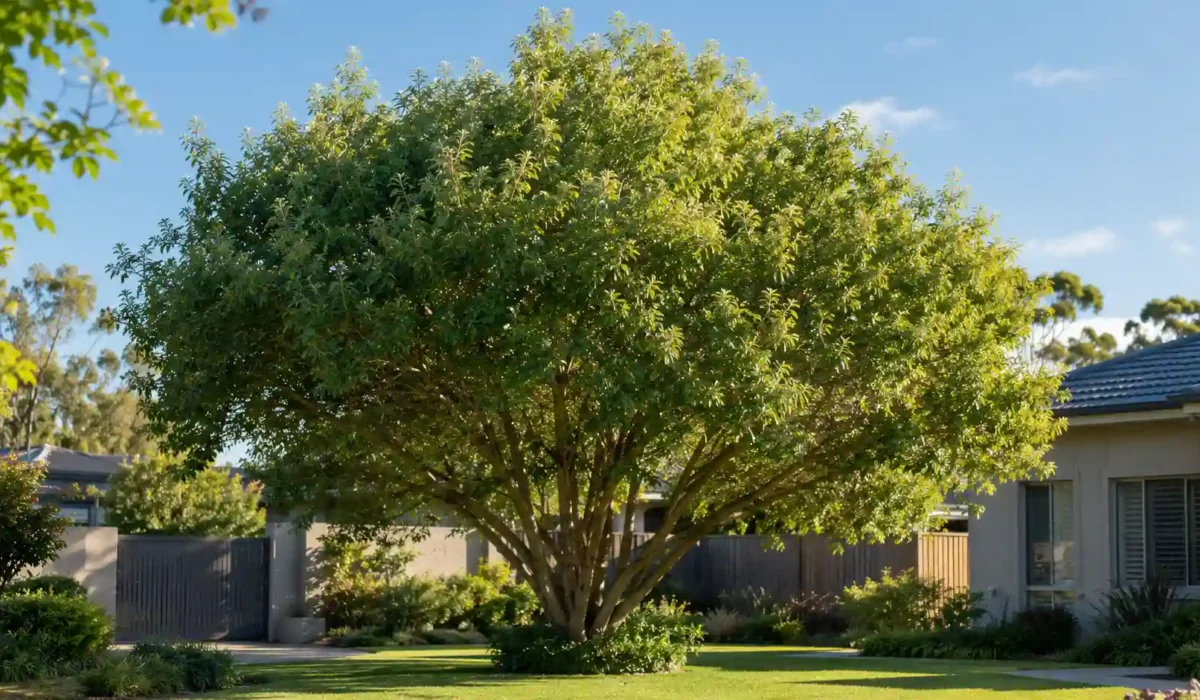
The flowering ash tree (Fraxinus griffithii) is one of the most commonly planted ornamental shade trees in Australian gardens, valued for its semi-evergreen foliage, tidy canopy, and adaptability to suburban landscapes. It is widely used across warm temperate and subtropical regions, yet it is often misunderstood in terms of care requirements and stress tolerance. Many flowering ash tree Australia plantings decline not because the species is weak, but because environmental conditions are mismatched. This includes poor soil structure, irregular watering, and urban heat stress. Understanding how this tree functions biologically is essential for long-term health and stable growth. The genus Fraxinus (ash trees) includes a wide range of species globally, many of which are used in ornamental and urban landscaping.
If you are comparing flowering ash with other ornamental species, our Flowering Trees Australia guide covers popular flowering trees, their characteristics, climate suitability, and growing considerations.
By Elemo Baker | Plant Care & Gardening Expert
Last Updated: August 2026
Quick Summary
- Flowering ash trees (Fraxinus griffithii) in Australia often decline due to environmental stress rather than disease.
- Leaf scorch, chlorosis, and root competition are the most common issues affecting health.
- Early warning signs include yellowing leaves, canopy thinning, and branch tip dieback.
- Most problems are reversible if identified early and managed correctly.
What Is a Flowering Ash Tree? A Quick Overview for Australian Gardeners
Definition and Identification
The flowering ash tree (Fraxinus griffithii) is a small to medium ornamental tree native to South and South-East Asia. In Australia, it is widely planted in urban landscapes due to its neat form and ability to provide shade without excessive maintenance. Mature trees typically reach 5–8 metres in height and develop a rounded, dense canopy. In mixed edible-ornamental gardens, species like the feijoa tree in Australia are sometimes planted alongside shade trees for multi-purpose landscaping.
Growth Habit in Australia
In cooler inland areas, the species behaves as semi-deciduous, while in warmer coastal regions it remains evergreen. This variation often confuses gardeners who expect uniform behaviour across climates. The tree produces small white flower clusters in spring, followed by winged seeds typical of the Fraxinus genus.
Why It Is Widely Planted
Flowering ash is popular because it establishes quickly, tolerates moderate drought once mature, and adapts well to urban conditions. However, poor soil preparation or excessive compaction often leads to long-term decline.
Types of Ash Trees Grown in Australia
For gardeners comparing compact ornamental trees suitable for suburban landscapes, plants like the Leptospermum dwarf red tea tree also offer dense screening and low-maintenance growth in similar Australian conditions.
Flowering Ash (Fraxinus griffithii)
Most common in Australian gardens; evergreen to semi-evergreen depending on climate; ideal for suburban shade.
Golden Ash (Fraxinus excelsior ‘Aurea’)
Deciduous species valued for golden autumn foliage; performs best in cooler regions.
Green Ash (Fraxinus pennsylvanica)
Occasionally used in parks; more cold-hardy and fully deciduous.
Common Ash (Fraxinus excelsior)
Rare in Australia due to unsuitable warm climate conditions.
Comparison Table
| Species | Habit | Climate Suitability | Mature Height | Use in Australia |
| Flowering Ash | Semi-evergreen | Warm temperate/subtropical | 5–8 m | Gardens, streets |
| Golden Ash | Deciduous | Cool temperate | 10–15 m | Ornamental autumn colour |
| Green Ash | Deciduous | Cold temperate | 12–18 m | Parks, large spaces |
| Common Ash | Deciduous | Cool climates only | 20–30 m | Rare ornamental use |
Common Flowering Ash Tree Problems in Australia
Leaf Scorch and Sun Stress
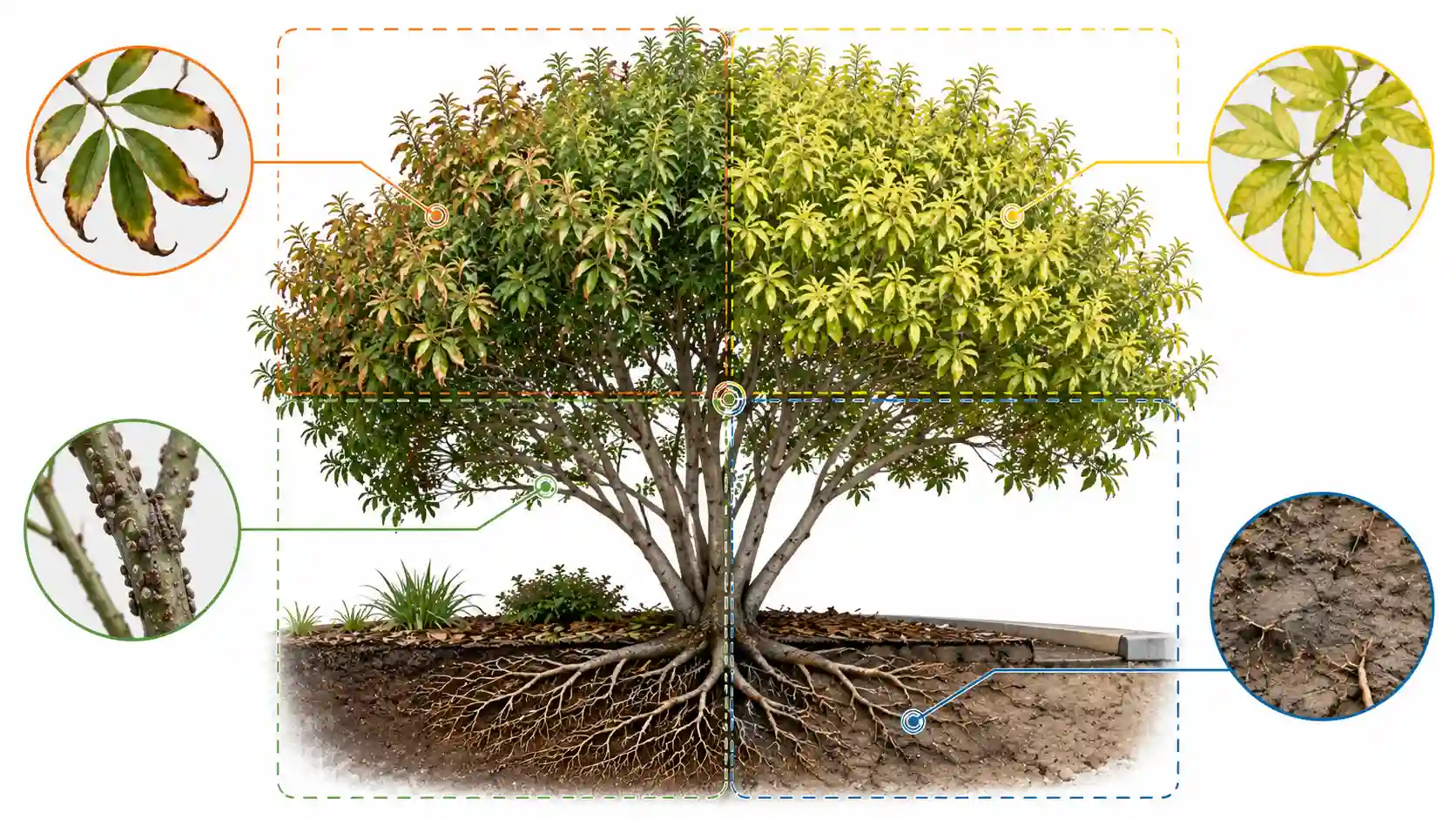
Leaf scorch occurs when intense afternoon sun, reflected heat, and dry winds damage leaf margins. It appears as brown, crispy edges rather than uniform yellowing. In our experience managing urban plantings, western exposure is the most common trigger. Improving irrigation consistency and providing wind protection reduces severity.
Chlorosis (Yellowing Leaves)
Chlorosis is usually caused by iron deficiency in alkaline or poorly drained soils. Leaves turn yellow while veins remain green. Elemo Baker recommends applying chelated iron and improving soil drainage, as correction of pH imbalance often restores normal foliage colour.
Root Competition and Soil Compaction
In compacted suburban soils, roots struggle to expand, leading to restricted growth and canopy thinning. The root system of Fraxinus griffithii is moderately spreading but highly sensitive to hard surfaces. Aeration and organic matter incorporation improve long-term vitality.
Scale Insects and Sooty Mould
Scale insects appear as small white or brown bumps on stems and leaves. They produce honeydew, which leads to sooty mould growth. Horticultural oil sprays are effective when applied early in infestation cycles. To support pollinator-friendly garden ecosystems, many Australian gardeners also include seasonal flowers such as pink marigolds, which help improve biodiversity around larger shade trees.
Phytophthora Root Rot
This soil-borne pathogen thrives in waterlogged conditions. Symptoms include wilting, sudden decline, and root decay. Prevention through drainage improvement is critical, as treatment options are limited once infection is established.
Verticillium Wilt
A vascular fungal disease that blocks water movement within the tree. Symptoms include one-sided dieback and internal wood discolouration. There is no cure; management focuses on pruning and stress reduction.
Canopy Dieback and Branch Death
Dieback can result from multiple stress factors including drought, poor pruning, or root damage. It is important to distinguish this from European ash dieback (Hymenoscyphus fraxineus), which is not currently present in Australia but often searched by gardeners.
Are Flowering Ash Tree Roots Invasive?
When planting near hard surfaces, many homeowners also consider curated driveway plant ideas for Australian homes that are better adapted to restricted root zones.
Root System Behaviour
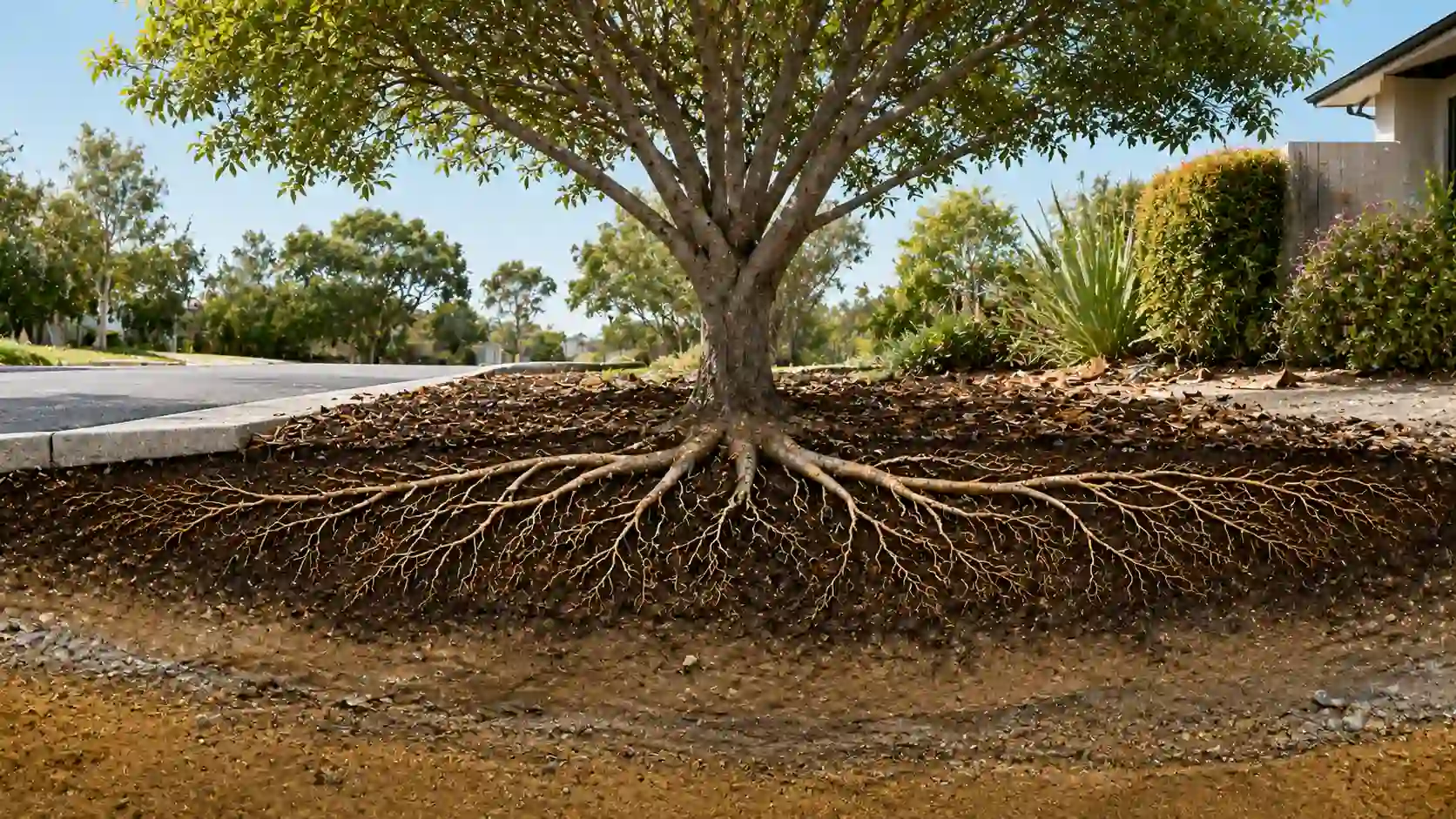
The roots of Fraxinus griffithii are moderately spreading but not aggressively invasive compared to species like figs or poplars. Most root development occurs in the upper soil layers.
Structural Risks
In confined urban spaces, roots may lift paving or compete with nearby plants, especially where soil volume is restricted.
Planting Distance
A minimum distance of 3–5 metres from structures is recommended to reduce future interference.
Dwarf Varieties
Dwarf flowering ash cultivars have reduced canopy and root spread, making them more suitable for small gardens, though they still require proper soil conditions.
How to Tell If Your Flowering Ash Tree Is Dying
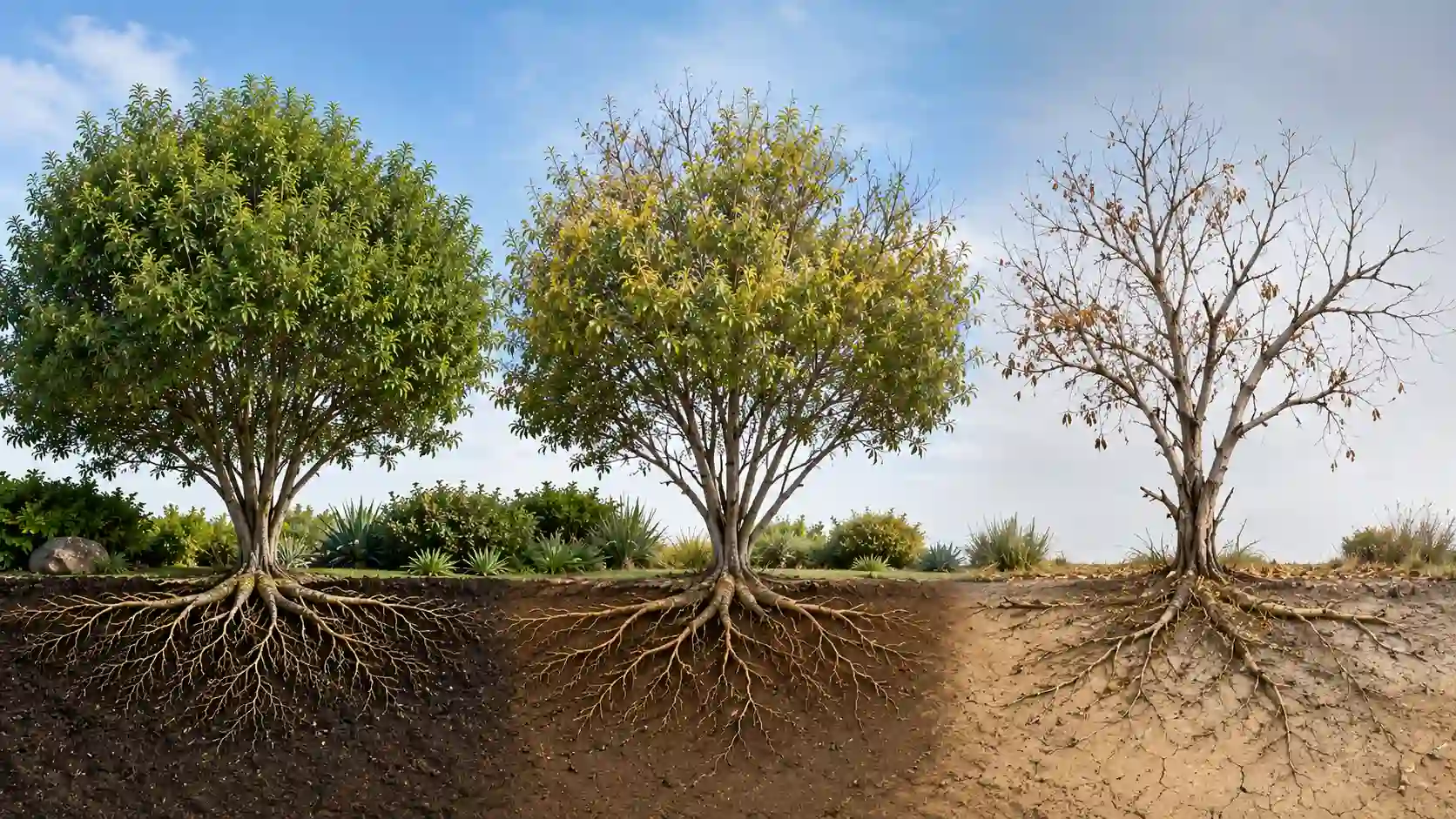
Early Warning Signs
Early symptoms include pale or yellowing leaves, reduced shoot growth, and thinning canopy density.
Mid-Stage Decline
Progressive dieback begins at branch tips. Bark may crack, and fungal growth can appear at the base in moist conditions.
Terminal Indicators
Extensive deadwood, absence of spring bud formation, and widespread root failure indicate severe decline.
When a Tree Cannot Recover
If more than 60% of the canopy is dead or structural rot is present, recovery is unlikely. Arborists typically assess root integrity and vascular function before recommending removal.
Can Ash Trees Recover?
Recovery Potential in Australia
Most flowering ash issues unrelated to severe root rot or vascular disease are recoverable with intervention.
Key Recovery Factors
Tree age, root health, and environmental stability determine recovery success. Younger trees recover more quickly than mature stressed specimens.
Ash Dieback Clarification
European ash dieback (Hymenoscyphus fraxineus) is not established in Australia. Local decline cases are usually environmental rather than pathogenic.
How to Treat a Sick Flowering Ash Tree
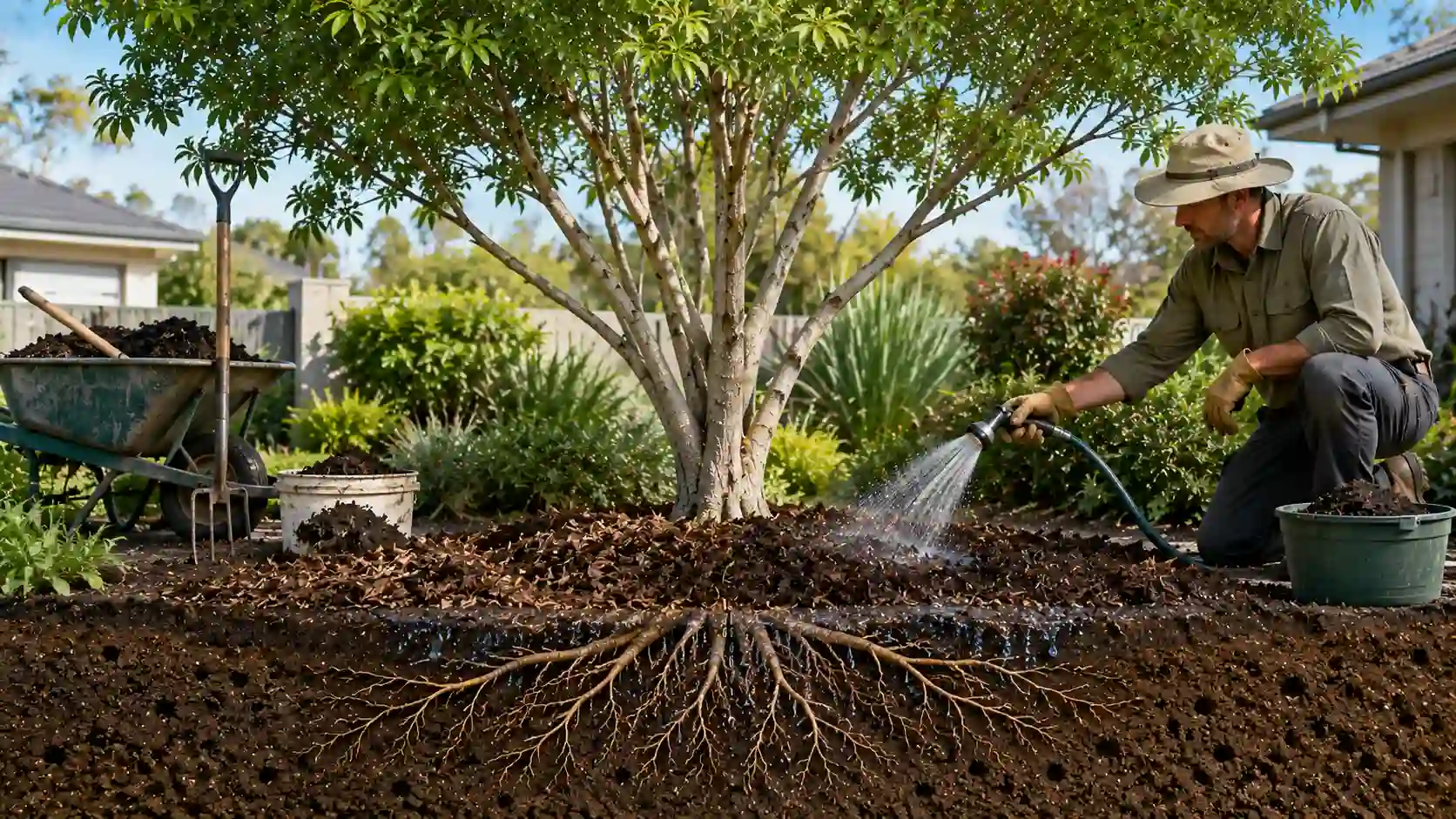
Step 1 — Diagnose the Problem
Identify whether the issue is water stress, pests, or disease through visual inspection and soil assessment.
Step 2 — Improve Soil Conditions
Aerate compacted soil and incorporate organic matter to improve drainage and root oxygenation.
Step 3 — Adjust Watering Practices
Use deep, infrequent watering rather than shallow irrigation. Mulching helps stabilise soil moisture.
Step 4 — Fertilisation
Apply balanced NPK fertiliser in early growth periods. Use chelated iron for chlorosis but avoid fertilising during severe stress.
Step 5 — Pest and Disease Control
Use horticultural oil for scale insects and copper-based fungicides for fungal issues where appropriate.
Step 6 — Pruning Strategy
Remove dead wood with clean cuts. Avoid topping, as it causes structural weakness and abnormal regrowth patterns.
Flowering Ash Tree Size and Growth Rate
For those seeking similar shade trees with faster ornamental impact, fast-growing magnolia varieties in Australia are often used as alternative landscape trees.
Mature Size
Fraxinus griffithii typically reaches 5–8 metres in height and 4–6 metres in width in Australian conditions. In tropical and subtropical regions, compact fruiting plants like the super dwarf Cavendish banana are often used alongside ornamental shade trees in space-limited gardens.
Growth Rate
It is a moderate grower, with faster development in fertile, well-drained soils and slower growth under stress conditions.
Dwarf Forms
Dwarf varieties are smaller but may be more sensitive to environmental stress due to limited root mass.
Flowering Ash vs. Golden Ash
For gardeners identifying complementary landscaping plants, guides like pink flowering shrub identification in Australia help match seasonal colour palettes with shade trees.
Growth Habit
Flowering ash is semi-evergreen, while golden ash is deciduous with seasonal leaf drop.
Climate Suitability
Flowering ash performs better in warmer climates; golden ash prefers cooler regions.
Problem Profiles
Flowering ash is more prone to heat stress and chlorosis, while golden ash is more susceptible to cold-related stress.
Aesthetic Differences
Flowering ash produces subtle white spring flowers, while golden ash is valued for bright autumn foliage.
Common Gardening Mistakes
For gardeners seeking alternatives that require less maintenance than flowering ash, explore low-maintenance fence line plants for Australian gardens that better suit narrow urban spaces.
Poor Planting Location
Planting too close to structures restricts root expansion and increases maintenance issues. Similar spacing and root management issues are also seen in hedge species such as Ficus Hillii ‘Flash’, which requires careful placement to avoid structural and root-related conflicts.
Improper Watering
Overwatering young trees or shallow irrigation leads to weak root systems.
Topping Trees
Cutting the top of an ash tree causes structural instability and promotes weak regrowth.
Ignoring Chlorosis
Delayed treatment of nutrient deficiencies can lead to long-term canopy decline.
Over-Fertilising During Heat
Excess nitrogen during hot conditions increases stress and leaf burn risk.
Lack of Mulching
Without mulch, soil moisture fluctuates excessively, stressing the root system.
Conclusion
The flowering ash tree (Fraxinus griffithii) is a widely used ornamental species in Australia, but its long-term health depends heavily on correct environmental management. Most flowering ash tree problems in Australia stem from soil stress, water imbalance, and urban growing conditions rather than inherent disease susceptibility. With proper diagnosis, timely intervention, and consistent care, these trees can remain healthy, stable, and attractive for many years. Early observation and corrective action remain the most effective strategies for maintaining strong tree health.
FAQs
1. What does a sick flowering ash tree look like?
A sick flowering ash tree shows yellowing leaves, thinning canopy, branch tip dieback, and sometimes fungal growth at the base.
2. Are flowering ash tree roots invasive in Australian gardens?
They are moderately spreading but not highly invasive. Problems occur mainly in confined urban spaces.
3. Can a flowering ash tree recover from severe dieback?
Yes, if the root system is healthy and less than half the canopy is affected, recovery is possible with care.
4. What is the best fertiliser for a flowering ash tree?
A balanced NPK fertiliser works best, with chelated iron used for chlorosis correction.
5. How long do flowering ash trees live?
They typically live several decades, but lifespan depends on soil quality, water management, and urban stress levels.
6. How do I know if my ash tree has pests or disease?
Scale insects and sticky residue indicate pests, while uniform yellowing and wilting often suggest physiological or soil-related issues.
7. Is the flowering ash tree native to Australia?
No, Fraxinus griffithii is native to South and South-East Asia and is widely planted as an ornamental tree in Australia.
2 Comments