

Acmena Smithii Minor: Size, Growth Rate, Care & Hedge Guide
Introduction
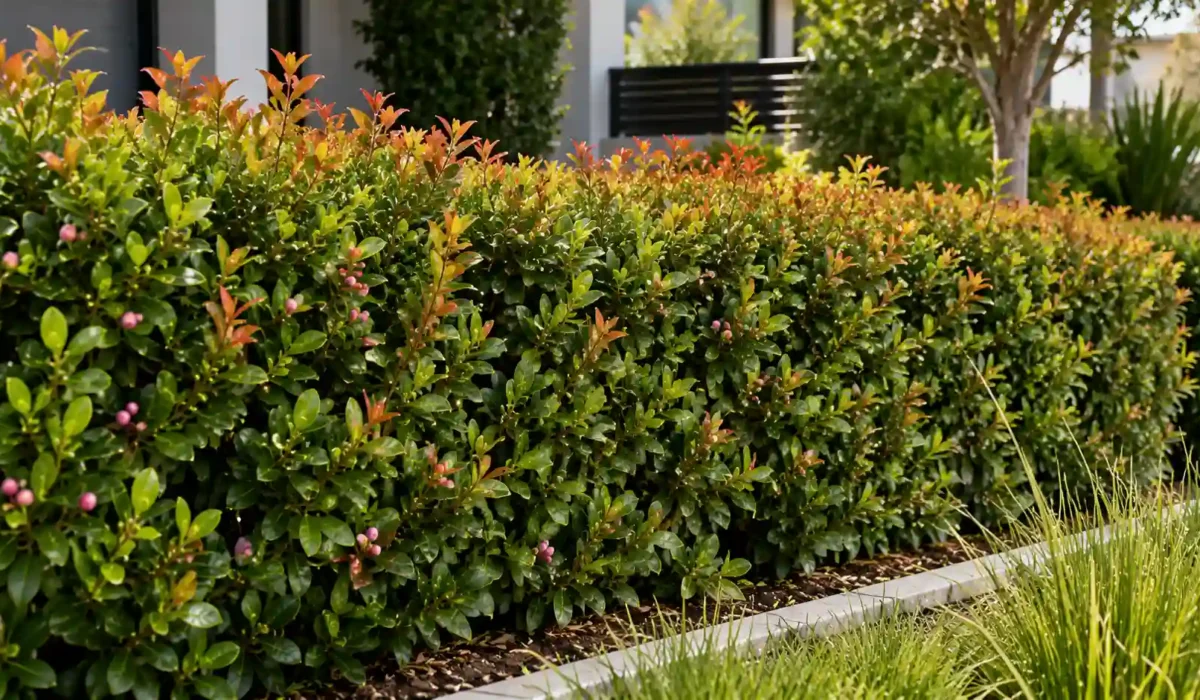
Acmena smithii minor, commonly sold as dwarf lilly pilly, small leaf lilly pilly, or Syzygium smithii minor, is a compact Australian native shrub valued for dense hedging, screening, and low-maintenance garden design. Unlike the larger Acmena smithii species, the minor form stays much smaller, making it suitable for suburban gardens where space is limited. It typically grows around 2–3 metres tall and 1–2 metres wide, while maintaining glossy foliage, attractive new growth, and strong resistance to common lilly pilly pests. This guide explains Acmena smithii minor size, growth rate, planting requirements, care needs, hedge spacing, cultivars, and common growing problems.
By Elemo Baker | Plant Care & Gardening Expert
Last Updated: July 2026
Quick Summary
- Acmena smithii minor usually reaches around 2–3 m tall and 1–2 m wide, making it much smaller than standard Acmena smithii.
- It is a moderate to fast-growing native shrub, often adding around 40–80 cm per year in favourable conditions.
- The plant performs best in full sun to part shade, with fertile, well-drained soil and regular watering during establishment.
- It is widely used as a dense hedge plant because it responds well to pruning and has good psyllid resistance.
- For a formal hedge, plants are generally spaced around 1 metre apart to encourage a thick screen.
What Is Acmena Smithii Minor?
Acmena smithii minor is a compact-growing form of the Australian native lilly pilly species Acmena smithii (now commonly classified under Syzygium smithii). It belongs to the Myrtaceae family, which also includes well-known Australian plants such as eucalyptus, bottlebrush, and tea tree.
The plant is naturally suited to Australian gardens because it tolerates a wide range of conditions, including coastal environments, urban areas, and humid climates. It is especially popular as a hedge plant because its dense foliage can be clipped into formal shapes while still providing natural screening.
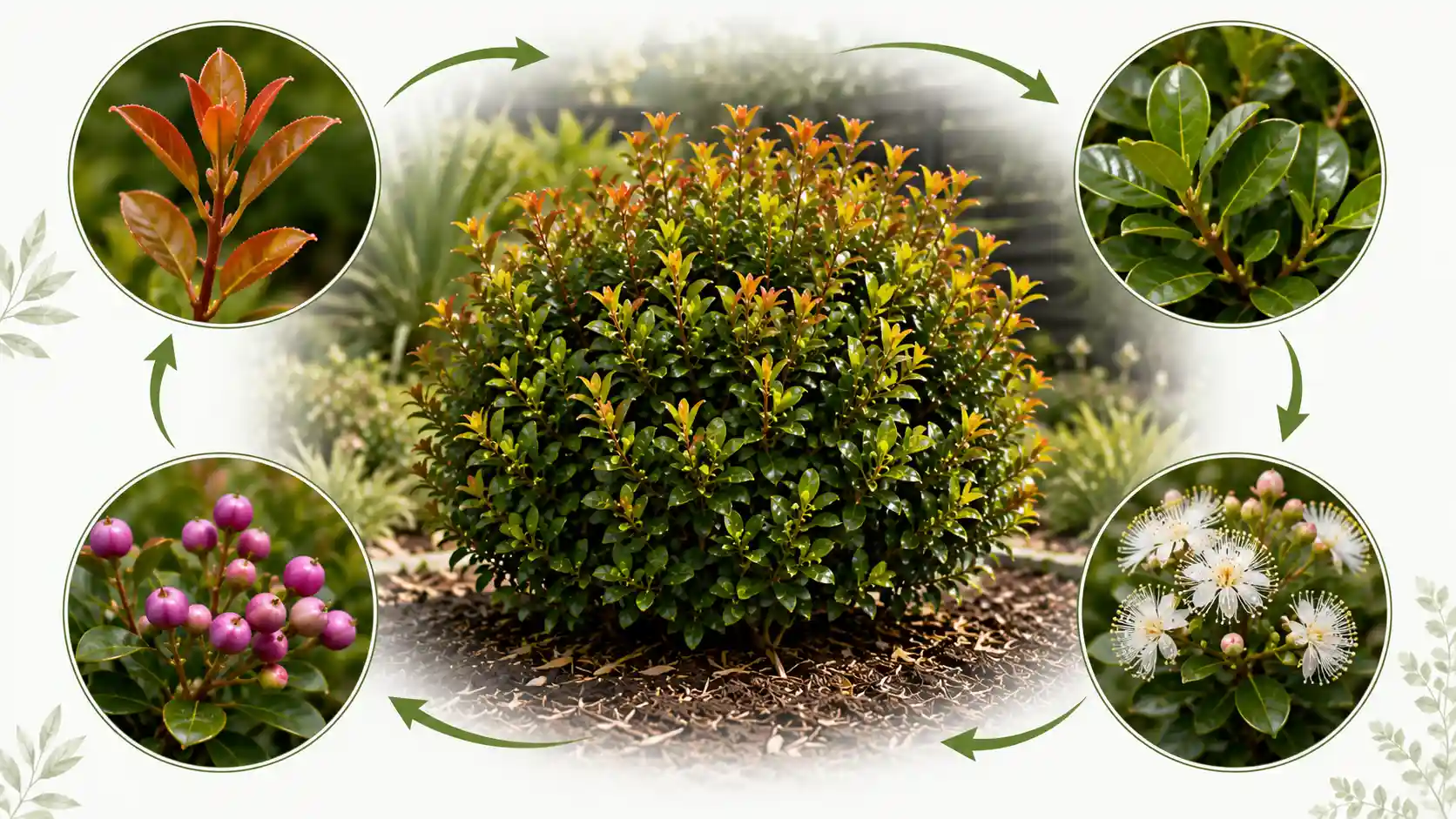
The main identifying features of Acmena smithii minor include:
- New growth: Bronze, copper, or reddish young leaves that gradually mature to glossy green.
- Leaves: Small, narrow, evergreen leaves with a dense growth habit.
- Flowers: Small white to cream flowers appearing mainly during summer.
- Fruit: Attractive pink to mauve berries that develop after flowering.
The “minor” form is valued because it provides the appearance and benefits of a lilly pilly without the large mature size of the original species.
It is commonly sold by Australian nurseries under names including:
- Dwarf lilly pilly
- Small leaf lilly pilly
- Acmena lilly pilly
- Acmena plant
- Syzygium smithii minor
In practical garden use, Acmena smithii minor is often selected for fence-line planting, privacy screens, borders, and smaller gardens where a 15–20 metre tree would be unsuitable.
Acmena Smithii vs Acmena Smithii Minor — What’s the Difference?
The main difference between Acmena smithii and Acmena smithii minor is size: the minor form is a naturally compact selection that remains around 2–3 metres tall, while the standard species can potentially grow 15–20 metres high.
Both plants belong to the same species group, but their growth habits are very different.
| Feature | Acmena smithii | Acmena smithii minor |
| Mature height | Up to 15–20 m | Usually 2–3 m |
| Growth habit | Large tree or tall screening plant | Compact shrub |
| Best use | Large properties, parks, tall screens | Residential hedges and small gardens |
| Pruning needs | Moderate | Regular clipping for formal hedges |
| Leaf size | Larger foliage | Smaller leaves and denser texture |
The term Acmena smithii var minor is often used in gardening references to describe this smaller-growing form. Gardeners choose the minor type when they want the benefits of a native lilly pilly hedge without excessive height or root competition.
Acmena Smithii vs Syzygium Smithii — Naming Explained
Acmena smithii and Syzygium smithii refer to the same plant because botanical classification changes moved Acmena species into the Syzygium genus. The plant’s botanical classification has changed over time, with Acmena species being moved into the Syzygium genus as part of modern taxonomic studies (see: Syzygium smithii).
In 2006, taxonomic studies resulted in several Acmena species being reclassified into the larger Syzygium genus. As a result, the plant may appear under different scientific names depending on the source.
Common names currently used include:
- Acmena smithii
- Syzygium smithii
- Syzygium smithii minor
- Syzygium acmena smithii
Australian nurseries often continue using the Acmena name because it remains familiar among gardeners. Therefore, when buying a dwarf lilly pilly, these names may describe the same plant group rather than different species.
How Tall Does Acmena Smithii Minor Grow?
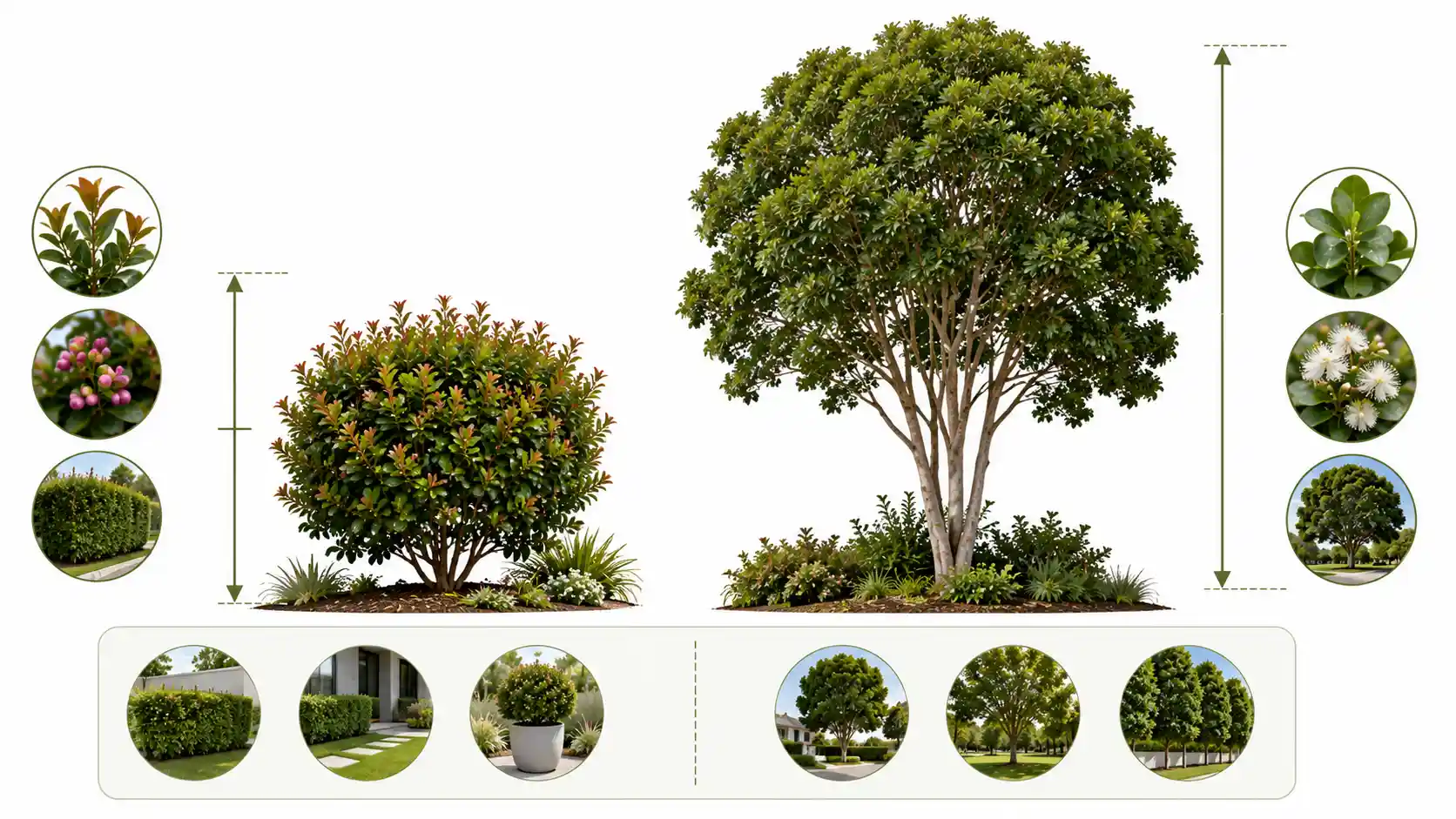
Acmena smithii minor typically grows 2–3 metres tall and 1–2 metres wide, although some unclipped plants may reach around 3–5 metres depending on growing conditions.
The final size depends on several factors:
- Soil quality
- Climate
- Available moisture
- Sunlight exposure
- Pruning frequency
- Plant age
For formal hedges, regular pruning can maintain Acmena smithii minor at much shorter heights, commonly between 80 cm and 2 metres. This makes it useful for low privacy screens, pathways, pool surrounds, and boundary planting.
Compared with the standard Acmena smithii tree, the minor form provides better control in smaller landscapes.
Indoor/Container vs Garden Size
Acmena smithii minor can be grown successfully in large pots because of its naturally compact growth habit. Container-grown plants usually remain smaller because restricted root space limits overall growth.
Typical differences include:
| Growing situation | Expected size |
| Large garden bed | 2–3 m tall |
| Regularly clipped hedge | 0.8–2 m |
| Large container | Around 1–2 m depending on care |
When growing in containers, plants require more frequent watering because pots dry out faster than garden soil. Regular pruning also helps maintain a balanced shape.
For indoor use, Acmena smithii minor is generally less suitable than traditional indoor plants because it prefers outdoor light levels, airflow, and seasonal conditions.
How Big Do Cultivars Like Allyn Magic Get?
Acmena smithii ‘Allyn Magic’ is a named cultivar within the lilly pilly group and is recognised for its compact growth, colourful foliage, and suitability for hedging.
Allyn Magic generally remains smaller than standard Acmena smithii and is commonly used where gardeners want a neat, dense screen without excessive height.
Its growth characteristics include:
- Compact shrub habit
- Attractive reddish new foliage
- Dense branching after pruning
- Suitability for formal hedges
Compared with general Acmena smithii minor, Allyn Magic is selected more specifically for ornamental performance, but both are suitable choices for smaller Australian gardens.
Growth Rate of Acmena Smithii Minor
Acmena smithii minor is considered a moderate to fast-growing shrub, usually producing around 30–80 cm of growth per year when provided with good soil, water, and sunlight. For gardeners wanting faster privacy solutions, other evergreen species may also be suitable. See our guide to Fast Growing Evergreen Trees Australia for more screening choices.
Growth speed varies depending on environmental conditions. Plants in warm, humid regions with fertile soil often establish faster than those grown in poor, dry, or exposed locations.
Growth is typically strongest during:
- Spring, when temperatures increase and new shoots develop.
- Summer, when adequate moisture supports active growth.
During colder months, growth naturally slows as the plant enters a less active period.
How Fast Does Acmena Smithii Firescreen Grow?
Acmena smithii ‘Firescreen’ is a fast-growing lilly pilly cultivar that can establish quickly when compared with many compact hedge varieties, although growth speed depends on climate, soil, and maintenance.
Firescreen is often selected for privacy screens because of its vigorous growth, dense branching, and attractive red new foliage. Compared with standard Acmena smithii minor, Firescreen may grow slightly faster and can reach a taller screening size if left unpruned.
Key differences include:
| Feature | Acmena smithii minor | Acmena smithii ‘Firescreen’ |
| Growth habit | Compact shrub | Vigorous screening plant |
| Growth speed | Moderate to fast | Fast-growing |
| Main use | Smaller hedges and gardens | Privacy screens and larger hedges |
| Foliage | Small glossy leaves | Colourful new growth with dense foliage |
In good conditions, Firescreen responds strongly to regular watering and fertilising, making it suitable where faster screening is required. However, regular pruning is important to prevent excessive height and maintain hedge density.
How to Speed Up Lilly Pilly Growth
The best way to speed up lilly pilly growth is to improve soil quality, maintain consistent moisture, provide adequate nutrients, and reduce competition around the roots.
Elemo Baker recommends focusing on establishment care during the first 12–18 months because this period determines how quickly a hedge develops.
Practical methods include:
- Prepare the soil before planting: Add compost or organic matter to improve soil structure and drainage.
- Water consistently: Young plants need regular watering, especially during hot Australian summers.
- Apply suitable fertiliser: Use a slow-release native fertiliser during active growing periods.
- Mulch around the root zone: A 5–8 cm layer of organic mulch helps retain moisture and regulate soil temperature.
- Prune early: Light trimming encourages branching and creates a thicker hedge.
A common beginner mistake is allowing young lilly pillies to dry out repeatedly during establishment. Even drought-tolerant native plants require reliable moisture while developing their root system.
Growing Conditions and Care Guide
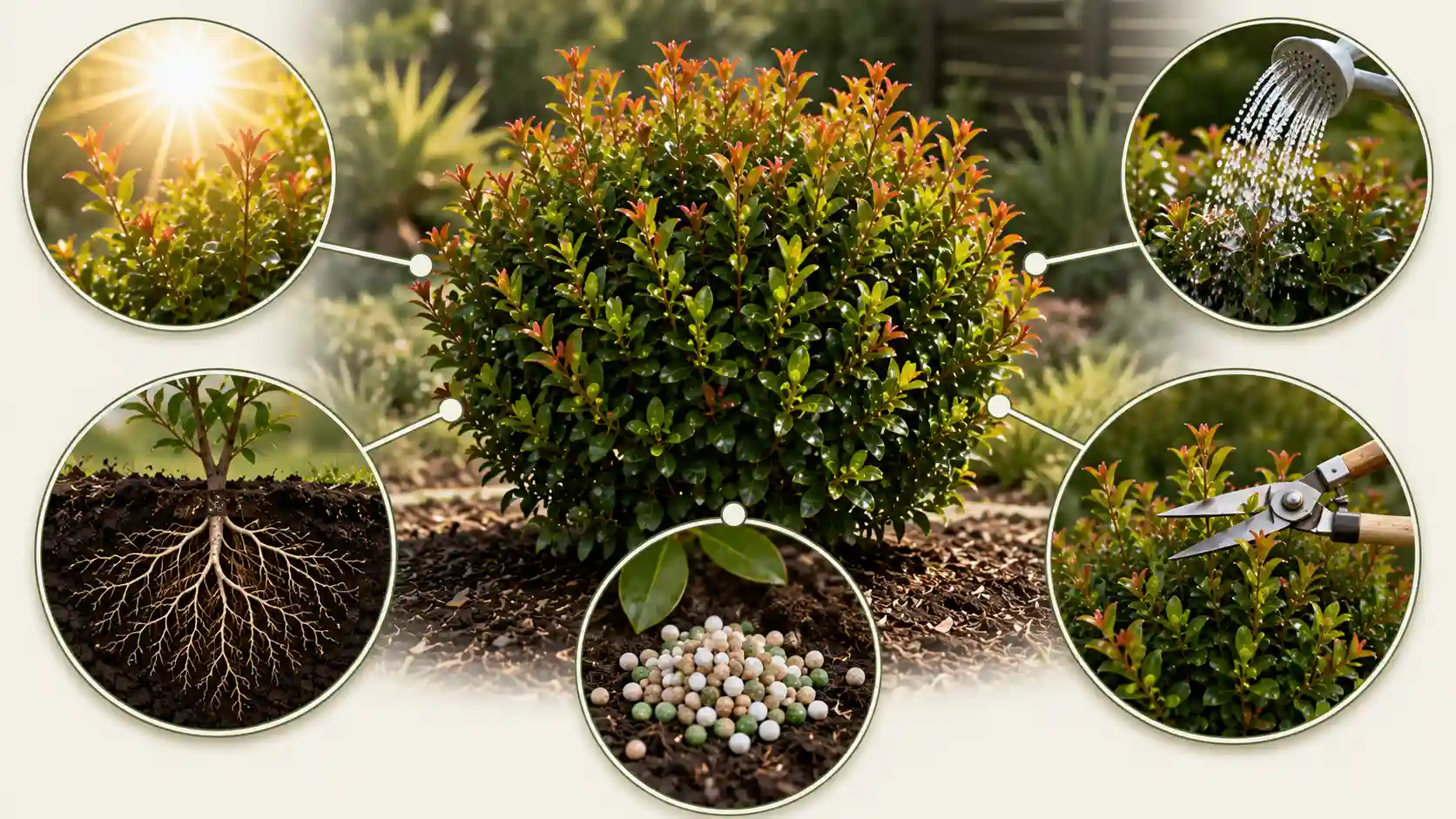
Acmena smithii minor grows best in full sun to part shade, fertile well-drained soil, regular watering during establishment, and occasional pruning to maintain shape.
This adaptable Australian native performs well across many garden conditions, including coastal locations and urban landscapes.
Light Requirements
Acmena smithii minor can grow in full sun or part shade, but it generally produces denser growth and better foliage colour with more sunlight.
Ideal conditions include:
- Full sun: encourages compact growth and stronger foliage density.
- Part shade: suitable in warmer climates where afternoon protection reduces heat stress.
- Heavy shade: may result in slower growth and a thinner hedge.
If planting as a privacy screen, locations receiving at least several hours of direct sunlight daily usually provide the best results.
Soil Requirements
Acmena smithii prefers humus-rich, well-drained soil that retains moisture without becoming waterlogged.
The plant is adaptable and can tolerate many Australian soil types, but growth improves when soil conditions are balanced.
Suitable soil characteristics include:
- Good drainage
- Organic matter content
- Slightly acidic to neutral pH
- Reliable moisture availability
Poor drainage is one of the most common causes of yellow leaves and weak growth because saturated soil reduces oxygen around the roots.
Watering Requirements
Young Acmena smithii minor plants need regular watering, while established plants become reasonably drought tolerant once their root systems are developed.
A practical watering approach:
- First year after planting: water deeply once or twice weekly depending on rainfall.
- Hot weather: increase watering frequency if soil becomes dry.
- Established hedges: water during extended dry periods.
Deep watering encourages stronger roots compared with frequent shallow watering.
Fertilising Needs
Acmena smithii minor benefits from feeding during active growth periods.
Recommended approach:
- Apply a slow-release native fertiliser in spring.
- Provide additional feeding in autumn if required.
- Avoid excessive high-phosphorus fertilisers because many Australian natives are sensitive to phosphorus levels.
Healthy nutrition supports dense foliage production and improves hedge formation.
Pruning Requirements
Regular pruning is one of the most important care practices for Acmena smithii minor hedges.
Pruning helps:
- Maintain the desired height.
- Encourage branching.
- Create thicker foliage.
- Prevent a sparse or leggy appearance.
For formal hedges, light trimming several times during the growing season usually produces the best density.
Climate Tolerance
Acmena smithii minor is suited to many Australian climate zones and tolerates coastal conditions, urban pollution, and light frost once established.
It performs particularly well in:
- Temperate gardens
- Subtropical regions
- Coastal landscapes
Young plants may need extra protection from severe frost or extreme weather until established.
Planting Acmena Smithii Minor as a Hedge
Acmena smithii minor is one of the popular Australian native hedge plants because it forms dense foliage, responds well to clipping, and stays smaller than many traditional screening trees.
It can be planted using:
- Tube stock plants
- Small nursery pots
- Larger established plants
Tube stock is often economical for creating long hedges, while larger plants provide faster initial screening.
Before planting:
- Remove weeds from the planting area.
- Improve poor soil with compost or organic matter.
- Dig holes slightly wider than the root ball.
- Water thoroughly after planting.
- Apply mulch while keeping it away from the stem.
The root system is generally well-behaved when planted correctly and given appropriate space. Choosing the right fence-line plant depends on available space, maintenance needs, and climate conditions. Our guide to Low-Maintenance Plants for Fence Line in Australia covers more suitable screening options.
How Far Apart to Plant Acmena Smithii Minor Hedges?
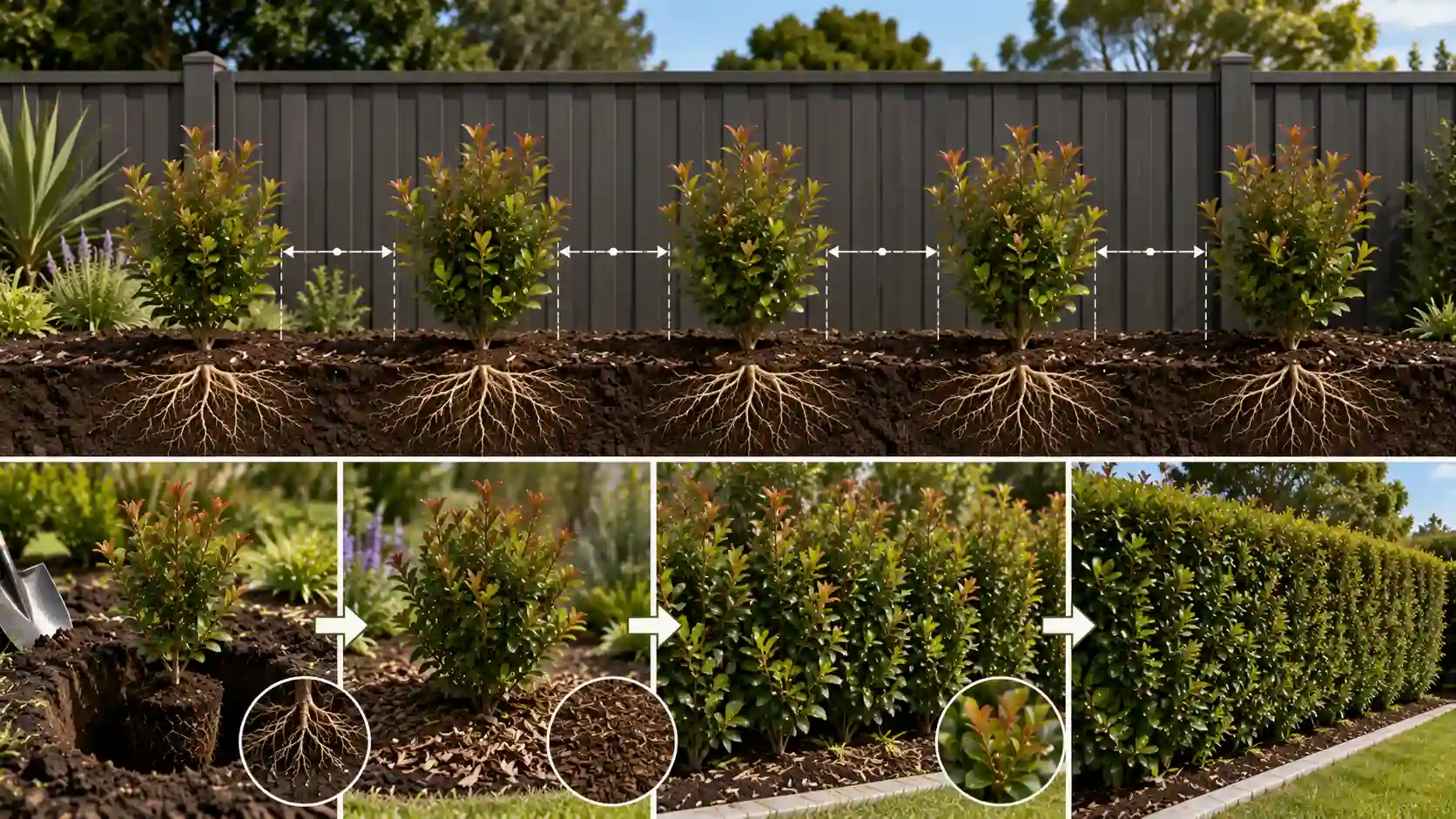
For a dense Acmena smithii minor hedge, plants are usually spaced around 1 metre apart to encourage a continuous screen.
Spacing depends on the final purpose of the hedge:
| Hedge purpose | Recommended spacing |
| Formal clipped hedge | Around 1 m apart |
| Informal screen | 1–1.5 m apart |
| Container planting | Individual pots based on plant size |
For Allyn Magic, approximately 1 metre spacing is also commonly used when creating a dense hedge. Gardeners comparing hedge plants often consider alternatives such as Photinia fraseri ‘Robusta’, which is another popular screening plant known for colourful new growth and dense foliage.
Closer spacing creates faster coverage but increases competition between plants, while wider spacing reduces planting costs but takes longer to form a solid screen.
Keywords often used by gardeners include lilly pilly tube stock and Acmena smithii minor hedge because these plants are frequently purchased for boundary planting projects.
Does Acmena Smithii Minor Have Invasive Roots?
Acmena smithii minor does not generally have invasive roots when planted in suitable locations, but all trees and shrubs require sensible spacing from structures.
The root system is usually fibrous and spreading rather than aggressively destructive.
Good planting practice includes:
- Avoid planting directly against foundations.
- Keep suitable distance from drains and pipes.
- Consider mature plant width before installation.
- Maintain good soil conditions to encourage balanced root growth.
Compared with large trees, the compact size of dwarf lilly pilly makes it a safer choice for residential gardens.
Pests and Disease Resistance
Acmena smithii minor is valued for its strong psyllid resistance compared with many older lilly pilly varieties, making it a lower-maintenance choice for Australian hedges.
One of the major reasons gardeners select dwarf lilly pilly is its improved resistance to lilly pilly psyllids, which are sap-sucking insects that can cause distorted, curled, or damaged new growth.
Older varieties, particularly some Syzygium australe selections, are more commonly affected by psyllid damage. Acmena smithii minor generally performs better, although no plant is completely immune to pests.
Common issues to monitor include:
- Psyllids: May cause raised bumps, curled leaves, or distorted new shoots.
- Scale insects: Can occasionally appear on stressed plants.
- Leaf spots: Often linked with excessive moisture, poor airflow, or fungal activity.
- Myrtle rust: A fungal disease affecting some members of the Myrtaceae family.
Good plant health is the best prevention method. Regular pruning, adequate spacing, proper watering, and avoiding excessive fertiliser encourage stronger plants.
As of 2026, Australian growers continue to favour improved lilly pilly cultivars with natural pest resistance because they reduce the need for frequent chemical treatments in home gardens.
In our experience growing native hedging plants, maintaining airflow through regular trimming is one of the simplest ways to reduce disease pressure.
Is the Fruit of Acmena Smithii Minor Edible?
The berries of Acmena smithii minor are generally considered edible, but they are not usually regarded as one of the best-tasting lilly pilly fruits compared with other Syzygium species.
After flowering, the plant produces small pink to mauve berries that can attract birds and add seasonal colour to the garden.
The fruit characteristics include:
- Small berry size
- Pink, purple, or mauve colouring
- Mild flavour
- Often described as bland or less appealing than improved fruiting lilly pilly selections
While some people consume lilly pilly berries in jams, sauces, and native food recipes, identification is important before eating any foraged fruit.
Gardeners should remember:
- Do not eat berries from unknown plants.
- Confirm correct plant identification before consumption.
- Avoid consuming fruit treated with garden chemicals.
- Taste and suitability can vary between plants and growing conditions.
Acmena smithii minor is mainly grown as an ornamental hedge rather than as a fruit-producing plant.
Habitat and Origin
Acmena smithii is native to eastern Australia, where it naturally grows along rainforest margins, coastal forests, and moist woodland areas from Queensland through New South Wales and into Victoria. Acmena smithii minor is part of Australia’s diverse native plant landscape, which includes many flowering species featured in our guide to Australian Native Purple Flowers: Types, Care & Guide.
Its natural habitat explains many of its garden preferences. The plant evolved in environments with:
- Warm, humid conditions
- Organic-rich soils
- Regular rainfall
- Protection from extreme exposure
Native populations are commonly found in:
- Subtropical rainforest edges
- Coastal regions
- Creek-side environments
- Moist forest areas
Because of this natural adaptability, Acmena smithii minor performs well in many Australian landscapes when provided with suitable moisture and soil conditions.
Its Australian origin also makes it an excellent choice for gardeners wanting native plants that support local biodiversity while providing practical functions such as screening and privacy.
Acmena Smithii Minor and Its Popular Cultivars — A Comparison
Acmena smithii minor belongs to a broader group of lilly pilly cultivars developed for different garden purposes, including colourful foliage, faster growth, and improved hedge performance. Besides lilly pillies, other Australian hedge options such as Ficus Hillii ‘Flash’ can be considered when planning larger privacy screens or formal garden boundaries.
Different cultivars vary in size, growth speed, foliage colour, and ideal use.
| Cultivar | Approximate Size | Growth Rate | Foliage Features | Best Use | Psyllid Resistance |
| Acmena smithii minor | 2–3 m | Moderate-fast | Bronze new growth, glossy green leaves | Compact hedges | Good |
| Cherry Surprise | 3–5 m | Fast | Bright red new foliage | Tall screens | Good |
| Firescreen | 3–5 m | Fast | Strong red foliage flush | Privacy screens | Good |
| Forest Flame | 3–5 m | Moderate-fast | Orange-red new growth | Feature hedges | Good |
| Sublime | 4–5 m | Fast | Dense green foliage | Formal screening | Good |
| Hedgemaster | 2–3 m | Moderate | Dense compact leaves | Low hedges | Good |
| Cascade | 2–4 m | Moderate | Decorative foliage and berries | Ornamental screens | Good |
| Pink Cascade | 2–3 m | Moderate | Pink-toned fruit and foliage interest | Decorative planting | Good |
| Royal Flame | 3–5 m | Fast | Vibrant new growth | Feature screening | Good |
Choosing Between Popular Lilly Pilly Cultivars
When selecting between varieties such as Acmena Cherry Surprise, Acmena Firescreen, Acmena Forest Flame, Acmena Sublime, Syzygium Cascade, lilly pilly Royal Flame, and lilly pilly Hedgemaster, consider:
For small gardens:
- Acmena smithii minor
- Hedgemaster
- Pink Cascade
For fast privacy screens:
- Firescreen
- Cherry Surprise
- Sublime
For ornamental colour:
- Forest Flame
- Royal Flame
- Pink Cascade
The best choice depends on available space, desired hedge height, and how frequently you plan to prune.
Common Problems With Acmena Smithii Minor
Most Acmena smithii minor problems are caused by environmental stress, incorrect planting conditions, or insufficient maintenance rather than serious plant weaknesses.
Slow or Stalled Growth
Slow growth is usually caused by poor soil, limited nutrients, drought stress, or competition from nearby plants.
Possible causes:
- Compacted soil
- Lack of organic matter
- Insufficient watering
- Root competition from surrounding plants
Solutions:
- Improve soil before planting.
- Apply suitable native fertiliser.
- Water deeply during dry periods.
- Add mulch around the root zone.
Yellowing Leaves
Yellow leaves often indicate watering problems, poor drainage, or nutrient deficiencies.
Common causes:
- Waterlogged soil
- Overwatering
- Lack of nitrogen
- Root stress
Fixes:
- Check drainage conditions.
- Reduce watering if soil remains wet.
- Apply balanced native plant fertiliser when appropriate.
- Remove damaged foliage.
Healthy Acmena smithii minor leaves should generally remain glossy green.
Psyllid or Pest Damage
Although Acmena smithii minor is more resistant to psyllids, occasional pest damage can still occur, especially on stressed plants.
Management methods include:
- Remove heavily damaged shoots.
- Encourage healthy growth through proper care.
- Monitor new growth regularly.
- Maintain plant vigour.
Leggy or Sparse Hedges
Sparse growth usually occurs when plants are not pruned regularly or are grown in insufficient light.
To improve hedge density:
- Trim lightly from an early stage.
- Avoid only cutting the top growth.
- Encourage side branching.
- Provide adequate sunlight.
Regular pruning encourages the compact, dense structure that makes lilly pillies popular screening plants.
Beginner Mistakes to Avoid When Growing Dwarf Lilly Pilly
The most common mistakes when growing dwarf lilly pilly are incorrect spacing, poor soil preparation, inconsistent watering during establishment, and excessive fertilising.
Although Acmena smithii minor is considered a hardy and adaptable Australian native plant, correct planting and early care have a major influence on long-term performance.
Planting Hedges Too Close Together
Overcrowding is a common mistake because plants compete for water, nutrients, and sunlight when spaced too tightly.
Some gardeners plant lilly pillies very close together expecting faster screening, but excessive competition can lead to:
- Weak growth
- Reduced airflow
- Increased disease risk
- Uneven hedge development
For most formal hedges, around 1 metre spacing provides a good balance between quick coverage and healthy plant development.
Planting in Poorly Drained Soil
Acmena smithii minor prefers moisture-retaining soil but does not perform well in constantly waterlogged conditions.
Heavy clay or poorly drained areas can restrict root oxygen and contribute to:
- Yellowing leaves
- Slow growth
- Root stress
Before planting, improve difficult soils with organic matter and ensure excess water can drain away.
Neglecting Early Watering
Even drought-tolerant native plants need consistent moisture while establishing their root systems.
A common misconception is that Australian native plants require little water immediately after planting.
Young dwarf lilly pillies benefit from:
- Deep watering during dry periods
- Regular soil moisture checks
- Mulching to reduce evaporation
Once established, the plant becomes much more resilient to short dry periods.
Over-Fertilising
Applying too much fertiliser can damage roots and create excessive soft growth that is more vulnerable to stress.
Better practice includes:
- Using slow-release native fertilisers.
- Following product application rates.
- Feeding mainly during active growth periods.
- Avoiding unnecessary repeated applications.
Balanced nutrition supports strong, dense foliage rather than forcing rapid but weak growth.
Conclusion
Acmena smithii minor is a compact, hardy Australian native shrub that provides an excellent low-maintenance option for hedges, screening, and smaller gardens.
Also known as dwarf lilly pilly, small leaf lilly pilly, and Syzygium smithii minor, this plant combines attractive bronze new growth, glossy green foliage, summer flowers, and colourful berries with practical garden benefits.
The typical Acmena smithii minor height is around 2–3 metres, although pruning allows gardeners to maintain much smaller formal hedges. Its moderate-to-fast growth rate, good psyllid resistance, and adaptability to Australian conditions make it a reliable choice for privacy planting.
For the best results, provide full sun to part shade, fertile well-drained soil, regular watering during establishment, and consistent pruning. When planted around 1 metre apart, Acmena smithii minor can develop into a dense, attractive hedge suitable for many Australian landscapes. Acmena smithii minor is one of many hardy Australian natives suitable for residential landscapes. For more ideas on selecting suitable species, explore our guide to Best Trees and Shrubs for Australian Gardens.
Frequently Asked Questions
What is the difference between Acmena smithii and minor?
The difference between Acmena smithii and Acmena smithii minor is mainly their mature size and growth habit. Standard Acmena smithii can become a large tree reaching around 15–20 metres, while the minor form remains a compact shrub generally around 2–3 metres tall. The minor variety is preferred for residential hedges and smaller gardens where space is limited.
How tall does Acmena smithii minor grow?
Acmena smithii minor typically grows 2–3 metres tall and 1–2 metres wide in garden conditions. Some plants may reach around 3–5 metres if left unpruned in favourable environments, but regular hedge trimming can maintain the plant between 80 cm and 2 metres.
Is Acmena smithii minor the same as Syzygium smithii?
Yes, Acmena smithii minor and Syzygium smithii minor refer to the same plant group due to botanical reclassification. The genus name was updated as Acmena species were moved into Syzygium, but Australian nurseries still commonly use both names.
How far apart should you plant Acmena smithii minor for a hedge?
Acmena smithii minor hedges are usually planted around 1 metre apart for a dense formal screen. Wider spacing of 1–1.5 metres can be used for informal screening, while closer planting may increase competition between plants.
Is Acmena smithii minor fruit edible?
The berries of Acmena smithii minor are generally considered edible, but they are not usually grown for fruit production and may have a mild or bland flavour. Always confirm plant identification before eating any foraged fruit.
Is Acmena smithii minor resistant to psyllids?
Yes, Acmena smithii minor has good resistance to lilly pilly psyllids compared with many older lilly pilly varieties. However, resistance does not mean complete immunity, so stressed plants may still experience occasional pest problems.
Will Acmena smithii minor grow in shade?
Acmena smithii minor can tolerate part shade but usually grows best in full sun or bright light conditions. Heavy shade may reduce growth speed, foliage density, and hedge quality.
4 Comments