

Glauca Pencil Pine: Height, Care & Growth Guide
Introduction
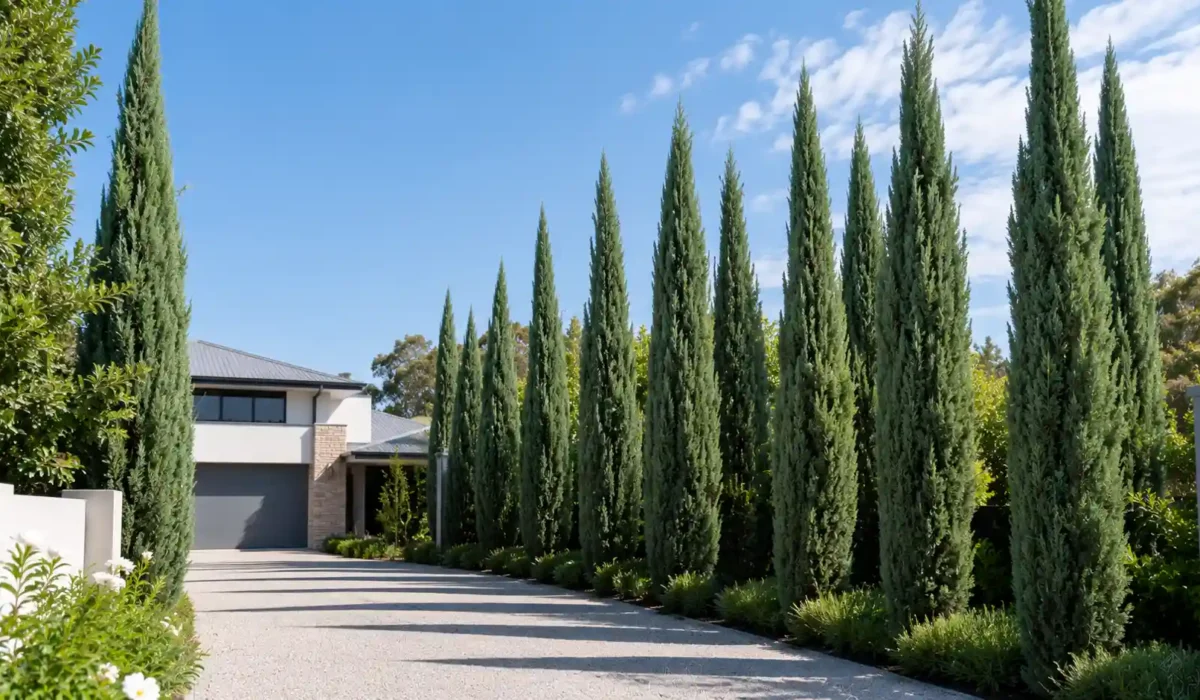
The Glauca Pencil Pine (Cupressus sempervirens ‘Glauca’) is a narrow, columnar evergreen conifer valued in Australian gardens for its tall vertical shape, privacy screening ability, and elegant driveway plantings. Also called a pencil pine, Italian pencil pine, or Italian Cypress, this cultivar is recognised for its blue-green foliage and naturally upright growth habit. The glauca pencil pine is popular because it provides structure in small and large landscapes while requiring relatively low maintenance once established. It grows best in full sun, tolerates dry conditions, and suits many Australian climates. Understanding its mature size, growth rate, root behaviour, and care requirements helps gardeners choose the right planting location.
Quick Summary
- Glauca Pencil Pine typically grows 6–15m tall while remaining approximately 1–1.5m wide, depending on cultivar and growing conditions.
- It has a moderate growth rate of around 30–60cm per year once established.
- The pencil pine root system is generally considered shallow and non-invasive, but spacing near paving and structures remains important.
- It is a low-maintenance, drought-tolerant, and frost-tolerant evergreen suitable for formal Australian gardens.
- Full sun, well-drained soil, and correct establishment watering support the healthiest growth.
What Is a Glauca Pencil Pine?
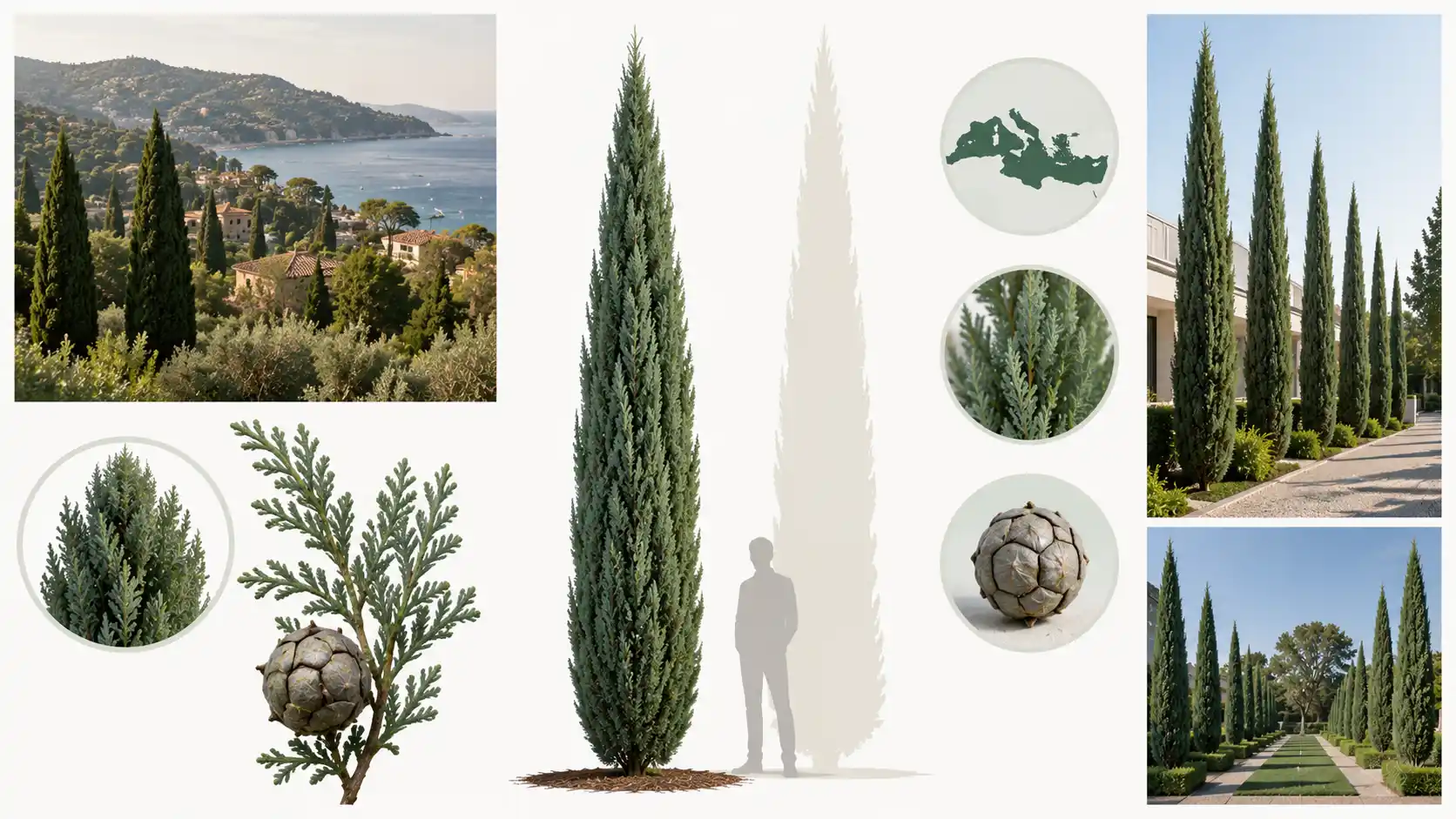
The Glauca Pencil Pine (Cupressus sempervirens ‘Glauca’) is a cultivated form of the Mediterranean cypress, belonging to the Cupressaceae family. Its botanical name is Cupressus sempervirens ‘Glauca’, and it is commonly associated with the classic Italian Cypress appearance found throughout Mediterranean landscapes. The Glauca Pencil Pine belongs to the Mediterranean cypress species (Cupressus sempervirens), a historically important evergreen tree native to the Mediterranean region.
The species originates from the Mediterranean region, including areas such as Sicily and Sardinia, where narrow cypress trees have traditionally been used for wind protection, boundaries, and formal garden designs. In Australia, the plant is widely grown as an ornamental evergreen due to its slim profile and ability to create height without taking up much ground space.
The name “pencil pine” comes from its distinctive pencil-like shape. Unlike broad spreading trees, this cultivar develops a naturally narrow, upright silhouette with dense foliage growing close to the trunk. This makes it especially useful where gardeners want vertical impact in limited spaces.
Other common names include:
- Italian Pencil Pine
- Italian Cypress
- Cupressus Glauca
- Cupressus sempervirens Glauca
- Mediterranean Cypress
Although the name “pencil pine” is commonly used, it is not a true pine tree. It is a cypress species, meaning it belongs to a different botanical group from traditional pine trees in the Pinaceae family.
How Tall Do Glauca Pencil Pines Grow?
Glauca Pencil Pines usually reach 6–15 metres in height when planted in suitable ground conditions. Their final size varies depending on the exact plant selection, climate, soil quality, available moisture, and whether pruning is used to control growth.
The narrow growth habit is one of the plant’s main advantages. Even when mature, many specimens maintain a width of only around 1–1.5 metres, making them suitable for narrow garden areas, driveways, and formal landscape designs.
Mature Height and Width
The mature size of a Glauca Pencil Pine depends on environmental conditions and cultivar variation. Trees planted in deep soil with good sunlight and regular establishment care generally reach greater heights than those grown in restricted spaces.
Typical mature dimensions:
| Growing Situation | Expected Height | Typical Width |
| Home garden planting | 6–12m | 1–1.5m |
| Ideal landscape conditions | Up to 15m | Around 1–1.5m |
| Restricted spaces | Lower height possible | Narrower growth maintained |
Pruning can help maintain a formal appearance, but removing excessive growth from the main leader can permanently affect the natural columnar shape.
In Australian gardens, the final height may vary between regions. Warmer climates with long growing seasons may encourage faster development, while cooler areas may produce slower growth.
Height at 5 Years / Early Growth Stages
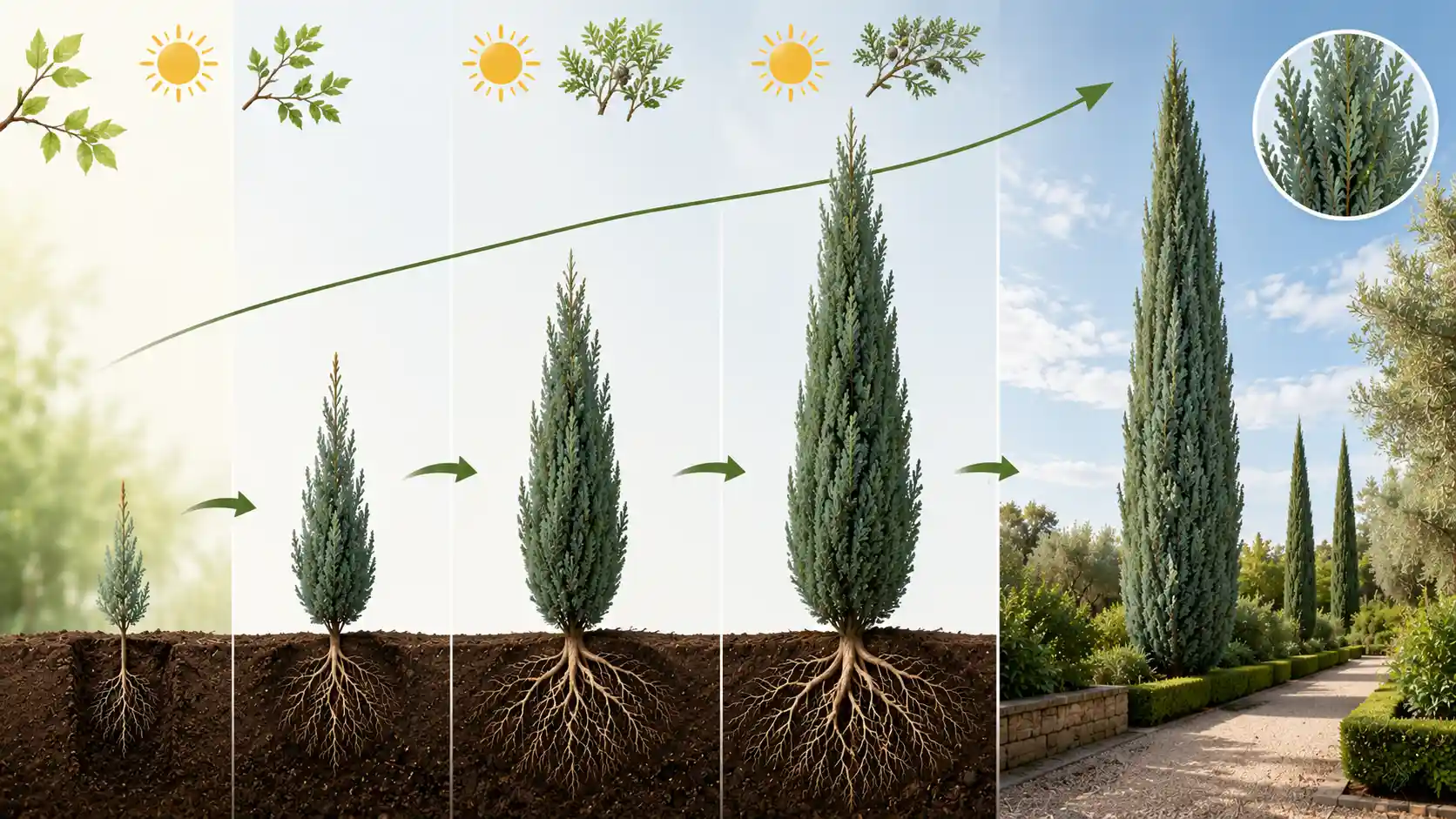
A common question is “how tall is a 5 year old pine tree?” For Glauca Pencil Pine, the answer depends on establishment conditions, but a typical growth rate of around 30–60cm per year can provide a useful estimate.
After five years:
- Slower-growing specimens may reach approximately 1.5–3m
- Well-established trees may reach around 3–5m
Early growth is influenced by:
- Amount of direct sunlight
- Soil drainage
- Water availability during establishment
- Competition from nearby plants
- Local climate conditions
In our experience growing narrow evergreen screening plants, the first few years are often focused on root establishment rather than maximum height gain. Once the root system becomes established, vertical growth usually becomes more noticeable.
Indoor/Pot vs Ground Height Differences
Glauca Pencil Pines can be grown in large containers, but their size will usually be restricted compared with trees planted directly into the ground.
Container-grown plants typically remain smaller because:
- Root space is limited
- Water and nutrients are more restricted
- Growth naturally slows as the pot becomes crowded
A potted pencil pine may remain suitable as a feature plant on patios, balconies, or entrances when regularly maintained.
However, long-term container growth requires:
- A large, stable pot
- Excellent drainage
- Periodic root management
- Regular watering during hot weather
Ground-planted trees will always have greater potential to achieve their natural mature height and structure.
Glauca Pencil Pine Growth Rate
The Glauca Pencil Pine growth rate is considered moderate compared with many fast-growing screening trees. Under suitable conditions, established trees generally grow around 30–60cm per year. Growth is usually faster during the warmer months when sunlight, soil moisture, and temperatures support active development.
Many gardeners ask, “Do pencil pines grow fast?” The answer is that they grow steadily rather than rapidly. They are not among the quickest-growing screening plants, but their narrow shape allows them to create height efficiently without requiring large garden areas.
While the Glauca Pencil Pine has a moderate growth rate, gardeners looking for quicker screening options can also explore other fast growing evergreen trees in Australia that provide rapid coverage and year-round foliage.
Seasonal growth patterns typically include:
- Spring: New foliage growth begins as temperatures increase.
- Summer: Active growth continues when moisture is available.
- Autumn: Growth slows as temperatures decrease.
- Winter: Growth may become minimal, especially in cooler climates.
Factors that influence pencil pine growth rate include:
- Full sunlight exposure
- Well-drained soil
- Adequate water during establishment
- Good soil structure
- Reduced competition from nearby plants
A common comparison question is “what is the quickest growing pine tree?” True pine species and other screening plants may grow faster than Cupressus sempervirens cultivars, but faster growth often comes with larger root systems, wider canopies, or higher maintenance requirements. The Glauca Pencil Pine is valued more for its controlled columnar habit and long-term structure than for extremely rapid growth.
Elemo Baker recommends focusing on planting conditions rather than forcing growth with excessive fertiliser. Healthy root development and correct placement usually produce stronger long-term growth than artificial acceleration.
Pencil Pine Root System — Are They Invasive?
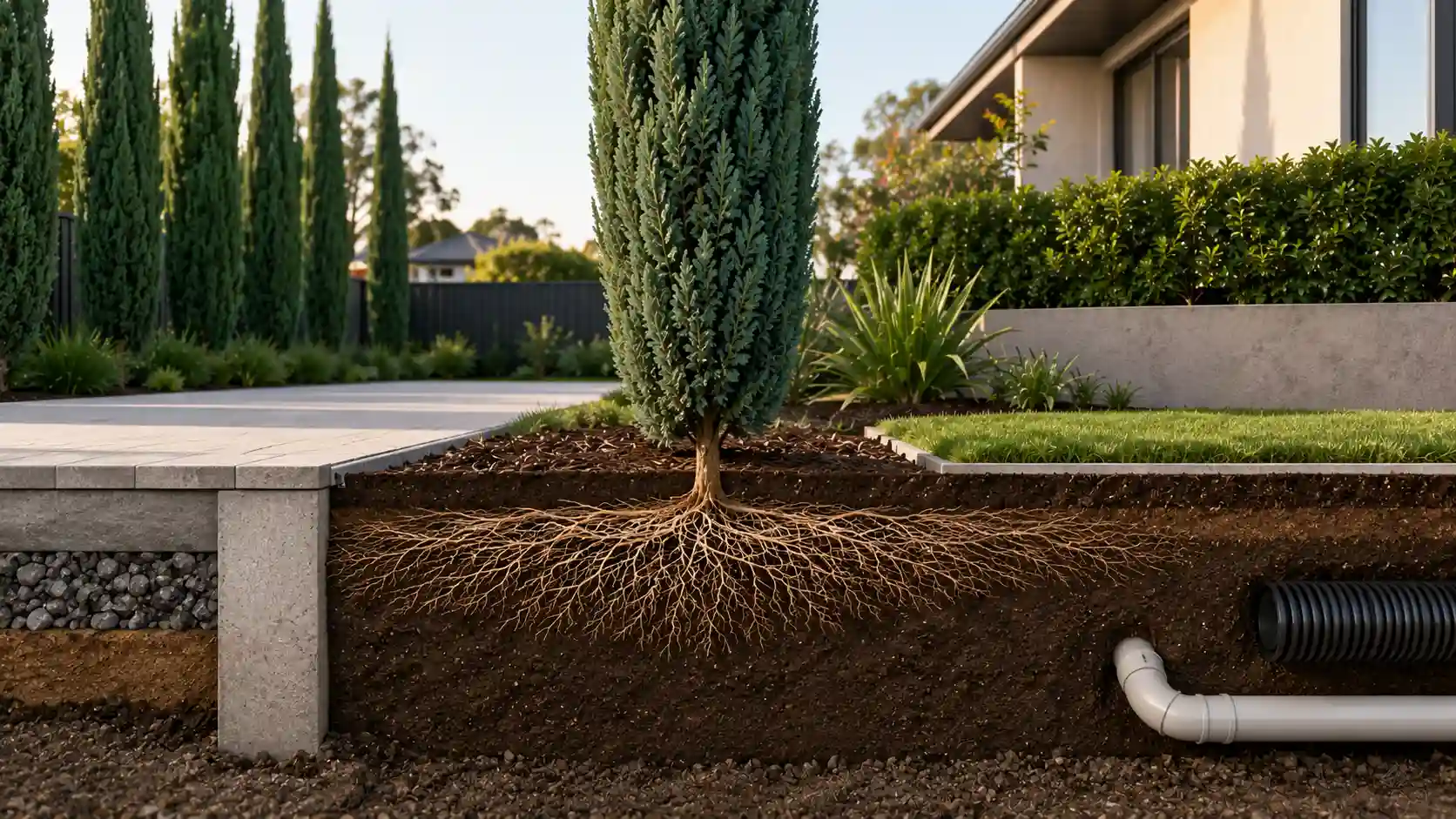
The pencil pine root system is generally considered shallow and non-aggressive compared with many large trees. Glauca Pencil Pines typically develop a fibrous root network that spreads mainly through the upper soil layers rather than producing large invasive structural roots. Understanding root behaviour is important when choosing landscape trees, especially when comparing pencil pines with larger species such as eucalyptus trees covered in our guide to the gum tree root system, spread, and safe planting distances.
A common homeowner concern is: “Do pencil pines have invasive roots?” In most garden situations, pencil pines are not classified as invasive-root trees. However, any mature tree planted too close to structures can create problems due to limited space, soil movement, or competition for moisture.
Potential issues usually occur when trees are planted:
- Immediately beside paving
- Against retaining walls
- Too close to underground services
- In compacted or poorly drained soil
For driveway planting, spacing is an important consideration. The narrow growth habit makes pencil pines popular for avenues and entrances, but allowing adequate room helps prevent future maintenance issues.
Recommended spacing considerations:
- Keep trees approximately 1–2 metres away from driveways and paving where possible
- Allow additional distance near foundations or underground infrastructure
- Consider mature width rather than the small size of young plants
The phrase “pencil pine driveway” is common among Australian gardeners because these trees are frequently used along entrances. With thoughtful placement, they can create an attractive formal effect without causing unnecessary problems.
Pencil Pine Care Guide
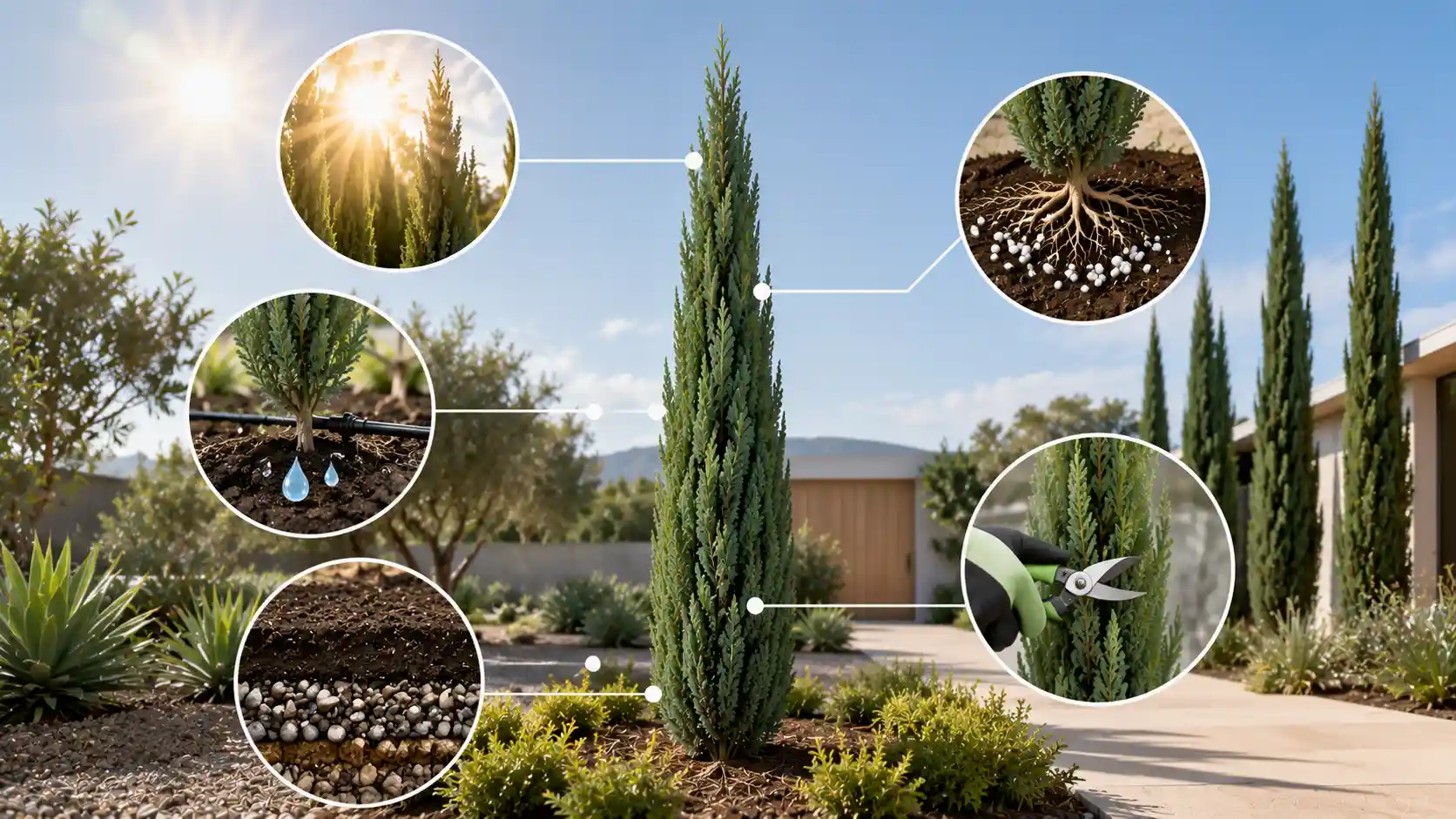
Glauca Pencil Pines are considered relatively easy-care evergreen trees once established. Their Mediterranean background gives them good tolerance to dry conditions, heat, and occasional frost, making them suitable for many Australian gardens.
Watering
Young pencil pines require consistent watering while their roots establish. During the first growing seasons, deep watering encourages roots to grow downward and improves drought tolerance.
Recommended watering approach:
- Water deeply once or twice weekly during hot, dry periods after planting
- Reduce watering once the tree becomes established
- Avoid frequent shallow watering, which encourages weak surface roots
Mature trees are drought tolerant but may still benefit from occasional deep watering during prolonged heatwaves or extended dry periods.
A common mistake beginners make is overwatering established pencil pines. Excess moisture, especially in heavy clay soils, can contribute to root stress and yellowing foliage.
Light Requirements
Glauca Pencil Pines perform best in full sun.
Ideal conditions include:
- At least 6 hours of direct sunlight daily
- Open areas with good air circulation
- Protection from excessive competition from larger plants
Trees grown in insufficient light may develop weaker growth, reduced density, and a less defined columnar shape.
Although they can tolerate some light shade, heavy shade is not recommended because it limits healthy foliage development.
Soil Preferences
Glauca Pencil Pines adapt to a wide range of soil conditions as long as drainage is adequate.
Suitable soils include:
- Sandy soils
- Loamy soils
- Moderately alkaline soils
- Some coastal or seaside garden conditions
Poor drainage is one of the most common causes of decline. Heavy clay soils that remain waterlogged for long periods can stress the root system.
Improving soil before planting with organic matter and ensuring excess water can escape will encourage healthier establishment.
Fertilising
Pencil pines generally do not require heavy feeding. A balanced slow-release fertiliser applied during active growth can support healthy foliage and development.
Recommended timing:
- Apply fertiliser in spring
- A light early summer application may be suitable if growth is weak
- Avoid excessive nitrogen, which can encourage soft growth
Healthy soil and correct watering are usually more important than frequent fertilising.
Pruning
One of the main attractions of the Glauca Pencil Pine is its naturally narrow shape, meaning it usually requires minimal pruning.
Pruning is mainly used for:
- Removing damaged or dead branches
- Maintaining formal spacing
- Controlling height in restricted areas
Avoid cutting deeply into old wood or removing the central leader unless necessary, as this can affect the tree’s natural upright appearance.
Light trimming is best performed during active growing periods when the plant can recover more effectively.
Climate Tolerance
Glauca Pencil Pines are well suited to many Australian climates because they tolerate both heat and frost once established.
They generally perform well in:
- Temperate regions
- Mediterranean-style climates
- Dry inland gardens
- Coastal areas with suitable drainage
They tolerate moderate frost, but young plants may require protection from severe cold conditions.
As of 2026, gardeners are increasingly selecting drought-tolerant structural plants like pencil pines as water availability and changing climate conditions influence landscape choices across Australia.
Are Pencil Pines Low Maintenance?
Yes, pencil pines are considered low maintenance once established because they naturally maintain a narrow shape, require little pruning, and tolerate dry conditions.
Their main care requirements are:
- Regular watering during establishment
- Full sun placement
- Good drainage
- Occasional fertilising
- Minimal corrective pruning
Unlike many hedging plants, they do not require frequent trimming to maintain a formal appearance. Their naturally vertical growth habit makes them suitable for gardeners seeking structure with limited ongoing maintenance.
However, low maintenance does not mean no maintenance. Correct planting location, early care, and occasional monitoring help prevent future problems.
In our experience with evergreen screening plants, the most successful pencil pine plantings are those where gardeners plan spacing carefully before planting rather than trying to correct overcrowding later.
Glauca Pencil Pine Uses in Australian Gardens
The Glauca Pencil Pine is widely used in Australian landscapes because its narrow vertical form creates height without requiring much horizontal space. Its evergreen foliage provides year-round structure, making it suitable for formal gardens, modern landscapes, and smaller urban properties. For narrow boundaries and privacy planting, Glauca Pencil Pines can be combined with other low-maintenance plants for fence lines in Australia to create structured screening areas.
Pencil pines are a popular choice for formal entrances, but homeowners can also compare other driveway plants ideas for Australian homes when designing attractive and practical garden boundaries.
Common uses include:
- Driveway avenues: Pencil pines are often planted in rows along driveways to create a classic formal entrance. Their upright shape provides a strong architectural effect without blocking vehicle access.
- Privacy screening: Closely spaced trees can form a tall, narrow screen where space is limited.
- Formal hedging: The dense columnar growth can create a structured hedge or boundary feature.
- Feature planting: A single specimen can add height and visual focus in lawns or garden beds.
- Narrow garden beds: Their slim width makes them useful beside fences, pathways, and restricted planting areas.
- Pot planting: Young trees can be grown in large containers for patios, entrances, and courtyards.
The popularity of pencil pines Perth and pencil pines Brisbane reflects their adaptability across different Australian regions. In Perth, their Mediterranean tolerance suits dry summers, while in Brisbane they can perform well when planted in sunny locations with good drainage.
For screening purposes, the pencil pine hedge effect works best when plants are positioned correctly from the beginning. Overcrowding young trees may create competition later as their root systems and foliage mature.
How Much Space Do Pencil Pines Need?
Glauca Pencil Pines need enough space to develop their natural columnar shape while avoiding competition with nearby plants, paving, or structures. Gardeners planning larger landscapes may also compare the size and growth habits of other Australian-friendly trees, such as the Tuckeroo tree growth rate, height, and care requirements.
For hedge-style planting, recommended spacing is generally:
- 0.8–1m apart: Creates a denser screening effect more quickly
- 1–1.5m apart: Allows better airflow and healthier long-term growth
For individual specimen planting, allowing approximately 1.5–2m of open space around each tree helps maintain its natural form and reduces competition.
When planning spacing, gardeners should consider:
- Mature height and width, not the size of young nursery plants
- Distance from driveways and pathways
- Nearby underground services
- Future pruning access
A common mistake is planting young pencil pines too close together because they appear narrow when purchased. Although they remain slim compared with many trees, they still require room for healthy root and foliage development.
Common Pencil Pine Problems and How to Fix Them
Although Glauca Pencil Pines are hardy, certain growing conditions can cause health issues. Most problems are linked to planting location, watering practices, or soil conditions.
Yellowing Foliage
Yellowing foliage is one of the most common concerns with pencil pines.
Possible causes include:
- Poor drainage
- Overwatering
- Root stress
- Nutrient imbalance
- Natural ageing of older inner foliage
Solution:
- Check whether the soil remains wet for long periods
- Improve drainage if necessary
- Reduce unnecessary watering
- Remove damaged foliage and monitor new growth
Healthy pencil pines usually maintain blue-green foliage, so sudden colour changes should be investigated rather than ignored.
Overwatering in Clay Soils
Heavy clay soils can hold excess moisture around the root zone. While pencil pines tolerate different soil types, they do not perform well in permanently waterlogged conditions.
Signs of overwatering include:
- Yellowing leaves
- Weak growth
- Sparse foliage
- Declining branches
Solution:
- Improve soil drainage before planting
- Avoid frequent shallow watering
- Consider raised planting areas in very heavy clay soils
Slow or Stunted Growth
Slow growth may occur when environmental conditions limit development.
Common causes include:
- Too much shade
- Root competition from nearby plants
- Poor soil preparation
- Lack of establishment watering
- Trees planted too closely together
Solution:
Use a cause → fix → prevention approach:
| Cause | Fix | Prevention |
| Poor sunlight | Relocate if possible or remove shading | Choose full sun planting areas |
| Water stress | Adjust watering schedule | Deep water during establishment |
| Poor drainage | Improve soil structure | Test drainage before planting |
| Overcrowding | Remove competing plants | Plan mature spacing early |
Pencil Pine vs Other Conifers (Comparison Block)
The term “pencil pine” is sometimes used broadly for several narrow conifers, but different cultivars have different sizes and growth habits. Understanding these differences helps gardeners choose the correct plant.
| Plant Type | Mature Size | Growth Habit | Best Use |
| Glauca Pencil Pine (Cupressus sempervirens ‘Glauca’) | 6–15m tall, 1–1.5m wide | Tall, narrow column | Driveways, screening, formal gardens |
| Dwarf Pencil Pine cultivars | Smaller, usually under several metres | Compact column | Small gardens and containers |
| Other columnar conifers | Varies by species | Upright but different shapes | Feature planting and landscaping |
The dwarf pencil pine option is better suited to gardeners who want the same vertical appearance but have limited space. Full-size Glauca Pencil Pines are better for creating dramatic height and long-term landscape structure.
When choosing the best type of pencil pine, the decision should depend on:
- Available garden space
- Desired mature height
- Maintenance expectations
- Climate suitability
The Glauca Pencil Pine remains one of the most popular choices where a tall, narrow evergreen feature is required.
Beginner Mistakes to Avoid With Glauca Pencil Pines
Although pencil pines are easy-care plants, beginners often make mistakes during planting and early maintenance.
Planting Too Close Together
Young trees appear small in garden centres, which can encourage overcrowding.
Insufficient spacing may lead to:
- Poor airflow
- Competition for water
- Uneven growth
- Difficult maintenance later
Incorrect Pruning of the Leader
The central leader gives the pencil pine its characteristic upright form. Cutting it incorrectly can permanently affect the tree’s natural shape.
Prune only when necessary and avoid heavy top pruning.
Poor Establishment Watering
A drought-tolerant mature tree still needs proper care when newly planted. Insufficient water during the first years can limit root development and reduce long-term performance.
Planting Too Close to Hard Surfaces
Although pencil pine roots are generally not considered invasive, planting directly beside paving, walls, or structures can create avoidable issues.
Before planting, consider:
- Mature size
- Root space
- Maintenance access
- Surrounding infrastructure
Good planning is the easiest way to enjoy healthy, long-lasting pencil pines.
Conclusion
The Glauca Pencil Pine is a valuable evergreen tree for Australian gardens due to its narrow columnar shape, moderate growth rate, drought tolerance, and low-maintenance nature. Growing approximately 6–15m tall while staying relatively narrow, it provides strong vertical structure for driveways, screening, and formal landscapes.
Its root system is generally shallow and non-invasive, but careful spacing near paving, foundations, and services remains important. With full sun, well-drained soil, correct establishment watering, and minimal pruning, the Glauca Pencil Pine can become a reliable long-term feature plant for many Australian gardens.
Frequently Asked Questions
How tall do glauca pencil pines grow?
Glauca Pencil Pines typically grow between 6 and 15 metres tall with a narrow width of around 1–1.5 metres. Final size depends on climate, soil conditions, cultivar selection, and maintenance practices.
Do pencil pines have invasive roots?
No, pencil pines are generally not considered invasive-root trees. Their roots are usually shallow and fibrous, but they should still be planted with appropriate spacing away from paving, foundations, and underground services.
Are pencil pines low maintenance?
Yes, pencil pines are low maintenance once established. They require full sun, well-drained soil, occasional watering during dry periods, and minimal pruning to maintain their natural upright shape.
Can pencil pines stay in pots?
Yes, young pencil pines can grow in large pots, but container-grown plants will remain smaller than trees planted in the ground. Large containers, good drainage, and regular care are required for successful growth.
How long do pencil pines live for?
Pencil pines can live for many decades when grown in suitable conditions. With proper soil, sunlight, and maintenance, they can become long-term landscape trees.
Can pencil pines grow in shade?
Pencil pines can tolerate some light shade but perform best in full sun. Heavy shade may reduce growth, density, and the characteristic narrow columnar shape.
What is the best type of Pencil Pine?
The best type depends on garden requirements. Cupressus sempervirens ‘Glauca’ is one of the most popular choices for tall formal screening and driveway planting, while dwarf pencil pine cultivars are better for smaller gardens and containers.