

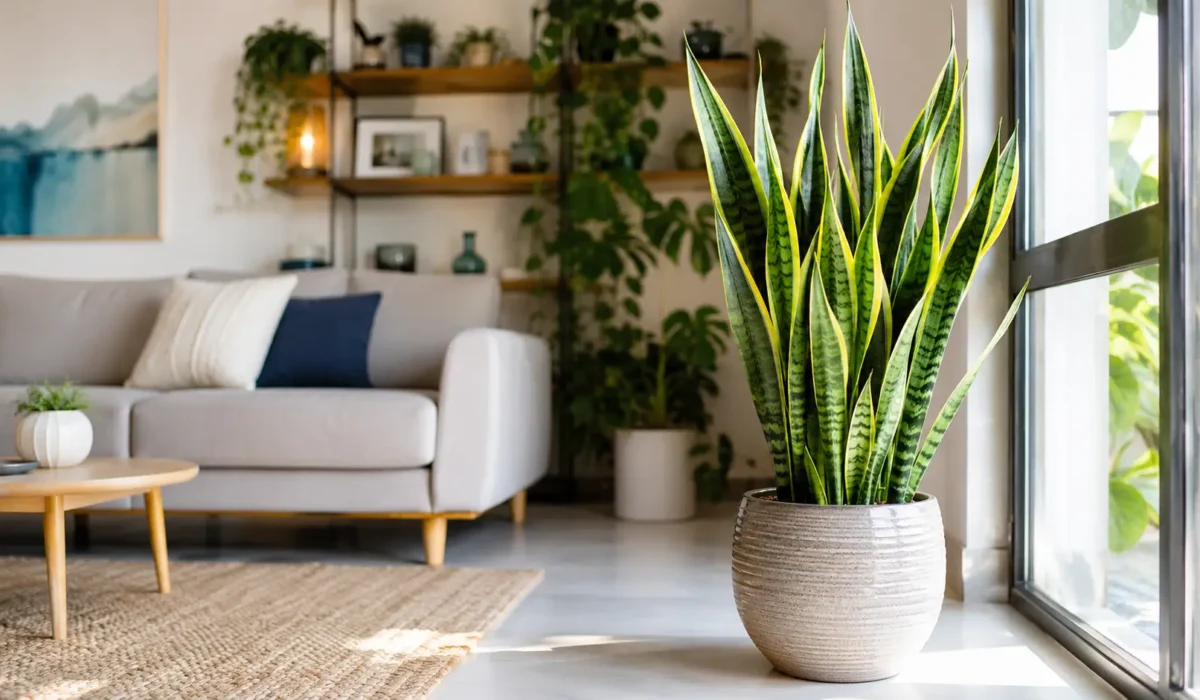
10 Benefits of Snake Plant for Home and Health
Introduction
The snake plant, scientifically known as Dracaena trifasciata and formerly classified as Sansevieria, is one of the most popular indoor plants in the world. Commonly called mother-in-law’s tongue, this hardy plant is valued for its upright leaves, attractive appearance, and exceptional adaptability. Many homeowners choose it because of the well-known snake plant benefits at home, including air purification, low maintenance requirements, and suitability for a wide range of indoor environments. Native to tropical regions of West Africa, the snake plant has gained attention for both decorative and health-related reasons. From improving indoor spaces to supporting better air quality, this versatile houseplant offers numerous advantages worth exploring.
Snake plants are one of the easiest ways to bring these advantages home — see our full guide to the health and wellness benefits of indoor plants for the science behind why they work.
Quick Summary
- Snake plants help purify indoor air by filtering pollutants such as formaldehyde, benzene, xylene, and trichloroethylene.
- Unlike most houseplants, they produce oxygen at night, making them ideal for bedrooms.
- They require minimal care and tolerate drought, low light, and occasional neglect.
- Snake plants are associated with feng shui benefits, protective symbolism, and positive energy in many cultures.
- Traditional practices have also linked snake plants to various skin, hair, and medicinal uses.
What Is a Snake Plant? (Dracaena Trifasciata Overview)
Common Names and Botanical Identity
The snake plant belongs to the species Dracaena trifasciata, a flowering plant native to tropical West Africa. For many years, it was classified under the genus Sansevieria, which is why many gardeners still refer to it as Sansevieria trifasciata. In 2017, botanical classification updates placed the species within the Dracaena genus based on genetic research.
The plant is known by several common names, including:
- Snake plant
- Mother-in-law’s tongue
- Saint George’s sword
- Bowstring hemp
- Snake plant (Sansevieria)
The multiple names reflect its long history in cultivation and its widespread popularity across different cultures. Whether referred to as a mother-in-law tongue plant or Dracaena trifasciata, it remains one of the most recognizable houseplants worldwide.
What Does a Snake Plant Look Like?
A snake plant is easily identified by its stiff, upright, sword-shaped leaves. The foliage typically grows vertically from the base and displays green bands or variegated patterns.
Common characteristics include:
- Tall, architectural growth habit
- Thick, succulent-like leaves
- Dark green coloration with lighter horizontal markings
- Yellow-edged varieties such as ‘Laurentii’
- Compact dwarf forms and larger landscape varieties
Indoor plants snake plant varieties typically grow between 1 and 4 feet tall, although some outdoor specimens can become significantly larger. Their clean, vertical form makes them ideal for modern interiors, offices, bedrooms, and living rooms.
10 Benefits of Snake Plant for Home and Health
Purifies Indoor Air
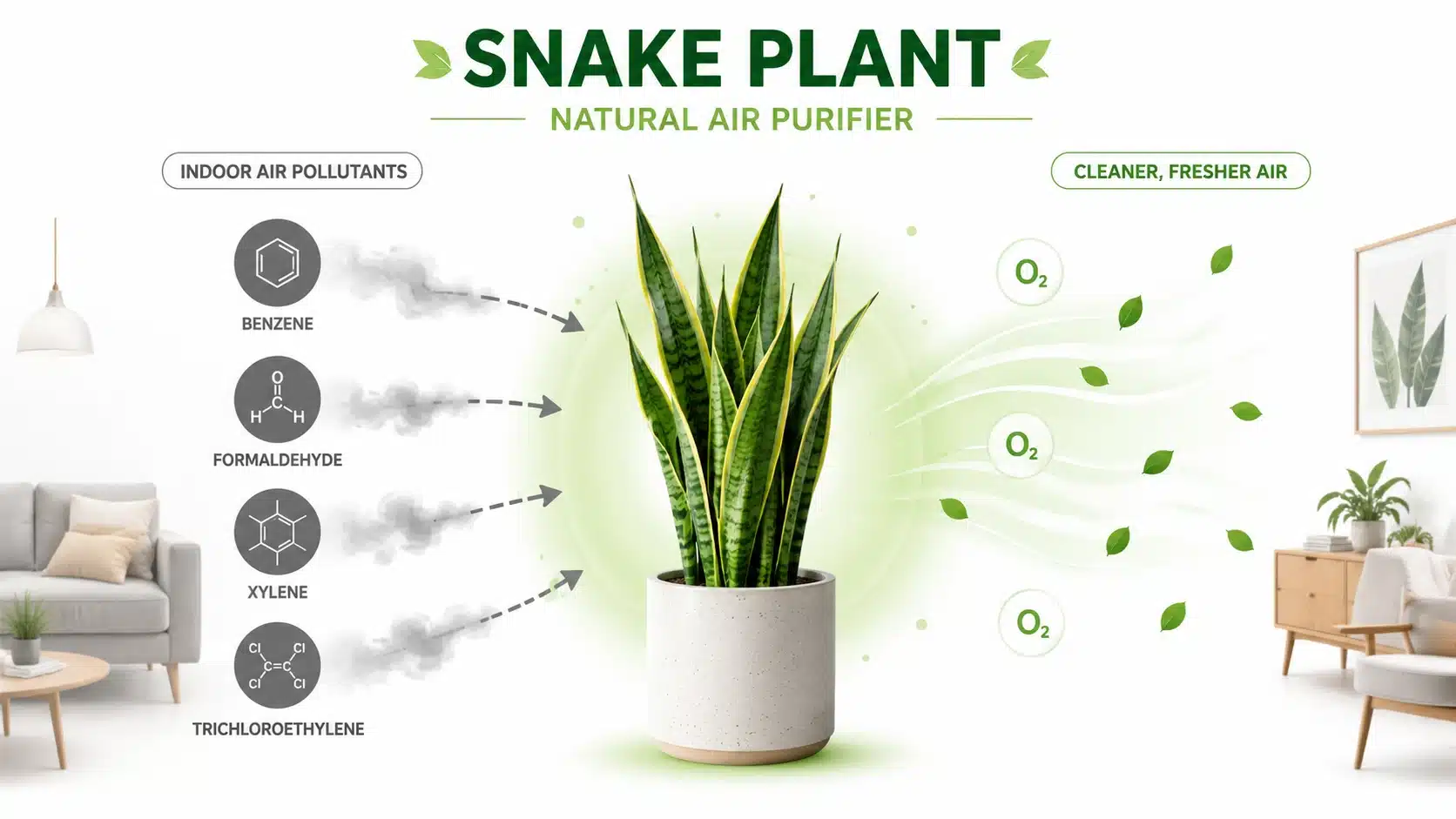
One of the most widely recognized benefits of snake plant is its ability to help improve indoor air quality. The plant gained popularity after being included in the NASA Clean Air Study, which examined how certain plants interact with indoor pollutants.
Snake plants can help absorb airborne compounds such as:
- Benzene
- Formaldehyde
- Xylene
- Trichloroethylene
- Toluene
These substances are commonly found in household products, paints, furniture finishes, cleaning products, and building materials.
While no houseplant can completely replace proper ventilation, snake plants contribute to healthier indoor environments by participating in natural gas exchange processes and supporting cleaner indoor air.
Produces Oxygen at Night

Unlike many plants that primarily release oxygen during daylight hours, snake plants use a specialized process called Crassulacean Acid Metabolism (CAM) photosynthesis. CAM plants open their stomata at night rather than during the day. This adaptation helps reduce water loss while allowing the plant to continue gas exchange after dark.
As a result, snake plants:
- Release oxygen during nighttime hours
- Improve bedroom plant suitability
- Conserve moisture efficiently
- Thrive in indoor conditions
Because of this unique characteristic, many people consider the snake plant one of the best bedroom plants available. The ability to produce oxygen at night contributes to its reputation as a beneficial indoor companion.
Removes Toxins and Improves Air Quality
Beyond the specific pollutants identified in laboratory studies, snake plants may contribute to healthier indoor environments by supporting overall air quality.
Modern homes and offices are often tightly sealed for energy efficiency. While beneficial for reducing energy costs, these environments can sometimes allow volatile organic compounds (VOCs) to accumulate indoors.
Common indoor VOC sources include:
- Synthetic flooring
- Upholstered furniture
- Cleaning products
- Paints and adhesives
- Air fresheners
Snake plants help participate in the natural filtration processes occurring within indoor ecosystems. Combined with adequate ventilation, they can be part of a broader strategy for maintaining cleaner indoor air.
In our experience growing indoor plants, snake plants perform particularly well in apartments, offices, and rooms where natural ventilation is limited.
Extremely Low Maintenance (Ideal for Beginners)
Snake plants are among the easiest houseplants to grow successfully. Their natural drought tolerance allows them to survive conditions that would stress many other indoor plants. This makes them an excellent choice for beginners, frequent travelers, and busy homeowners.
Reasons they are considered beginner-friendly include:
- Tolerate infrequent watering
- Adapt to low-light conditions
- Resist many common plant problems
- Require minimal pruning
- Grow well in containers
Elemo Baker recommends snake plants to first-time indoor gardeners because they are forgiving of common mistakes and remain attractive even with minimal attention. For anyone learning how to care for a snake plant, the most important rule is simple: avoid overwatering.
Boosts Mental Health and Reduces Stress
Indoor plants have become an important part of biophilic design, a concept that emphasizes the human connection to nature. Research in environmental psychology suggests that exposure to greenery can support emotional well-being by helping create calmer and more relaxing environments.
Potential mental wellness benefits associated with indoor plants include:
- Reduced stress levels
- Improved mood
- Enhanced concentration
- Increased productivity
- Greater sense of comfort indoors
The snake plant’s upright structure and consistent appearance make it particularly effective as a visual focal point in homes and workplaces. In our experience, placing a snake plant near workspaces or reading areas helps create a more balanced and welcoming indoor atmosphere.
Feng Shui and Spiritual Benefits
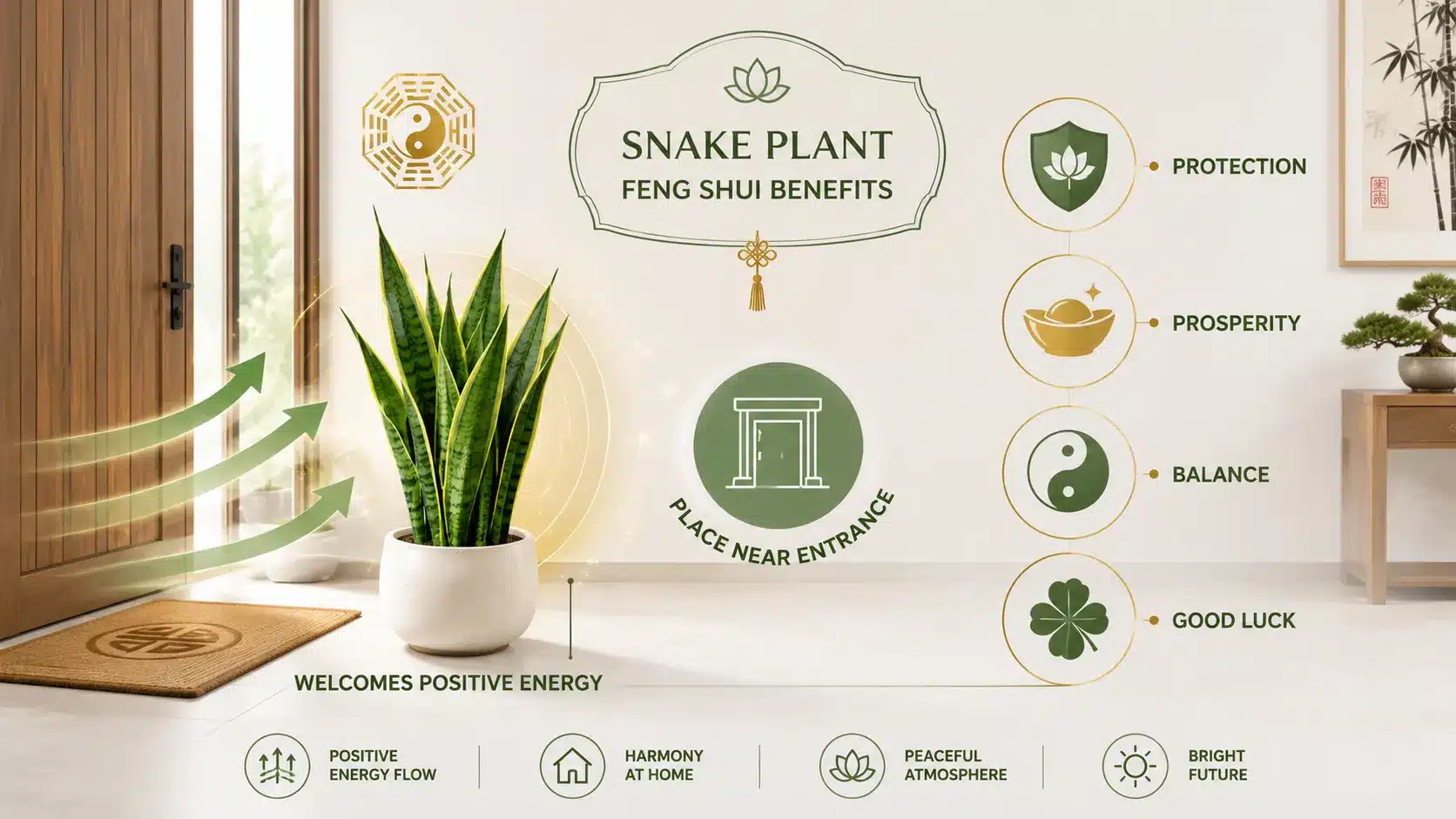
Snake plants are widely recognized in feng shui traditions for their symbolic protective qualities. Their strong vertical leaves are often interpreted as representing upward growth, resilience, and protective energy. Because of this symbolism, many practitioners place snake plants near entrances and specific areas of the home.
Common feng shui associations include:
- Protection from negative energy
- Strength and resilience
- Prosperity and growth
- Improved environmental harmony
Some traditions recommend positioning the plant:
- Near entryways
- In corners needing energetic balance
- In wealth-related areas of the home
The snake plant spiritual meaning varies among cultures, but themes of protection, endurance, and positive energy frequently appear.
Skin and Hair Health (Traditional and Emerging Uses)
In various traditional practices, snake plant leaves have been used for skin and hair applications.
The plant contains sap with gel-like properties that has historically been applied topically in some cultures. Traditional users have associated the plant with soothing effects for minor skin discomforts.
Folk uses have included:
- Skin hydration
- Minor skin irritation relief
- Traditional eczema-related applications
- Hair conditioning preparations
However, these uses are based primarily on traditional knowledge and anecdotal practices rather than extensive clinical evidence. People interested in skin conditions such as eczema should consult qualified healthcare professionals rather than relying solely on traditional plant remedies.
Medicinal Uses of Snake Plant
Snake plants have a long history of ethnobotanical use in parts of Africa and Asia.
Traditional medicinal applications have included:
- Minor wound care
- Anti-inflammatory preparations
- Headache remedies
- Traditional herbal treatments
Some traditional healers have used extracts from various parts of the plant in local medicine systems.
It is important to note that these snake plant medicinal uses are primarily historical and cultural practices. Modern scientific evidence supporting many of these uses remains limited, and the plant should not be considered a substitute for professional medical care.
Improves Sleep Quality
Snake plants may contribute to a more comfortable sleeping environment through a combination of nighttime oxygen production, air-quality support, and calming visual appeal.
Unlike many common houseplants, snake plants continue gas exchange at night through CAM photosynthesis. This characteristic has made them a popular choice for bedrooms and sleep-focused indoor spaces.
Potential reasons snake plants are associated with better sleep environments include:
- Nighttime oxygen release
- Support for cleaner indoor air
- Reduced visual clutter through simple plant design
- Stress-reducing effects associated with indoor greenery
While a snake plant alone will not solve sleep problems, many homeowners appreciate its ability to enhance bedroom comfort with minimal maintenance.
Elemo Baker recommends placing one or two healthy snake plants in bedrooms where indirect light is available. Their compact footprint and upright growth make them easy to incorporate into most room layouts.
Enhances Interior Aesthetics and Space Design
Snake plants are among the most versatile decorative plants used in modern interior design. Their bold vertical leaves create architectural interest without overwhelming a room. Because they come in various sizes and leaf patterns, they fit a wide range of decorating styles. For more ideas on choosing greenery that suits different rooms and garden settings, see our Australian Plants Guide: Indoor Houseplants & Garden Design.
Benefits for interior design include:
- Clean and modern appearance
- Works in minimalist spaces
- Complements contemporary décor
- Adds natural texture indoors
- Suitable for homes and offices
Popular design applications include:
- Living room corners
- Bedroom nightstands
- Office desks
- Hallway accents
- Entryway displays
Whether used as a statement plant or grouped with other indoor plants, snake plants add structure and visual balance to interior spaces.
Snake Plant Benefits Specifically for Bedroom Placement

Snake plants are widely considered one of the best plants for bedrooms because they combine several desirable qualities in a single plant.
Key bedroom-specific benefits include:
- Oxygen production during nighttime hours
- Support for improved indoor air quality
- Calming visual presence
- Minimal maintenance requirements
- Compact growth suitable for indoor spaces
For best results, place a snake plant:
- Near a bedroom window with indirect light
- On a dresser or bedside table
- In a corner that receives filtered sunlight
- Away from heating and cooling vents
Many people ask how many snake plants are needed in a bedroom. While there is no exact number, one to three healthy plants are generally sufficient for decorative and environmental benefits in an average-sized room.
As of 2026, indoor gardening experts continue to recommend snake plants as one of the most practical bedroom plants because they tolerate indoor conditions exceptionally well and require very little ongoing care.
Snake Plant Spiritual Benefits and Feng Shui Meaning
Snake plants hold important symbolic value in feng shui and several cultural traditions.
Feng Shui Symbolism
In feng shui, the plant’s upright leaves are often associated with:
- Strength
- Protection
- Determination
- Prosperity
- Positive growth
Because the leaves resemble upward-pointing blades, they are believed to cut through stagnant or negative energy and encourage forward movement.
Where to Place a Snake Plant for Good Luck
Common feng shui placement recommendations include:
| Location | Traditional Meaning |
| Entryway | Protection and welcoming positive energy |
| Wealth corner | Financial growth and abundance |
| Home office | Focus and productivity |
| Living room | Balance and harmony |
| Hallway | Improved energy flow |
Cultural Meanings Across Regions
In various African traditions, snake plants have historically symbolized endurance and resilience because of their ability to survive harsh conditions. In parts of Asia, they are often viewed as protective plants that bring stability and positive energy to households.
Biblical and Spiritual Meaning
Some people search for the biblical spiritual meaning of snake plants. There is no direct reference to Dracaena trifasciata in the Bible. However, certain individuals associate the plant’s resilience, longevity, and upright growth with themes of perseverance and strength.
These interpretations are symbolic rather than theological and vary according to personal beliefs.
Is Snake Plant Lucky for Home?
From a feng shui perspective, yes. Snake plants are commonly considered lucky for homes because they are believed to:
- Attract positive energy
- Promote protection
- Encourage prosperity
- Support emotional balance
While these beliefs are cultural rather than scientific, they remain one reason for the plant’s enduring popularity.
Snake Plant Size and Growth Rate
How Big Does a Snake Plant Grow?
Snake plant size varies significantly depending on variety, growing conditions, and whether the plant is grown indoors or outdoors.
Typical size ranges include:
| Variety Type | Typical Height |
| Dwarf cultivars | 6–12 inches |
| Standard indoor varieties | 2–4 feet |
| Large mature specimens | 4–6 feet |
| Outdoor tropical specimens | Up to 8 feet |
Indoor plants generally remain smaller because container size naturally limits root expansion and overall growth.
Popular dwarf varieties such as ‘Hahnii’ stay compact and work well on desks, shelves, and tabletops. Standard varieties like ‘Laurentii’ can become dramatic floor plants that serve as focal points in a room.
Factors affecting mature size include:
- Light availability
- Pot size
- Age of plant
- Watering practices
- Nutrient availability
How Fast Does a Snake Plant Grow?
Snake plants are generally considered slow-to-moderate growers. Under ideal indoor conditions, most varieties produce several new leaves each growing season rather than rapid expansion.
Growth is usually strongest during:
- Spring
- Early summer
- Late summer
Growth often slows significantly during:
- Late autumn
- Winter
Factors that encourage faster growth include:
- Bright indirect light
- Proper watering practices
- Appropriate fertilization
- Warm temperatures
- Adequate root space
Factors that slow growth include:
- Very low light
- Cold temperatures
- Excessive watering
- Poor drainage
- Nutrient deficiencies
In our experience growing Dracaena trifasciata, bright indirect light produces the most noticeable improvement in growth rate. Plants kept in dark corners often survive but may produce very little new growth throughout the year.
How to Care for a Snake Plant Indoors
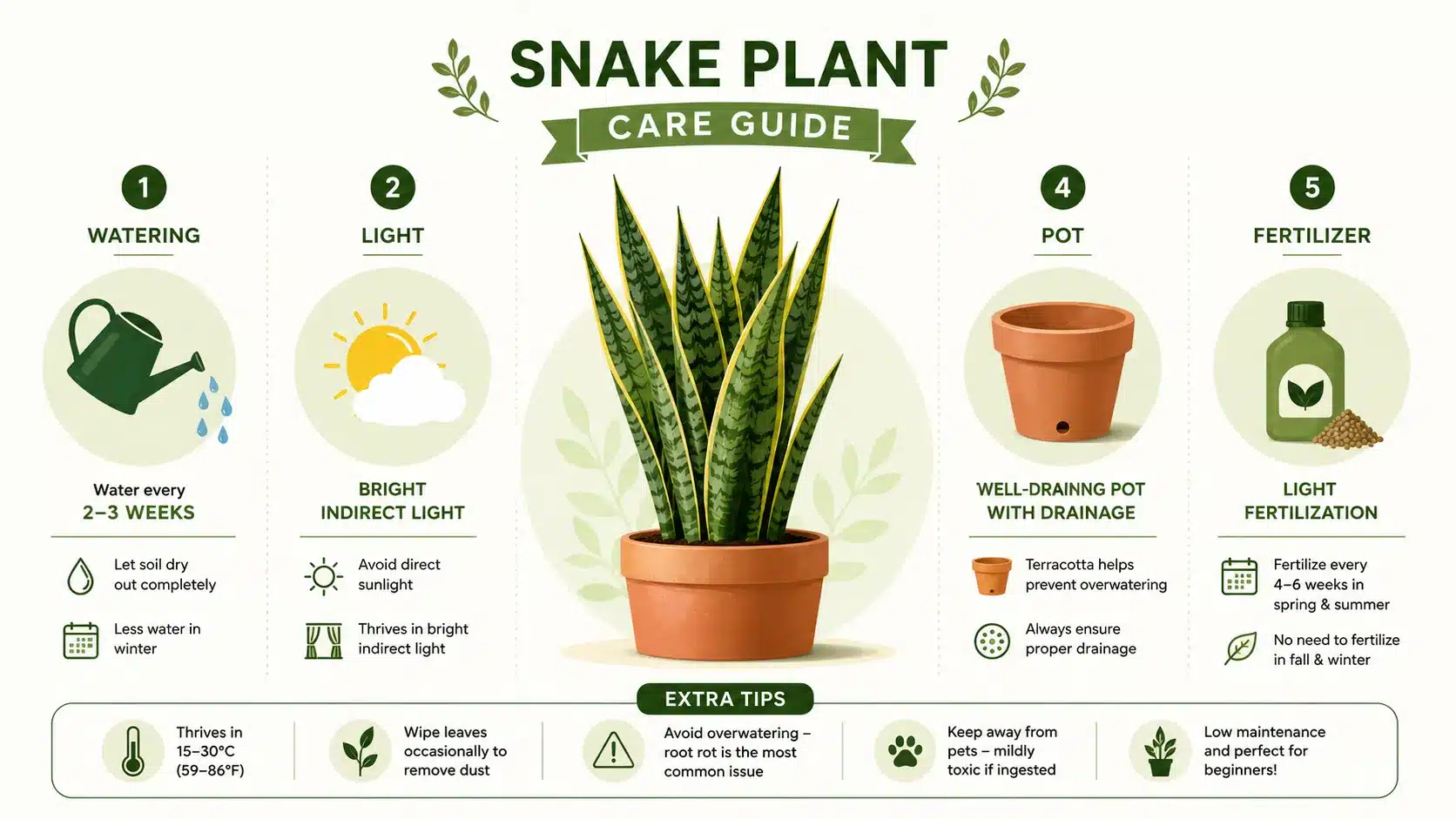
Watering Requirements
Overwatering is the most common reason snake plants fail indoors. Because snake plants store moisture in their thick leaves and roots, they prefer drying out between waterings.
General watering guidelines include:
| Season | Watering Frequency |
| Spring | Every 2–3 weeks |
| Summer | Every 2–3 weeks |
| Autumn | Every 3–4 weeks |
| Winter | Every 4–6 weeks |
Always check the soil before watering. The top several inches should feel dry before additional water is added.
Signs of overwatering include:
- Yellow leaves
- Mushy foliage
- Soft stems
- Root rot odor
- Blackened roots
Signs of underwatering include:
- Wrinkled leaves
- Dry leaf edges
- Slowed growth
When in doubt, wait a few more days before watering. Snake plants tolerate drought far better than excess moisture. Want these watering and care intervals in a printable format you can check anytime? Our downloadable snake plant quick reference sheet breaks down the same seasonal watering, light, and soil guidance at a glance.
Light Requirements
Snake plants are highly adaptable and can tolerate a broad range of lighting conditions. However, they perform best in bright indirect light.
Ideal lighting conditions include:
- East-facing windows
- Bright filtered sunlight
- Rooms with natural daylight
- Indirect exposure near south-facing windows
They can survive in low-light conditions, which is one reason they are popular indoor plants.
Avoid:
- Intense afternoon sun
- Prolonged direct exposure through hot glass
- Completely dark spaces
Although snake plants survive in low light, brighter conditions generally encourage healthier growth and stronger leaf coloration.
Soil and Pot Preferences
Proper drainage is essential for successful snake plant care. The best soil mixes allow water to move quickly away from the roots.
Suitable soil options include:
- Cactus soil
- Succulent soil
- Sandy potting mixes
- Well-draining indoor plant blends
Terracotta pots are often preferred because they:
- Improve airflow
- Help excess moisture evaporate
- Reduce root rot risk
- Provide stability for taller plants
A recommended soil blend often includes:
- Potting soil
- Perlite
- Coarse sand
This combination helps create the drainage conditions snake plants naturally prefer.
Fertilization and Pruning
Snake plants are light feeders and generally require minimal fertilization.
During active growth seasons, fertilize:
- Once monthly during spring and summer
- With a balanced houseplant fertilizer
- At half-strength if desired
Avoid fertilizing during winter dormancy.
Pruning requirements are minimal.
Prune when you notice:
- Brown leaf tips
- Damaged foliage
- Diseased leaves
- Broken stems
To prune correctly:
- Use clean, sharp scissors or pruners.
- Cut damaged leaves near the soil line.
- Remove brown tips carefully without removing excessive healthy tissue.
- Dispose of diseased foliage immediately.
Elemo Baker recommends sterilizing pruning tools before and after trimming to reduce the risk of spreading plant diseases indoors.
Snake Plant Disadvantages — What You Should Know
Although snake plants offer many benefits, they also have a few disadvantages that homeowners should understand before bringing one home. The most important concern is toxicity. Snake plants contain compounds called saponins, which can cause mild to moderate reactions if ingested by pets or humans.
Key Snake Plant Disadvantages
- Toxic to cats and dogs if consumed
- May cause nausea, vomiting, or drooling in pets
- Sap can trigger skin irritation in sensitive individuals
- Overwatering can quickly lead to root rot
- Growth is relatively slow compared to many houseplants
- Not ideal for homes with free-roaming pets that chew plants
Pet owners should place snake plants out of reach or choose a pet-safe alternative if animals regularly interact with indoor plants. Despite these drawbacks, snake plants remain one of the most reliable and beginner-friendly indoor plants when grown responsibly.
Snake Plant vs. Spider Plant — Which Indoor Plant Is Better?
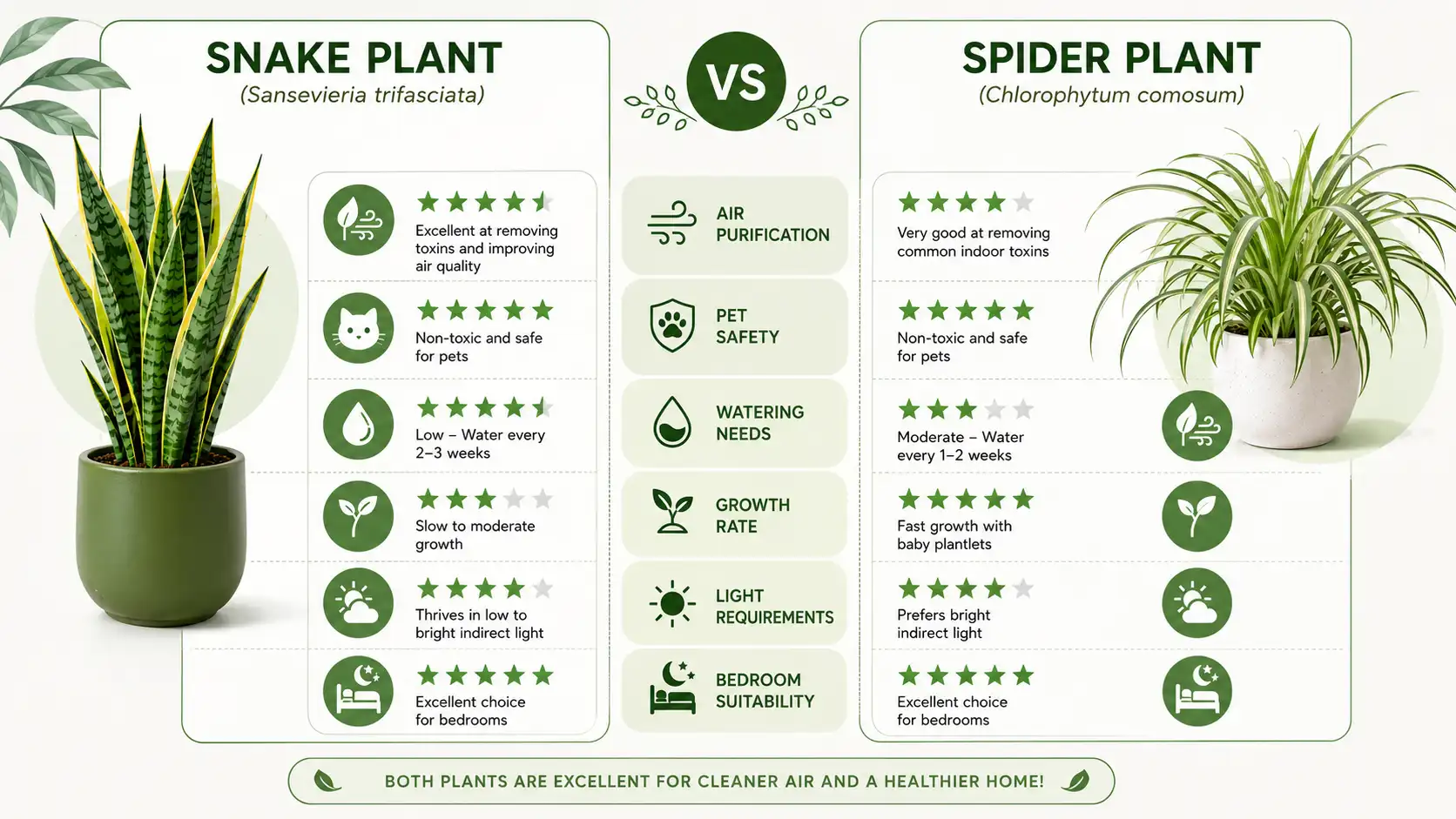
Both snake plants and spider plants are popular houseplants, If you’d rather test this side-by-side against 20 other houseplants at once, the interactive indoor plant comparison tool lets you filter by light, watering habits, and pet safety. It’s a faster way to see exactly where snake plant vs. spider plant differ before you buy. but they excel in different situations.
| Feature | Snake Plant | Spider Plant |
| Air Purification | Yes | Yes |
| Night Oxygen Production | Yes | No |
| Pet Safety | Toxic to pets | Non-toxic |
| Light Tolerance | Low to bright indirect | Bright indirect preferred |
| Watering Needs | Low (drought tolerant) | Moderate |
| Growth Rate | Slow to moderate | Fast |
| Ideal Placement | Bedroom, living room | Hanging baskets, offices |
Spider Plant Benefits
Spider plants (Chlorophytum comosum) are known for:
- Fast growth
- Easy propagation
- Pet-safe foliage
- Attractive arching leaves
- Strong adaptability indoors
Spider plant indoor benefits make them excellent choices for families with pets and gardeners who enjoy watching plants grow quickly.
When to Choose a Snake Plant
Choose a snake plant if you want:
- A drought-tolerant plant
- A bedroom-friendly plant
- Minimal maintenance
- Modern architectural appearance
- Better tolerance of low-light spaces
When to Choose a Spider Plant
Choose a spider plant if you want:
- Pet-safe greenery
- Rapid growth
- Hanging basket displays
- Easy propagation from plantlets
- A softer, cascading appearance
Both plants are excellent indoor choices, and many homeowners successfully grow both species together.
Common Snake Plant Problems and How to Fix Them
Leaves Turning Yellow or Mushy
Yellow or mushy leaves are usually caused by overwatering. When soil remains wet for too long, roots lose access to oxygen and begin to rot.
How to Fix It
- Stop watering immediately
- Remove the plant from its pot
- Inspect roots for black or mushy sections
- Trim damaged roots
- Repot into fresh, well-draining soil
Prevention
- Water only when soil is dry
- Use drainage holes
- Avoid leaving water in saucers
Root rot is the most common snake plant problem and is almost always preventable.
Brown Leaf Tips
Brown tips can develop for several reasons.
Common causes include:
- Inconsistent watering
- Low humidity
- Mineral buildup from tap water
- Physical leaf damage
Solutions
- Maintain a consistent watering schedule
- Use filtered or distilled water if necessary
- Trim damaged tips with clean scissors
- Keep the plant away from heating vents
Small brown tips are generally cosmetic and rarely threaten plant health.
Snake Plant Not Growing
A snake plant that appears stagnant is not always unhealthy. These plants naturally grow slowly.
Possible causes include:
- Insufficient light
- Winter dormancy
- Root-bound conditions
- Nutrient deficiencies
How to Encourage Growth
- Move the plant to brighter indirect light
- Fertilize during spring and summer
- Repot if roots completely fill the container
- Maintain temperatures above 60°F (16°C)
In our experience, increased light is often the simplest and most effective solution for slow-growing snake plants.
Pests on Snake Plant (Mealybugs, Spider Mites)
Snake plants are relatively pest-resistant but can occasionally attract insects.
Common pests include:
- Mealybugs
- Spider mites
- Scale insects
Identification
Mealybugs appear as:
- White cotton-like clusters
- Sticky residue on leaves
Spider mites may cause:
- Fine webbing
- Speckled foliage
- Leaf discoloration
Organic Treatment Options
- Wipe leaves with rubbing alcohol
- Use insecticidal soap
- Spray with neem oil
- Isolate affected plants
Prevention
- Inspect new plants before bringing them indoors
- Keep leaves clean
- Avoid overcrowding houseplants
Regular inspections can catch infestations before they become serious.
Snake Plant Varieties Worth Knowing
Snake plants come in numerous cultivars that differ in color, size, and growth habit.
Popular Snake Plant Varieties
- Dracaena trifasciata ‘Laurentii’ – Classic variety with yellow leaf margins.
- ‘Moonshine’ – Attractive silver-green foliage with a modern appearance.
- ‘Cylindrica’ – Cylindrical spear-like leaves that grow upright.
- ‘Hahnii’ – Compact dwarf variety often called Bird’s Nest Snake Plant.
- ‘Black Gold’ – Dark green leaves with bold golden edges.
- ‘Bantel’s Sensation’ – Narrow leaves with elegant white striping.
- ‘Whale Fin’ – Produces large paddle-shaped leaves with dramatic visual appeal.
How Variety Affects Growth and Size
For a deeper cross-reference of cultivars alongside other low-maintenance, air-purifying houseplants, bookmark our indoor air-purifying plants reference database. It’s organized so you can compare snake plant varieties against similar-care species in one place.
Different cultivars vary in:
- Mature height
- Growth speed
- Leaf shape
- Color patterns
- Decorative uses
For example:
| Variety | Typical Size | Growth Habit |
| Hahnii | 6–12 inches | Compact rosette |
| Laurentii | 2–4 feet | Upright |
| Moonshine | 2–4 feet | Upright |
| Cylindrica | 3–6 feet | Vertical spears |
| Whale Fin | 1–4 feet | Broad paddle leaves |
Fortunately, care requirements remain very similar across most snake plant varieties.
Beginner Mistakes When Growing Snake Plants Indoors
Many snake plant problems can be traced back to a handful of common mistakes.
Most Common Beginner Errors
- Overwatering the plant
- Using heavy, poorly draining soil
- Choosing pots without drainage holes
- Placing plants in completely dark corners
- Repotting too frequently
- Fertilizing excessively
- Ignoring signs of root rot
- Using cold water during winter months
- Leaving plants exposed to freezing temperatures
- Assuming all yellow leaves are caused by underwatering
Elemo Baker recommends treating snake plants more like succulents than traditional tropical houseplants. They prefer drying out between waterings and generally thrive when left alone rather than over-managed.
A simple care routine often produces better results than constant adjustment.
Read Also:
Conclusion
The 10 benefits of snake plant extend far beyond its attractive appearance. This versatile indoor plant can help support cleaner indoor air, release oxygen at night, enhance bedroom environments, reduce maintenance demands, and contribute to a more relaxing living space. Its cultural significance, feng shui associations, and traditional medicinal history further add to its appeal.
Whether you are a beginner gardener or an experienced plant enthusiast, the snake plant remains one of the most practical houseplants available. Its combination of durability, beauty, and adaptability makes it suitable for homes, apartments, offices, and bedrooms alike.
The biggest takeaway is simple: few indoor plants offer as many benefits with as little effort. For anyone seeking a low-maintenance plant that supports both home décor and indoor well-being, the snake plant is an excellent choice.
Frequently Asked Questions (FAQs)
What are the top benefits of keeping a snake plant indoors?
The top benefits of keeping a snake plant indoors include air purification, nighttime oxygen production, low maintenance requirements, stress reduction through indoor greenery, and positive feng shui associations. It is one of the easiest houseplants to grow successfully and adapts well to most indoor environments.
Is a snake plant good for the bedroom?
Yes, a snake plant is considered one of the best plants for bedrooms because it produces oxygen at night through CAM photosynthesis. Its air-quality benefits, compact growth habit, and calming visual presence make it particularly suitable for sleeping spaces. Place it near a window that receives indirect light for best results.
What are the spiritual benefits of a snake plant?
Snake plants are associated with protection, resilience, prosperity, and positive energy in many cultural traditions. In feng shui, they are believed to help guard against negative energy and encourage personal growth. Entryways, living rooms, and wealth corners are commonly recommended placement locations.
What are the disadvantages of a snake plant?
The primary disadvantages of a snake plant are its toxicity to cats and dogs if ingested, the potential for mild skin irritation from its sap, and susceptibility to root rot when overwatered. It also grows more slowly than many other common houseplants.
Is a snake plant good for arthritis or skin conditions?
Traditional medicine systems have used snake plants for various skin and inflammatory concerns, including minor wounds and irritation. However, these uses are based largely on ethnobotanical traditions rather than strong clinical evidence. Snake plants should not be considered a treatment for arthritis, eczema, or other medical conditions without professional medical guidance.
Is a snake plant lucky for the home?
According to feng shui traditions, snake plants are often considered lucky for homes. They are associated with protection, prosperity, strength, and positive energy. Many practitioners recommend placing them near entrances or in areas linked to wealth and personal growth.
What is the snake plant good for, exactly?
A snake plant is valued for several purposes. It helps support indoor air quality, produces oxygen at night, requires very little maintenance, enhances interior design, and holds cultural and spiritual significance in various traditions. Its combination of practical and decorative benefits makes it one of the most popular indoor plants worldwide.
12 Comments