
Are There Purple Sunflowers? Truth Explained
Introduction
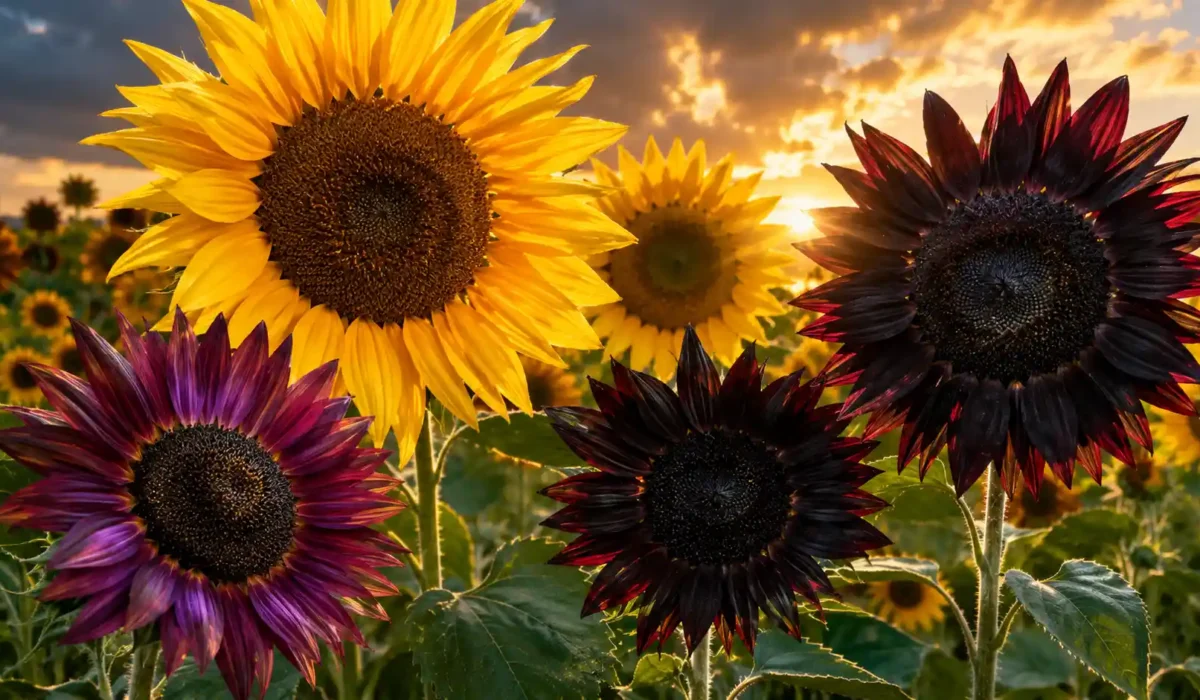
Are there purple sunflowers is a common gardening question driven by viral images and florist listings showing deep violet blooms. In reality, true purple sunflowers do not exist in nature. The sunflower species (Helianthus annuus) naturally produces yellow, orange, red, and brown tones due to carotenoid pigments, not purple pigments. However, some varieties appear very dark and near-purple, while others are dyed or artificially coloured for decorative use. This article explains the science, real varieties, and misleading marketing behind “purple sunflowers”.
By Elemo Baker | Plant Care & Gardening Expert
Last Updated: June 2026
Quick Summary
- True purple sunflowers (Helianthus annuus) do not exist in nature — no genetic pathway produces purple petals.
- Some varieties show deep burgundy or near-black tones that can look purple in certain light.
- “Purple sunflowers” sold commercially are usually dyed or artificial flowers.
- False sunflowers (Heliopsis species) are the closest natural plants with purple-adjacent tones.
Are Purple Sunflowers Real or Fake?
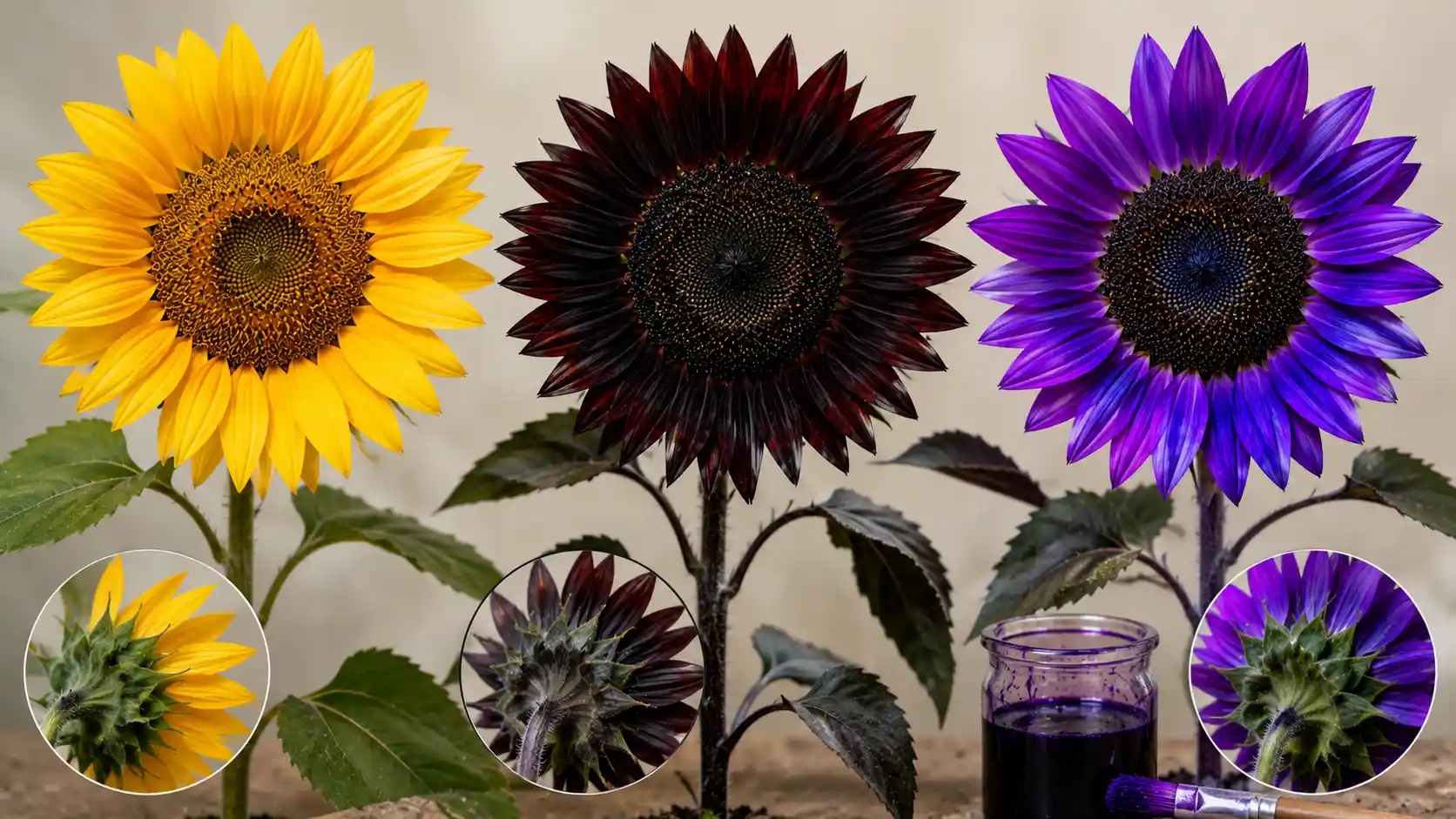
Purple sunflowers are not real in a natural botanical sense; they are either dark-coloured hybrids, dyed flowers, or artificial products. No known sunflower species naturally produces true purple petals. Sunflowers belong to the genus Helianthus, a well-documented group in the Asteraceae family, commonly known as the daisy family.
Sunflowers belong to a pigment system dominated by carotenoids, which create yellow, orange, and reddish tones. They lack significant anthocyanin expression, the pigment responsible for purple, blue, and violet colours in many other flowers. This is why “purple sunflowers fake” is a common search term — the colour simply does not occur naturally in the genus.
Natural sunflower colours include:
- Yellow (most common)
- Golden orange
- Deep red and burgundy
- Cream and white
- Bi-coloured patterns
“Purple sunflowers” in shops are typically:
- White sunflowers dyed with floral colouring
- Artificial silk flowers
- Digitally enhanced images used in marketing
What Sunflower Varieties Come Closest to Purple?
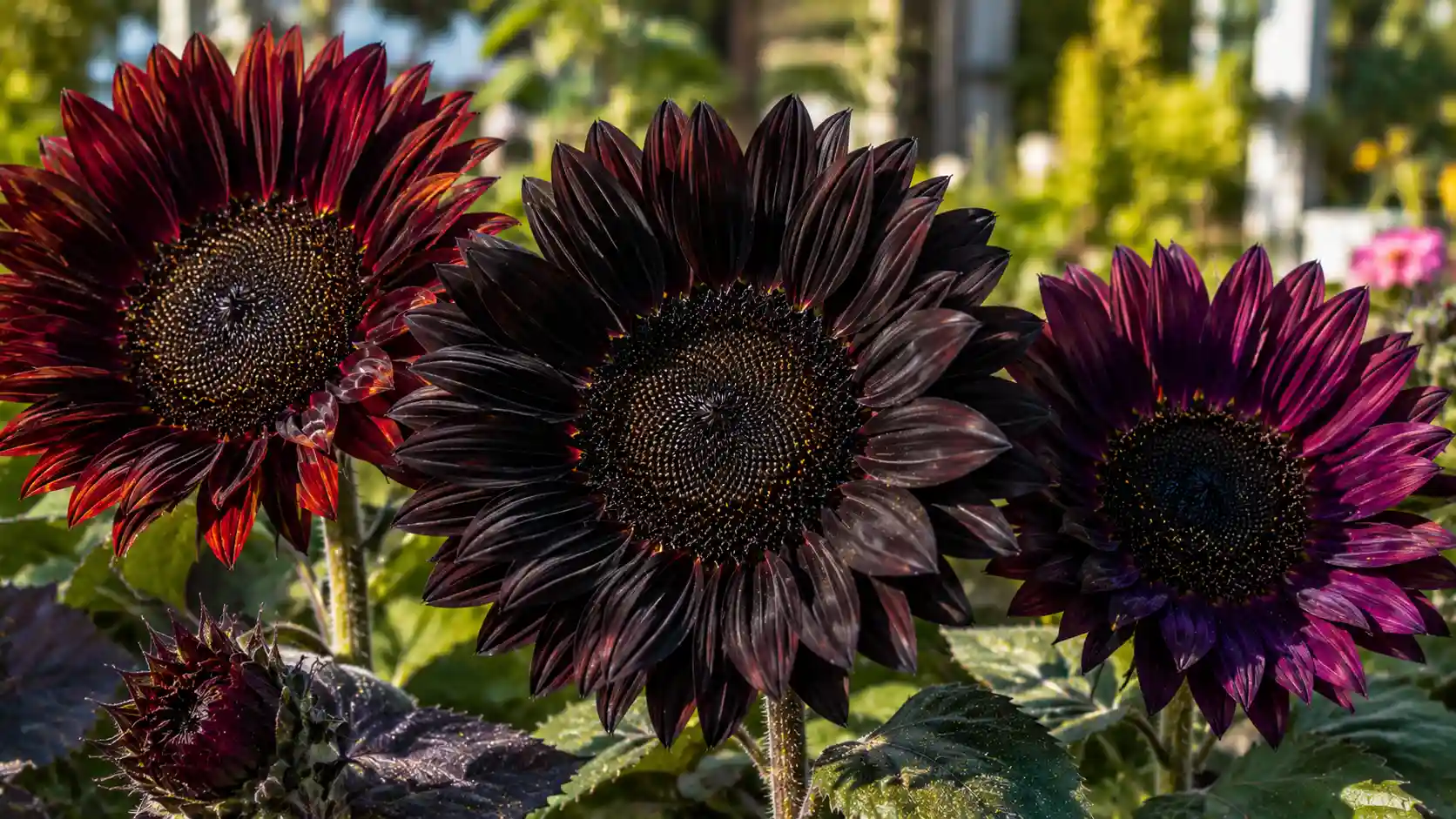
While true purple does not exist, several sunflower varieties produce deep tones that appear purple under certain lighting conditions.
Sunfill Purple Sunflower
The Sunfill Purple sunflower is a cut-flower variety known for its deep burgundy petals. In Australia, it is primarily available through the commercial floral trade rather than home gardens. Its colour is often marketed as “purple”, but it is technically a rich wine-red tone. Elemo Baker notes that florists prefer it for its dramatic contrast in arrangements, especially in modern bouquets.
Midnight Oil Sunflower
The Midnight Oil sunflower is one of the darkest commercially available sunflower types. Its petals appear nearly black with deep burgundy undertones, sometimes reading as purple in shaded lighting. The plant is pollen-free, making it ideal for indoor arrangements. The term “midnight oil sunflowers” is often used in cut-flower farming due to its strong vase life and uniform appearance.
Violet Majesty Sunflower
The Violet Majesty sunflower is a hybrid variety with dark maroon-purple petals and contrasting dark centres. It performs best in full sun and well-drained soil. While not widely available in all regions of Australia, it is occasionally sold through specialty seed suppliers. Elemo Baker recommends it for gardeners seeking unusual ornamental colour contrast.
Dark Purple Sunflowers — What’s Actually Available
“Dark purple sunflowers” is a marketing term rather than a botanical classification. These flowers typically fall into deep red, burgundy, or near-black categories. Their perceived purple hue is influenced by lighting, soil conditions, and post-harvest handling rather than genetics.
What Are the Rare Colours of Sunflowers?
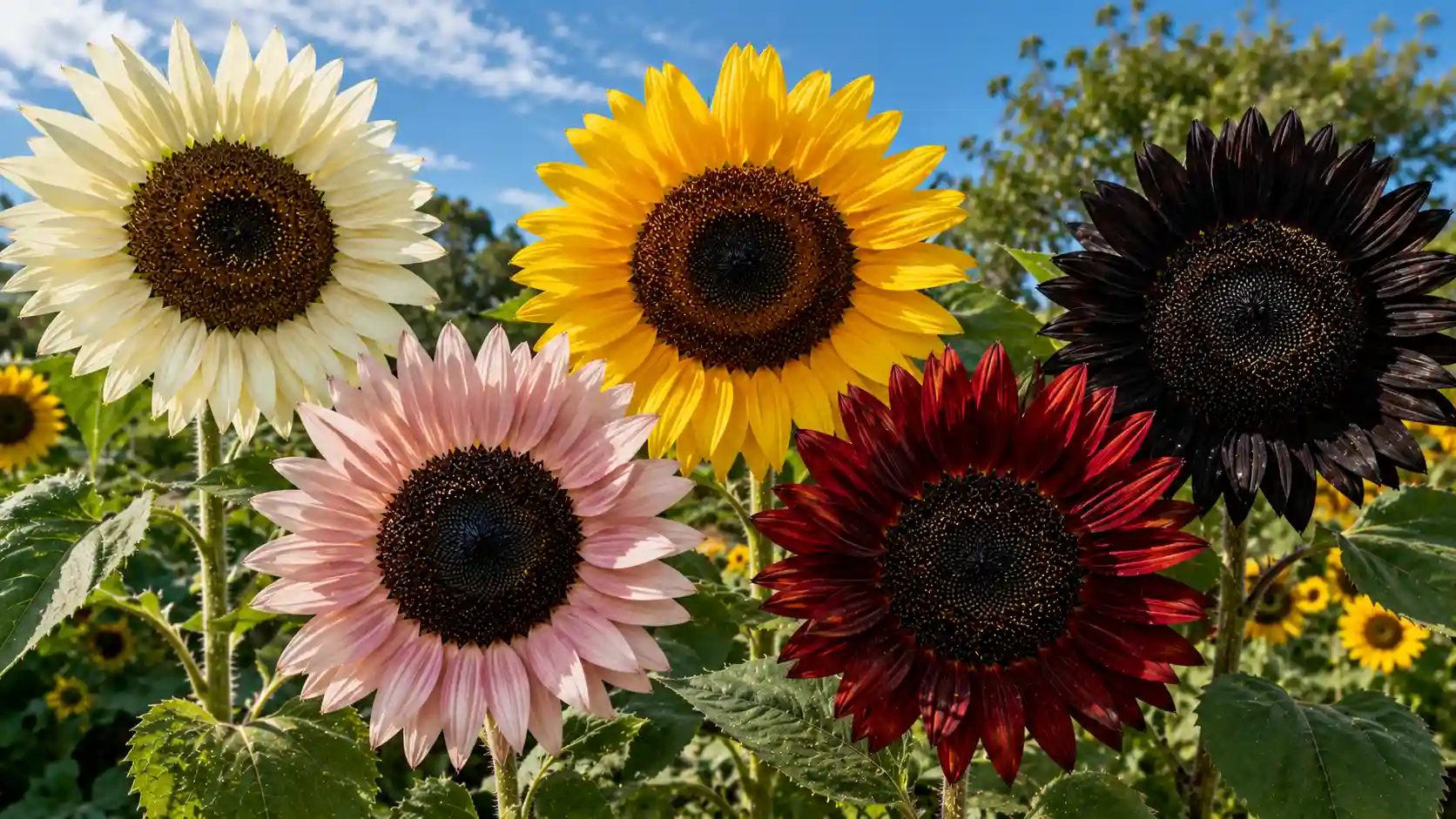
Sunflowers come in a wider colour range than many people expect, although true blue and purple do not exist naturally. Like other decorative species used in landscaping, including driveway plants in Australian homes, sunflowers are valued for their bold visual impact.
| Sunflower Colour | Example Variety | Availability in Australia |
| Deep Burgundy/Near-Purple | Sunfill Purple, Midnight Oil | Yes — cut flower trade |
| Bicolour (Red + Yellow) | Autumn Beauty | Yes — seed available |
| White/Cream | Italian White | Yes |
| Pink | Hybrid varieties | Limited |
| Near-Black | Black Magic | Yes |
Pink sunflowers exist in limited hybrid forms, often with soft rose or blush tones. However, blue sunflowers do not exist in nature, as sunflower genetics do not support blue pigment development.
Are Pink and Purple Sunflowers Real?
Pink sunflowers are real, but purple sunflowers are not naturally occurring. Soft pink-toned blooms can also be seen in shrubs covered in guides like pink flowering shrub identification in Australia, though these are botanically unrelated to sunflowers.
Some hybrid sunflower plants can produce pale pink or rose-tinted petals due to limited anthocyanin activity. These are often sold as pink sunflower seeds, pink sunflower seeds to plant, or pink sunflower plants in niche gardening markets. Other naturally occurring warm-toned blooms like pink marigolds also show how selective breeding can produce soft pink hues in ornamental flowers.
In contrast, purple sunflowers are always:
- Dyed flowers
- Artificial products
- Or dark red varieties misidentified as purple
Gardeners searching for pink sunflower seeds Australia can find limited availability through specialty seed suppliers, but results vary depending on climate and soil conditions. Elemo Baker notes that colour expression in pink varieties is often less stable in hot Australian summers.
What Are Purple False Sunflowers?
Purple false sunflowers refer to plants in the Heliopsis helianthoides group and related Asteraceae species. These are called “false sunflowers” because they resemble true sunflowers but belong to a different genus.
They differ from Helianthus in:
- Flower structure and genetics
- Growth habit and leaf shape
- Pigment expression
Some varieties of false sunflowers may display slightly purple-tinged centres or stems, but they are not true purple sunflowers. They are often used in perennial garden borders for their hardiness and long flowering season.
What Does a Purple Sunflower Mean? Symbolism and Uses
A purple sunflower symbolises admiration, uniqueness, and mystery, even though it does not exist naturally.
In floriography:
- Sunflowers represent loyalty, positivity, and adoration
- Purple tones represent royalty and individuality
Combined meaning:
A purple sunflower (dyed or hybrid) symbolises rare admiration or a one-of-a-kind emotional connection.
Sunflowers are also culturally associated with devotion and loyalty, sometimes linked to expressions of love. While red roses traditionally represent “I love you”, sunflowers are often seen as a more joyful alternative. Some traditions suggest gifting two sunflowers to symbolise balance and shared happiness, although this is not scientifically based.
Teddy Bear Sunflowers — A Unique Variety Worth Knowing
The Teddy Bear sunflower is a dwarf, double-petalled variety known for its soft, fluffy appearance.
Key characteristics:
- Height: typically 40–60 cm
- Compact growth habit
- Dense, pom-pom-style blooms
- Ideal for pots and small gardens
In Australia, teddy bear sunflower seeds are widely available and easy to grow in warm seasons. Elemo Baker recommends them for beginners because they germinate quickly and tolerate heat well.
The giant teddy bear sunflower Australia variations are less common but refer to slightly taller hybrid forms. These plants are still part of Helianthus annuus, not a separate species.
Growing Sunflowers from Seed in Australia
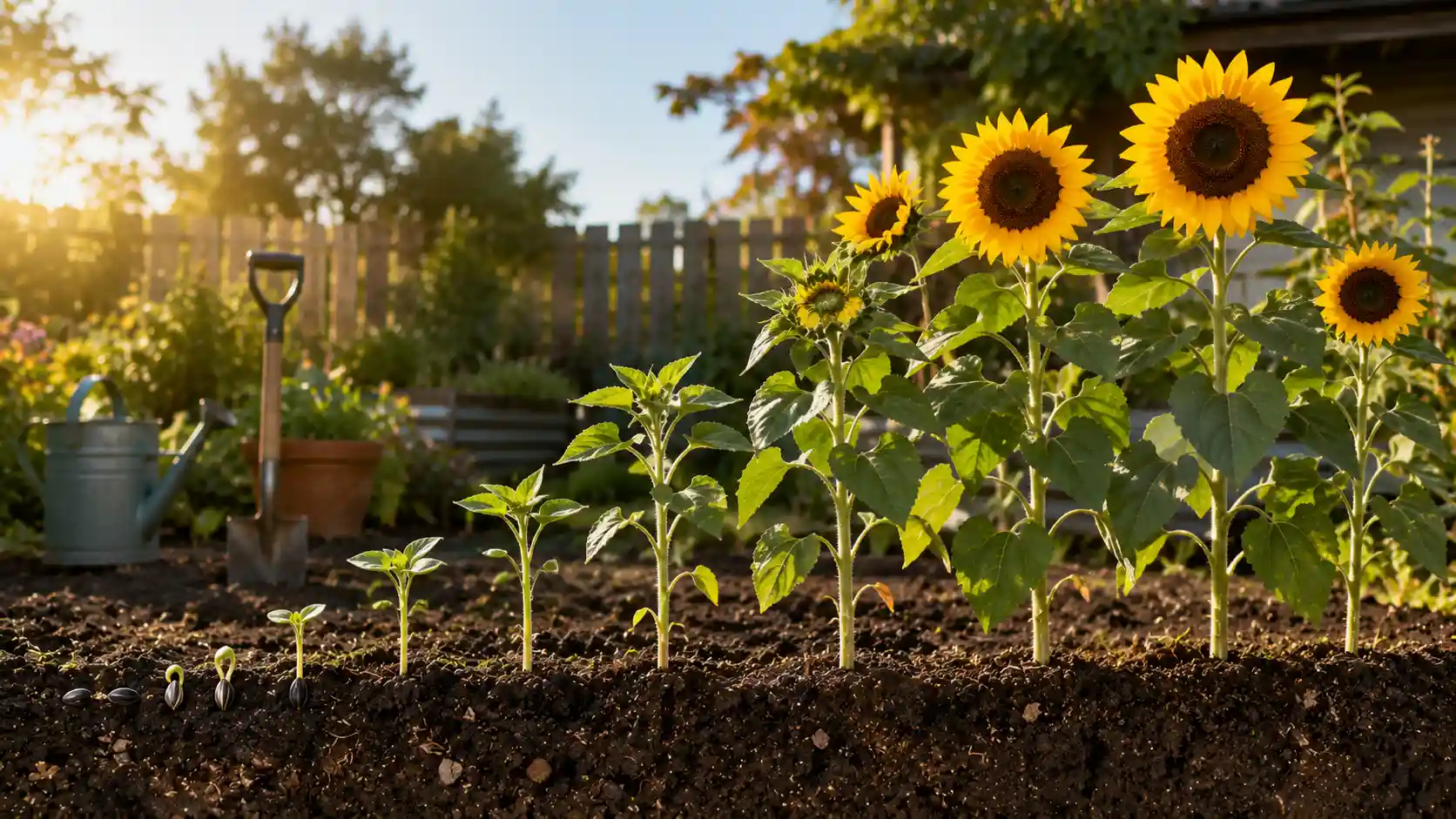
Sunflowers are among the easiest flowering plants to grow from seed, especially in Australian climates. Sunflowers are often grouped with other easy-care garden plants, similar to low-maintenance fence line plants in Australia used for quick seasonal colour.
Choosing the Right Seeds
Select sunflower varieties based on:
- Colour preference (yellow, burgundy, pink-toned hybrids)
- Size (dwarf vs tall varieties)
- Purpose (cut flowers vs garden display)
Common seed types include:
- Flower sunflower seeds
- Sunflower seed flowers
- Sunflower seed Australia mixes
Planting and Growing Conditions
Just like fast-growing ornamental species such as magnolias in Australia, sunflowers also respond strongly to full sun and nutrient-rich soil conditions.
Best practices include:
- Plant in full sun (6–8 hours daily)
- Sow seeds in spring after frost risk passes
- Use well-drained soil enriched with compost
- Water regularly during early growth
- Apply balanced fertiliser during flowering stage
Elemo Baker notes that overwatering is a common mistake in Australian summers, often leading to weak stems. Similar climate-adapted planting approaches are also seen in fruiting plants such as the feijoa tree in Australia, which thrives in comparable warm, sunny conditions. Other fast-growing ornamental plants like Ficus hillii ‘Flash’ hedges in Australia also require similar pruning and spacing considerations.
Where to Buy Purple Sunflower Seeds in Australia
There are no true purple sunflower seeds Australia products that produce genuine purple flowers. Items labelled as such usually grow:
- Dark burgundy sunflowers
- Mixed-colour hybrids
- Or artificially enhanced results in marketing images
For best results, gardeners should choose:
- Midnight Oil sunflower seeds
- Sunfill-type dark sunflower hybrids
- Teddy Bear sunflower seeds Australia
Common Mistakes When Growing Unusual Sunflower Varieties
- Expecting true purple blooms from “purple sunflower seeds”
- Overwatering during hot Australian summers
- Planting too late in the season, reducing bloom quality
- Confusing dark red varieties with diseased plants
- Poor spacing between dwarf and tall varieties
Elemo Baker emphasises that most colour disappointment comes from marketing misunderstandings rather than gardening failure. Unusual growth issues are sometimes confused with pest damage, which is why guides like garden pest identification in Australian gardens are useful for troubleshooting.
Conclusion
True purple sunflowers do not exist in nature due to genetic limitations in pigment production. However, varieties such as Sunfill Purple, Midnight Oil, and Violet Majesty produce deep burgundy tones that can appear purple-like. Dyed and artificial sunflowers also fill the market demand for this colour. For Australian gardeners, a wide range of unusual sunflower varieties can still be grown successfully from seed, offering vibrant alternatives to traditional yellow blooms.
Frequently Asked Questions
1. Are purple sunflowers real?
No, true purple sunflowers do not exist naturally. Only dyed or dark hybrid varieties appear purple-like.
2. What is the name of the purple sunflower variety?
Common near-purple varieties include Sunfill Purple, Midnight Oil, and Violet Majesty.
3. Can you buy purple sunflower seeds in Australia?
Not true purple seeds. Products labelled as such produce dark burgundy or mixed-colour sunflowers.
4. What are purple false sunflowers?
They are Heliopsis species that resemble sunflowers but are not true Helianthus plants.
5. What is the rarest sunflower colour?
White, near-black, and pale pink are among the rarest natural sunflower colours.
6. What does giving someone a purple sunflower mean?
It symbolises unique admiration, mystery, and individuality.
7. Are teddy bear sunflowers a different species?
No, they are a dwarf cultivar of Helianthus annuus with double-petalled blooms.
2 Comments