

Bonsai Care Guide for Beginners in Australia | Full Guide
According to Elemo Baker, beginner bonsai care centres on four essentials: bright indirect light for six or more hours daily, watering only when the topsoil feels dry (never on a fixed schedule), well-draining bonsai-specific soil, and light pruning during active growth to maintain shape. Repotting every two to three years prevents root-bound stress and supports long-term health.
Species choice matters more than most guides admit — hardy options like Chinese elm or juniper forgive early mistakes far better than tropical ficus varieties. Outdoor bonsai also need seasonal dormancy exposure to cold, so bringing them indoors year-round can weaken the tree over time.
This guide sits within our broader The Ultimate Guide to Plant Care & Growing in Australia — start there if you want the fundamentals that apply across every plant type, not just bonsai.
By Elemo Baker | Plant Care & Gardening Expert
Quick Summary
- Bonsai is a technique applied to ordinary tree species, not a special dwarf plant — almost any woody tree can be trained this way.
- The single biggest first-year killer is watering on a fixed schedule instead of checking the soil.
- Your Australian climate zone matters more than the “official” species guide, because most bonsai content online is written for Northern Hemisphere seasons.
- Working out your species and whether it needs to live indoors or outdoors comes before touching water, soil, or tools.
If you’ve just been handed a bonsai as a gift, or picked one up on impulse at a nursery or Bunnings, you’re probably not short on love for the tree — you’re short on a plan. This guide gives you one: work out what you actually have, match it to where you live, then run a simple first-year care system built around Australian seasons rather than a Northern Hemisphere calendar.
What Is Bonsai, Really?
A bonsai isn’t a species of plant — it’s a horticultural technique applied to a normal tree to keep it small through pruning, wiring, and root restriction. Ficus, juniper, Chinese elm, Japanese maple, and several Australian natives are simply ordinary trees trained into this shape over years. Understanding this early stops a common early mistake: treating a bonsai like a delicate houseplant species rather than a real tree that happens to live in a shallow pot. As Wikipedia’s overview of bonsai confirms, the practice originates from Chinese penjing before being refined in Japan into the tradition most people recognise today.
Can you bonsai any tree? Technically yes, but not every species makes a forgiving beginner project. Very fast-growing species, non-woody plants, and trees with a single deep taproot (rather than a spreading, fibrous root system) tend to struggle with the repeated root pruning bonsai requires. Stick to species with a track record as bonsai — juniper, ficus, Chinese elm, Japanese maple, and hardy Australian natives like Port Jackson fig, Casuarina, and Grevillea — for your first tree.
Is Your Bonsai Indoor or Outdoor?
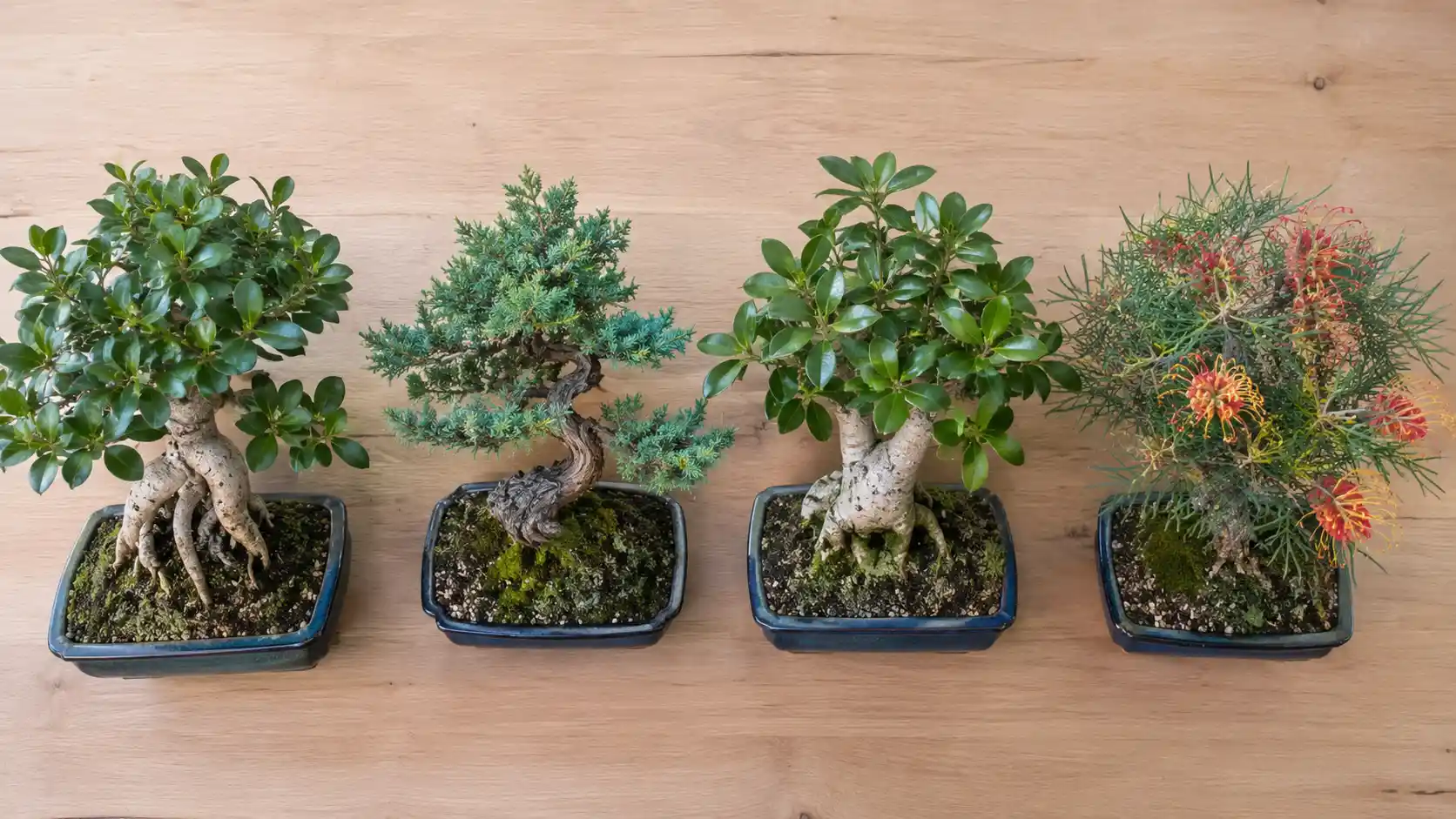
This is where most beginners get misled. Many trees sold as “indoor bonsai” — ginseng ficus is the classic example — are actually subtropical outdoor trees that merely tolerate indoor conditions for a while before slowly declining. True long-term houseplants in the bonsai world are the exception, not the rule.
| Type | Examples | Indoor-tolerant? | Best AU zones | Beginner difficulty |
| Subtropical, indoor-tolerant | Ginseng ficus, Chinese elm cultivars | Yes, with bright light | Warm temperate, subtropical | Easy |
| True outdoor, hardy | Juniper, pine | No — needs outdoor seasons | Most zones except tropical/arid | Easy–moderate |
| True outdoor, natives | Port Jackson fig, Moreton Bay fig | No | Coastal NSW–QLD, NT tropical | Moderate |
| True outdoor, drought-tolerant natives | Casuarina, Grevillea | No | Warm temperate, subtropical, dry inland | Moderate (species-specific watering and light tolerances need verification against an experienced Australian grower or bonsai society before being treated as universal — treat general native-care advice with some caution) |
If your tree came with no label, take a photo of the leaf shape and bark to a local nursery or bonsai club — this single step prevents most of the climate-mismatch deaths described below.
Matching Your Bonsai to Your Australian Climate Zone
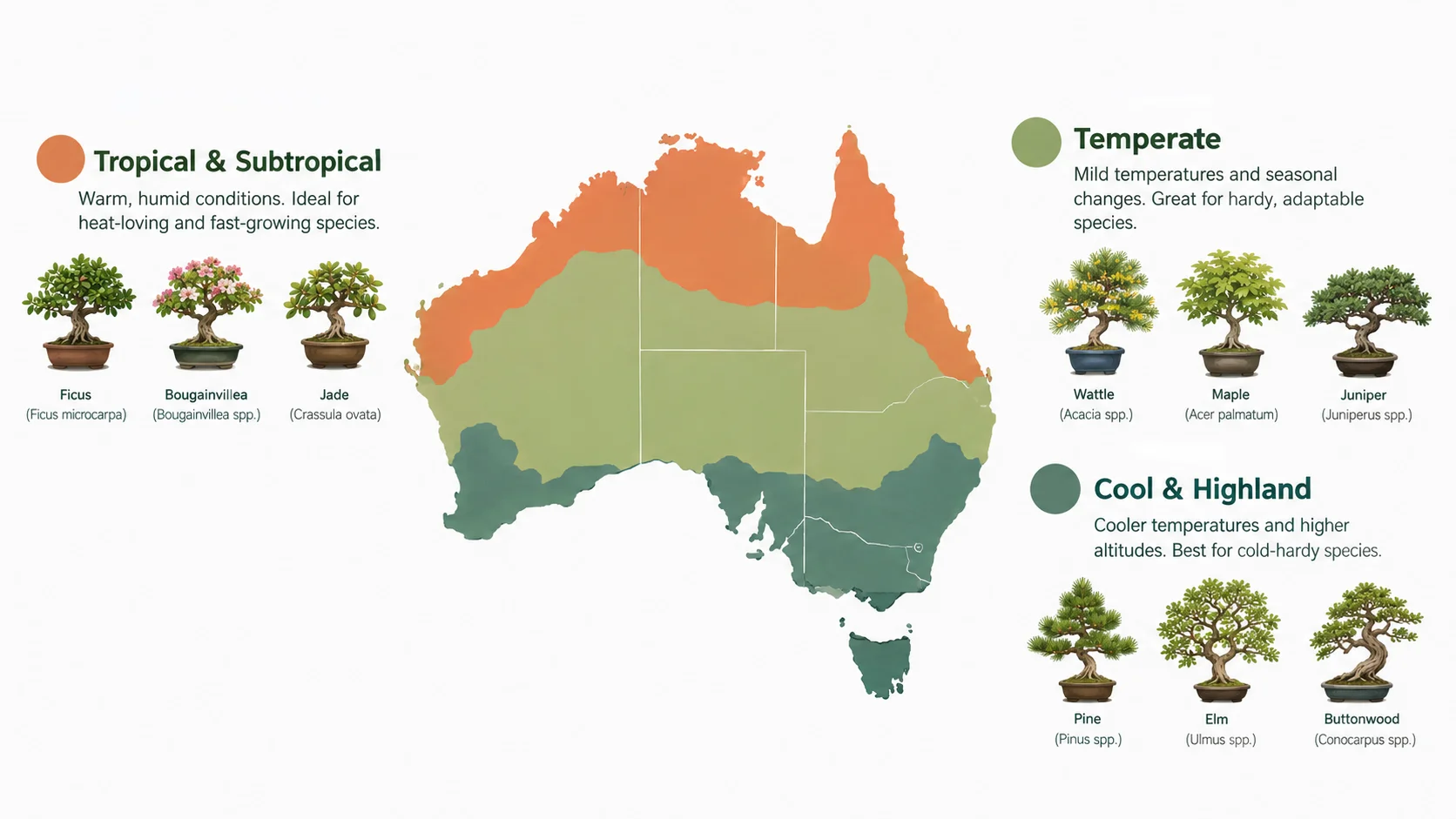
Global bonsai guides assume Northern Hemisphere seasons, which is exactly backwards for an Australian grower — advice to “protect from frost” or “fertilise as spring begins” needs to be read against our own calendar, not translated literally from a UK or US source.
- Tropical/subtropical (QLD, NT, coastal NSW): Native figs, ficus species, and many warmth-loving imports thrive outdoors year-round. If you’re drawn to a native species over an imported one, our Native & Feature Trees: How to Choose the Right One guide walks through the broader selection process before you commit to training one as bonsai.
- Temperate (southern NSW, VIC, SA, southern WA): Juniper, Chinese elm, and Japanese maple handle the seasonal swing well; native figs generally do not enjoy the cooler winters.
- Cool/highland (TAS, alpine regions): Hardier deciduous species (Japanese maple, some juniper cultivars) fare better than frost-sensitive tropicals.
Difficulty complaints about bonsai (“are bonsai trees hard to grow?”) are overwhelmingly a species-to-climate mismatch problem, not a reflection of bonsai technique being inherently difficult.
What Your Bonsai Actually Needs: The First-Year Care System
Watering: feel the soil, don’t watch the calendar
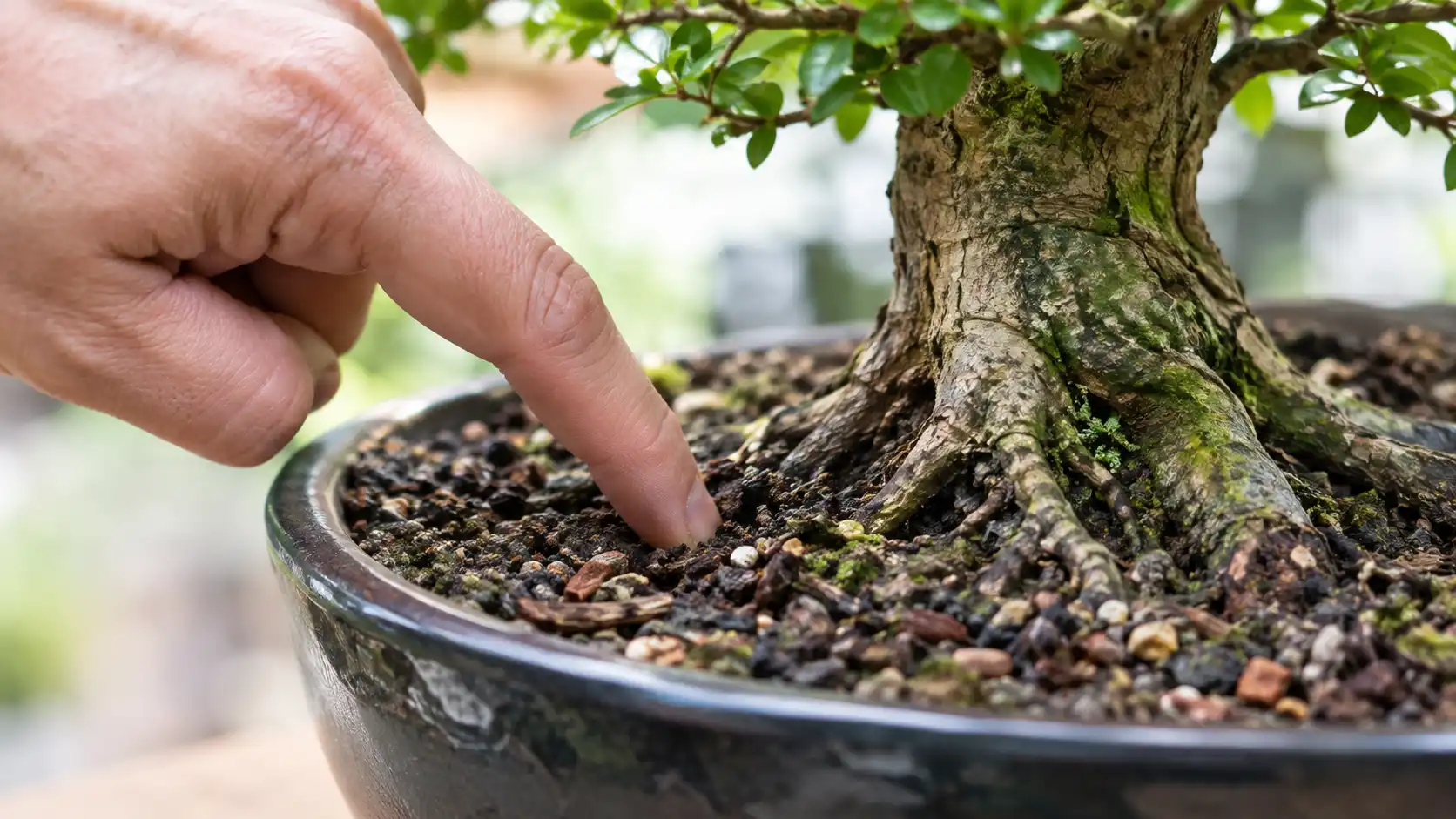
Water when the soil surface begins to dry out, not on a fixed daily or weekly schedule. A shallow bonsai pot holds far less soil volume than a garden bed, so it dries out faster and less predictably than typical potting advice assumes. Check by pressing a finger into the top centimetre of soil, or by lifting the pot to feel whether it’s still holding weight from the last watering — a genuinely dry pot feels noticeably lighter. In an Australian winter this might mean watering every two to three days; in summer heat, potentially daily or more for an outdoor tree in full sun. Most tap water is fine unless yours is heavily chlorinated or artificially softened.
A bonsai generally will not survive two weeks without water — the shallow soil volume simply doesn’t hold enough reserve. If you’re travelling, a self-watering tray, a simple wicking system, or a neighbour briefed on the finger test will get you through better than any drip-timer guess.
Light and position
Most bonsai species need several hours of genuinely bright light daily — a bright windowsill alone is rarely enough for true outdoor species, which will decline slowly (rather than dramatically) indoors, making the cause easy to miss for weeks. Aim for a position with half a day of sun, morning sun where possible, sheltered from harsh wind, and adjust the spot seasonally as the sun’s angle changes.
Soil and potting
Standard potting mix holds too much moisture for a shallow bonsai pot and is one of the fastest routes to root rot. Bonsai needs a fast-draining, low-organic mix (commonly built from a base like akadama, grit, and a smaller organic component), planted in a pot with genuine drainage holes — not just decorative slots.
Fertilising, pruning, wiring, and repotting
| Task | How often | Australian timing | Sign you’re overdoing it |
| Fertilising | Light, regular doses | Spring through autumn (growing season) | Excess soft, leggy growth |
| Pruning | As needed to maintain shape | Year-round for maintenance, heavier shaping in growing season | Stripping all foliage at once — this shocks the tree rather than shaping it |
| Wiring | Occasional, for structure | Avoid the most active growth flush | Wire cutting into thickening bark |
| Repotting | Every 2–4 years, species-dependent | End of winter, before spring growth begins | Repotting every year “just in case” |
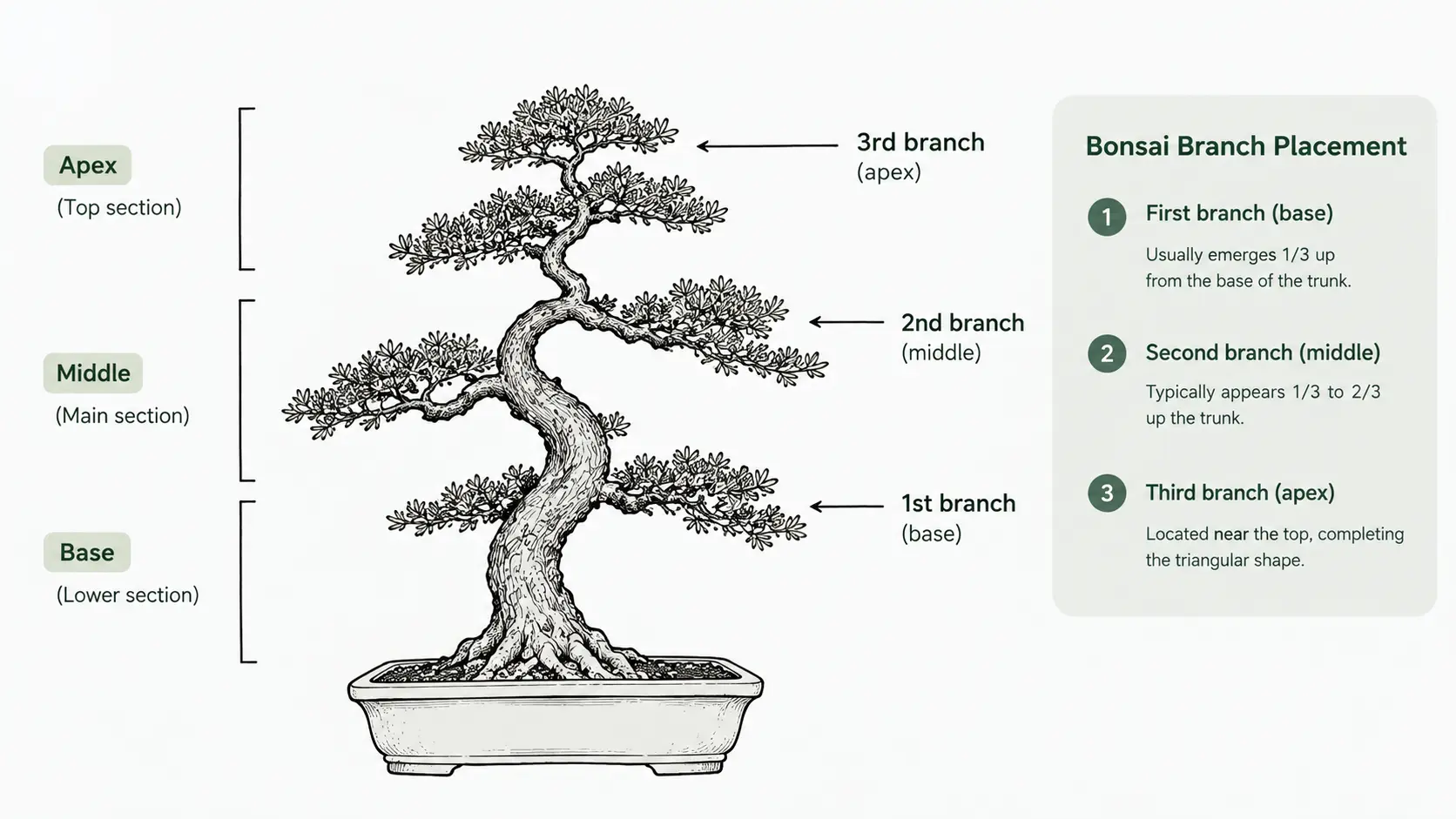
A simple beginner shaping heuristic worth knowing is the rule of thirds: the first branch typically emerges around a third of the way up the trunk, with subsequent branches alternating around the trunk to create depth rather than a flat, two-dimensional silhouette. It’s a guideline, not a strict law — don’t let it override a tree’s natural growth pattern.
How Long Until It Looks Like a “Real” Bonsai?
Don’t let the species dictate the pace of bonsai development, a tree can be decades old in the ground and still appear unstructured in year one of bonsai training, while a younger tree that has been cared for carefully can look convincing sooner. The speed of growth can differ between species, and from one season to the next – most of the bonsai grown in Australia will show a sign of growth in spring, and grow more slowly over the winter months. The trees are not naturally dwarfed, but become kept small and retain their mature size through continued pruning and root limitation, and the rate of growth and size of an indoor-grown tree is usually less than that of an outdoor-grown tree. For a broader look at how growth rate and root behaviour work across species generally, see our Growth Rate, Root Spread & Plant Sizing Guide.
Common Beginner Mistakes
- Watering on a fixed schedule instead of checking the soil
- Using standard potting mix instead of a free-draining bonsai mix
- Choosing a pot with no real drainage
- Picking a species mismatched to your climate zone (the single biggest AU-specific mistake)
- Over-fertilising in the hope of faster growth
- Cutting all the foliage off at once rather than shaping gradually
- Ignoring early signs of a root-bound tree until growth stalls
Troubleshooting: Symptom, Cause, Fix
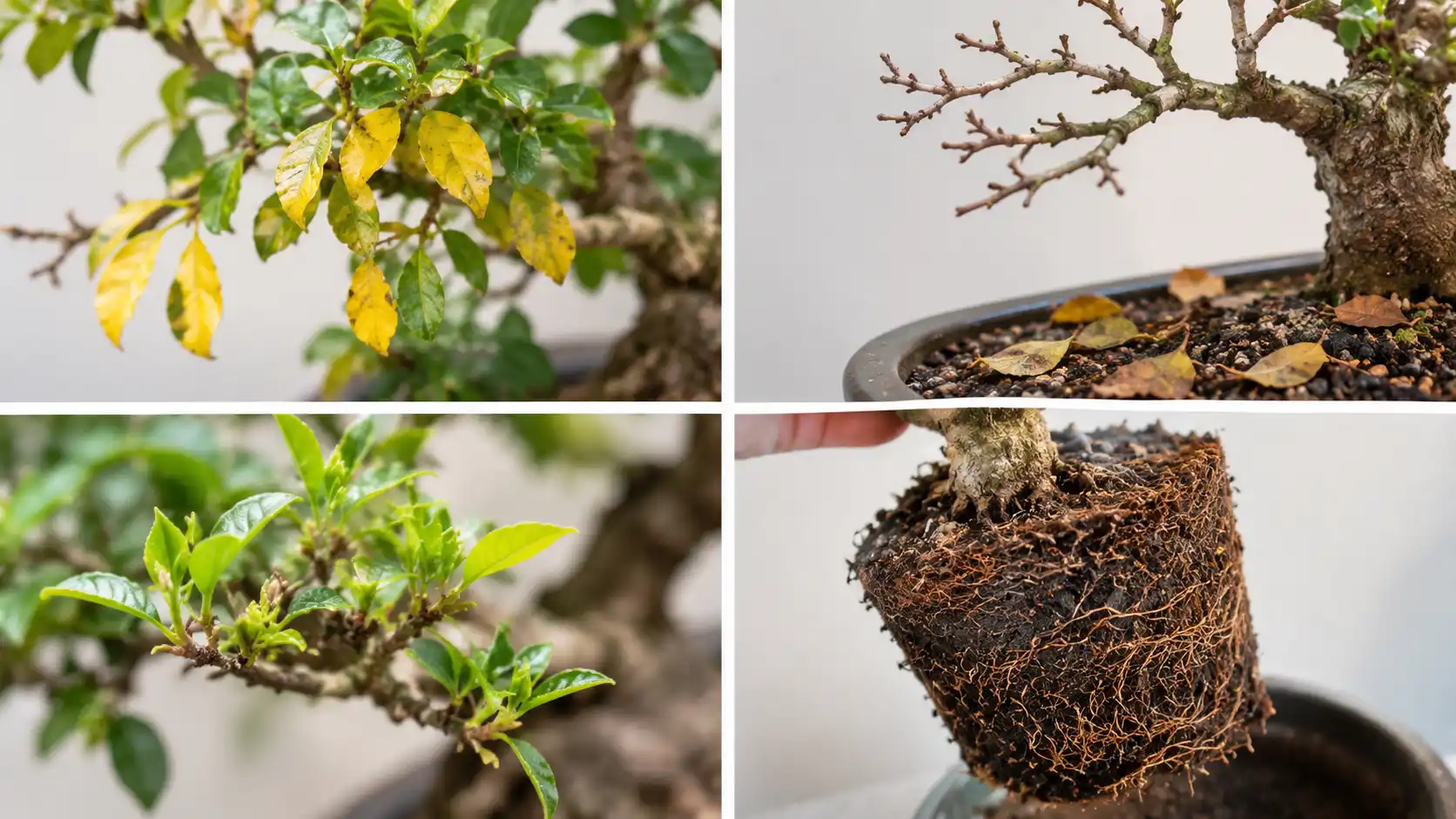
| Symptom | Likely cause | Fix | Prevention |
| Leaves turning yellow | Overwatering or poor drainage | Let soil dry further between waterings; check for root rot | Use free-draining mix; check soil before watering |
| Sudden leaf drop | Environmental shock (move, temperature swing, draught) | Stabilise position and watering; avoid moving the tree again immediately | Acclimatise gradually to any new position |
| No new growth in the growing season | Root-bound pot or insufficient light | Check roots at next repotting window; move to brighter position | Repot on schedule; position for adequate light |
| Bare branches with no leaves | Not necessarily dead | Scratch a small patch of bark — green underneath means it’s alive | Address the underlying watering/light cause before giving up |
Conclusion
Bonsai care isn’t difficult so much as it’s specific — the tree in front of you needs a plan built around what species it actually is and where you actually live, not a generic Northern Hemisphere checklist. Get the species-to-climate match right, water by soil feel rather than habit, and use the troubleshooting table above at the first sign of trouble rather than after weeks of decline. Once you know what you’re working with, the ongoing care becomes routine — and if you already know your species, our dedicated growing guides below go deeper on that specific tree. Once you’ve identified your species, our dedicated guides go deeper — including Bonsai Asam Jawa: Care, Styles & Growing Guide if tamarind is your tree or Pigeon Pea Bonsai: Care, Growth & Growing Guide for pigeon pea specifically and Locust Bonsai Tree: Care, Growth, Cost & Problems Guide covers locust in full, including cost and common problems.
Frequently Asked Questions
How do I care for a beginner bonsai tree?
Identify the species and whether it’s suited to indoor or outdoor life in your climate zone first, then water by checking the soil rather than on a schedule, provide several hours of bright light, use a free-draining bonsai soil, and feed lightly during the growing season.
What is the rule of 3 in bonsai?
It’s a beginner-friendly design guideline for branch placement: the first branch sits roughly a third of the way up the trunk, with further branches alternating around the trunk to create natural depth rather than a flat silhouette.
Can bonsai survive 2 weeks without water?
Generally no. The shallow soil volume in a bonsai pot holds far less water reserve than a garden bed, so most bonsai need watering well before the two-week mark, especially in warmer Australian conditions.
What is the golden rule of bonsai?
There’s no single official “golden rule,” but the closest universal principle is to water and prune according to what the individual tree needs and shows you, rather than following a fixed schedule regardless of conditions.
What is the easiest bonsai to maintain?
Hardy, forgiving species like juniper and Chinese elm are commonly recommended as beginner-friendly across most Australian climate zones, since they tolerate some inconsistency in watering and light better than more sensitive species.
How can I start a bonsai tree as a beginner?
Buy a ready-trained bonsai from a reputable nursery rather than starting from raw stock, confirm the species and whether it’s indoor-tolerant or a true outdoor tree, match it to your climate zone, and begin with the watering and light basics before attempting pruning or wiring.
Should I mist my bonsai every day?
Misting can help humidity-loving species and freshly repotted trees, but it isn’t a substitute for checking soil moisture, and daily misting alone won’t meet a tree’s actual watering needs.