

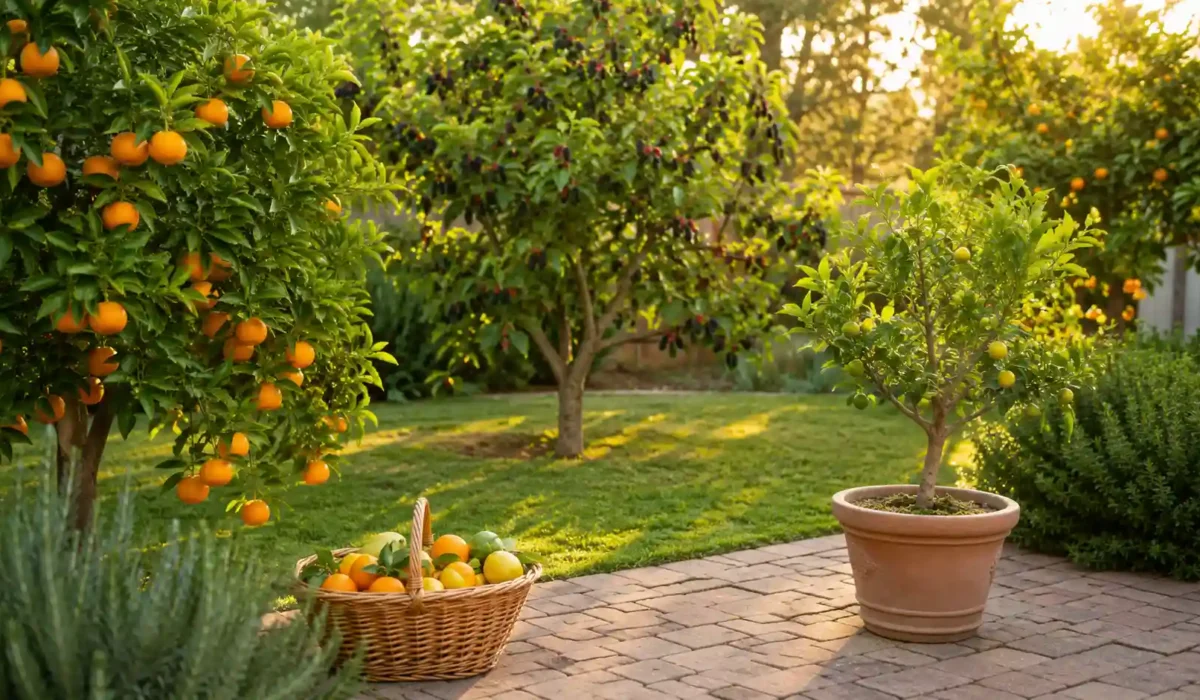
Fruit Tree Harvest and Fruiting Guide Australia
A fruit tree harvest and fruiting guide for Australia needs to answer two different questions at once: when will a tree start bearing fruit, and when is that fruit actually ready to pick. Most home gardeners land here after years of watching a healthy-looking tree produce nothing, or after guessing wrong on harvest timing and losing a crop to birds or rot. This guide brings together first-fruiting timelines, a cross-species harvest calendar, ripeness cues, and a troubleshooting framework for non-fruiting trees, covering citrus, stone fruit, pome fruit, mulberries, feijoas, and dwarf potted varieties grown across Australian climates. This guide is part of our broader Fruit Trees and Tropical Plants hub, covering everything from planting to harvest across citrus, tropical fruit, and stone fruit varieties.
By Elemo Baker | Plant Care & Gardening Expert
Last Updated: September 2026
Quick Summary
- Most grafted fruit trees bear their first fruit within 2–4 years; seed-grown trees can take 5–10 years or more.
- Harvest timing in Australia varies by species and region, but most fruit ripens over a broad window from late spring through autumn.
- Non-fruiting trees are usually explained by one of five factors: pollination failure, tree age, incorrect fertiliser timing, insufficient chill hours, or pot restriction.
- Potted fruit trees typically fruit later and produce smaller crops than the same variety grown in open ground.
- Ripeness is best judged using a combination of colour, firmness, and ease of detachment from the branch, not by calendar date alone.
When Do Fruit Trees Start Fruiting in Australia?
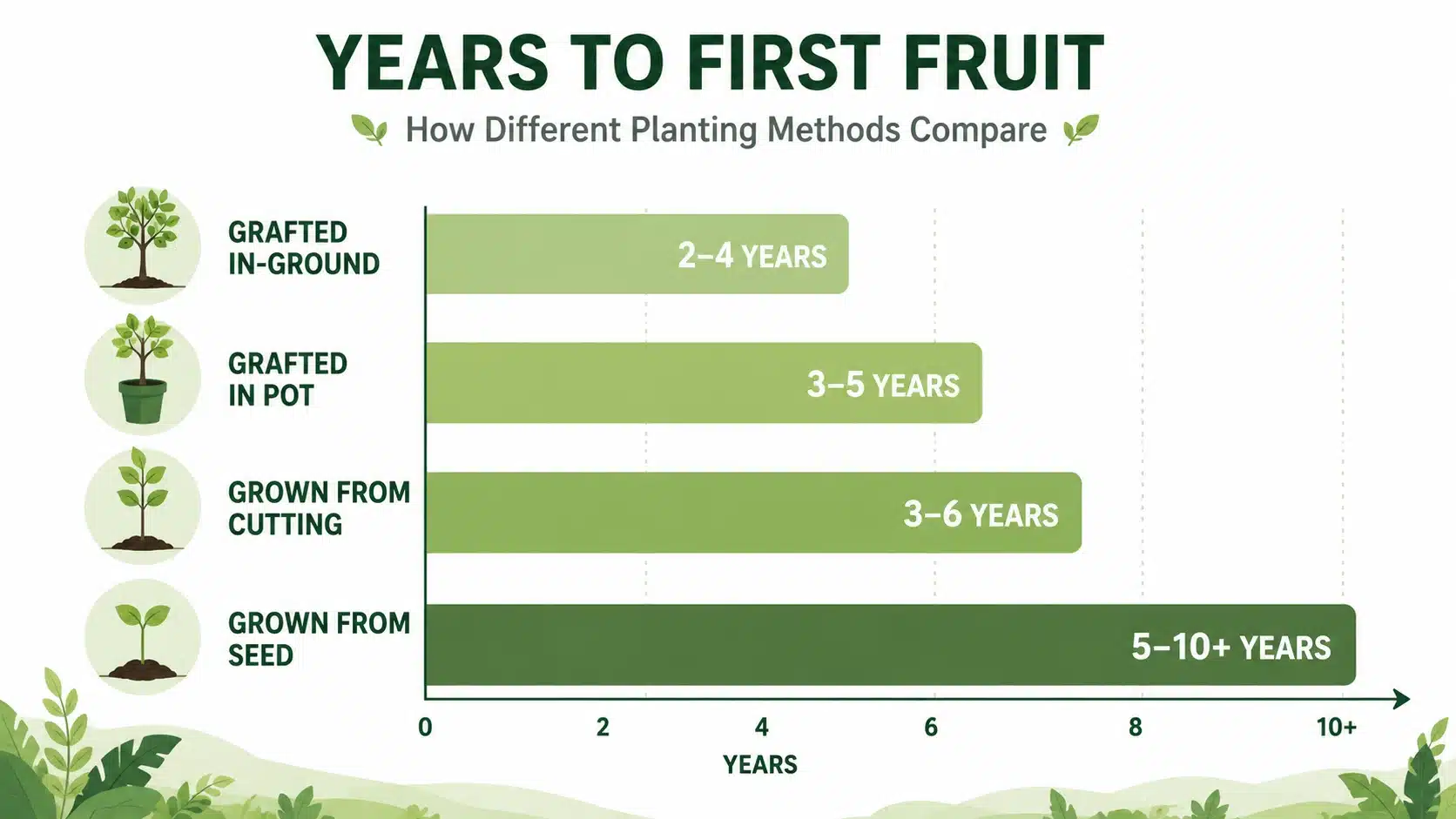
Most grafted fruit trees produce their first fruit within 2 to 4 years of planting, while trees grown from seed can take 5 to 10 years or longer to mature enough to flower and set fruit. The propagation method used has more influence on first-fruit timing than almost any other single factor, because grafted trees are cloned from already-mature wood rather than starting life as a juvenile seedling.
Years to First Fruit by Propagation and Planting Method
| Method | Typical Years to First Fruit | Notes |
| Grafted, in-ground | 2–4 years | Fastest and most reliable route to fruiting |
| Grafted, in a pot | 3–5 years | Slightly delayed due to root restriction |
| Grown from cutting | 3–6 years | Varies widely by species; citrus and mulberry root and mature faster than stone fruit |
| Grown from seed | 5–10+ years | Juvenile phase must be outgrown before flowering is possible; fruit quality may also differ from the parent tree |
In our experience growing citrus and mulberry trees side by side, a grafted specimen consistently outpaces a seed-grown tree of the same species by several years, even under identical care.
Australia-Wide Fruit Tree Harvest Calendar
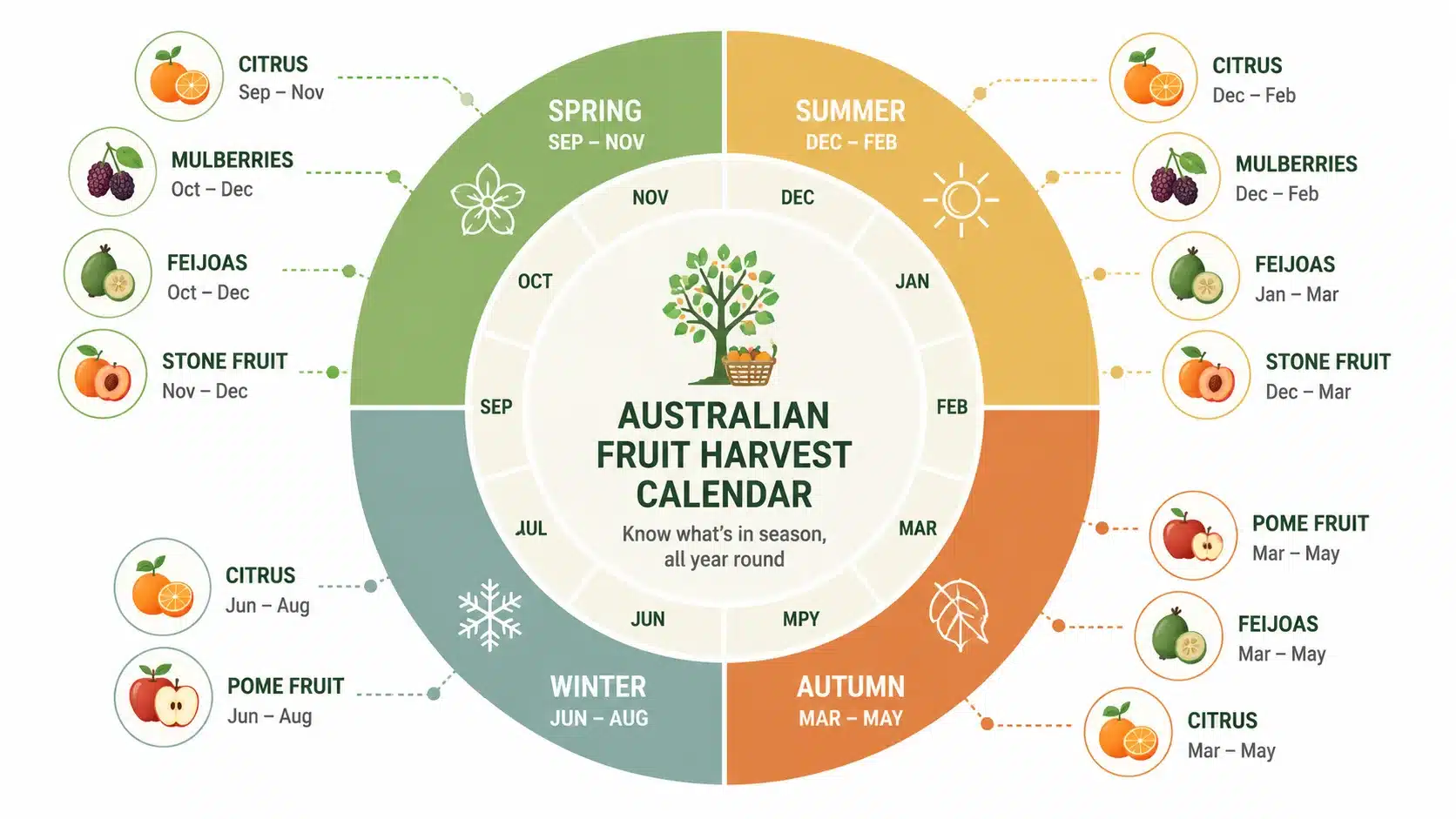
Harvest timing depends on species, climate zone, and seasonal conditions, but the table below gives a general Australia-wide guide to when each fruit is typically ready to pick.
| Fruit | Typical Harvest Window | Notes |
| Citrus | Autumn to late winter | Timing varies by variety; see the fruit tree pollination chart for Australia for flowering overlap |
| Mulberries | Spring to early summer | See when do mulberry trees fruit for variety-specific detail |
| Feijoa | Autumn | Fruit drops when ripe rather than being picked; see the feijoa tree guide |
| Stone fruit | Late spring to late summer | Ripening window is often only 2–3 weeks per variety |
| Pome fruit (apples, pears) | Late summer to autumn | Later-ripening varieties tolerate light frost better |
| Dwarf/potted varieties | Same season as in-ground, delayed by weeks | See dwarf fruit trees for pots in Australia |
For a general breakdown of harvest signs across species, our dedicated post on when to harvest fruit trees in Australia covers additional variety-specific detail.
How to Tell When Fruit Is Ready to Harvest
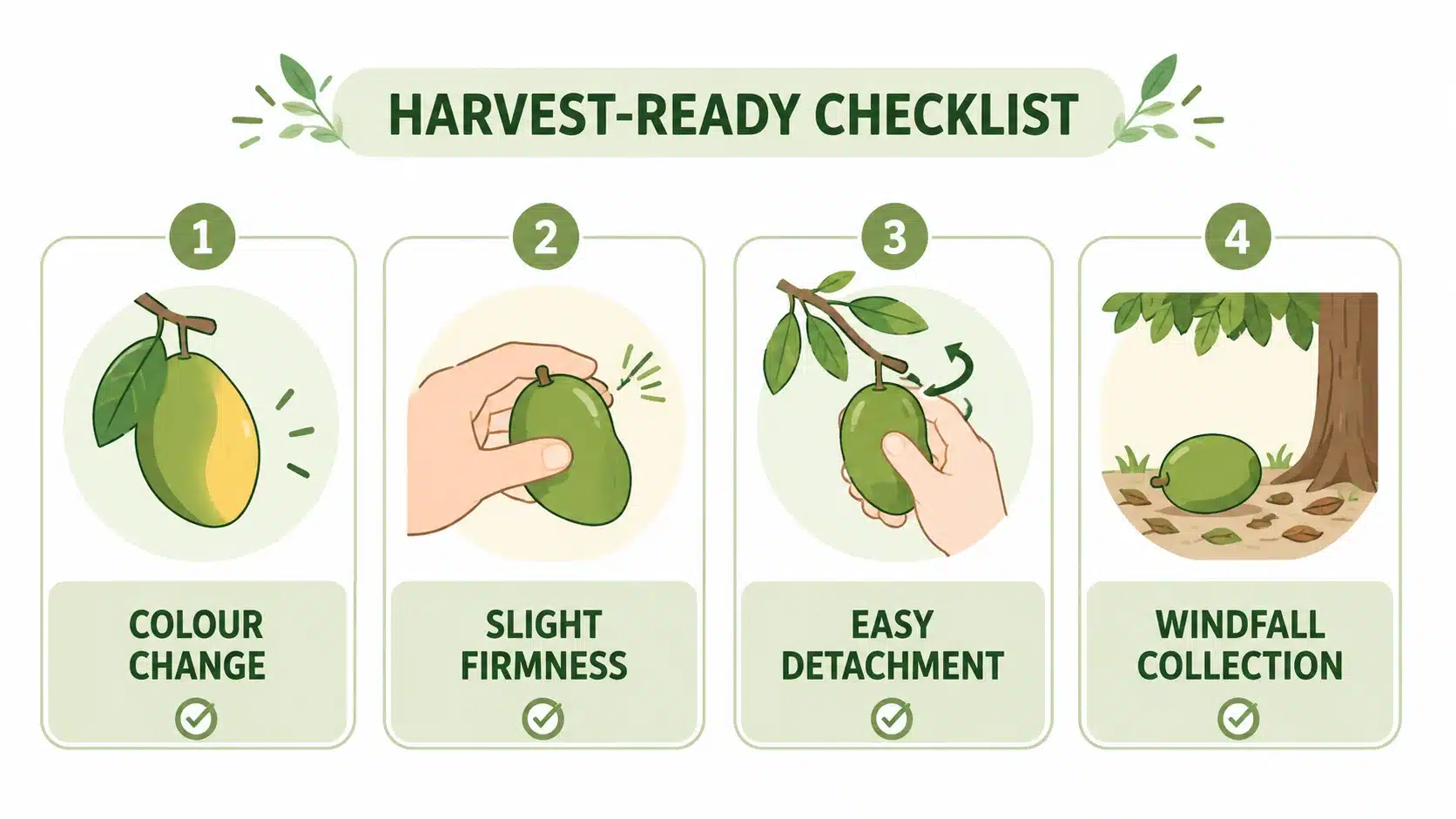
Fruit is ready to harvest when colour, firmness, and ease of detachment all align for that specific species, rather than relying on the calendar alone. Calendar windows shift from year to year depending on rainfall, temperature, and flowering timing, so relying on a fixed date rather than the fruit itself is one of the most common beginner mistakes.
- Colour: A shift from green to the variety’s mature colour is the first visible cue, though some varieties (like certain feijoas) ripen with little colour change.
- Firmness: A gentle give under light pressure signals ripeness in stone fruit; citrus stays firm even when ripe.
- Detachment: Ripe fruit typically separates from the branch with a slight twist; fruit that resists picking is usually still immature.
- Fallen fruit: Feijoas and some mulberries are best harvested by collecting windfall rather than picking from the branch.
Why Isn’t My Fruit Tree Fruiting?
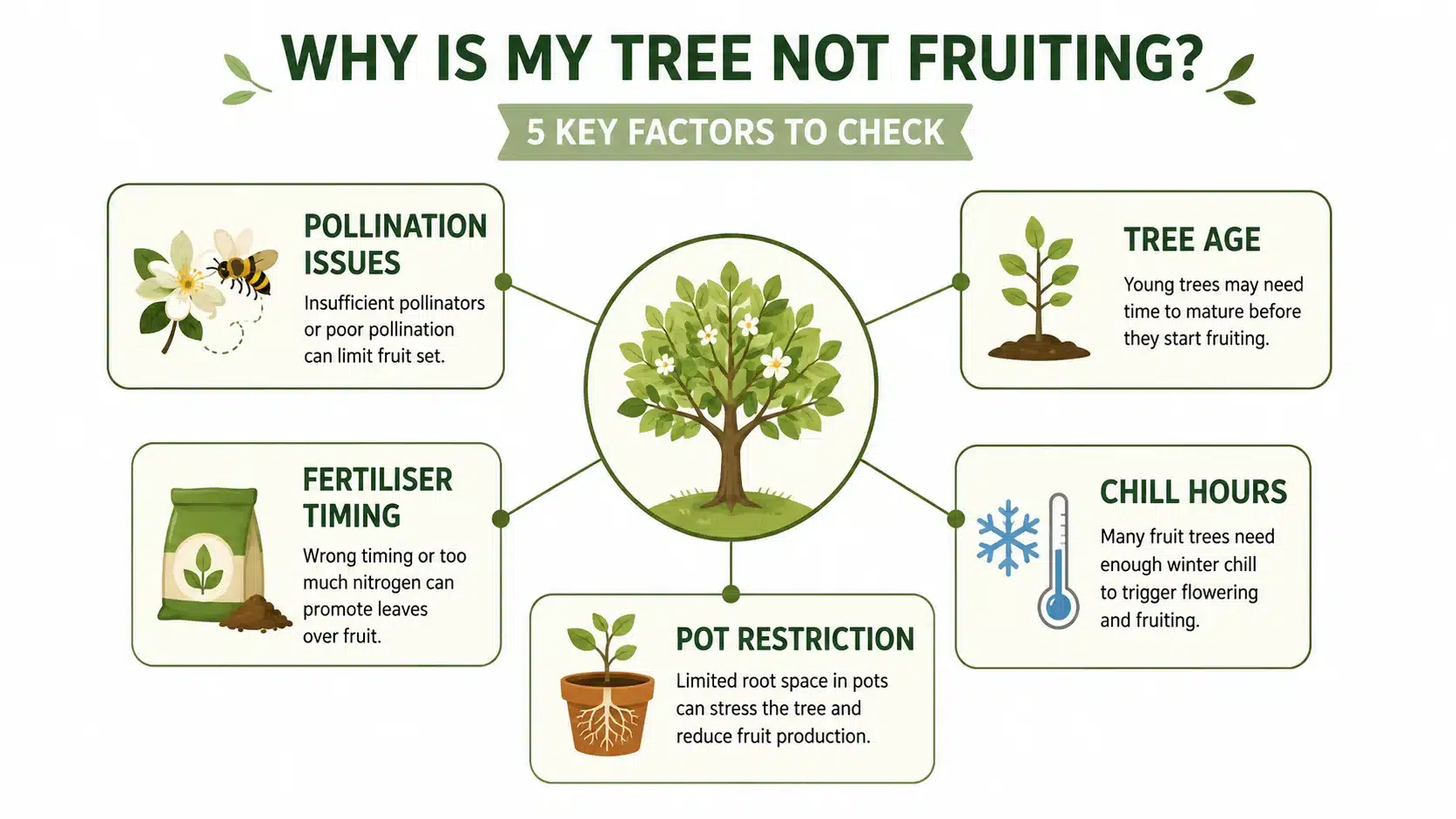
A fruit tree that isn’t fruiting is almost always affected by one or more of five factors: insufficient pollination, tree age, incorrect fertiliser timing, inadequate chill hours, or pot restriction. Diagnosing non-fruiting trees means working through these causes systematically rather than assuming a single explanation.
- Pollination: Many fruit trees need a compatible pollinator variety nearby, or rely on insect activity that can be disrupted by pesticide use. Our fruit tree pollination chart for Australia sets out which species are self-fertile and which need a partner tree.
- Tree age: A tree still in its juvenile phase will not flower regardless of care quality, particularly if it was seed-grown.
- Fertiliser timing: High-nitrogen fertiliser applied late in the season encourages leafy growth at the expense of flowering. Elemo Baker recommends switching to a lower-nitrogen, higher-potassium feed ahead of the flowering period; our fruit tree fertiliser schedule sets out timing by season.
- Chill hours: Deciduous fruit trees such as stone fruit and pome fruit need a minimum number of cold hours over winter to break dormancy and flower properly; warmer regions of Australia may fall short for high-chill varieties.
- Pot restriction: Root-bound trees in pots often prioritise survival over reproduction, delaying or reducing fruit set.
Potted vs In-Ground Fruit Trees: Fruiting and Harvest Differences
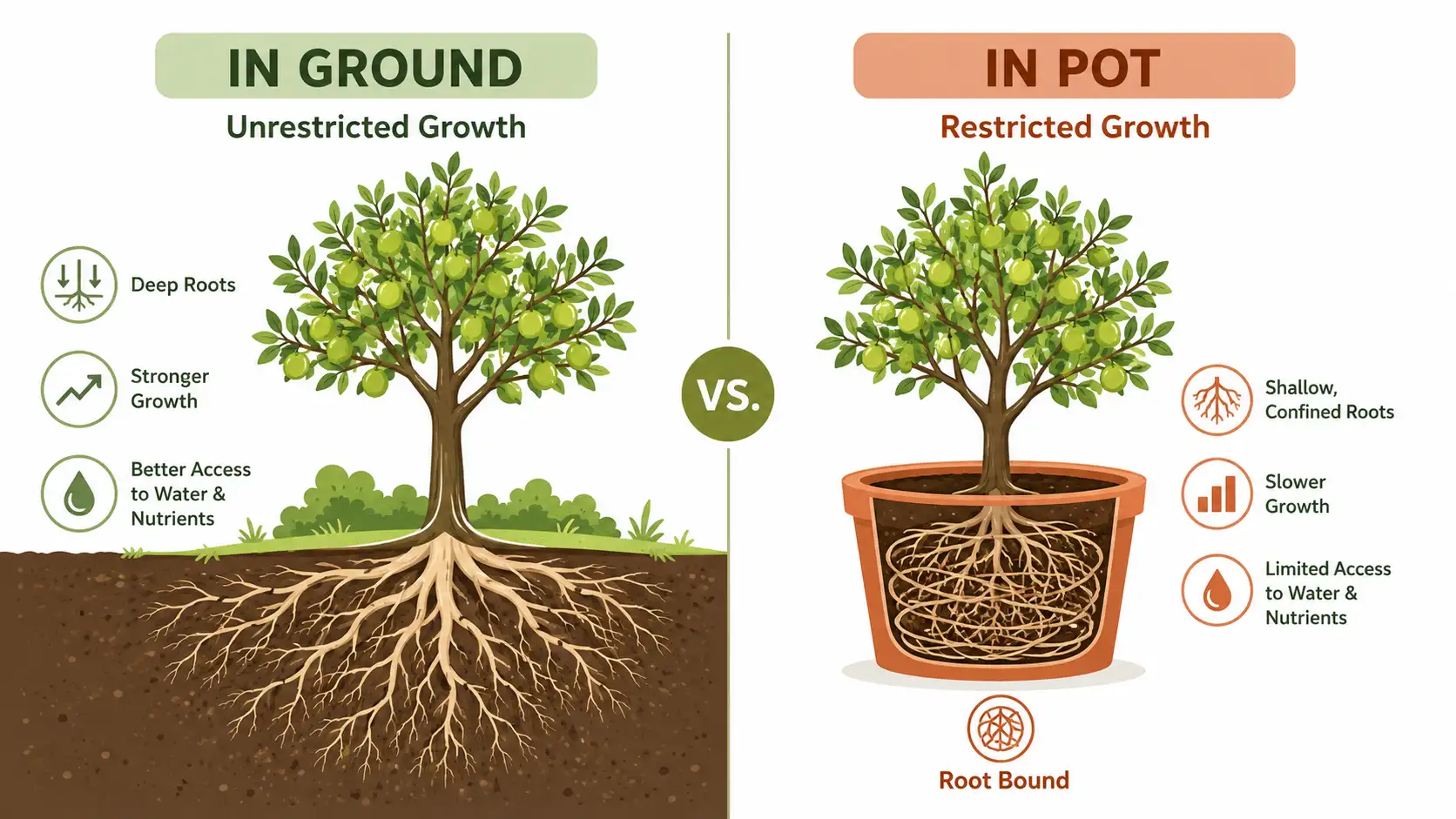
Potted fruit trees generally fruit later and produce a smaller crop than the same variety grown in open ground, mainly due to restricted root volume limiting nutrient and water uptake. Root restriction also means potted trees are more sensitive to inconsistent watering and fertilising, which can further delay flowering. Harvest timing for potted trees typically follows the same seasonal window as in-ground trees but can lag by two to four weeks in cooler climates, since pots warm and cool faster than garden soil. Dwarf varieties bred specifically for container growing, covered in our guide to dwarf fruit trees for pots in Australia, are bred to fruit reliably despite these constraints.
Do Grafted Trees Fruit Faster Than Seed-Grown Trees?
Yes, grafted trees fruit significantly faster than seed-grown trees because grafted wood is taken from an already mature parent tree rather than starting as a juvenile seedling. A seedling must pass through a juvenile phase, which can last many years, before it is physiologically capable of flowering. Grafting bypasses this phase entirely by joining mature fruiting wood onto rootstock, which is why nurseries graft almost all commercially sold fruit trees. Seed-grown trees also frequently produce fruit that differs from the parent variety, since most fruit trees do not grow true to seed.
Regional Differences: Harvest Timing by State and Climate Zone
Harvest timing shifts across Australia by four to eight weeks between regions, driven mainly by temperature and chill hour differences between states.
| Region | General Pattern |
| Queensland / Northern NSW | Earlier harvests; limited chill hours restrict high-chill stone fruit and pome varieties |
| Southern NSW / ACT | Moderate chill hours; wide range of species suited |
| Victoria / Tasmania | Higher chill hours; later harvests but broader deciduous fruit variety options |
| South Australia | Warm, dry summers; harvest windows can compress under heat stress |
| Western Australia | Coastal areas mirror NSW patterns; inland areas run hotter with earlier ripening |
As of the 2026 growing season, growers in marginal chill zones are increasingly choosing low-chill stone fruit and pome cultivars bred for warmer climates, reducing the gap between northern and southern harvest timing.
Related Guides
- Fruit Tree Fertiliser Schedule
- Feijoa Tree Guide
- When Do Mulberry Trees Fruit
- Mulberry Varieties in Australia
- Fruit Tree Pollination Chart Australia
- When to Harvest Fruit Trees in Australia
- Dwarf Fruit Trees for Pots in Australia
Conclusion
Fruiting and harvest timing in Australia depend on propagation method, species, region, and ongoing care, but the underlying pattern is consistent: grafted trees fruit faster than seed-grown trees, potted trees lag behind in-ground trees, and non-fruiting is almost always traceable to pollination, age, fertiliser timing, chill hours, or pot restriction. Understanding this fruit tree harvest and fruiting guide framework lets gardeners diagnose problems rather than guess, and time each harvest by the fruit’s actual readiness rather than the calendar. Working through pollination needs, a suitable fertiliser schedule, and realistic first-fruiting expectations gives most Australian home gardeners a reliable path to a consistent annual harvest.
FAQs
How many years does it take for a fruit tree to produce fruit in Australia?
Grafted fruit trees typically produce their first fruit within 2 to 4 years, while seed-grown trees can take 5 to 10 years or longer.
Why is my fruit tree not producing fruit after several years?
Non-fruiting is usually caused by poor pollination, insufficient tree age, incorrect fertiliser timing, inadequate chill hours, or pot restriction, and each cause should be checked in turn.
Do potted fruit trees fruit later than trees in the ground?
Yes, potted fruit trees generally fruit later and produce smaller crops than in-ground trees due to restricted root growth.
Does fertiliser affect whether a fruit tree flowers and fruits?
Yes, high-nitrogen fertiliser applied late in the season promotes leafy growth over flowering, while a lower-nitrogen feed ahead of flowering supports better fruit set.
Do chill hours matter for fruit trees grown in warmer parts of Australia?
Yes, deciduous fruit trees like stone fruit and pome fruit require a minimum number of winter chill hours to flower properly, and warmer regions may need low-chill varieties.
How do I know when fruit is ripe enough to pick?
Ripeness is best judged by colour change, slight firmness give, and easy detachment from the branch, rather than by a fixed calendar date.
Do grafted trees fruit faster than trees grown from cuttings?
Grafted trees generally fruit faster and more predictably than cutting-grown trees, though cuttings still outperform seed-grown trees in most species.
1 Comment