

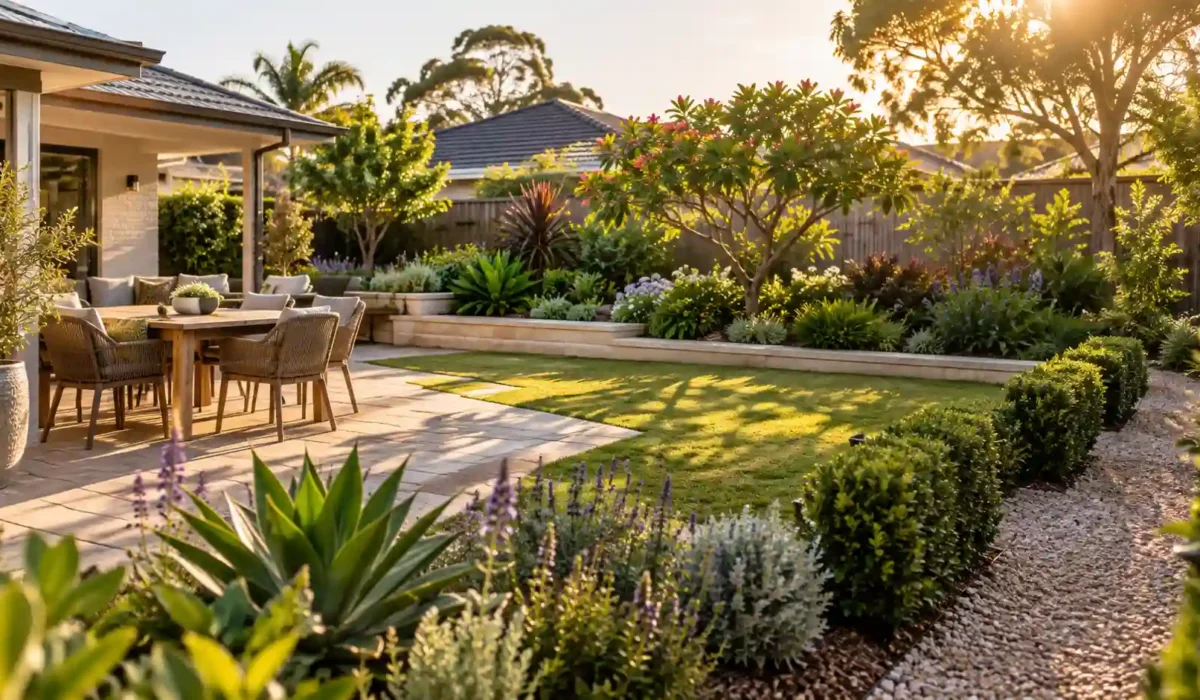
Garden Design and Landscaping Australia: Planning Guide
Most people staring at a bare block or an overgrown backyard don’t need more pretty pictures — they need to know what to decide first. That’s the gap in most garden design content: plenty of style inspiration, almost nothing on the actual sequence of decisions that turns a messy yard into a garden that works.
Garden design is the plan — the style, layout and plant choices for your space. Landscaping is the execution — the earthworks, hardscaping and planting that build it. Getting a good result in Australia means running through both in the right order: assess the site, choose a style suited to your climate, zone the space for how you’ll actually use it, sequence the build correctly, budget realistically, and check what council rules apply before you dig.
By Elemo Baker | Plant Care & Gardening Expert
Quick Summary
- Garden design and landscaping in Australia works best as a fixed sequence: assess the site, choose a climate-suited style, zone for use, sequence hard landscaping before planting, budget realistically, then check council rules.
- Style should be chosen by climate zone and water access first, looks second — a Mediterranean-style garden in a frost-prone inland zone, or a tropical-look garden under water restrictions, will struggle regardless of how well it photographs.
- Landscaping in Australia typically runs from roughly $5,000–$15,000 for a basic backyard refresh up to $50,000+ for a full design-and-build transformation, with soft landscaping around $50–$80 per m² and hardscaping around $100–$300+ per m² (indicative 2026 figures — confirm against current local quotes before budgeting).
- Most council issues come from fences, tall retaining walls and drainage changes, not planting — very few councils regulate garden beds themselves.
Start With the Site, Not the Style
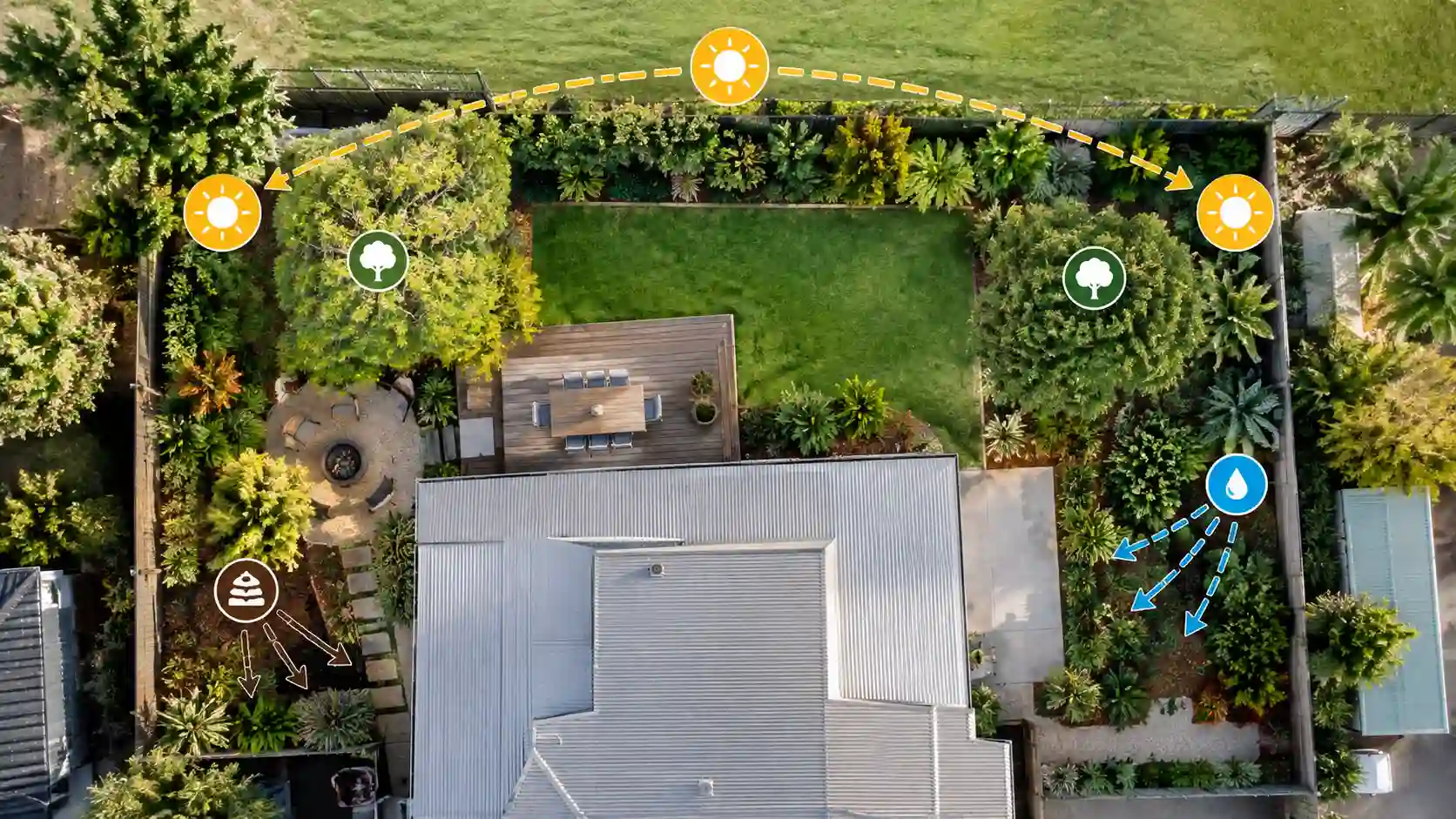
Before you choose a look you like, map how your specific block actually behaves — sun, soil, slope, drainage and what’s already there.
Skipping this step is why so many DIY gardens fail within a year: the plant palette gets picked for looks, then struggles because it was never matched to the site’s real conditions.
A proper site read covers: the sun path across the seasons (not just today’s shadow), soil type and drainage, any slope or level changes, existing trees or structures you’re working around, and the sightlines from inside the house — since that’s the view you’ll actually see most days. Cross-reference this against your local frost risk, because a garden built around plants that can’t handle a cold snap will need replacing within a season or two — our frost-tolerant plants guide covers what copes where winters bite. If you haven’t settled on your climate zone or soil type yet, our trees and outdoor plants planning guide covers that groundwork before you get to layout.
Choose a Style That Suits Your Climate — Not Just Your Feed
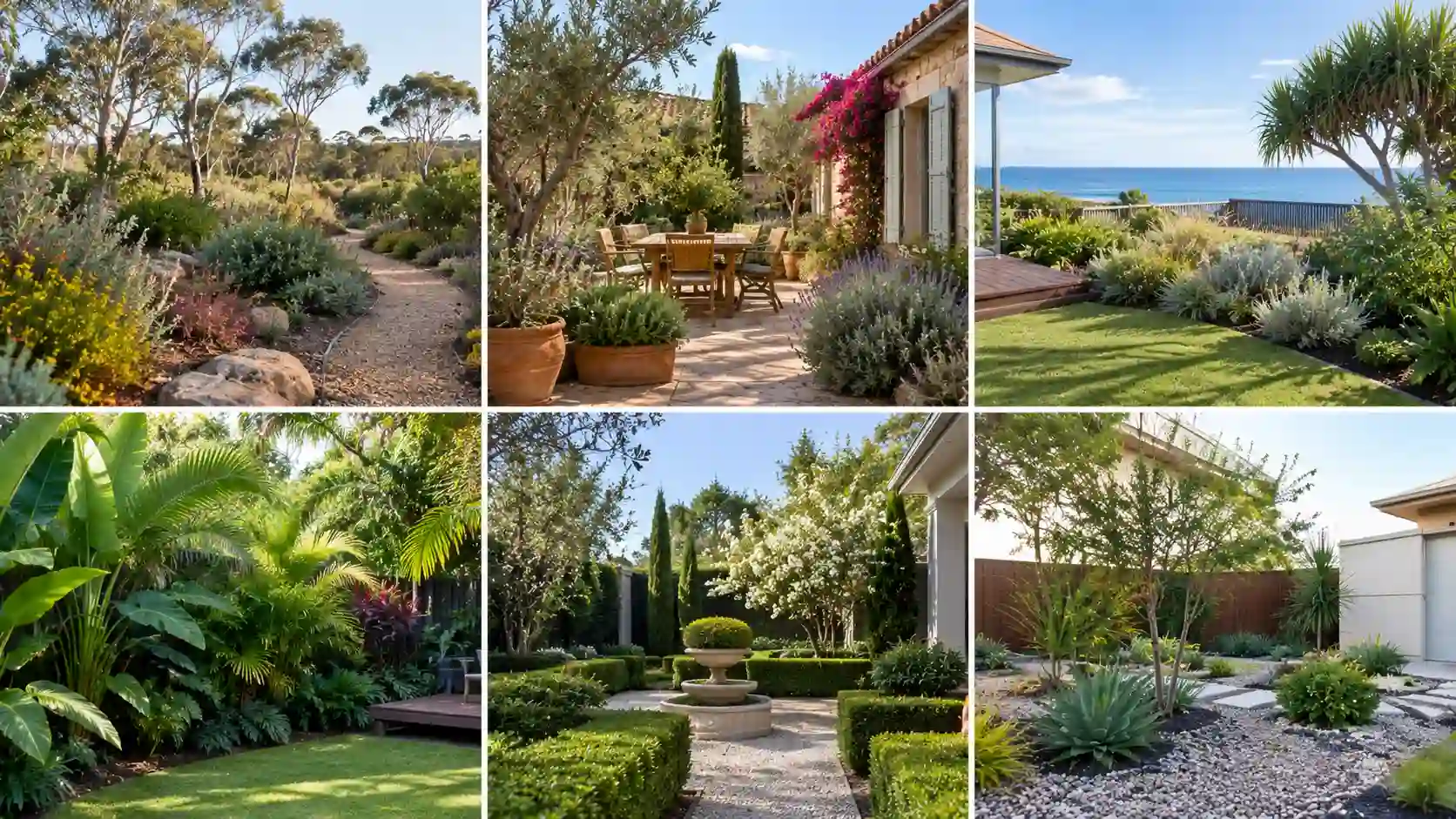
Pick a garden style based on what your climate zone and water access can sustain, then refine for looks within that shortlist.
Style-inspiration content treats Mediterranean, coastal, tropical, native/bush, formal and low-maintenance gardens as interchangeable aesthetic choices. In Australian conditions, they’re not — each has real climate and water dependencies that decide whether it thrives or becomes a maintenance burden.
| Style | Best-suited climate zones | Water needs | Maintenance | Where it struggles in Australia |
| Native/bush | Most zones, especially dry/temperate | Low once established | Low–moderate | Can look sparse until plants mature |
| Mediterranean | Warm-temperate, low humidity | Low–moderate | Moderate | Struggles in humid subtropical zones |
| Coastal | Coastal/exposed sites | Moderate | Moderate | Salt/wind damage further inland loses relevance |
| Tropical | Subtropical/tropical north | High | High | Heavy water use under restrictions; frost-sensitive |
| Formal | Temperate, sheltered | Moderate–high | High (hedging/topiary) | Labour-intensive in fast-growing climates |
| Low-maintenance/contemporary | Most zones | Low | Low | Can read as “bare” if planting density is skimped |
Lifestyle matters as much as climate: an entertaining-focused household in a frost-free zone might lean formal or Mediterranean, while a time-poor household in the same zone is often better served going low-maintenance regardless of aesthetic preference — see our low-maintenance garden design guide for how that’s built out in practice.
Zone the Garden for How You’ll Actually Use It
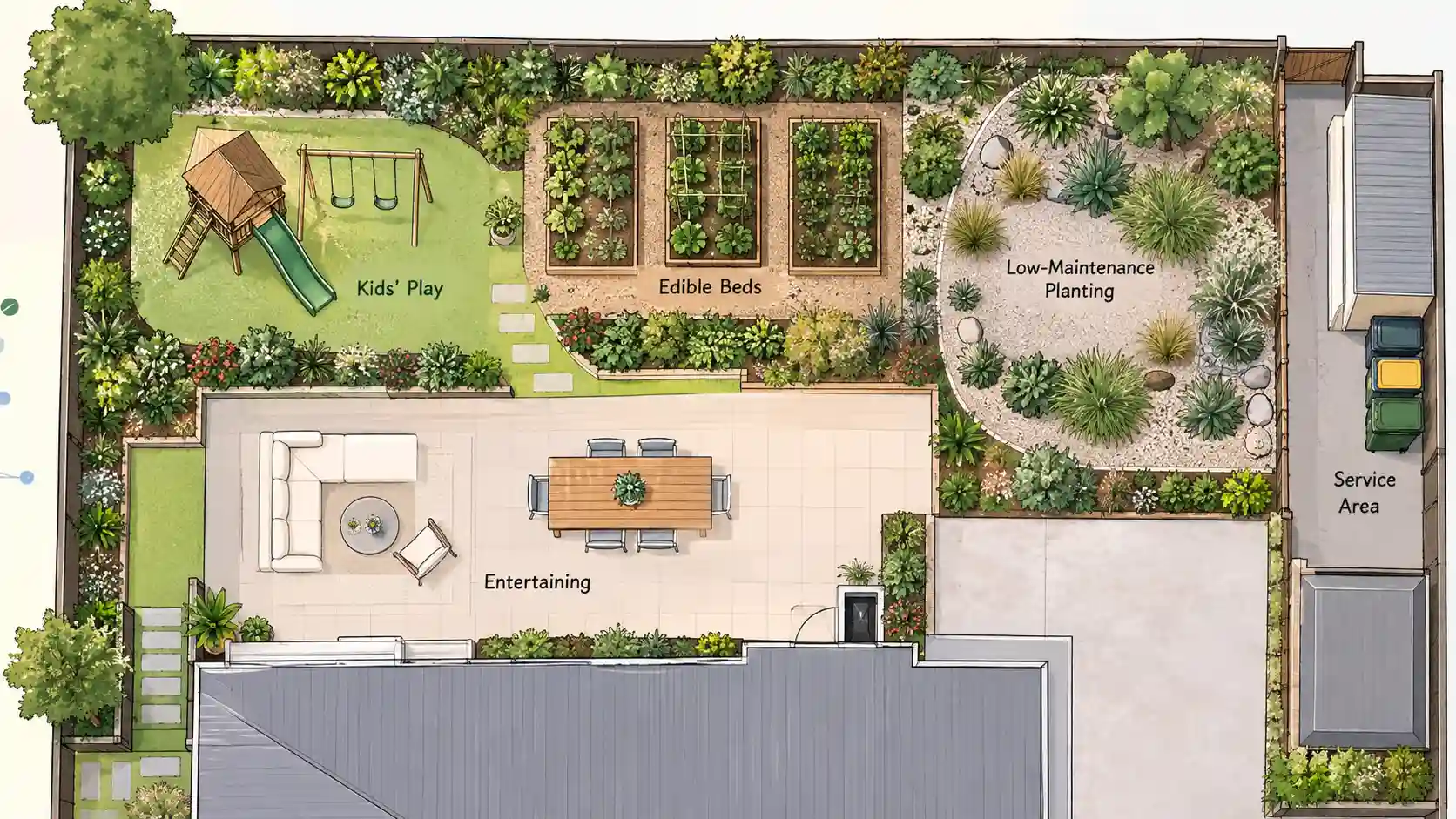
Divide the space by function — entertaining, kids, edibles, low-maintenance beds, service areas — before deciding what goes where.
Zoning is the layer most DIY plans skip entirely, jumping from “style” straight to “plants.” The most common mistakes: no clear separation between high-traffic areas and garden beds, edible beds placed wherever there’s spare space rather than where they get adequate sun, no dedicated low-maintenance zone for the busy periods of the year, and entry/driveway zones treated as an afterthought rather than a first-impression zone — worth planning deliberately, as covered in our driveway plants ideas guide.
Get the Build Order Right: Hard Landscaping Before Planting
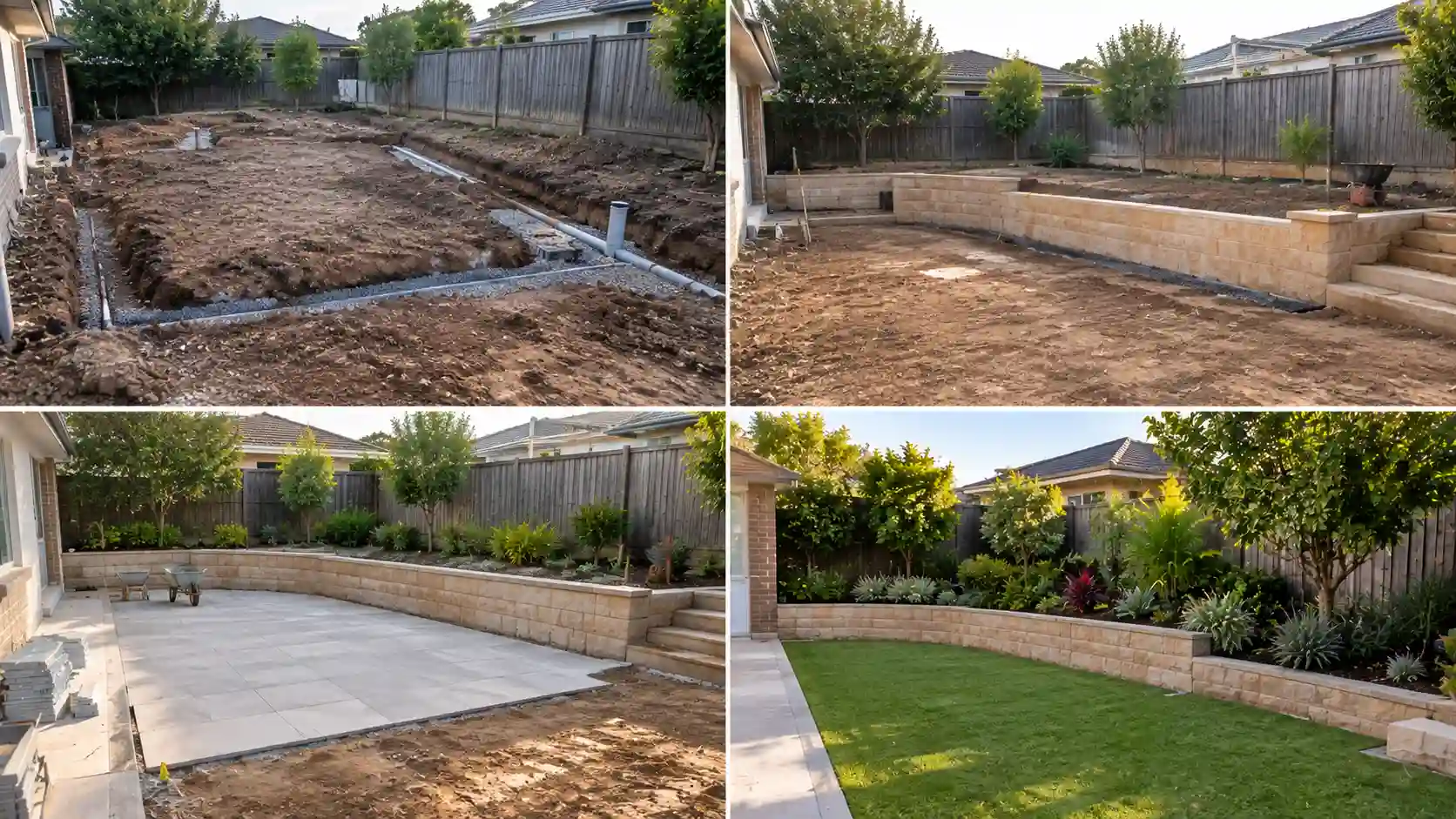
Earthworks and drainage come first, then retaining walls and paving, then irrigation, then planting, then mulching and finishing touches.
Reversing this order is one of the most expensive DIY mistakes, and it’s rarely mentioned in style-led content. Paving or building retaining walls after planting risks compacting soil and damaging root zones you’ve just established. Running irrigation lines after planting means trenching straight through beds that are trying to settle in.
The correct sequence: drainage and earthworks → retaining walls → hard landscaping (paving, structures) → irrigation lines → soil preparation → planting → mulching → edging and lighting. Once plants are in and mulched, mature size matters more than it looks like it will on day one — our tall landscaping plants guide is worth checking before you finalise spacing.
For the planting and mulching stage itself, ground covers do most of the work of finishing a bed and suppressing weeds while structural plants establish. Hibbertia scandens, mondo grass and evergreen baby lomandra each suit slightly different light and traffic conditions, so it’s worth matching the ground cover to the zone rather than defaulting to one species across the whole garden. For a repeating formal element — hedge lines, clipped borders, entry statements — see our topiary plants guide.
Budget Reality: DIY vs Professional Landscaping
Soft landscaping (planting, mulching, edging) is the most realistic DIY territory; structural work (drainage, retaining walls, major earthworks) is where professional input reduces costly rework.
The figures below synthesise several current Australian trade-pricing sources and are indicative planning ranges, not quotes — confirm against local rates before setting a budget.
| Project scope | Indicative 2026 cost |
| Basic backyard refresh | ~$5,000–$15,000 |
| Mid-range courtyard/backyard upgrade | ~$15,000–$50,000 |
| Full design-and-build transformation | $50,000+ |
| Landscaper hourly rate | ~$55–$110/hour |
| Soft landscaping | ~$50–$80/m² |
| Hardscaping (paving, walls, structures) | ~$100–$300+/m² |
| Professional design plan only | ~$2,000–$5,000 (consultations from ~$250) |
A practical way to allocate a limited budget: spend on drainage and structure first, since that’s the part you can’t easily fix later, and treat planting as the layer you can build out gradually over a couple of seasons if funds are tight. Spending the whole budget on hardscaping and leaving nothing for soil preparation is a common way to end up with a garden that looks finished but performs poorly within a year.
If you’re weighing landscaping against other home improvement spending, the Housing Industry Association publishes broader renovation cost benchmarks worth cross-checking your budget against.
Council Rules and Permits That Catch People Out
Fences, retaining walls above a set height, and stormwater or drainage changes are the areas most likely to need council approval — planting almost never does.
The pattern with most permit issues isn’t malice, it’s timing: work starts before anyone checks. Fence height and boundary rules vary by council and by whether you’re on a corner block. Retaining walls above a certain height (commonly around one metre, though this varies by area) typically need engineering sign-off or approval. Changes that alter stormwater flow onto a neighbouring property are a common source of disputes, even when unintentional. Tree removal, including on private property, is regulated in many councils via significant-tree or vegetation-protection rules. The fix in every case is the same: a call to your local council’s planning department before the work starts, not after a neighbour complains.
Native Plants as Structure, Not Just a Look
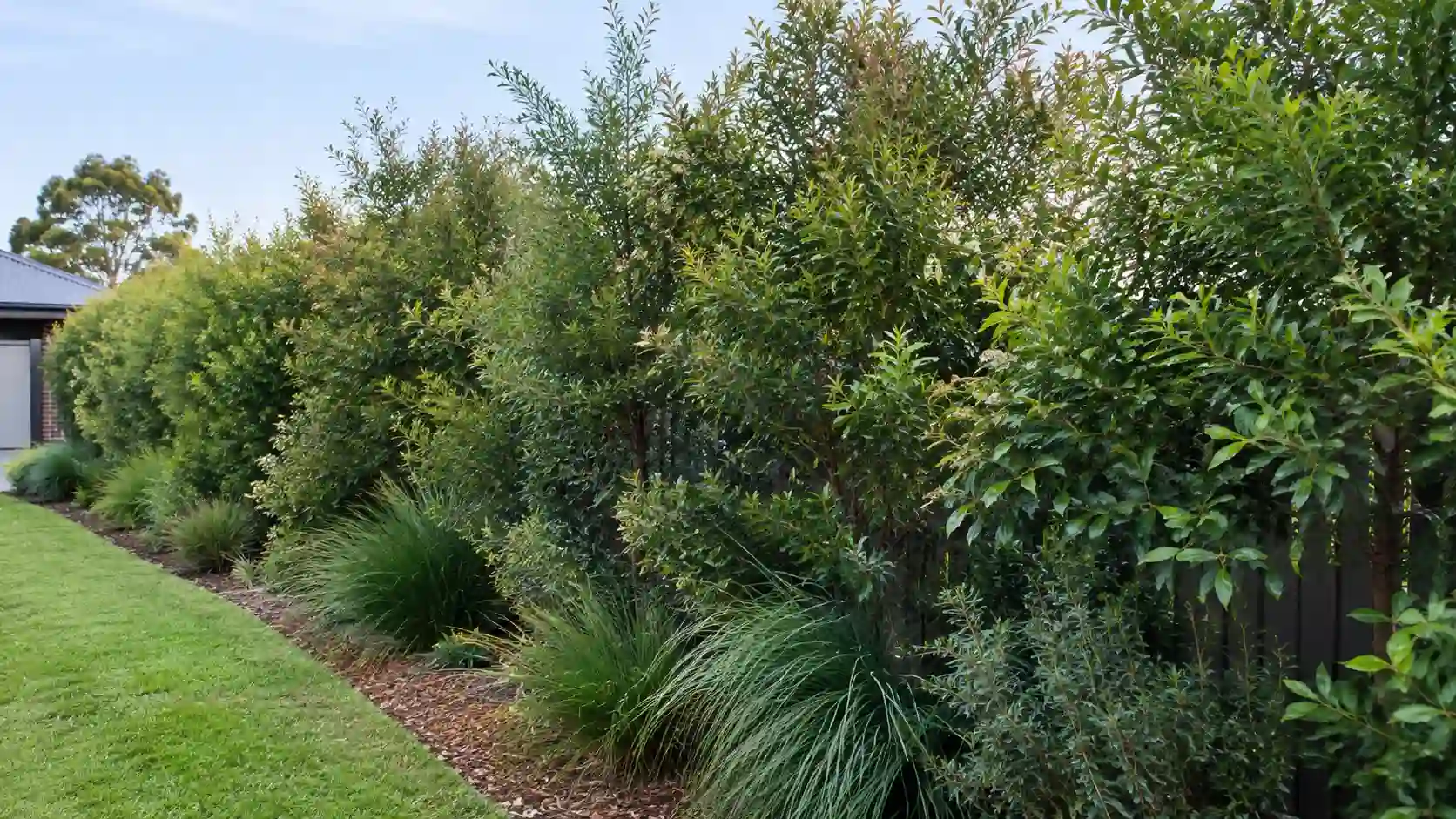
Native plants work best treated as a functional design layer — screening, windbreaks, low-water zoning and habitat — rather than a single “bush garden” aesthetic.
This is a genuine gap in most garden design content, which files natives under “native/bush style” and stops there. In a mixed-style garden, natives can do structural jobs a purely ornamental palette can’t: dense screening for privacy, windbreaks on exposed sites, and low-water zoning for the parts of the garden you don’t want to irrigate heavily — all without forcing the whole garden into a bush aesthetic if that’s not what you’re after. A flowering border plant like agapanthus ‘Snowball’ works well as a structural edging element within this kind of low-water zoning, without needing to be styled as a native/bush look.
The sustainability case for this approach is well documented — the Australian Government’s YourHome sustainable landscaping guide outlines how structural native planting supports biodiversity, cooling and water management, not just aesthetics.
Where Beginners Go Wrong
The mistakes that show up again and again in DIY gardens: designing for one season and forgetting what the garden looks like in the others; underestimating mature plant size and ending up with overcrowded beds within a couple of years; skipping a soil test and planting into conditions that were never going to work; underestimating how much water new plantings need in their first year while establishing; and starting on planting before hard landscaping is actually finished.
New Build vs Established Yard: Two Different Starting Points
A blank block and an established yard need the same framework applied differently. On a new build, soil is often stripped or compacted from construction, there’s nothing existing to work around, and you can sequence the full build from scratch. On an established yard, you’re usually staging the renovation to manage cost over time, working around mature trees or root zones you may want to keep, and deciding what to remove versus retain before any new design goes in.
Conclusion
A good Australian garden comes down to the order of decisions, not the number of styles you’ve browsed. Assess the site, choose a style your climate can actually sustain, zone for real use, build hard landscaping before you plant, budget with structure first, and check council rules before you dig. Once that framework is set, the detail work — which ground covers to use, which plants tolerate frost, how to keep a bed low-maintenance — is where the site’s deeper guides come in.
Frequently Asked Questions
What’s the difference between garden design and landscaping?
Garden design is the plan — style, layout and plant selection. Landscaping is the physical execution of that plan, including earthworks, hardscaping and planting.
How much does it cost to landscape a backyard in Australia?
Indicative 2026 figures range from around $5,000–$15,000 for a basic refresh to $50,000+ for a full transformation, though this varies significantly by scope, materials and site conditions — confirm current rates locally.
Should I hire a landscaper or do it myself?
Soft landscaping (planting, mulching, edging) is generally realistic to DIY. Structural work — drainage, retaining walls, major earthworks — is where professional input reduces the risk of costly rework.
What garden style suits a frost-prone Australian climate?
Native/bush and low-maintenance/contemporary styles generally cope best with frost, while tropical and some Mediterranean plant palettes are more vulnerable and need careful species selection.
Do I need council approval to landscape my backyard?
Usually not for planting itself, but fences, retaining walls above a certain height, and anything that changes stormwater or drainage flow commonly require approval — check with your local council before starting.
What order should landscaping work be done in?
Drainage and earthworks first, then retaining walls, then hard landscaping, then irrigation, then soil preparation and planting, then mulching and finishing touches.
How do I make a garden design low-maintenance without making it look bare?
Use denser, layered planting within a low-maintenance palette rather than sparse spacing — see our low-maintenance garden design guide for specific layout approaches.
1 Comment