

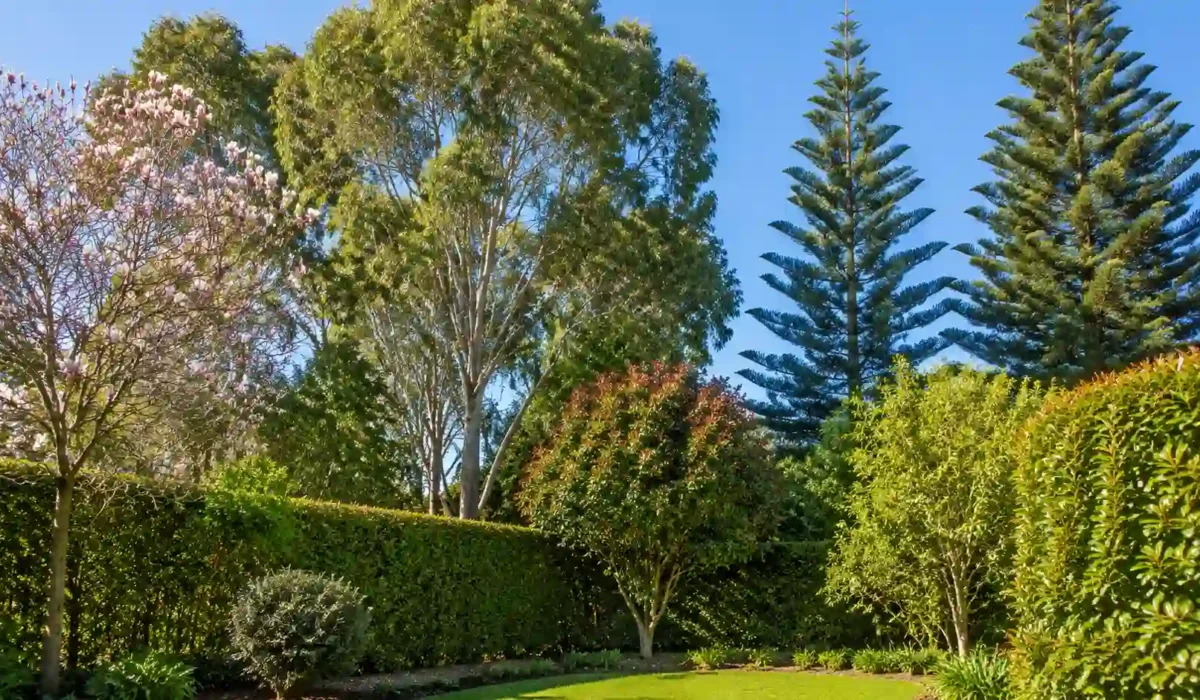
Fast Growing Evergreen Trees Australia Guide
Introduction
Fast growing evergreen trees Australia refers to trees that keep their foliage throughout the year while also achieving substantial growth within a relatively short period. Unlike deciduous trees that lose their leaves seasonally, evergreen species provide continuous privacy, shade, and visual appeal. Many Australian gardeners choose fast-growing evergreen trees to create windbreaks, screening, habitat for wildlife, or long-term shade. Growth rates vary by species, climate, and soil conditions, but many suitable trees can grow more than one metre annually when established. Understanding the differences between species helps gardeners select trees that match their available space, climate zone, and landscaping goals.
Quick Summary
- Fast-growing trees typically grow at least 1 metre per year under favourable conditions.
- Evergreen trees retain foliage year-round, making them ideal for privacy and consistent shade.
- Popular options include pines, native Australian species, and flowering evergreen trees.
- Tree selection should consider mature size, climate suitability, and intended purpose.
- Many evergreen species perform well across Australia’s diverse growing conditions.
What Is a Fast Growing Evergreen Tree?
A fast growing evergreen tree is a tree that retains leaves or needles throughout the year and produces rapid annual growth. In horticulture, a growth rate exceeding approximately one metre annually is commonly considered fast growing.
For a broader botanical explanation of evergreen species and foliage retention, see the Wikipedia article on evergreen plants.
Evergreen trees are often described as non deciduous trees because they do not shed all foliage during a single season. Instead, leaves are replaced gradually throughout the year. This characteristic allows evergreen species to provide permanent screening, shade, and structure within the landscape.
Evergreen vs Deciduous Trees Compared
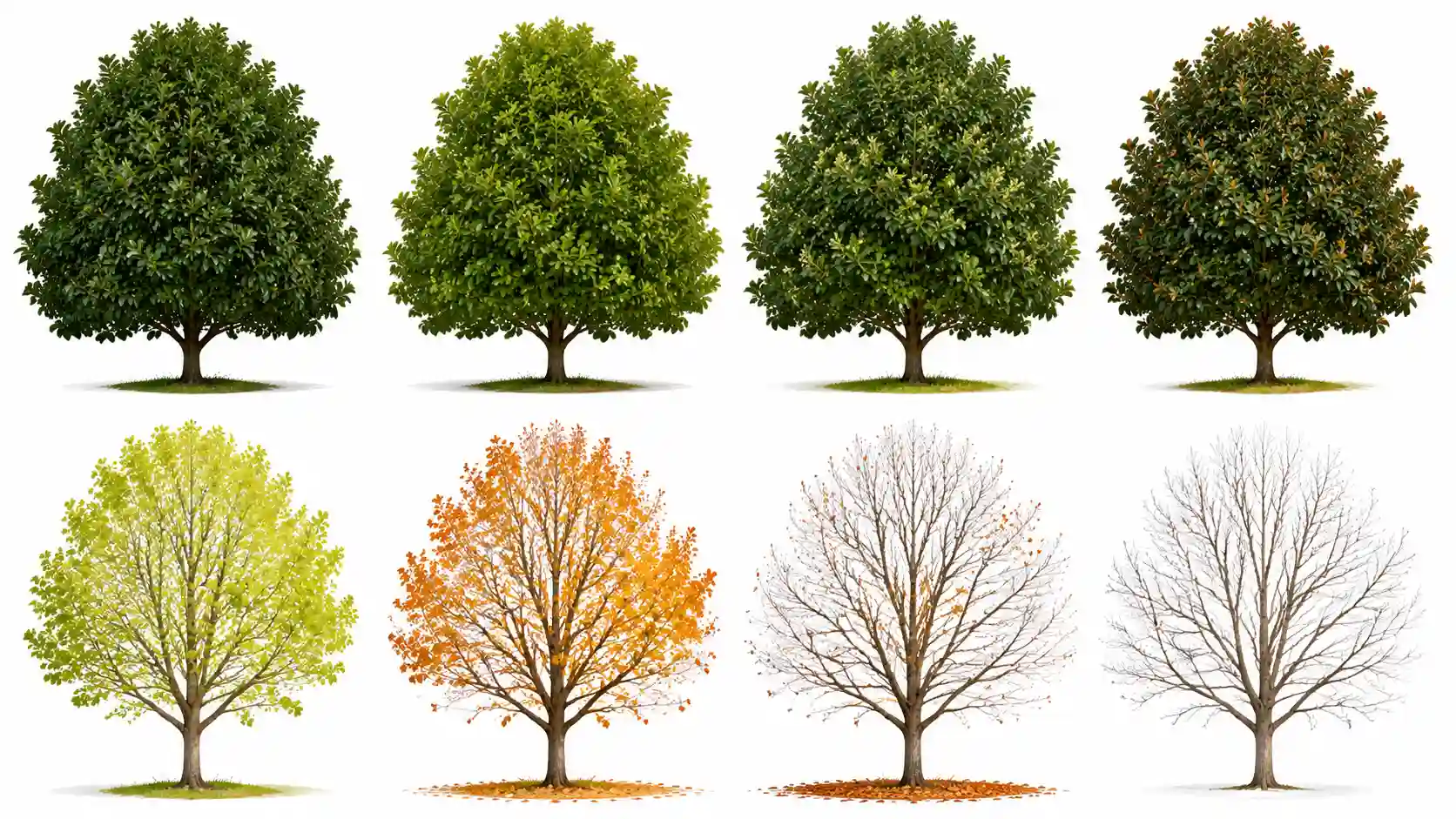
Evergreen trees maintain year-round foliage, while deciduous trees shed leaves during specific seasons. Fast growing deciduous trees Australia are often chosen for seasonal shade, whereas evergreen trees are preferred for continuous coverage.
| Feature | Evergreen Trees | Deciduous Trees |
| Foliage | Present year-round | Dropped seasonally |
| Shade | Consistent throughout the year | Seasonal |
| Privacy | Continuous screening | Reduced during leaf drop |
| Maintenance | Less seasonal leaf litter | Significant seasonal leaf fall |
| Typical Use | Privacy, screening, windbreaks | Seasonal shade and ornamental use |
Best Fast Growing Evergreen Trees for Australian Gardens
Australia’s climate supports a wide range of evergreen trees. The best choice depends on rainfall, soil conditions, available space, and local temperatures.
Fast Growing Pine Trees
Fast growing pine trees Australia are valued for their height, screening ability, and adaptability.
Common examples include:
- Monterey Pine (Pinus radiata)
- Slash Pine (Pinus elliottii)
- Maritime Pine (Pinus pinaster)
These species often grow quickly during their early years and are suitable for larger properties. Pines generally perform best in full sun and well-drained soil.
Flowering Evergreen Trees
Flowering evergreen trees combine permanent foliage with seasonal displays of flowers. Homeowners seeking colourful flowering trees may also find our Tree With Pink Flowers Australia: Identification Guide useful when comparing ornamental landscape options.
Popular examples include:
- Magnolia (Magnolia grandiflora)
- Lilly Pilly (Syzygium species)
- Water Gum (Tristaniopsis laurina)
- Crepe Myrtle hybrids with semi-evergreen characteristics in warmer regions
These trees provide ornamental value while maintaining year-round greenery. Gardeners interested in ornamental flowering species can also explore our Purple Flower Tree Australia: Native & Popular Species Guide for additional year-round colour options suitable for Australian landscapes.
Magnolia cultivars are popular evergreen choices, and our Teddy Bear Magnolia Landscaping Guide for Australian Gardens covers practical design ideas and placement recommendations.
Fast Growing Evergreen Australian Native Trees
Fast growing evergreen Australian native trees are often well adapted to local conditions and require less intervention once established.
Common choices include:
- Lemon-Scented Gum (Corymbia citriodora)
- Brush Box (Lophostemon confertus)
- Queensland Brush Box
- Lilly Pilly species
- Weeping Lilly Pilly (Waterhousia floribunda)
In our experience growing native trees, species adapted to local rainfall patterns generally establish faster and experience fewer pest issues.
Choosing by Size — Tall, Small and Large Options
Selecting the right size tree is essential for long-term success. A tree that fits the available space requires less pruning and experiences fewer structural issues.
Tall Fast Growing Evergreen Trees
Tall evergreen trees are suitable for large properties, shelterbelts, and substantial shade.
Examples include:
- Lemon-Scented Gum
- Monterey Pine
- Brush Box
- Southern Mahogany (Eucalyptus botryoides)
These trees may reach heights exceeding 20 metres under favourable conditions.
Large fast growing trees Australia are commonly used where significant screening or shade is required.
Small Fast Growing Evergreen Trees
Small fast growing evergreen trees Australia are better suited to courtyards, urban gardens, and compact blocks.
Popular options include:
- Dwarf Lilly Pilly cultivars
- Water Gum
- Magnolia Little Gem
- Native Frangipani (Hymenosporum flavum)
These species provide screening and greenery without overwhelming smaller spaces. If you are considering compact evergreen magnolias, our Magnolia Teddy Bear vs Little Gem: Key Differences Explained comparison can help determine which variety best suits your available space.
Fast Growing Evergreen Trees for Privacy and Screening
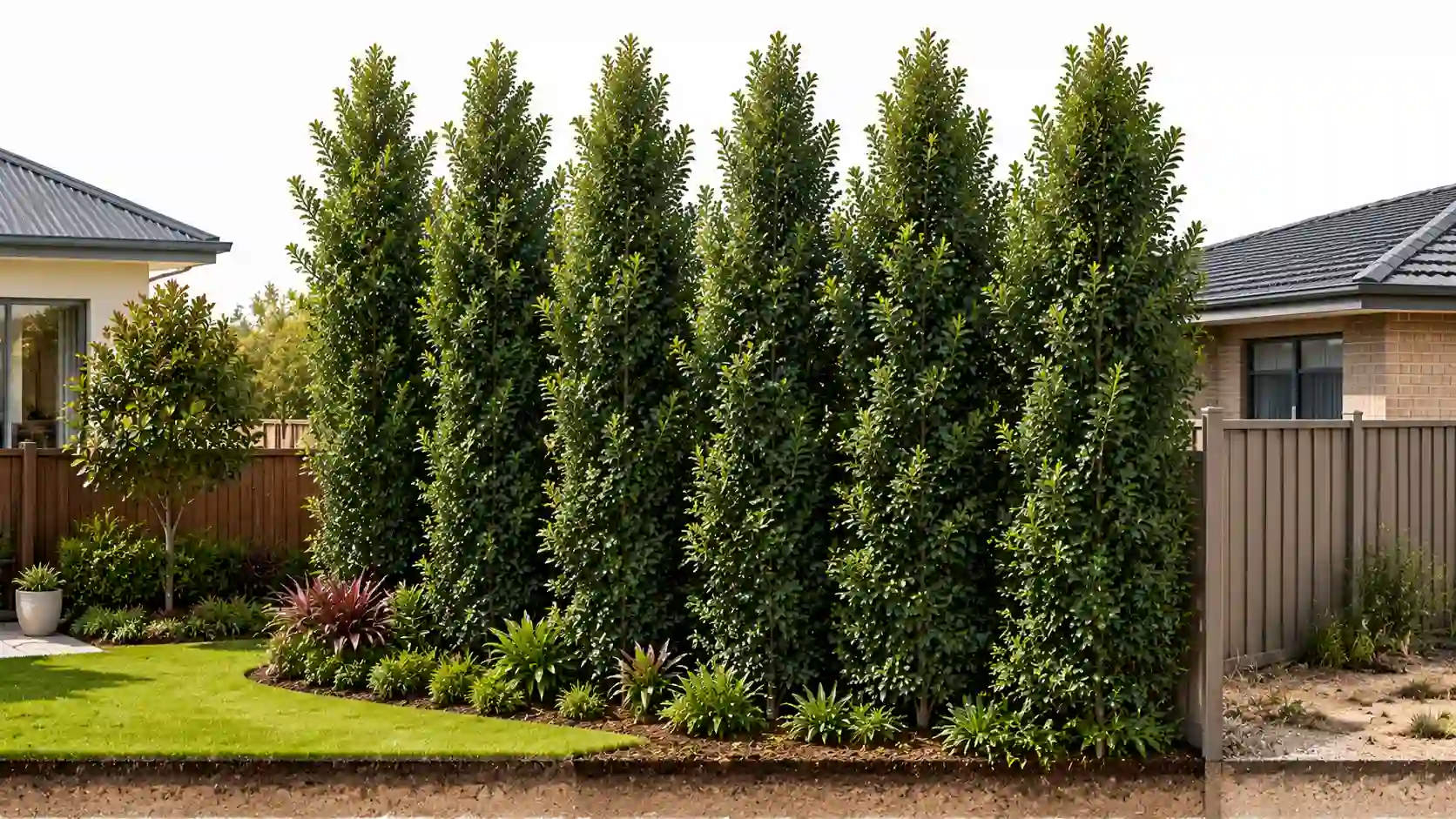
Privacy is one of the most common reasons gardeners plant evergreen trees. Dense foliage and rapid growth provide effective visual barriers. For narrow screening spaces, see our Pittosporum Silver Sheen Growth Rate Guide, which explains growth speed, mature size, and hedge performance.
Recommended screening species include:
- Lilly Pilly
- Brush Cherry
- Magnolia grandiflora
- Water Gum
- Photinia
- Murraya
General planting spacing guidelines:
- Small species: 1–2 metres apart
- Medium species: 2–3 metres apart
- Large species: 3–5 metres apart
Elemo Baker recommends considering mature width rather than current nursery size when determining spacing. This prevents overcrowding and excessive pruning later. One popular screening option is Photinia Fraseri Robusta: Growth, Care & Hedge Guide, valued for its dense foliage and fast establishment in privacy plantings.
Fast Growing Shade Trees in Australia
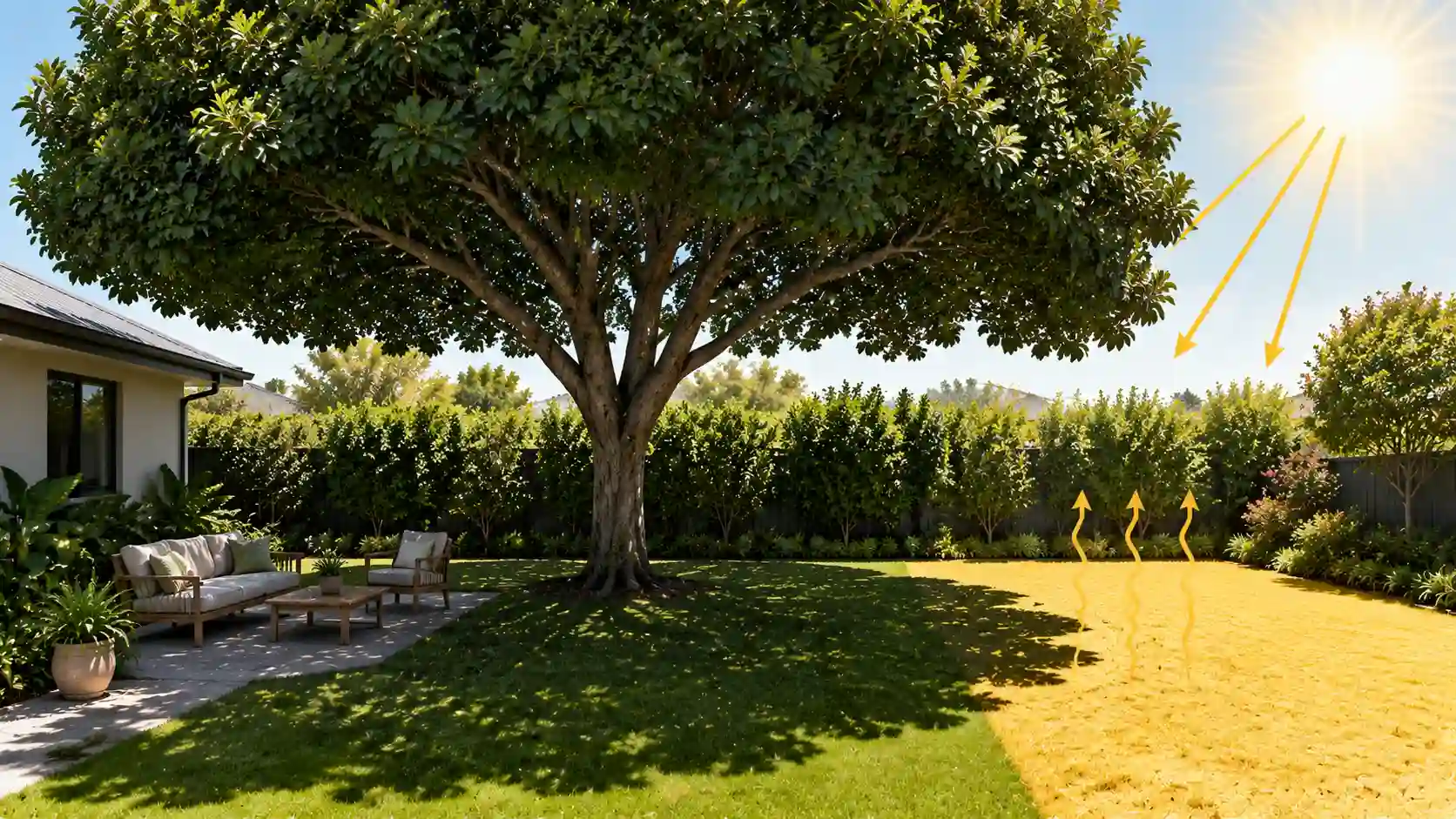
Fast growing shade trees Australia help reduce heat, improve outdoor comfort, and support energy-efficient landscapes.
| Tree Species | Mature Height | Approximate Growth Rate | Sun Requirement |
| Lemon-Scented Gum | 20–40 m | 1–2 m/year | Full sun |
| Brush Box | 10–30 m | 1 m/year | Full sun |
| Water Gum | 8–15 m | 0.8–1.2 m/year | Full sun to part shade |
| Magnolia grandiflora | 10–20 m | 0.5–1 m/year | Full sun |
| Monterey Pine | 20–35 m | 1–2 m/year | Full sun |
Quick growing shade trees Australia should be selected according to available space and local climate. Fast-growing species can deliver substantial canopy cover within a decade.
Fast Growing Drought Tolerant Evergreen Trees
Many regions experience extended dry periods, making drought tolerance an important consideration.
Drought-hardy evergreen options include:
- Lemon-Scented Gum
- Coastal Banksia (Banksia integrifolia)
- Brush Box
- Olive Tree (Olea europaea)
- Southern Mahogany
These species generally tolerate:
- Extended dry conditions
- High temperatures
- Poor or sandy soils
- Coastal exposure
As of 2026, growers increasingly prioritise drought-tolerant species due to changing rainfall patterns and water conservation requirements.
Plant Size — How Big Do These Trees Get?
Mature size varies significantly between species.
Typical ranges include:
| Category | Height | Width |
| Small Trees | 4–8 m | 3–6 m |
| Medium Trees | 8–15 m | 5–10 m |
| Large Trees | 15–40+ m | 10–20+ m |
Courtyard-grown trees often remain smaller because of restricted root zones and reduced soil volume. Root development is also important when assessing mature tree size, particularly for compact ornamental varieties discussed in our Teddy Bear Magnolia Root System guide.
Factors influencing final size include:
- Soil depth
- Water availability
- Sunlight exposure
- Climate
- Root competition
- Fertility levels
Trees grown in open garden environments generally achieve their full mature dimensions more readily than those planted in confined spaces.
Growth Rate — How Fast Do They Actually Grow?
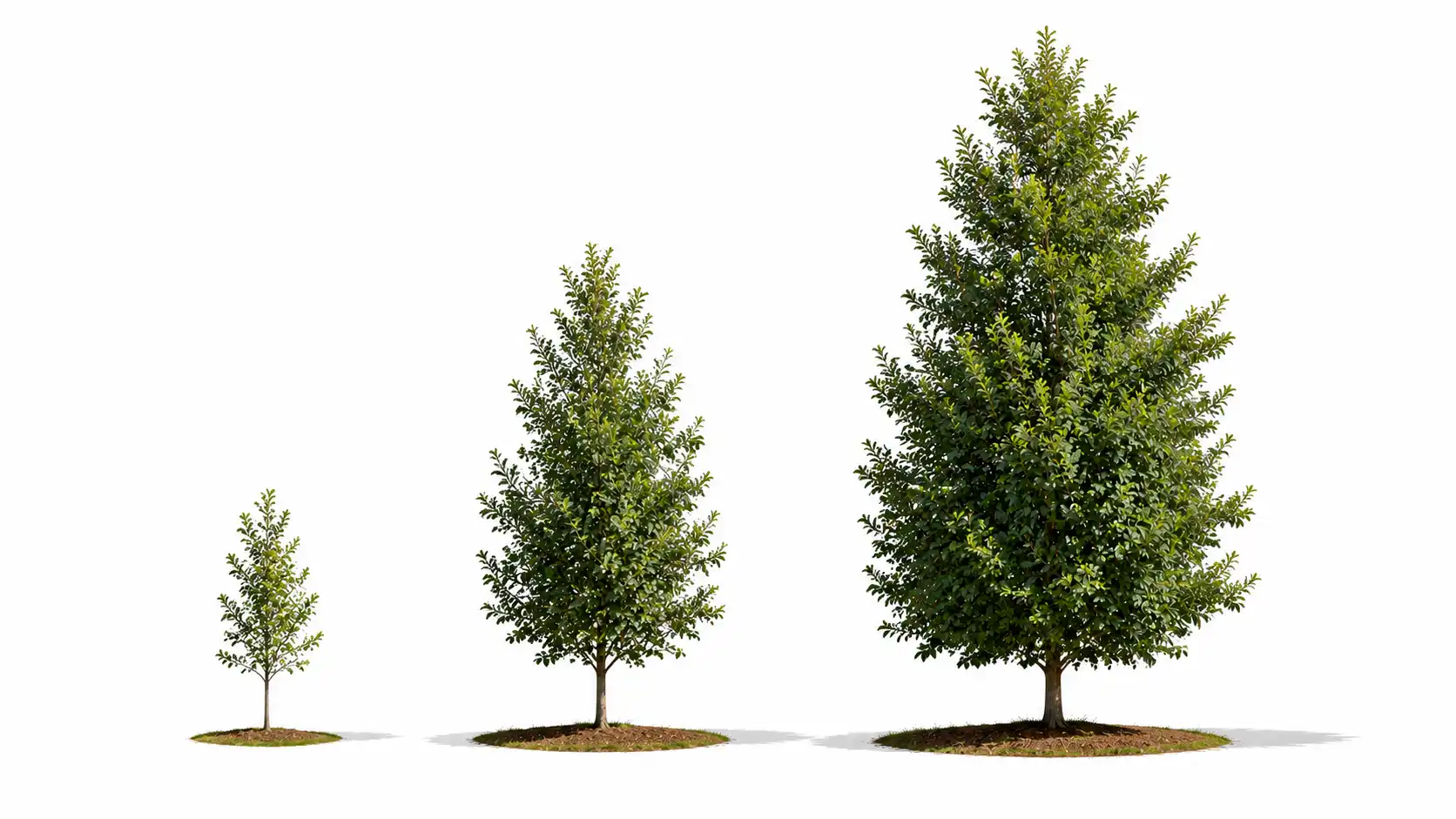
Growth rates are typically classified as:
| Growth Category | Annual Growth |
| Slow | Less than 30 cm |
| Moderate | 30 cm–1 m |
| Fast | More than 1 m |
Evergreen trees often experience their strongest growth during spring and summer when temperatures rise and daylight hours increase. Growth may slow significantly during winter, even though the tree remains evergreen.
Growth rates can vary considerably between species, as demonstrated in our Tuckeroo Tree Growth Rate: Size, Height & Care Guide.
Factors affecting growth speed include:
- Soil quality
- Water availability
- Fertilisation
- Temperature
- Climate zone
- Root health
In our experience, poor soil preparation is one of the most common reasons a supposedly fast-growing tree fails to reach expected growth rates.
Care Guide — Sun, Soil and Maintenance
Proper care helps maximise growth while maintaining tree health.
Watering Needs
Newly planted trees require regular watering during establishment.
General guideline:
- First year: Deep watering 1–2 times weekly
- Second year: Reduce frequency as roots develop
- Established trees: Water during prolonged dry periods
Light Requirements
Most fast-growing evergreen trees Australia full sun conditions prefer at least six hours of direct sunlight daily.
Some species, such as Water Gum and certain Lilly Pilly cultivars, tolerate part shade.
Soil Preferences
Most evergreen trees perform best in:
- Well-drained soil
- Moderate organic matter
- Slightly acidic to neutral pH
Improving drainage before planting reduces root stress and disease risk.
Fertilising Practices
Apply a balanced slow-release fertiliser during spring.
Native species generally require lower phosphorus fertilisers specifically formulated for Australian natives.
Pruning Considerations
Fast-growing trees may require formative pruning during their early years.
Pruning helps:
- Develop strong branch structure
- Improve airflow
- Maintain desired shape
Climate Tolerance
Australia’s climate zones vary significantly.
Many native species tolerate:
- Heat
- Drought
- Coastal conditions
- Variable rainfall
Selecting species suited to the local climate improves long-term performance.
Common Problems with Fast Growing Evergreen Trees
Leaves Turning Yellow or Browning
This often results from nutrient deficiencies, drought stress, root damage, or waterlogging.
Solution:
- Check soil moisture
- Improve drainage
- Apply appropriate fertiliser
Prevention:
- Monitor watering practices
- Maintain healthy soil
Overwatering or Poor Drainage Stress
Roots require oxygen. Constantly saturated soil reduces oxygen availability and encourages disease.
Solution:
- Improve drainage
- Reduce irrigation frequency
Prevention:
- Plant in suitable soil
- Avoid waterlogged locations
Pest Infestations Common to Fast-Growing Species
Common pests include:
- Psyllids
- Scale insects
- Aphids
- Leaf-chewing caterpillars
Solution:
- Monitor regularly
- Encourage beneficial insects
- Use appropriate treatments when necessary
Slower-Than-Expected Growth
Fast-growing labels assume favourable growing conditions.
Solution:
- Improve soil quality
- Correct nutrient deficiencies
- Ensure adequate sunlight
Prevention:
- Match species to site conditions from the beginning
Beginner Mistakes and Landscaping Tips
Many planting mistakes become expensive problems later.
Common mistakes include:
- Planting too close to buildings
- Ignoring mature tree size
- Underestimating root spread
- Choosing unsuitable species for local conditions
- Overcrowding screening trees
Useful landscaping tips:
- Plan for mature dimensions rather than nursery size.
- Allow adequate spacing for airflow and canopy development.
- Use larger species for shade and smaller species near structures.
- Combine native and ornamental trees for visual diversity.
- Consider future maintenance requirements before planting.
Elemo Baker recommends marking the mature canopy width on the ground before planting. This simple step helps visualise how much space the tree will eventually occupy. Before planting large species, review our Gum Tree Root System: Root Spread, Problems & Safe Distances guide to avoid future issues near buildings, driveways, and underground services.
Conclusion
Fast growing evergreen trees Australia provide year-round foliage, reliable privacy, consistent shade, and long-term landscape value. Trees are generally considered fast growing when they achieve approximately one metre or more of annual growth under suitable conditions. Whether the goal is screening, drought tolerance, shade, or ornamental appeal, selecting the right species for available space and climate is essential. By considering mature size, growth rate, and maintenance requirements before planting, gardeners can create healthier landscapes that continue to perform well for decades.
FAQs
What is a fast growing evergreen tree in Australia?
A fast growing evergreen tree in Australia is a tree that retains foliage year-round and typically grows at least one metre annually under favourable conditions. Examples include Lemon-Scented Gum, Brush Box, and Monterey Pine.
What is the fastest growing evergreen tree?
Several species compete for the title, but Lemon-Scented Gum and Monterey Pine are among the fastest-growing evergreen trees commonly planted in Australia, often exceeding one metre of growth per year.
What is the fastest growing Australian tree?
Lemon-Scented Gum (Corymbia citriodora) is frequently considered one of Australia’s fastest-growing native trees, particularly in warm climates with adequate moisture.
What is the fastest growing tree for privacy in Australia?
Lilly Pilly varieties are among the most popular fast-growing privacy trees because they develop dense foliage, respond well to pruning, and provide year-round screening.
What is the fastest growing evergreen tree in Australia overall?
The fastest growing evergreen trees Australia gardeners commonly choose include Lemon-Scented Gum, Monterey Pine, Brush Box, and selected Lilly Pilly cultivars. The fastest option depends on local climate, soil quality, and growing conditions.
14 Comments