

Benefits of Indoor Plants: 10 Science-Backed Reasons
Introduction
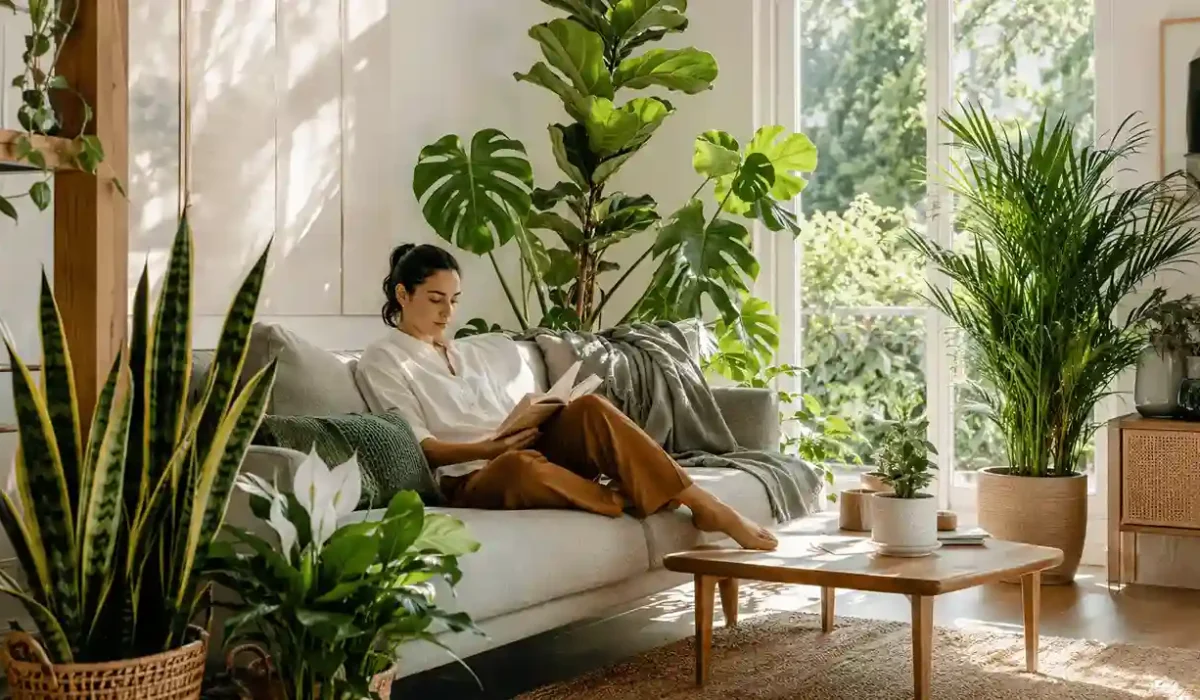
Indoor plants are living plants grown inside homes, offices, and enclosed spaces to improve the environment, wellbeing, and aesthetics of interior spaces. Across Australia, more households are discovering that the benefits of indoor plants extend well beyond decoration. Research now confirms that houseplants deliver measurable health benefits of indoor plants — from cleaner air to lower stress levels. Given that Australians spend roughly 90% of their time indoors, the quality of that interior environment has never mattered more. What was once considered purely aesthetic is now understood as a genuine wellness tool, and the modern Australian home is increasingly built around it.
Indoor plants are just one piece of the puzzle — for a full look at how greenery supports your health and home, check out our complete guide to plant benefits and natural wellness.
By Elemo Baker | Plant Care & Gardening Expert
Last Updated: June 2026
Quick Summary
- Indoor plants offer proven physical and mental health benefits, including reduced stress, improved focus, and better sleep
- Scientific research supports their role in improving indoor air quality by filtering certain volatile organic compounds (VOCs)
- Mental health benefits include lower anxiety, elevated mood, and reduced mental fatigue
- Choosing the right plant for your space, light conditions, and lifestyle amplifies these benefits
- Honest trade-offs exist — including maintenance demands, mould risks, and pet toxicity — and understanding them makes you a more successful plant keeper
What Are the Key Benefits of Indoor Plants?
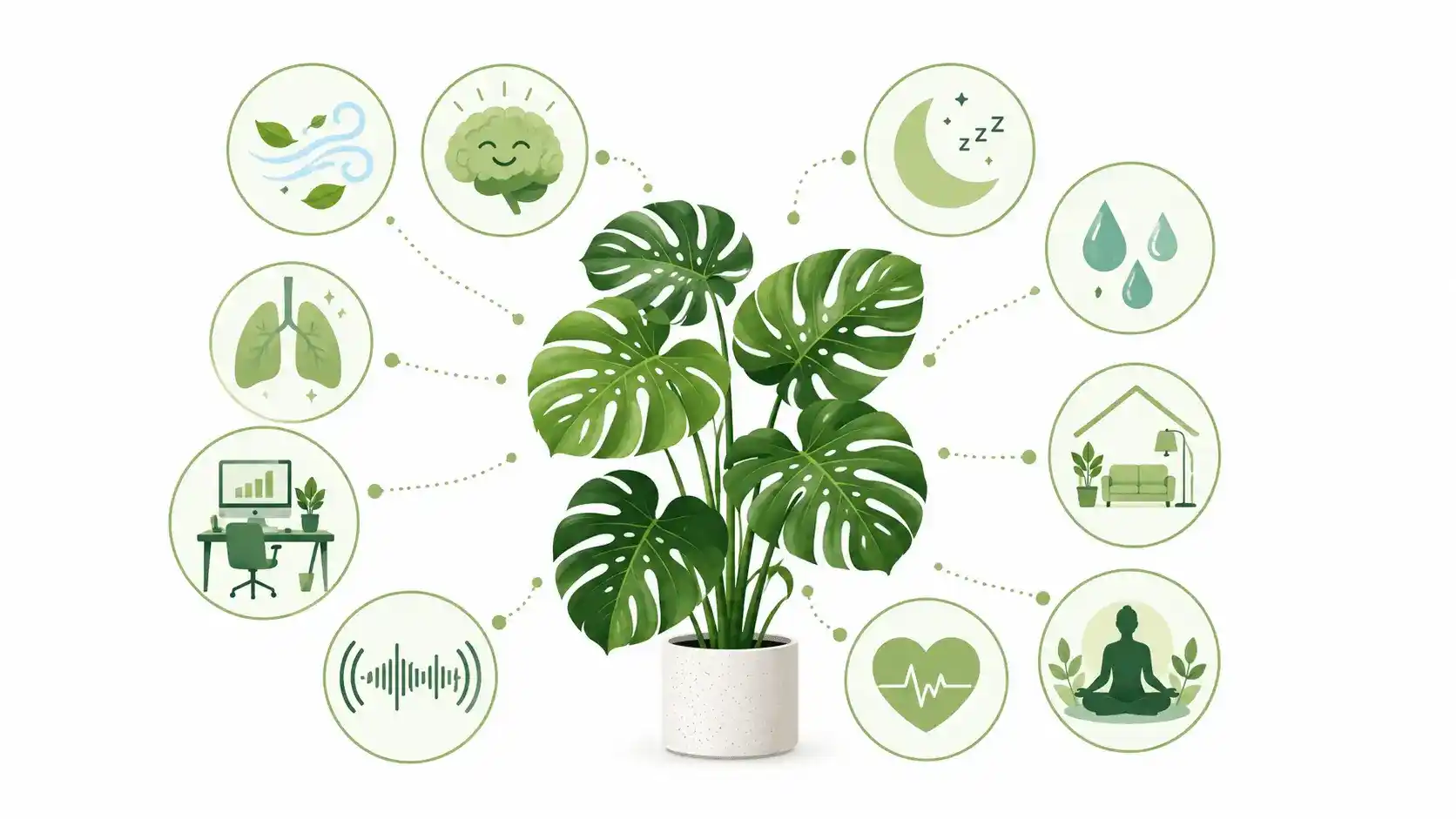
The benefits of indoor plants span physical health, mental wellbeing, home environment quality, and interior design. Research consistently identifies at least ten distinct plant benefits that apply across homes and workplaces.
The 10 core benefits of plants indoors are:
- Air quality improvement — plants absorb certain volatile organic compounds and produce oxygen
- Stress and anxiety reduction — exposure to greenery measurably lowers cortisol and blood pressure
- Improved productivity and focus — plants in workspaces support cognitive output and attention
- Better sleep quality — oxygen-producing plants and stress reduction support healthier sleep cycles
- Humidity regulation — plants release moisture through transpiration, improving comfort in dry climates
- Aesthetic and interior design value — plants add texture, colour, and visual depth to any space
- Acoustic benefits — plants absorb and diffract sound, reducing indoor noise levels
- Support for respiratory health — cleaner, more humid air benefits breathing and respiratory comfort
- Faster physical recovery — horticultural therapy research links plant exposure to reduced pain and faster healing
- Biophilic connection and mindfulness — contact with nature, even indoors, supports emotional grounding and mental clarity
These indoor plant benefits apply whether you keep a single pot on a windowsill or build a full indoor garden. The scale of benefit grows with the number and variety of plants you maintain.
Do Indoor Plants Actually Improve Air Quality?
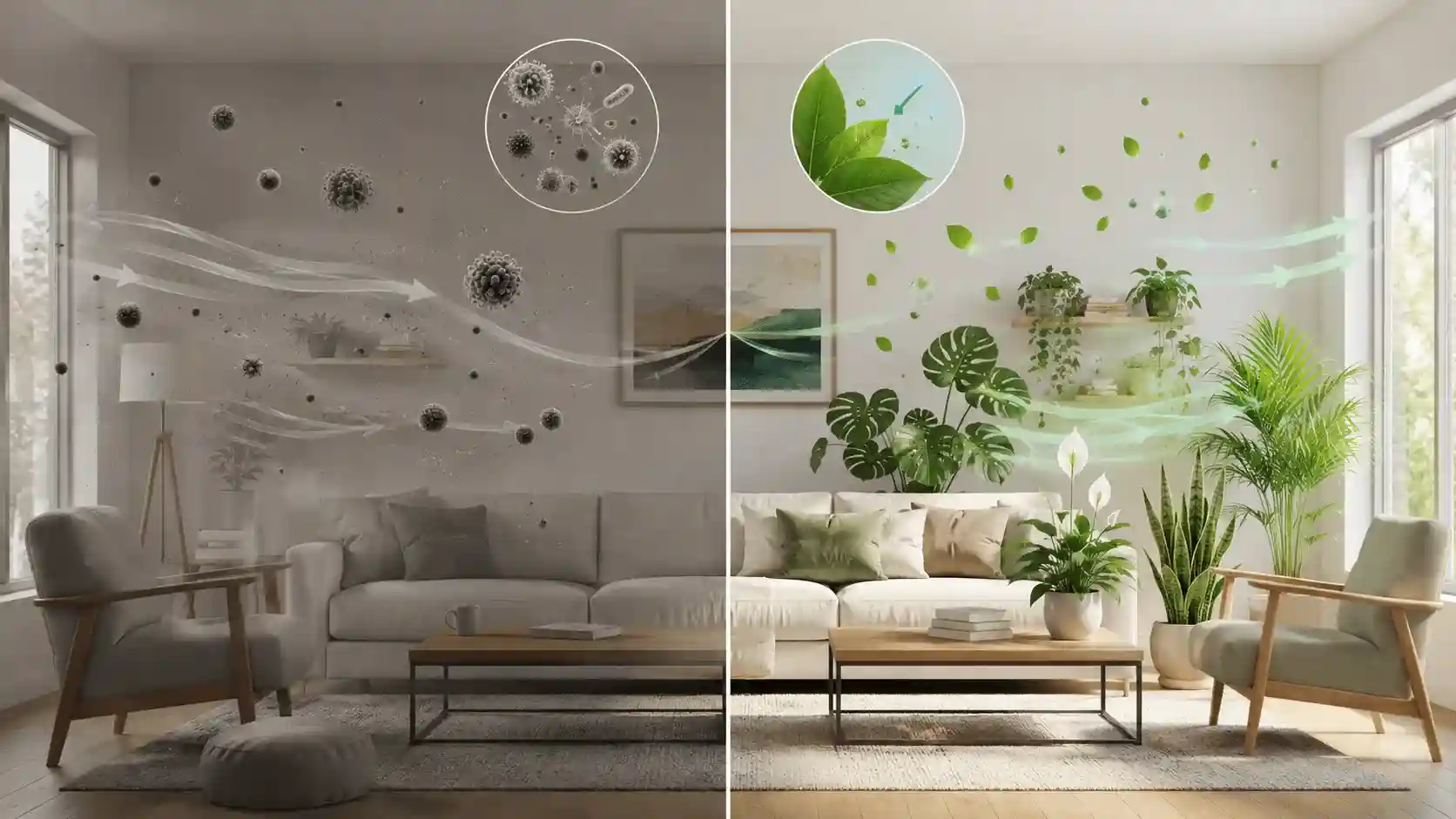
Indoor plants can improve air quality by absorbing certain volatile organic compounds (VOCs), though the scale of improvement in typical home conditions is more modest than commonly believed. Understanding both the evidence and its limits is important for setting realistic expectations.
The foundational research on indoor plants and air quality comes from NASA’s 1989 Clean Air Study, which found that common houseplants removed pollutants including formaldehyde and benzene from sealed test chambers. This process — known as phytoremediation — involves plants absorbing airborne toxins through their leaves and roots, where soil microbes then break them down.
More recently, a 2026 collaborative study led by the University of Surrey’s Global Centre for Clean Air Research (GCARE), involving 35 experts across the UK, Europe, the US, and Australia, confirmed that indoor plant systems — including living walls and hydroponic towers — can meaningfully improve indoor air quality, humidity, and thermal comfort when implemented at appropriate scale.
The honest limit: in a typical living room, you would need a very high density of plants to match the air purification output of a mechanical HEPA filter. Research from Drexel University’s Michael Waring found that the rate at which individual houseplants remove VOCs is relatively slow compared to normal air exchange in a ventilated home.
Are indoor plants good for health through air quality? Yes — particularly when combined with good ventilation. They are a beneficial supplement, not a standalone air filtration system. Even modest numbers of plants contribute meaningfully to VOC reduction over time, and the psychological benefits of having plants indoors are well-supported regardless of air purification scale.
How Do Indoor Plants Support Humidity and Thermal Comfort?
Indoor plants regulate humidity through a process called transpiration, where moisture is released from leaf surfaces into the surrounding air. This passive humidification is especially relevant in the Australian climate, where air conditioning and dry inland conditions frequently produce uncomfortably low indoor humidity levels.
Low indoor humidity contributes to dry skin, irritated nasal passages, disrupted sleep, and increased susceptibility to airborne respiratory irritants. Plants that transpire actively — such as peace lilies, ferns, and areca palms — help restore moisture balance naturally and continuously.
The 2026 University of Surrey GCARE study found that larger indoor plant systems, including living walls and hydroponic installations, can make interior spaces feel up to 2°C cooler during warm periods. While this effect is most pronounced with high-density plant systems, even a cluster of medium-sized plants in a well-lit room contributes to perceived thermal comfort — a practical benefit for Australian summers without increasing energy costs.
Elemo Baker recommends grouping three or more plants together in living areas during summer months. Clustered plants create a localised microclimate of increased humidity and slightly reduced ambient temperature — a simple, cost-free strategy that any Australian household can implement.
Mental Health Benefits of Indoor Plants
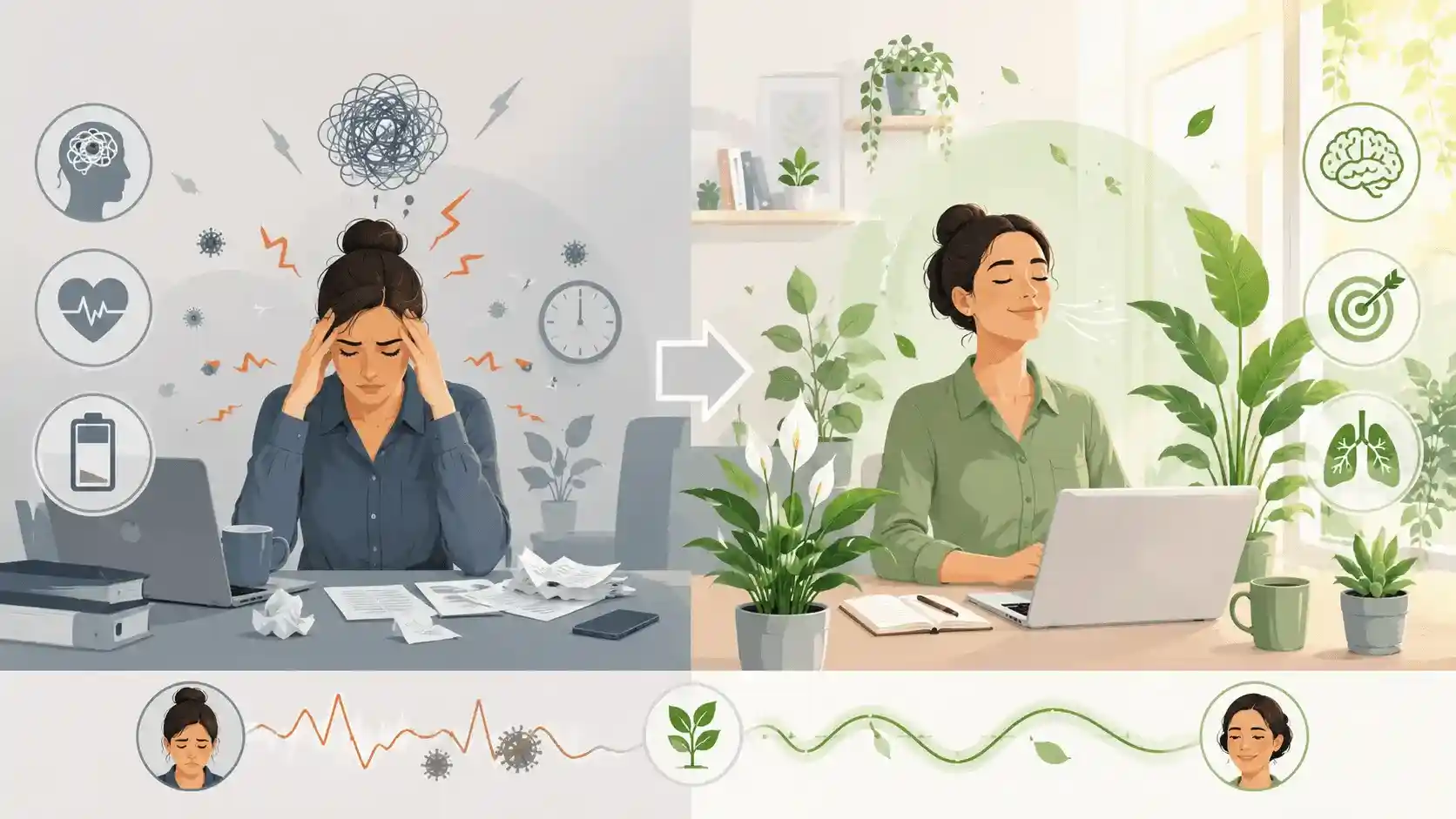
The mental health benefits of indoor plants are among the most extensively researched and consistently supported areas of houseplant science. A 2022 epidemiological review published in ScienceDirect examined 28 peer-reviewed studies and found that physical and visual access to indoor plants reliably improved subjective wellbeing, reduced emotional stress and anxiety, and enhanced cognitive performance across home, office, and healthcare environments.
A 2023 systematic review with meta-analyses — covering studies on the effects of indoor plants on human functions — confirmed these findings, identifying positive outcomes across mood, stress response, perceived air quality, and mental fatigue. The benefits of houseplants for mental health are now supported by a substantial and growing body of peer-reviewed evidence.
The psychological mechanism behind these benefits connects to biophilic design theory — the principle that humans have an innate, evolutionary affinity for natural environments. When indoor greenery is present, the brain responds to visual and olfactory nature cues with measurable reductions in physiological stress markers. This is why house plants benefits go beyond the aesthetic: they tap into something fundamental about how human biology responds to its environment.
Can Indoor Plants Reduce Stress and Anxiety?
Yes. Interacting with indoor plants measurably reduces stress and anxiety, and this effect is supported by multiple independent studies. A 2015 study published in the Journal of Physiological Anthropology found that participants who actively engaged with indoor plants experienced significant reductions in blood pressure and heart rate, alongside increased feelings of calm, compared to those completing computer-based tasks.
Part of this response is driven by phytoncides — natural aromatic compounds that many plants emit into the surrounding air. When inhaled, phytoncides trigger biological responses similar to those observed during aromatherapy: reduced cortisol levels, lower heart rate, and a measurable shift toward parasympathetic nervous system activity.
This mechanism mirrors the Japanese practice of Shinrin-yoku, or forest bathing — the therapeutic practice of spending time among trees using all five senses. Research on Shinrin-yoku consistently shows reduced anxiety, lowered blood pressure, and improved mood. Indoor greenery replicates a milder version of this effect within the home environment.
Importantly, you do not need to actively touch or tend to plants to experience the benefit. Studies confirm that simply viewing indoor plants produces a measurable calming response — meaning even a plant on a desk or windowsill delivers a stress-reduction benefit throughout the day.
Indoor Plants and Productivity and Focus
Indoor plants improve productivity and focus by supporting cognitive function through a combination of improved air quality, reduced stress, and the restorative effect of biophilic visual exposure. Research across office environments consistently shows that workspaces with plants produce higher task performance scores, improved attention span, and greater reported satisfaction than plant-free environments.
The cognitive mechanism is partly physiological: indoor plants increase oxygen levels and reduce CO₂ concentration in enclosed spaces. Higher oxygen availability supports sustained mental effort, while elevated CO₂ — common in poorly ventilated rooms — is associated with fatigue, reduced concentration, and decision-making errors.
The benefits of plants in the home extend directly to the home office context. For Australian workers who shifted to working from home post-pandemic, indoor house plants benefits include a reduced sense of mental fatigue across long work days, lower reported stress during task transitions, and a more psychologically comfortable workspace overall. Even a single plant placed within the natural line of sight from a desk has been shown to provide measurable cognitive restoration during brief visual breaks.
Can Indoor Plants Help You Sleep Better?
Indoor plants can support better sleep quality through two primary mechanisms: oxygen production during nighttime hours and the cumulative stress-reduction effect of living with greenery.
Most plants perform photosynthesis during daylight hours and switch to cellular respiration at night, which means they consume oxygen after dark. However, certain species — most notably the snake plant (Sansevieria trifasciata) — continue to produce oxygen at night through a specialized photosynthetic pathway known as Crassulacean Acid Metabolism (CAM). This makes them particularly well-suited to bedroom placement. For a detailed guide on this specific benefit, see our article on the 10 benefits of the snake plant.
Beyond direct oxygen production, the stress-reduction effect of indoor plants has a direct downstream impact on sleep. Lower cortisol levels, reduced anxiety, and a calmer nervous system — all supported by regular exposure to indoor greenery — are foundational conditions for restorative sleep. Placing plants known for calming fragrance, such as lavender, near sleeping areas amplifies this effect through olfactory relaxation pathways.
For best results, Elemo Baker recommends placing one to two low-maintenance plants — such as a snake plant or peace lily — within the bedroom, positioned away from direct airflow from fans or air conditioning units to maintain their humidity benefit overnight.
Physical Health Benefits of Indoor Plants
Beyond mental wellbeing, the health benefits of indoor plants include tangible physical outcomes. Improved air quality, regulated humidity, reduced biological stress markers, and the documented effects of plant exposure on recovery and pain perception all contribute to indoor plant health benefits that extend across the physical body. Understanding these indoor plants health benefits helps frame plant keeping as a genuine health investment rather than a lifestyle aesthetic. Beyond air quality, certain plants carry documented medicinal and wellness properties used across cultures for generations. The leaf of life plant is one such example, valued for its broad traditional health applications.
Indoor Plants and Respiratory Health
Cleaner, more humid indoor air directly supports respiratory health by reducing the concentration of airborne irritants and maintaining moisture levels that protect the mucous membranes of the nose, throat, and lungs. In dry or air-conditioned Australian interiors, low humidity is one of the most common triggers of respiratory discomfort, including dry coughs, nasal irritation, and worsened asthma symptoms.
Indoor plants address this through transpiration — continuously releasing water vapour that maintains healthier ambient humidity levels. Plants that are particularly effective for respiratory support include those with high transpiration rates, such as peace lilies, Boston ferns, and areca palms.
Some plants also have traditional and clinically observed associations with respiratory ease. The Vicks plant (Plectranthus tomentosus), which contains camphor and menthol compounds in its leaves, is used as a natural respiratory support plant across many cultures. For a detailed breakdown of its specific properties, see our guide to Vicks plant benefits.
Indoor Plants and Recovery From Illness
Research in horticultural therapy — the applied use of plants and gardening in therapeutic settings — consistently shows that exposure to indoor plants supports physical recovery from illness, surgery, and cognitive decline.
A study conducted at Rutgers University found that individuals with dementia demonstrated measurable improvements in short-term memory following structured sessions in garden environments. Horticultural therapy research more broadly shows that patients recovering in rooms with plants or garden views report lower perceived pain levels, require less pain medication, and are discharged from care settings faster than those in plant-free environments.
The psychological framework underlying these findings is the concept of restorative environments in health psychology — the theory that natural settings, including indoor plant-filled spaces, replenish directed attention and reduce physiological stress in ways that directly support healing. When the nervous system is less taxed by environmental stress, biological resources can be redirected toward physical recovery processes.
In our experience working with plant enthusiasts across Australia, the consistent observation is that homes designed with greenery in mind feel fundamentally different — calmer, warmer, and more restorative — in ways that go beyond what any single scientific measure captures.
Are Indoor Plants Good for Your Home Environment?
Indoor plants transform the home environment as a whole system, not merely as individual decorative items. The benefits of plants in the home extend across sensory, ecological, energetic, and structural dimensions. When thoughtfully selected and placed, plants for indoors become functional contributors to a healthier, quieter, and more balanced living space. Whether you are furnishing plants for house use in a compact apartment or selecting plants for interior design in a larger Australian home, the cumulative environmental impact is meaningful.
Indoor Plants and Aesthetic and Interior Design Value
Indoor plants are a central element of biophilic design — one of the most influential interior design philosophies of the past decade. Biophilic design integrates natural elements into built environments to support human psychological comfort, and plants are its most accessible and versatile tool. For collectors drawn to rare and architecturally striking foliage, understanding the differences between closely related species is essential. Our detailed comparison covers two of the most sought-after collector anthuriums available in Australia.
Plants add to interior spaces in ways that designed objects cannot replicate: organic texture, asymmetrical form, seasonal variation, and living movement in response to light and airflow. They introduce colour gradients — from deep forest green to silvery variegation — that soften the hard surfaces of modern interiors and create visual depth that makes spaces feel larger and more layered. For those drawn to rare and unusual indoor varieties, the Snow Maiden Oriental Pearl plant represents the kind of distinctive collector’s choice that transforms an interior from simply green to genuinely curated.
For dramatic visual impact, few house plants rival the Monstera albo variegata, whose large white-streaked leaves make it one of the most architecturally striking choices for living rooms and entryways. For rich jewel-toned colour and velvet texture, the purple passion plant offers a visually distinctive indoor option that few competitors in the category can match.
Can Indoor Plants Reduce Noise Indoors?
Indoor plants reduce ambient noise by absorbing, diffracting, and reflecting sound waves — a benefit that remains largely unknown to most plant keepers and is almost entirely absent from competitor content in this niche.
Hard interior surfaces — walls, floors, glass, and furniture — reflect sound, creating echo and amplifying background noise. Plants interrupt this reflective cycle through multiple mechanisms: their leaves scatter and absorb sound energy, their stems and branches diffract sound around obstacles, and their soil substrate absorbs low-frequency vibrations from below.
Plants with large, broad, textured leaves provide the most effective acoustic dampening. Species such as rubber plants (Ficus elastica), fiddle-leaf figs (Ficus lyrata), and large-leafed peace lilies are particularly effective sound absorbers when placed strategically near walls or windows. For home offices in open-plan living spaces or rooms facing busy streets, grouping several medium-to-large plants along interior walls creates a measurable reduction in perceived noise level.
Indoor Plants and Feng Shui and Positive Energy
In feng shui — the traditional Chinese system of spatial arrangement for harmonious energy flow — indoor plants are considered powerful activators of positive energy (chi or qi). Plants represent the wood element, which is associated with growth, renewal, vitality, and upward momentum. Placing plants in specific areas of the home is believed to amplify these qualities in the corresponding life domains.
Rounded-leaf plants are generally preferred in feng shui practice, as sharp or pointed leaves are believed to direct energy abruptly rather than allowing it to flow smoothly. The money tree (Pachira aquatica) is among the most auspicious feng shui plants in Australian homes, associated with financial prosperity, good fortune, and balanced energy. For a complete guide on its symbolism and care in the Australian context, see our dedicated article on the money tree in Australia.
Even for those who do not follow feng shui principles formally, the intentional placement of plants with attention to energy, flow, and balance often produces interior spaces that feel intuitively more peaceful and purposeful.
Best Indoor Plants for Health Benefits in Australia
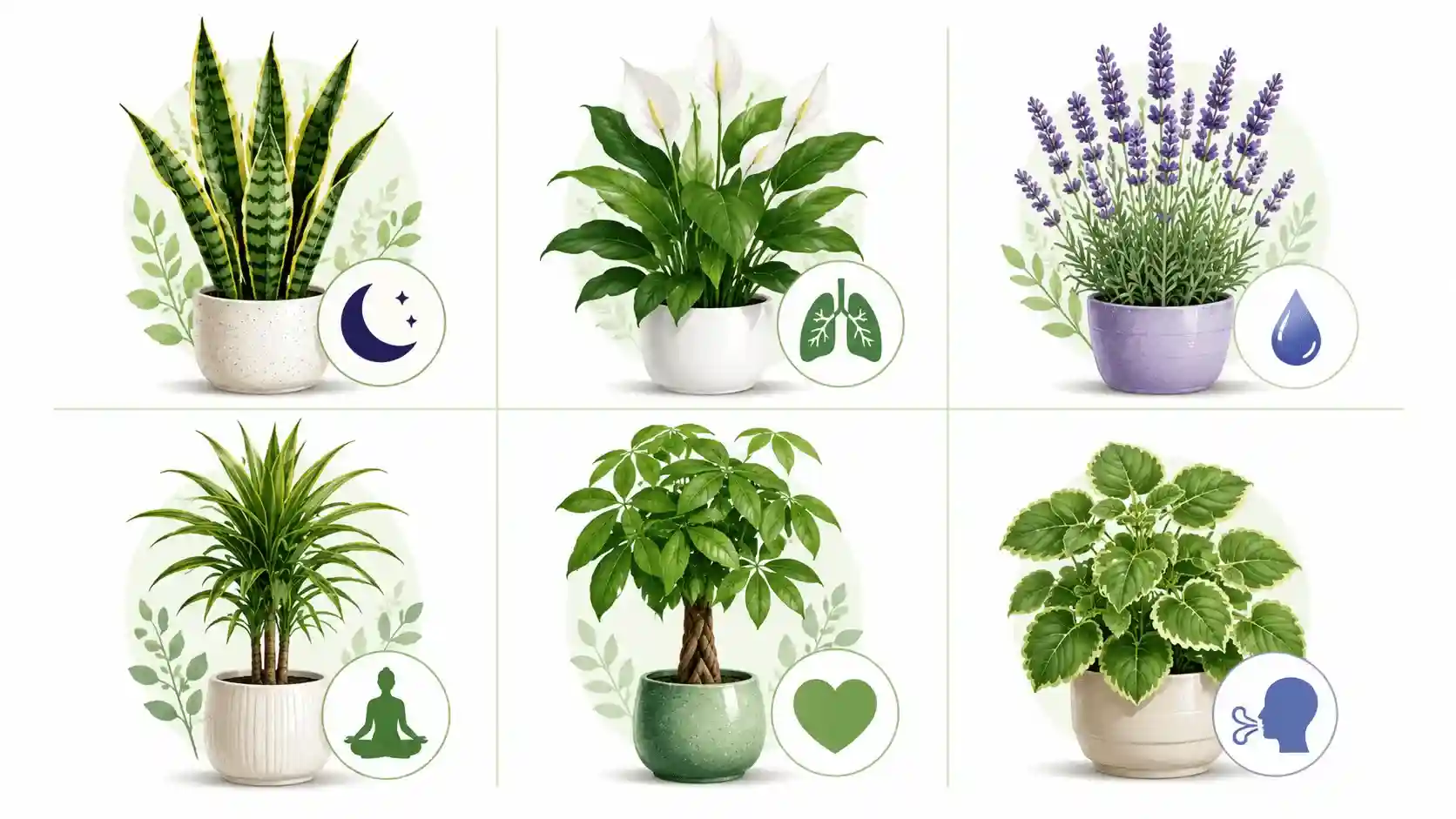
Australia’s indoor plant context is distinct. High UV intensity, air conditioning in summer, dry inland climates, and bright but often filtered indoor light through UV-blocking windows all influence which plants perform best indoors. The following Australia indoor plants have been selected for their combination of proven health benefits, adaptability to houseplant Australia conditions, and ease of care for typical Australian home environments.
| Plant | Key Health Benefit | Light Needs | Difficulty |
| Snake Plant | Oxygen at night, air purification | Low to bright indirect | Easy |
| Peace Lily | VOC absorption, humidity regulation | Low light | Easy |
| Lavender | Stress relief, sleep support | Bright indirect | Moderate |
| Dracaena | Air filtering, low maintenance | Low to medium indirect | Easy |
| Money Tree | Mental wellbeing, feng shui | Bright indirect | Easy |
| Vicks Plant | Respiratory support | Bright indirect | Easy |
For plants indoors in Australian conditions, the snake plant and dracaena are the most resilient choices for beginners — tolerating irregular watering, low humidity, and variable light with minimal complaint. Peace lilies perform well in south-facing rooms with filtered light, making them ideal inside plants for apartments with limited sun exposure.
Disadvantages of Indoor Plants — What You Should Know
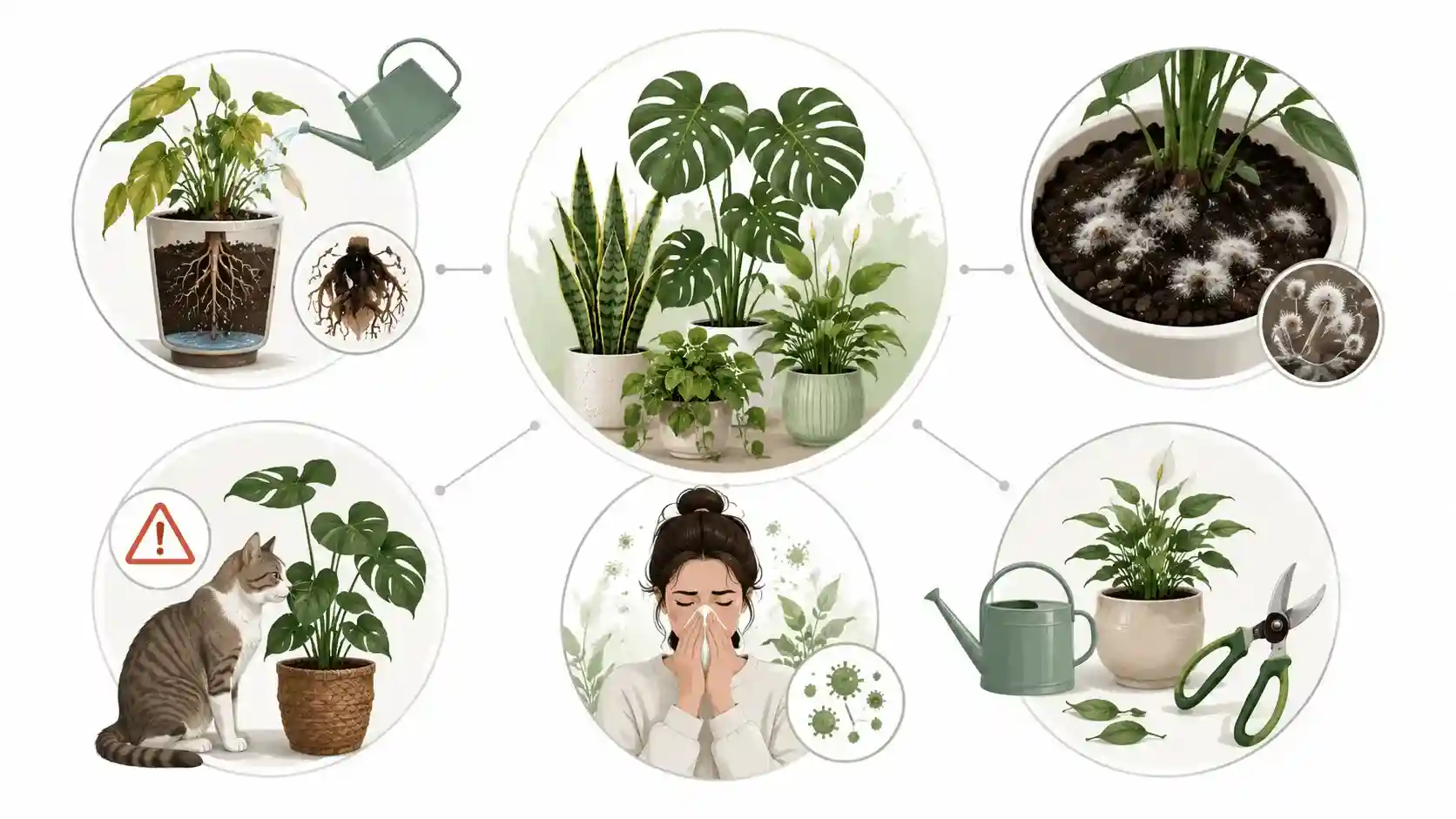
Not every aspect of keeping indoor plants is straightforward. An honest understanding of the disadvantages of indoor plants is essential for making informed choices and avoiding the most common problems. Nearly all competitor content in this niche ignores this dimension entirely — which is a disservice to readers and a missed opportunity for genuine authority.
The main disadvantages to be aware of include:
- Overwatering risk — the single most common cause of houseplant death, leading to root rot and soil degradation
- Mould in potting soil — overwatered pots create anaerobic conditions in which mould and pathogenic fungi thrive; a 2022 ScienceDirect epidemiological review specifically noted that potting soil can release pathogenic fungal and bacterial components into indoor air, which is a genuine health consideration for immunocompromised individuals
- Toxicity to pets and children — many common houseplants contain compounds harmful or fatal to cats, dogs, and young children
- Maintenance demands — plants require consistent attention to watering, light, and seasonal care; neglected plants deteriorate quickly
- Allergen potential — certain plants release pollen or spores that aggravate hay fever, asthma, or mould allergies
Understanding these trade-offs does not diminish the value of indoor plants — it allows you to manage them responsibly and get the full benefit with minimal risk.
Are Indoor Plants Safe for Pets and Children?
Several of the most popular indoor plants are toxic to pets and children, and this is one of the most important safety considerations for Australian households. Knowing which plants pose a risk allows you to make safe selections or manage placement effectively.
Common houseplants with known toxicity include:
- Pothos (Epipremnum aureum) — causes oral irritation, vomiting, and difficulty swallowing in cats and dogs
- Peace lily (Spathiphyllum) — toxic to cats and dogs; causes oral pain, drooling, and vomiting
- Dracaena species — toxic to cats and dogs; ingestion causes vomiting, weakness, and dilated pupils
- Philodendron — contains calcium oxalate crystals harmful to pets and children
- Firestick plant (Euphorbia tirucalli) — produces a toxic milky sap that causes severe skin and eye irritation on contact; for a detailed treatment guide, see our article on firestick plant sap on skin treatment
Safe alternatives for pet- and child-friendly households include spider plants (Chlorophytum comosum), Boston ferns (Nephrolepis exaltata), and money trees (Pachira aquatica). When in doubt, place plants on elevated shelves or use hanging planters to keep them physically out of reach.
Can Indoor Plants Cause Allergies or Mould?
Yes — under certain conditions, indoor plants can contribute to indoor allergen load and mould growth. This risk is primarily associated with overwatering rather than the plants themselves.
When potting soil remains consistently wet, anaerobic bacterial and fungal growth is common. Mould spores released from damp soil can aggravate asthma, hay fever, and other respiratory sensitivities. The 2022 ScienceDirect review of indoor plants in healthcare environments specifically flagged pathogenic fungal and bacterial components from potting soil as a legitimate indoor air quality concern.
Certain plants also produce pollen — weeping figs (Ficus benjamina) are known to trigger latex-related allergies in sensitive individuals. High-pollen flowering plants kept indoors can also aggravate seasonal allergy symptoms year-round.
To minimise these risks:
- Allow soil to dry adequately between waterings according to each plant’s specific needs
- Use pots with drainage holes and avoid decorative pot covers that trap moisture
- Choose low-pollen or pollen-free plants for allergy-sensitive households
- Replace potting mix annually to prevent long-term fungal accumulation
How to Maximize the Benefits of Indoor Plants at Home
To genuinely benefit from indoor plants, placement, light matching, watering consistency, and plant grouping all matter. Understanding how to get the most out of your collection removes the guesswork and makes the difference between plants that struggle and plants that thrive and deliver their full health and environmental value.
Quick tips for maximising plant benefits:
- Match each plant’s light requirements to its room placement before purchasing
- Group plants in clusters of three or more to create localised humidity zones
- Water according to each species’ needs — most indoor plants fail from too much water, not too little
- Rotate plants quarterly so all sides receive even light exposure
- Clean leaves monthly with a damp cloth to remove dust that blocks photosynthesis and transpiration
- Choose pot sizes proportional to root volume — oversized pots hold excess moisture and promote rot
Where to Place Indoor Plants for Maximum Health Benefits
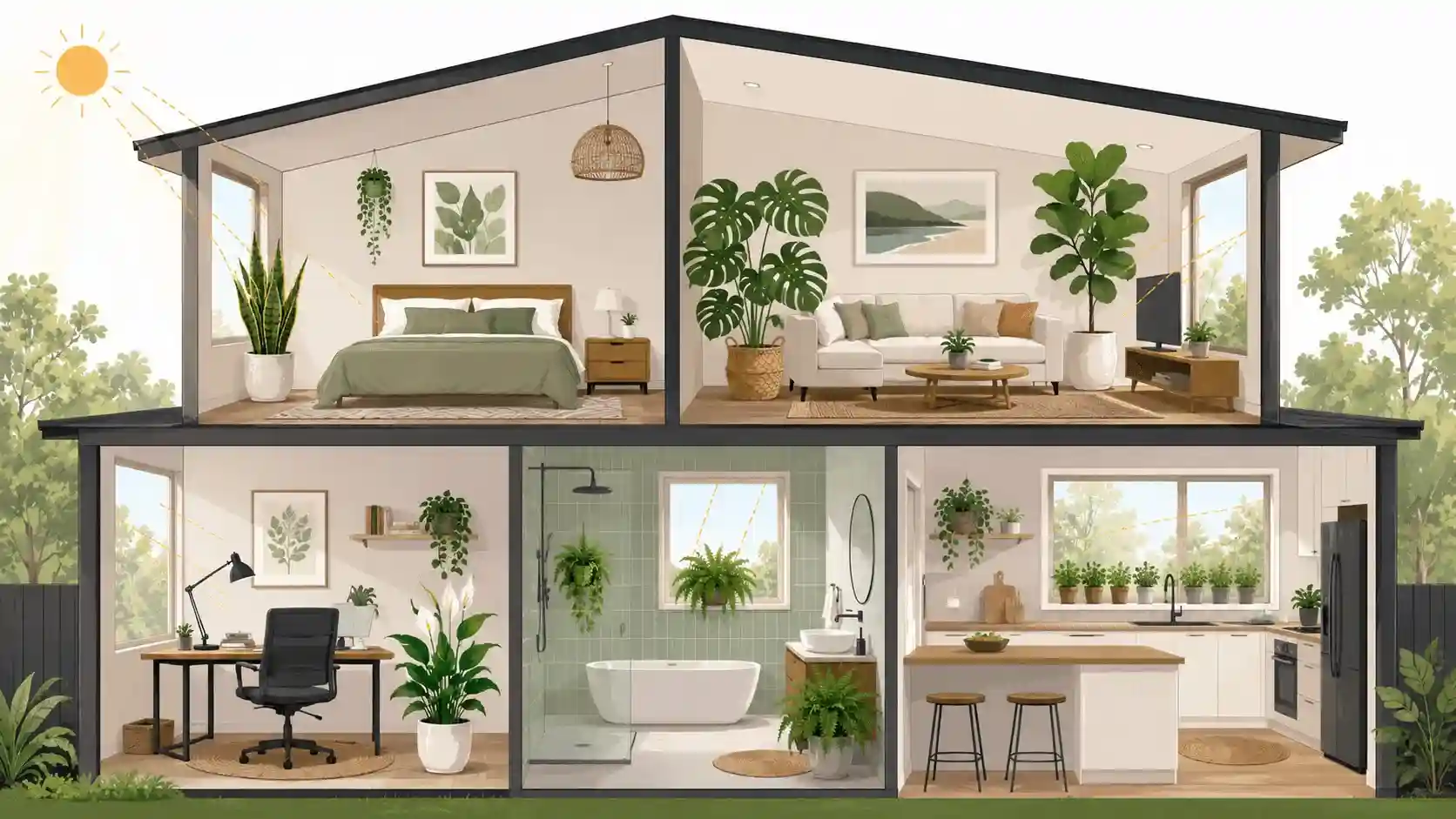
Strategic room-by-room plant placement maximises both the health and aesthetic benefits of indoor plants.
- Bedroom — choose oxygen-producing night plants like snake plants or calming fragrance plants like lavender; position away from drafts to preserve humidity output
- Living room — use larger statement plants (rubber plant, monstera, fiddle-leaf fig) in bright indirect light corners; cluster medium plants near walls for acoustic benefit
- Home office — place at least one plant within natural line of sight from the desk; peace lilies and pothos perform well in lower-light office settings
- Bathroom — high-humidity tolerant plants thrive here; ferns, orchids, and peace lilies benefit from natural steam and require less watering
- Kitchen — herbs (Ocimum basilicum, Mentha species) double as functional and aromatic plants; position on windowsills with direct morning light
For bedroom placement and sleep quality specifically, our detailed guide to the benefits of snake plants covers the optimal positioning for nighttime oxygen output.
How Many Indoor Plants Do You Need to See Benefits?
The number of plants needed depends on which benefit you are seeking. For air purification specifically, the research is sobering: Dr. Michael Waring of Drexel University calculated that achieving meaningful VOC removal through plants alone would require approximately 10 plants per square foot of floor space — a density far beyond what most homes accommodate.
However, for mental health, stress reduction, aesthetic value, humidity support, and the biophilic connection to nature, the threshold is far more accessible. Studies consistently show measurable psychological benefits from as few as one to three plants visible within a regular living or working space.
The practical guidance Elemo Baker recommends for Australian homes: start with three to five well-chosen plants in your most-used rooms — living room, bedroom, and home office. This density delivers real mental and environmental benefits without creating an unmanageable maintenance burden. Scale up gradually as your confidence and care routine develop.
Indoor Plants vs Air Purifiers — Which Is Better?
Indoor plants and air purifiers both improve the indoor environment, but they do so through fundamentally different mechanisms and deliver different types of benefit. The most accurate answer is that they are complementary tools, not competing alternatives.
| Factor | Indoor Plants | Air Purifiers |
| Air purification | Moderate — VOC absorption through phytoremediation | High — HEPA filtration removes particles, allergens, pathogens |
| Mental health benefit | Proven across multiple peer-reviewed studies | Minimal to none |
| Cost | Low to moderate (one-off plant purchase) | Moderate to high (device + ongoing filter replacement) |
| Maintenance | Regular watering, seasonal care | Filter replacement every 6–12 months |
| Aesthetics | High — significant visual and design contribution | Low — functional appliance appearance |
| Noise reduction | Yes — plants absorb and diffract sound | No — many purifiers generate fan noise |
| Humidity regulation | Yes — through transpiration | No — HEPA purifiers reduce humidity slightly |
For households with significant air quality concerns — particularly allergy sufferers, asthma patients, or those in high-pollution urban areas — a quality HEPA air purifier provides air filtration that no number of houseplants can replicate at scale. For mental health, stress reduction, aesthetic value, and the creation of a calming home environment, indoor plants offer benefits that no air purifier can provide.
The evidence-based recommendation: use both. An air purifier handles mechanical filtration; indoor plants handle wellbeing, humidity, aesthetics, and the human need for connection with the natural world.
Common Mistakes When Keeping Indoor Plants
The most consistent pattern observed across struggling indoor plant collections is not a lack of care — it is the wrong kind of care applied to the wrong plant in the wrong conditions. These are the most common mistakes that undermine indoor plant health:
- Overwatering — by far the leading cause of houseplant death; most indoor plants require far less water than people assume, particularly during winter
- Incorrect light placement — placing shade-tolerant plants in direct sun (which scorches leaves) or light-demanding plants in dark corners (which causes etiolation and weak growth)
- Wrong pot or soil — using pots without drainage holes or dense, moisture-retaining soils that suffocate roots
- Ignoring early pest signs — spider mites, fungus gnats, and scale insects establish quickly on stressed plants; early intervention is far more effective than treatment after infestation
- Overcrowding — plants placed too close together compete for light and airflow, increasing humidity-related fungal risk
Leaf symptoms are often the first visible signal of these mistakes. Brown spots on leaves typically indicate overwatering, underwatering, or sunburn — our detailed guide to brown spots on anthurium leaves covers the full diagnostic process. Yellowing stems are another common distress signal, with multiple potential causes explored in our article on orchid stem turning yellow.
Signs Your Indoor Plant Is Unhealthy
Identifying plant distress early gives you the best chance of successful intervention before damage becomes irreversible.
| Symptom | Likely Cause | Action |
| Yellow leaves | Overwatering, low light, nutrient deficiency | Reduce watering; check drainage; move to brighter position |
| Brown leaf tips | Low humidity, fluoride in tap water, overfertilising | Increase humidity; use filtered water; flush soil |
| Wilting despite wet soil | Root rot from overwatering | Remove from pot; trim rotted roots; repot in fresh, dry mix |
| Pale or bleached leaves | Too much direct sun | Move to bright indirect light |
| Slow or stopped growth | Low light, root-bound, seasonal dormancy | Repot if root-bound; increase light; pause fertilising in winter |
| Sticky residue on leaves | Scale insects or aphids | Treat with neem oil or insecticidal soap |
For a comprehensive diagnosis of leaf discolouration and brown spotting, see our guide to brown spots on anthurium leaves. For yellowing and stem discolouration specific to orchids, our article on orchid stem turning yellow provides a step-by-step troubleshooting process.
Conclusion — Why Indoor Plants Are Worth It
The benefits of indoor plants are broad, evidence-backed, and meaningful for everyday Australian life. Across ten distinct benefit categories — from air quality and humidity regulation to mental health, productivity, sleep, respiratory support, physical recovery, aesthetics, noise reduction, and energetic wellbeing — indoor plants deliver value that few other home additions can match at their price point and accessibility.
The evidence on air purification is honest: plants alone cannot substitute for ventilation or mechanical filtration at realistic densities. But this nuance does not diminish the overall case for indoor plants — it simply clarifies where their greatest value lies. Mental health, stress reduction, biophilic connection, humidity, aesthetics, and the genuine care practice of tending living things: these are the areas where indoor plants excel without qualification.
The disadvantages are real but manageable. Toxicity risks for pets and children are addressed through informed plant selection. Mould and allergy risks are managed through correct watering practice. Maintenance demands become routine with experience.
For the modern Australian home — increasingly designed for wellness, sustainability, and intentional living — indoor plants are not a trend. They are a practical, scientifically supported investment in the quality of the environment you spend most of your life in. Even one or two well-chosen plants, correctly placed and properly cared for, can measurably improve how your home looks, feels, and functions.
Frequently Asked Questions
1: What are the main health benefits of indoor plants?
The main health benefits of indoor plants include improved air quality through VOC absorption, reduced stress and anxiety, better sleep quality, improved cognitive performance and productivity, regulated indoor humidity, and support for respiratory comfort. Research across peer-reviewed studies confirms that both physical presence and visual exposure to indoor plants contribute to these outcomes.
2: Are indoor plants actually good for your health?
Yes — indoor plants are good for your health, and this is supported by peer-reviewed research. The benefits are strongest for mental health and psychological wellbeing, including measurable reductions in stress, anxiety, and mental fatigue. Air quality improvements are real but depend on plant density; even modest numbers of plants deliver clear mental and environmental benefits.
3: What are the mental health benefits of keeping indoor plants at home?
The mental health benefits of keeping indoor plants include reduced stress and anxiety, lower blood pressure, elevated mood, recovery from mental fatigue, and improved cognitive performance. A 2023 systematic review with meta-analyses confirmed positive effects on wellbeing and perceived air quality. These benefits are linked to the biophilic human response to natural environments and the aromatic compounds (phytoncides) that plants emit.
4: What are the disadvantages of indoor plants?
The main disadvantages of indoor plants include the risk of mould growth in overwatered soil, toxicity to pets and children from certain common species, potential to aggravate allergies through pollen or soil spores, regular maintenance demands, and the need for correct light placement to avoid plant decline. These risks are manageable with informed plant selection and correct care practices.
5: How many indoor plants do you need to improve air quality?
Research by Dr. Michael Waring at Drexel University found that meaningful air purification through plants alone would require approximately 10 plants per square foot — far more than most homes contain. However, even one to three plants provide real benefits for mental health, humidity regulation, aesthetics, and the biophilic connection to nature. For air quality as a primary goal, combine plants with good ventilation or a HEPA air purifier.
6: Which indoor plants are best for health benefits in Australia?
The best indoor plants for health benefits in Australian homes include the snake plant (oxygen at night, air purification), peace lily (VOC absorption, humidity), lavender (stress relief, sleep support), dracaena (air filtering, low maintenance), money tree (mental wellbeing, feng shui), and the Vicks plant (respiratory support). All perform well in typical Australian indoor conditions and are suitable for beginners.
7: Can indoor plants help with anxiety and stress?
Yes — indoor plants can help with anxiety and stress. Research consistently shows that both interacting with and viewing indoor plants reduces cortisol levels, lowers blood pressure, and promotes a calming physiological response. This effect is partly explained by phytoncides — natural aromatic compounds emitted by plants — and the innate biophilic human response to natural environments. Even a single plant in a regular line of sight provides a measurable calming benefit throughout the day.
18 Comments