
Best Trees and Shrubs for Australian Gardens: Growth, Roots & Landscaping Guide
Introduction
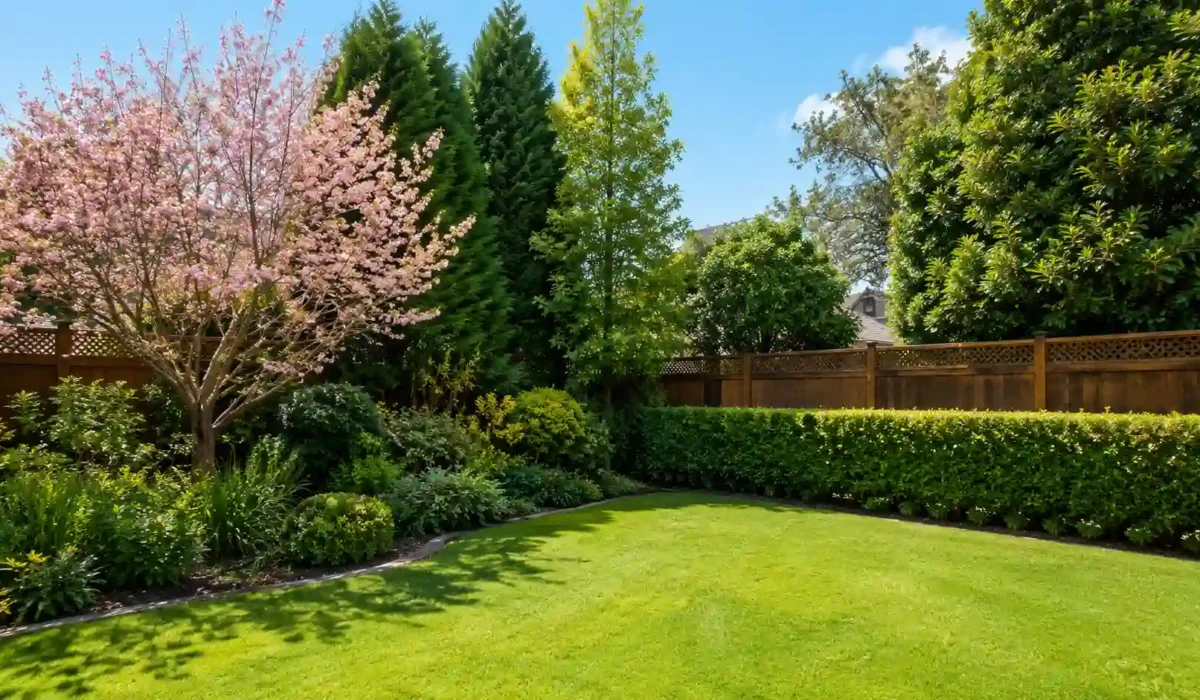
The best trees and shrubs for Australian gardens combine fast, reliable growth with manageable root systems and a mature size suited to the available space. Species such as Photinia, Pittosporum, Tuckeroo, and dwarf Magnolia varieties are popular across Australian climates because they balance quick establishment with low long-term maintenance. Choosing the right tree or shrub depends on climate zone, soil type, available space, and the intended purpose — whether that’s shade, privacy, or ornamental appeal.
These fundamentals sit alongside the broader basics of watering, feeding, and seasonal upkeep covered in our plant care and growing guides, which are worth reviewing before selecting species for your specific garden.
Last Updated: August 2026
Quick Summary
- Fast-growing species like Photinia and Tuckeroo establish quickly but still need adequate root and canopy space.
- Evergreen options provide year-round privacy and structure, while deciduous and flowering trees add seasonal interest.
- Root system behaviour varies significantly between species — some are safe close to homes, others are not.
- Small and dwarf varieties suit courtyards and compact gardens without sacrificing visual impact.
- Matching a tree or shrub to its purpose (screening, shade, ornamental, driveway) prevents costly replanting down the track.
How to Choose the Right Trees and Shrubs for an Australian Garden
Choosing the right tree or shrub starts with matching the plant’s natural growth habits to your garden’s conditions and your long-term goals. Getting this decision right early avoids expensive removals and root damage later.
Climate and Growing Zone Considerations
Australia’s climate zones range from tropical and subtropical in the north to temperate and arid conditions further south, and this has a major bearing on which trees and shrubs will thrive. A species that grows vigorously in Queensland’s humidity may struggle in Melbourne’s cooler, drier winters, so it’s worth checking a plant’s frost tolerance and preferred rainfall pattern before planting. In our experience growing a wide range of species across different Australian regions, matching climate first prevents most long-term establishment problems.
Soil Type and Drainage
Soil drainage has a direct impact on root health, particularly for species prone to root rot in heavy clay. Sandy loams generally suit fast-draining natives, while richer, well-drained soils support ornamental flowering trees. A simple test — digging a hole and checking how quickly water drains — reveals whether soil amendment is needed before planting.
Available Space: Height, Width and Root Spread
Every tree or shrub needs to be assessed against its mature size, not its size at purchase. This includes canopy width, height, and root spread, all of which affect how close a plant can safely sit to fences, paving, and building foundations.
Purpose: Shade, Privacy, Colour, or Structure
Defining the primary purpose — shade, screening, seasonal colour, or structural form — narrows the shortlist considerably and prevents mismatched choices, such as planting a slow-growing ornamental where fast privacy screening is actually needed.
Getting Started with Australian Native Plants
For gardeners new to native gardening, success comes down to matching the plant to your soil, sun and region rather than assuming “native” automatically means “easy care.” Our Australian Native Plants: A Complete Beginner’s Guide walks through the 10 most beginner-friendly native species, how to avoid overwatering and phosphorus-toxicity mistakes, and the best planting windows across Australian climates.
Why This Matters Before Choosing Trees and Shrubs
Many of the trees and shrubs covered in this guide are Australian natives, so the same foundational principles apply: check sun exposure, understand your local soil type, and avoid high-phosphorus fertilisers on sensitive Proteaceae species such as grevillea and banksia. Getting these basics right first makes every other planting decision in this guide easier to apply.
Best Fast-Growing Trees for Australian Gardens
Fast-growing trees are ideal for gardeners wanting quicker results, whether for shade, screening, or general landscaping impact within a few growing seasons.
What Makes a Tree “Fast-Growing”?
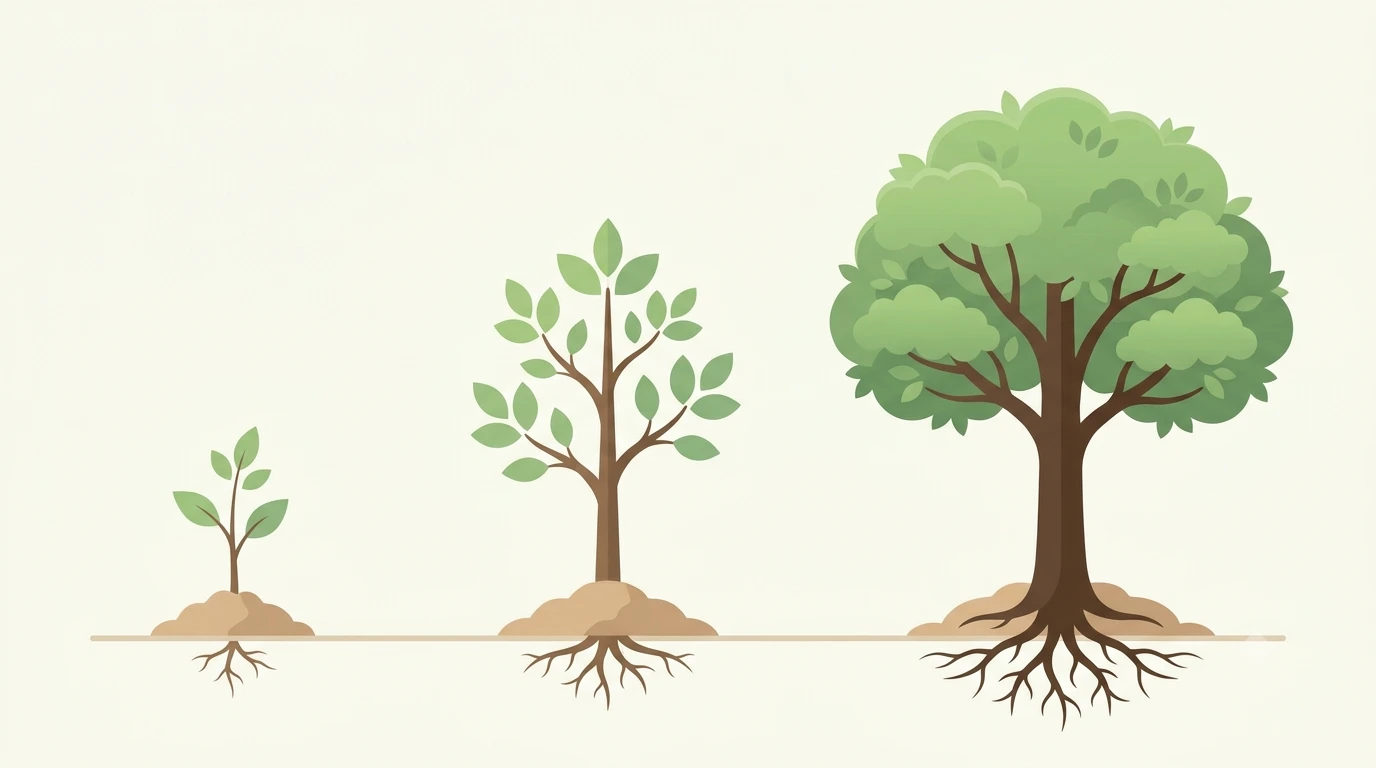
A tree is generally considered fast-growing in Australian conditions if it adds 60cm or more in height per year under suitable soil, light, and watering conditions. Growth rate is influenced by species genetics, but also strongly by soil quality, consistent watering during establishment, and local climate.
Top Fast-Growing Options
| Species | Typical Growth Rate | Mature Height | Best Use |
| Tuckeroo | Moderate–fast | 8–15m | Shade, street planting |
| Photinia Fraseri Robusta | Fast | 3–5m | Hedging, screening |
| Pittosporum Silver Sheen | Moderate–fast | 4–8m | Screening, ornamental foliage |
| Ficus Hillii ‘Flash’ | Fast | 8–15m | Hedging, large-scale screening |
For a full breakdown of species suited to rapid growth across different Australian climates, our fast growing evergreen trees Australia guide covers additional options in more depth, including drought-tolerant varieties.
Best Evergreen Screening Trees and Shrubs
Evergreen species are the backbone of most Australian privacy plantings, since they retain foliage year-round rather than leaving gaps in cooler months.
Why Evergreens Work Best for Privacy
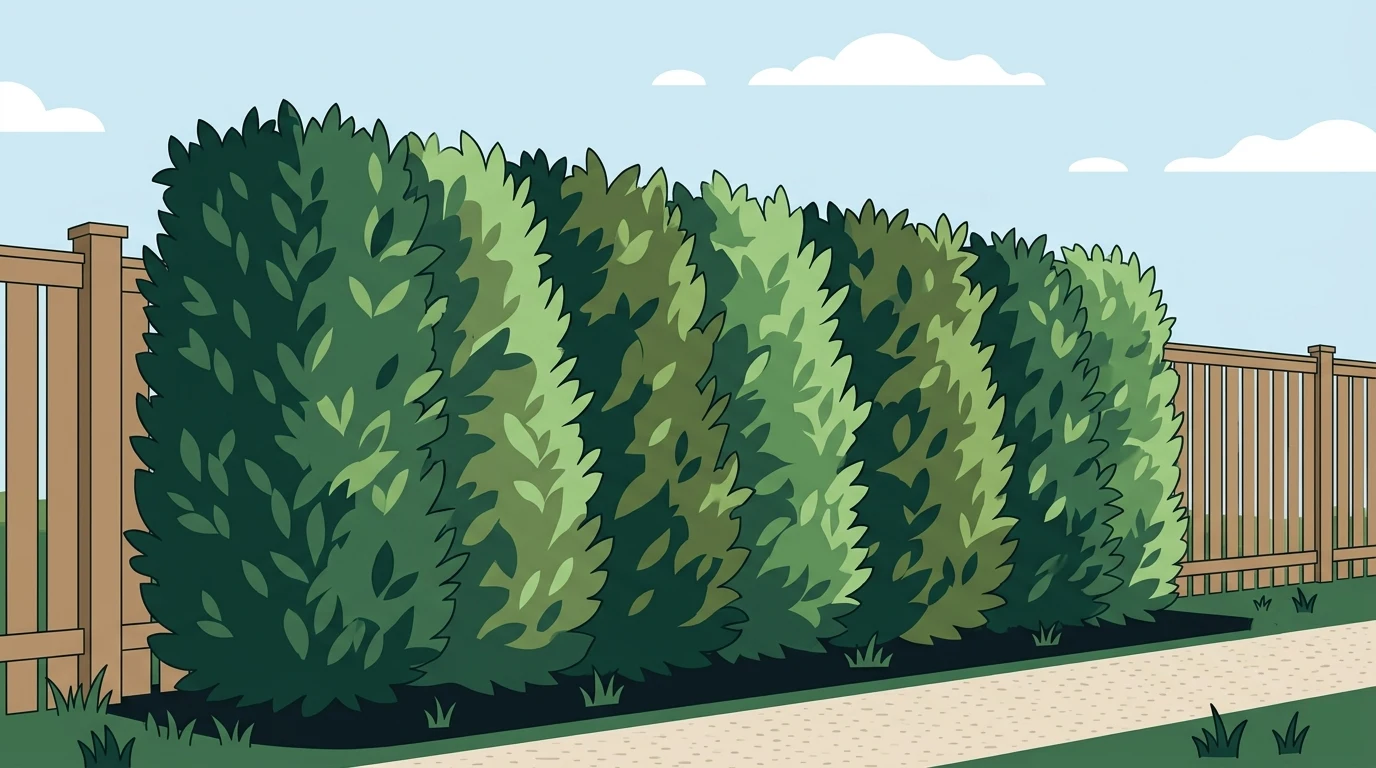
Unlike deciduous trees, evergreens maintain full foliage density through winter, which matters most for boundary screening and year-round privacy. Elemo Baker recommends prioritising evergreen species for any screening project where privacy is needed in every season, not just summer.
Recommended Screening Species
Three of the most reliable evergreen screening options for Australian gardens are Pittosporum, Photinia, and Ficus Hillii. Our Pittosporum Silver Sheen growth rate guide covers expected growth speed and hedging timelines in detail, while the Photinia Fraseri Robusta care and hedge guide outlines pruning and density tips for a tight, formal hedge. For larger-scale screening, the Ficus Hillii ‘Flash’ guide explains its use as a fast, dense hedging option for bigger boundaries.
Gardeners specifically focused on fence-line screening and low-maintenance boundary plantings may prefer to start with our dedicated low-maintenance plants for fence line guide, which compares hedges, screening trees, and climbing plants side by side for that exact use case.
Best Trees and Shrubs for Small Gardens
Compact and courtyard gardens still have plenty of options among dwarf and slow-growing cultivars bred specifically for smaller spaces.
Compact and Dwarf Varieties
Dwarf cultivars are bred to retain the ornamental appeal of their full-sized counterparts while staying within a manageable footprint. The dwarf Forest Pansy tree guide details a compact option prized for its heart-shaped burgundy foliage, while the dwarf cherry blossom tree guide covers a popular flowering option suited to courtyards and smaller garden beds.
Container and Courtyard Suitability
For containers and tight courtyards, root containment and eventual mature size both matter more than growth speed. Slower-growing dwarf varieties with non-invasive root systems are generally the safer long-term choice for paved or built-up areas.
Ground Covers for Australian Gardens
Ground covers fill the gap between trees, shrubs and lawn, and a well-chosen native option can suppress weeds while adding seasonal flower colour. Our Hibbertia scandens Ground Cover guide explains how this vigorous native scrambler — also called snake vine or Golden Guinea Vine — spreads 2–3m wide, tolerates sandy and coastal soils, and produces bright yellow flowers from spring through autumn. It’s a strong option for embankments, slopes and erosion control, though it needs occasional boundary pruning to keep it in check.
Best Flowering Ornamental Trees for Australian Gardens
Flowering ornamental trees add seasonal colour and visual interest, and several popular Australian varieties are well suited to both feature planting and hedging.
Magnolia Varieties Compared
Magnolia is one of the most popular ornamental genera in Australian gardens, but cultivars vary significantly in size and growth speed. Our Magnolia Teddy Bear vs Little Gem comparison breaks down the differences between two of the most commonly confused cultivars, while the fast growing Magnolia Australia guide highlights which varieties establish fastest.
Other Popular Flowering Trees
Beyond Magnolia, Lemon Myrtle is valued for its fragrant foliage and manageable size, covered in our Lemon Myrtle height and width guide. Flowering Ash is another popular ornamental choice, though it can present specific regional issues detailed in our Flowering Ash tree problems Australia guide.
Cool-Climate Deciduous Colour: Autumn Blaze Maple
For temperate and cool-climate gardens — think Victoria, Tasmania, the ACT and the NSW Tablelands — the Autumn Blaze Maple Australia guide covers Acer × freemanii ‘Jeffersred’, a fast-growing hybrid maple reaching 13–20m with vivid orange-red autumn foliage. It needs a genuine winter chill to colour well and performs poorly in humid subtropical and tropical zones, so it’s best reserved for southern Australian gardens with a distinct cool season.
More Native and Flowering Trees for Australian Gardens
Beyond Magnolia, Lemon Myrtle and Flowering Ash, Australian gardens have room for a wider range of native and subtropical flowering trees, from fiery reds to soft pinks.
Red and Orange Flowering Natives
The Queensland Firewheel Tree (Stenocarpus sinuatus) is a native rainforest species prized for its spectacular wheel-shaped red flower clusters and non-invasive root system, reaching 8–15m in typical garden conditions. For a larger tropical feature tree with a similarly dramatic flower display, the Poinciana Tree Australia guide covers Delonix regia, a fast-growing, frost-tender flame tree suited to Brisbane and other frost-free subtropical gardens.
Pink-Flowering Trees and Shrubs
The Blueberry Ash Brisbane guide explains Elaeocarpus reticulatus, a compact native evergreen valued for its fringed pink flowers, blue-purple berries and non-invasive roots — a reliable choice for smaller Brisbane gardens. Gardeners wanting a larger seasonal pink display can explore the Pink Dwarf Flowering Gum guide, which covers grafted Corymbia ficifolia cultivars such as ‘Summer Beauty’ and ‘Mini Red’ bred specifically for smaller suburban blocks. For a broader overview of species and identification tips, our Tree With Pink Flowers Australia guide compares native and exotic pink-flowering options across Australian climates.
Purple-Flowering and Architectural Native Plants
Colour and form don’t have to come from trees alone — purple-flowering natives and architectural feature plants can add just as much impact to an Australian garden.
Purple-Flowering Natives
Our Australian Native Purple Flowers guide covers genuine native species such as Hardenbergia violacea, Alyogyne huegelii and Melaleuca cultivars, and clears up the common misconception that jacaranda — Australia’s best-known purple bloomer — is actually a South American introduction rather than a native.
Architectural Feature Plants: Gymea Lily
For a striking architectural statement, the Doryanthes Excelsa Size guide explains the gymea lily, a slow-growing native perennial that develops a 2–4m clumping rosette and can send up a flower spike reaching 2–4m (occasionally to 6m) tall, topped with a dramatic red flower head.
Understanding Root Systems: Which Trees Are Safe to Plant Near Homes
Root behaviour is one of the most overlooked factors when choosing a tree, yet it has the biggest bearing on long-term safety around structures, pipes, and paving.
Shallow-Rooted vs Deep-Rooted Species
Shallow, spreading root systems are more likely to cause paving lift and competition with nearby garden beds, while deep taproot systems generally pose a lower risk to surface structures but may extend further underground than expected. Shallow, spreading root systems are more likely to cause paving lift and competition with nearby garden beds, while deep taproot systems generally pose a lower risk to surface structures but may extend further underground than expected.
Trees With Higher Root Risk
Some widely planted Australian species have vigorous, wide-spreading root systems that require greater planting distances from structures. Our gum tree root system guide explains safe planting distances for these iconic natives, and the Poinciana tree root system guide covers similar considerations for this popular flowering shade tree.
Trees With Lower Root Risk
Other species are considered safer near buildings and paving due to more contained root behaviour. The Crepe Myrtle root depth guide confirms this is generally a lower-risk option for gardens with limited space, and the Teddy Bear Magnolia root system guide outlines similarly manageable root behaviour for that cultivar.
Recommended Planting Distances
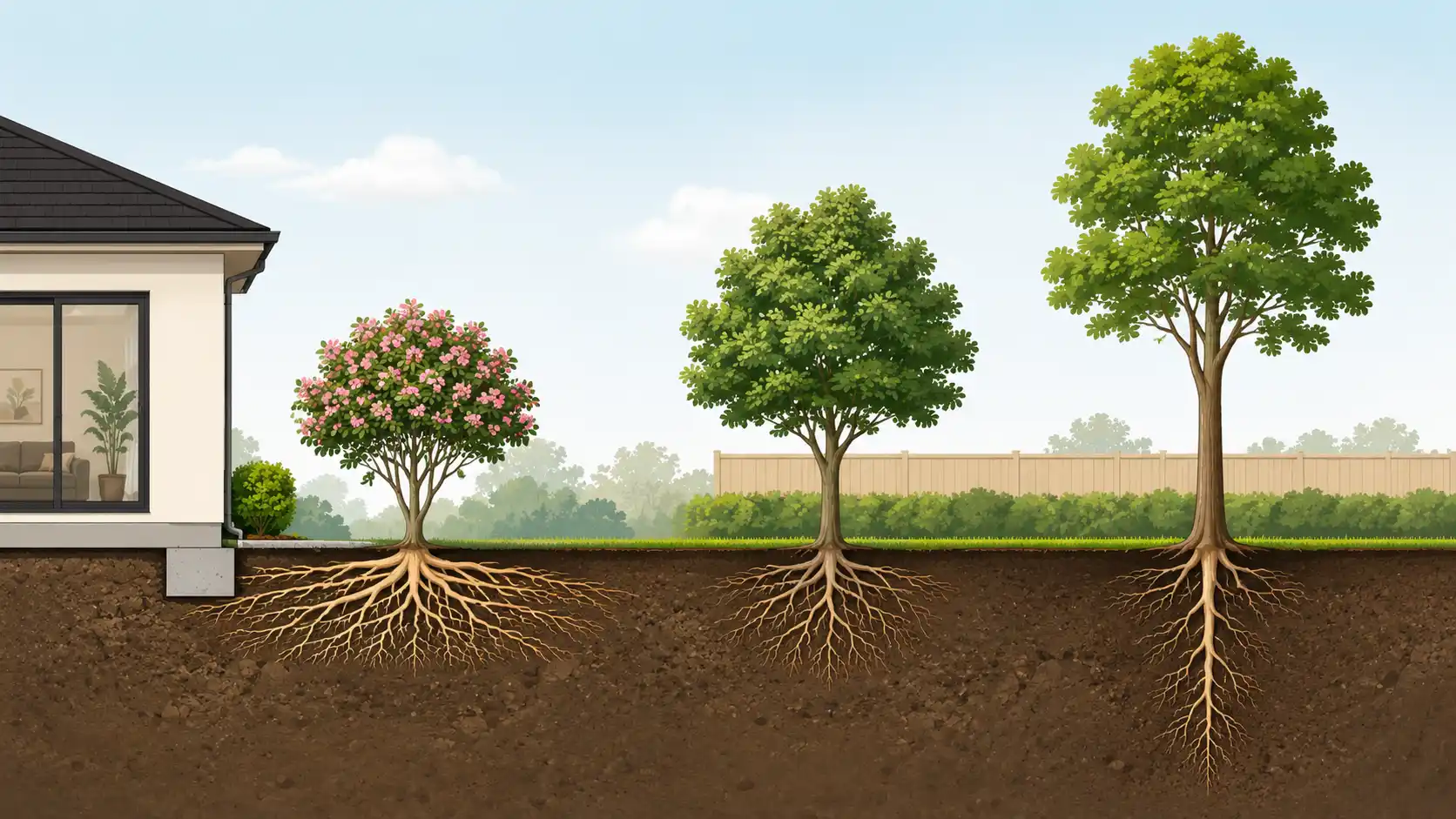
| Root Risk | Recommended Distance from Structures |
| High (e.g. large Eucalyptus, Poinciana) | 10–15m+ |
| Moderate (e.g. Tuckeroo, established hedging trees) | 5–8m |
| Low (e.g. Crepe Myrtle, dwarf Magnolia) | 2–4m |
Growth Rate Comparison: Trees and Shrubs at a Glance
| Species | Growth Rate | Mature Height | Root Risk | Best Use |
| Tuckeroo | Moderate–fast | 8–15m | Moderate | Shade, screening |
| Photinia Fraseri Robusta | Fast | 3–5m | Low–moderate | Hedging |
| Pittosporum Silver Sheen | Moderate–fast | 4–8m | Low–moderate | Screening |
| Crepe Myrtle | Moderate | 3–8m | Low | Ornamental, small gardens |
| Dwarf Magnolia varieties | Slow–moderate | 2–4m | Low | Courtyard, feature planting |
As of 2026, growers increasingly favour species with documented root behaviour and predictable mature size, reflecting a broader shift toward planting for long-term structural safety rather than short-term visual impact alone. For species-specific growth timelines, our Tuckeroo tree growth rate guide provides a detailed year-by-year outline.
Best Trees and Shrubs by Landscaping Purpose
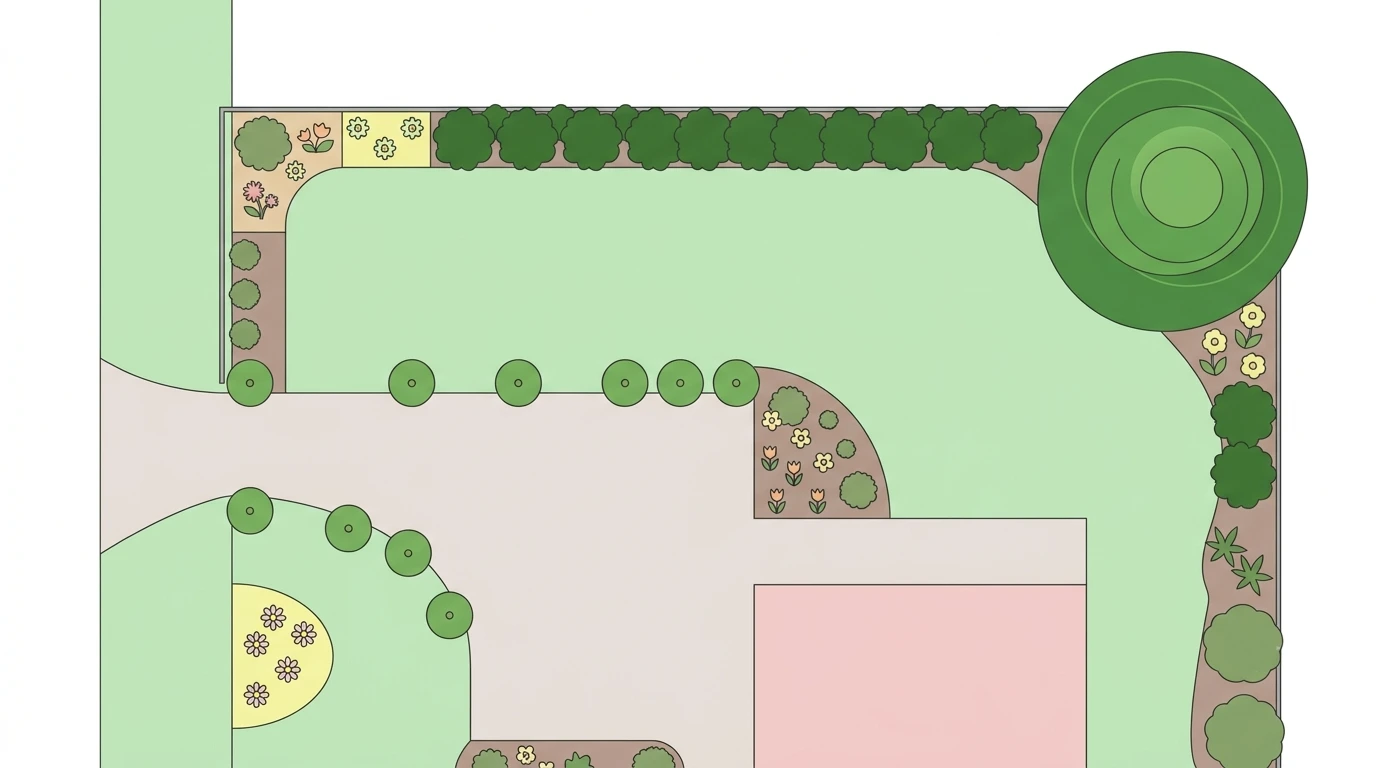
Different areas of the garden call for different growth habits, and matching the right species to its intended role improves both function and long-term appearance.
Driveway and Entrance Planting
Driveways benefit from species with predictable growth habits and root systems that won’t lift paving over time. Our driveway plants ideas guide covers suitable options for Australian entrances and driveway borders.
Tall Feature and Structural Planting
Taller trees and shrubs can be used to add vertical structure and define garden zones. The tall landscaping plants Australia guide outlines species suited to this purpose, from feature trees to backdrop planting.
Troubleshooting Common Growth Issues
Even well-chosen species can run into growth problems from poor soil, pests, or unsuitable conditions. Our Woolly Bush problems guide addresses common causes and practical fixes for one frequently affected ornamental shrub.
Common Mistakes When Choosing Garden Trees and Shrubs
Ignoring Mature Size
One of the most common beginner mistakes is planting based on a tree’s size in the nursery pot rather than its eventual mature height and canopy spread, which often leads to overcrowding or costly removal within a few years.
Even well-chosen species can run into avoidable problems from a few recurring beginner errors. If you’re just starting out, our Beginner Gardening Guide Australia covers the foundational mistakes — soil prep, overwatering, wrong-season planting — that often show up again here at the tree-and-shrub stage.
Planting Too Close to Structures
Underestimating root spread is a frequent cause of foundation, pipe, and paving damage. Checking a species’ root behaviour before planting — not after issues appear — is the more reliable approach.
Overlooking Climate Suitability
Selecting a tree based on appearance alone, without checking frost tolerance or rainfall requirements for the local region, is a common reason for poor establishment or dieback in the first few seasons.
Conclusion
Choosing the best trees and shrubs for an Australian garden comes down to matching growth rate, root behaviour, and mature size to the specific conditions and purpose of the planting site. Fast-growing evergreens suit privacy and screening needs, dwarf cultivars work well in smaller courtyards, and understanding root risk in advance protects structures and paving for years to come. With the right species selection and early planning, Australian gardeners can achieve strong, low-maintenance results whether the goal is shade, seasonal colour, or year-round screening.
FAQs
What is the best fast-growing tree for an Australian garden?
Photinia Fraseri Robusta and Tuckeroo are among the most reliable fast-growing options, offering strong annual growth alongside manageable maintenance requirements across most Australian climates.
Which trees have the safest root systems to plant near a house?
Crepe Myrtle and dwarf Magnolia cultivars are generally considered lower-risk options near structures, due to more contained root spread compared with larger native species.
How do I choose between an evergreen and a deciduous tree?
Evergreen species suit year-round privacy and screening needs, while deciduous trees are better suited to seasonal shade, allowing more winter sunlight once leaves drop.
What is the best tree for a small Australian garden?
Dwarf cultivars such as the dwarf Forest Pansy or dwarf cherry blossom are well suited to small gardens, offering ornamental appeal without requiring significant space.
How far should trees be planted from a house foundation?
Recommended distance depends on root risk: high-risk species generally need 10–15 metres or more, moderate-risk species around 5–8 metres, and low-risk species can often be planted 2–4 metres from structures, though local advice should confirm this for specific species and soil types.
How quickly do screening trees provide full privacy?
Most fast-growing screening species take between two and three years to establish a dense, functional privacy screen under good growing conditions, though this varies by species and site conditions.
19 Comments