

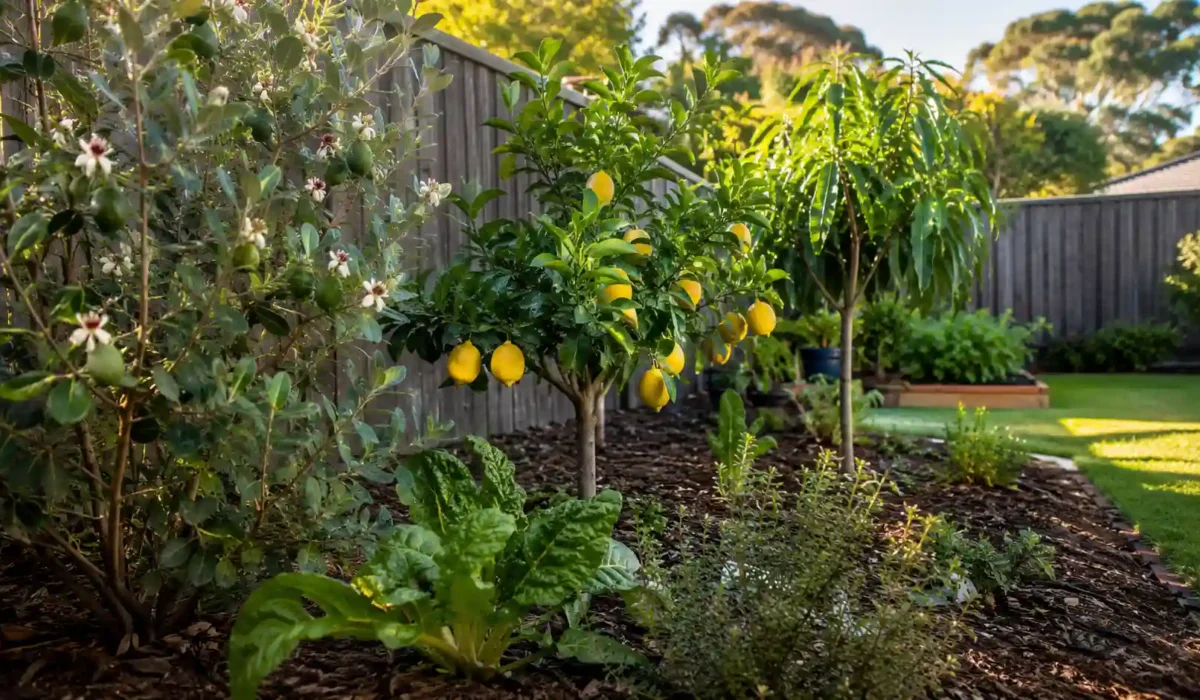
Fruit Trees for Australian Gardens: Complete 2026 Guide
Introduction
Choosing the right fruit tree for an Australian garden comes down to three things: your climate zone, how much space you have, and how much patience you’re willing to bring to the first few seasons. This guide brings together the best evergreen, fast-growing, dwarf, and native fruit trees for Australian conditions, organised by climate and garden size, so you can shortlist a tree that will actually thrive where you live rather than fighting your local weather for years.
By Elemo Baker | Plant Care & Gardening Expert
Last updated: July 2026
Key Takeaways
- Climate zone — not personal preference — is the single biggest factor in whether a fruit tree thrives in an Australian garden; matching tree to zone prevents most common failures.
- Evergreen fruit trees such as feijoa, avocado, and citrus double as year-round screening or specimen plants, while deciduous trees like mulberry and stone fruit need winter chill to fruit well.
- “Fastest growing” and “easiest to grow” are not the same thing — mulberries and passion fruit vines grow fastest, but citrus and feijoa are more forgiving for total beginners.
- Australian native fruit trees such as finger lime, lilly pilly, and Davidson’s plum are a genuine content and planting gap in most home gardens, offering low water needs and strong local wildlife value.
- Dwarf and grafted forms of exotic trees (dwarf mango, dwarf mulberry, dwarf citrus) and naturally compact native species are two different routes to a small-space edible garden — they aren’t interchangeable, and the right choice depends on whether you want familiar supermarket fruit or something distinctly Australian.
What Makes a Fruit Tree Suited to Australian Gardens
Australia spans tropical, subtropical, temperate, Mediterranean, and cool mountain climates, often within a single state. A tree that fruits reliably in Cairns will sulk or die in Hobart, and vice versa. Before choosing from any “best fruit trees” list, four factors decide success:
- Climate zone and frost risk — whether your winters are frost-free, lightly frosted, or regularly below 0°C.
- Chill hours — the number of hours below roughly 7°C that deciduous fruit trees need over winter to flower and fruit properly the following spring.
- Available space — full-sized trees can reach 6–15 metres, while dwarf and grafted forms typically stay under 3 metres.
- Sun exposure — nearly all productive fruit trees need at least six hours of direct sun daily; deep shade will reduce flowering and fruit set regardless of species.
Before choosing from any “best fruit trees” list, four factors decide success. For the fundamentals that apply across every plant in your garden — not just fruit trees — our complete guide to plant care and growing is a useful starting point.
Understanding these constraints upfront means less time troubleshooting a struggling tree later, and more time choosing between varieties that were always going to work in your garden.
Matching Fruit Trees to Your Climate Zone
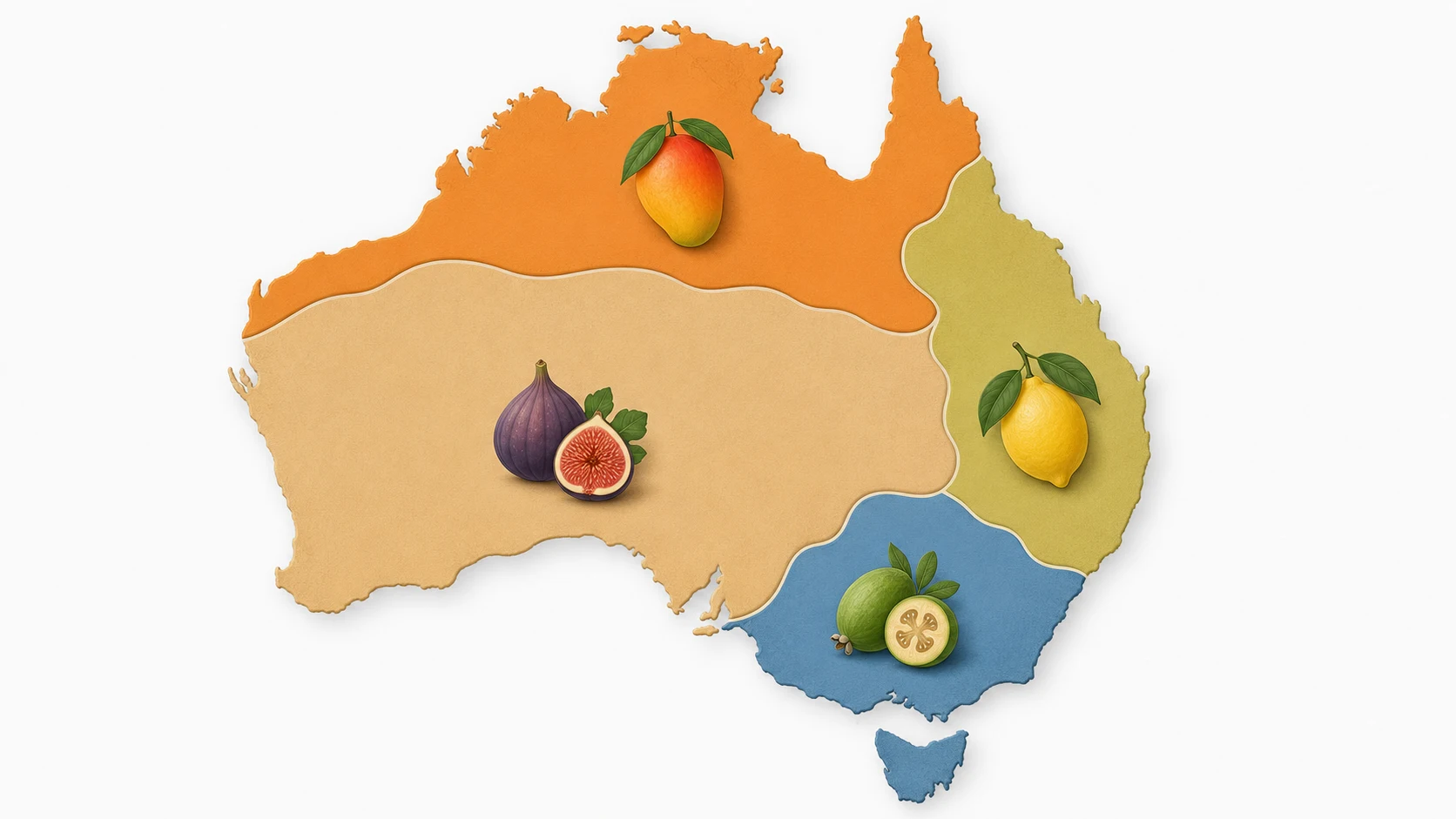
Australian growing conditions fall broadly into four zones, and the trees that thrive in one zone often struggle in another.
| Climate Zone | Representative Regions | Best-Suited Fruit Trees |
| Tropical / Subtropical | Far North QLD, Darwin, Cairns, Brisbane | Mango, lychee, soursop, banana, passion fruit (yellow), avocado |
| Warm Temperate | Sydney, coastal NSW, Perth | Citrus, feijoa, mulberry, passion fruit (purple), avocado |
| Cool Temperate | Melbourne, Adelaide, Hobart, Canberra | Meyer lemon, feijoa, black mulberry, apple, pear, cherry |
| Mediterranean / Dry Inland | Adelaide Hills, inland NSW/VIC | Citrus, olive, fig, pomegranate, grape |
Best fruit trees to grow in Victoria and Melbourne
Melbourne’s cool temperate climate, moderate winter chill, and occasional frost make it best suited to Meyer lemon over Eureka lemon, black mulberry over shahtoot, and feijoa, which tolerates light frost far better than many subtropical fruit trees. Passion fruit and mango are generally unsuitable outdoors without a warm, sheltered microclimate.
Best fruit trees for Adelaide and South Australia
Adelaide’s Mediterranean climate — dry summers, mild wet winters — suits citrus, olives, figs, and grapes particularly well, alongside feijoa and mulberry. When to plant fruit trees in South Australia generally follows the same bare-root winter planting window used across southern Australia, giving roots time to establish before summer heat arrives.
Best fruit trees for Queensland and Brisbane
Warmer, more humid conditions across Queensland — particularly North Queensland — favour mango, lychee, soursop, banana, and shahtoot mulberry. Fast growing fruit trees for Queensland gardens include banana and passion fruit, both of which can fruit within one to two years given consistent warmth.
Cold climate and frost-tolerant fruit trees
For inland or elevated gardens with regular frost, feijoa, black mulberry, and deciduous fruit trees such as apple, pear, and plum are the most reliable choices, since deciduous species are dormant during the coldest months and better tolerate frost than evergreen subtropical trees.
Best Fruit Trees for Australian Gardens by Category
Rather than a single “best” fruit tree, most Australian gardens benefit from a mix: an evergreen tree for year-round structure, a fast grower for an early harvest, and — increasingly — at least one native species for low water use and habitat value. The sections below break down each category in detail.
Evergreen Fruit Trees for Australian Gardens
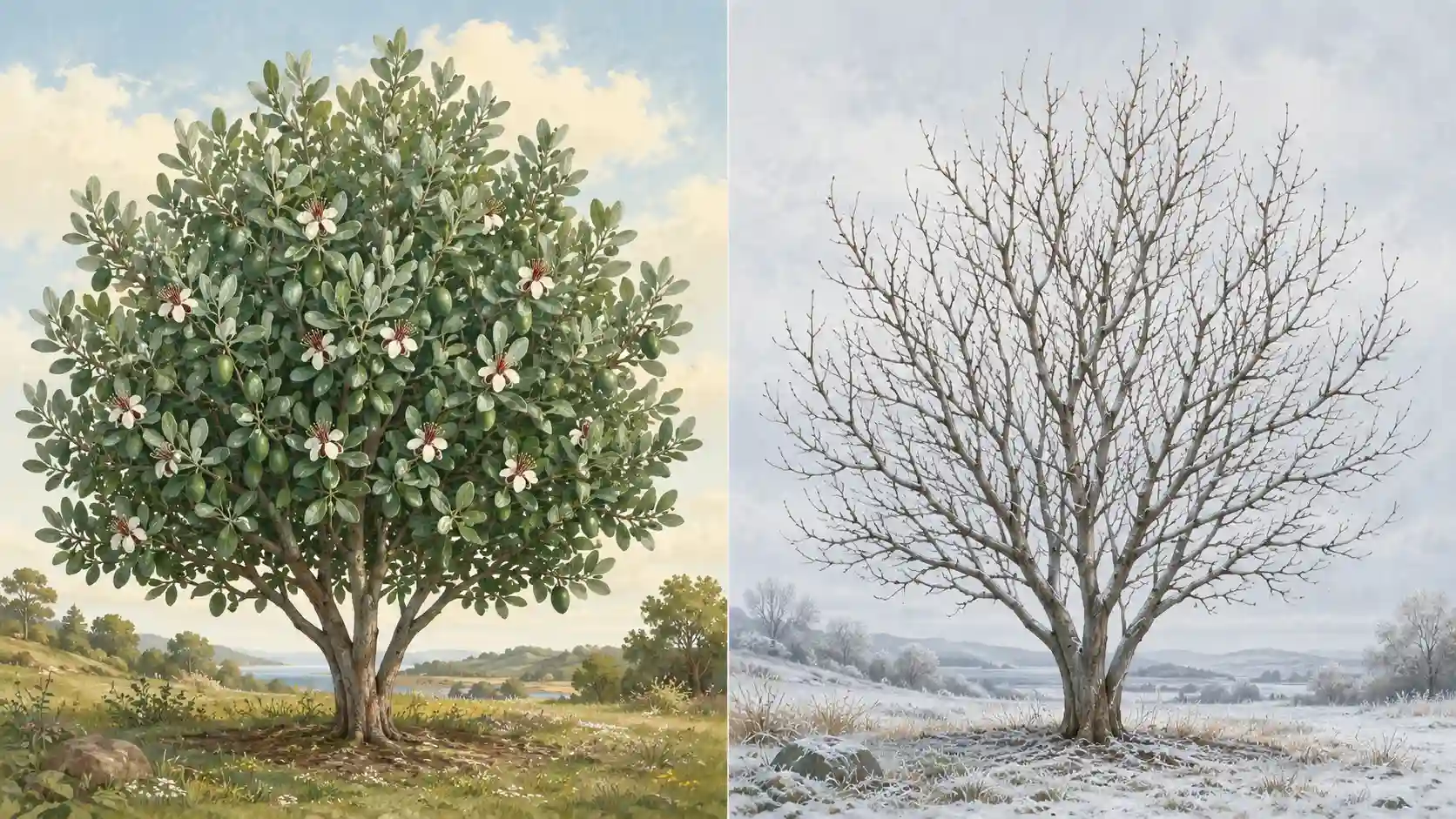
Evergreen fruit trees hold their foliage year-round, making them useful for screening and structure as well as fruit. This distinguishes them from deciduous fruit trees, which drop leaves in winter and rely on that dormancy period to set flower buds.
| Tree | Mature Height | Best Climate | Fruiting Season |
| Feijoa | 2–5 m | Cool–warm temperate | March–June |
| Avocado | 6–10 m (dwarf: 2–4 m) | Warm temperate–subtropical | Varies by variety |
| Citrus (Meyer lemon) | 1.5–4 m | Most zones, best in cooler climates | Nearly year-round |
| Lychee | 8–15 m | Subtropical–tropical | October–March |
Feijoa stands out among evergreen options because it functions equally well as a productive hedge or a standalone specimen tree, tolerating light frost and moderate drought once established. Avocado, best known as a fruit rather than a tree shape, is genuinely one of the easiest edible plants to grow from seed and produces fruit on its own without needing a second tree for pollination, though grafted trees fruit far sooner and more reliably than seed-grown ones.
Lemon Trees in Australian Gardens: Size and Seedless Varieties
Citrus is already one of the easiest evergreen options for an Australian garden, and lemons deserve a closer look of their own. Two questions come up constantly: how big will this tree actually get in my backyard, and can I plant one that won’t leave pips in every glass of juice? Both answers come down to variety and rootstock rather than luck.
How Large Do Lemon Trees Get?
Standard lemon trees typically reach 3–6 metres, with canopy width running roughly 60–75% of height. Dwarf and Meyer types stay much smaller.
Eureka: 4 m
Common in Australian gardens, near-thornless
Lisbon: 3–4 m
Dense, thorny, more cold-tolerant
Meyer: 2–4 m (dwarf ~2 m)
Compact, excellent for pots
Dwarf/potted lemon: 1.5–2.5 m
Best for courtyards and balconies
A healthy lemon tree can remain productive for 40–50 years, so it’s worth planning for mature size rather than nursery-pot size when choosing a planting spot. Our full guide, How Large Do Lemon Trees Get? Height & Size Guide, breaks down growth rate by year, indoor sizing, and spacing from fences and buildings.
Seedless Lemon Varieties
“Seedless” lemons are almost always low-seed rather than completely seed-free. Lisbon and Eureka Seedless are the two most reliable low-seed options for Australian gardens, both self-fertile and requiring no second tree for pollination. Meyer lemon, despite its popularity, is not a seedless variety — it’s a lemon-mandarin hybrid that can carry several seeds per fruit. For a full breakdown of how seedlessness develops and which cultivar suits your garden, see Seedless Lemon Tree: Varieties, Size, Care & Growing Guide.
Fastest-Growing Fruit Trees for Australian Gardens
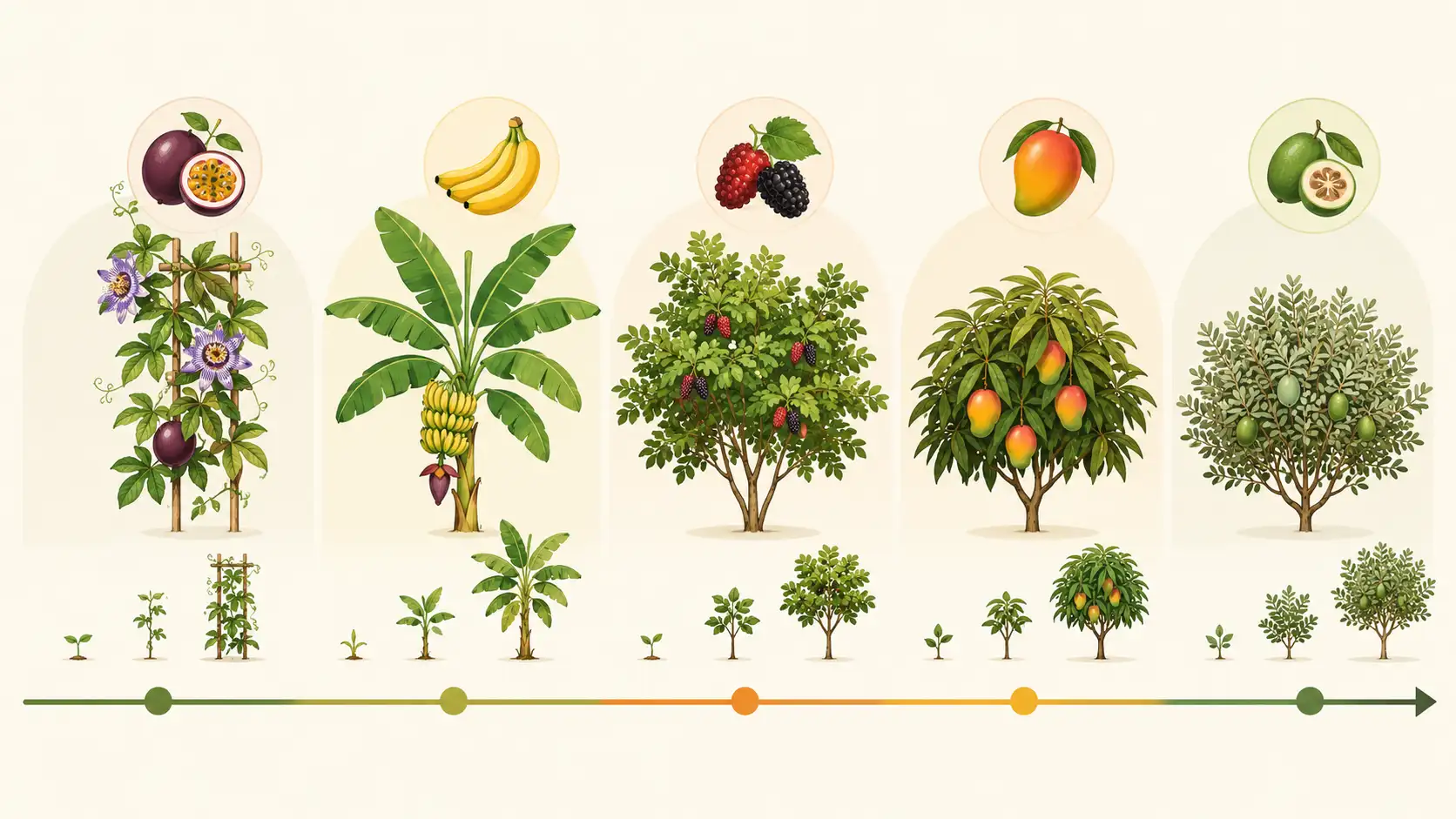
“Fast growing” and “fruits quickly” aren’t always the same tree. Some species put on rapid vegetative growth but take years to flower; others fruit within the first year but grow slowly afterward.
| Tree | Typical Time to First Fruit | Growth Habit |
| Passion fruit (yellow or purple) | 1–3 years | Vigorous climbing vine |
| Banana (dwarf Cavendish) | 9–18 months to flower | Fast, tropical/subtropical |
| Mulberry (grafted/cutting-grown) | 2–3 years | Fast once established |
| Dwarf mango (grafted) | 2–4 years | Moderate, compact |
| Feijoa (grafted) | 2–3 years | Moderate |
Passion fruit vines are usually the fastest route to homegrown fruit in a warm, sunny Australian garden, often producing a first crop within one to three years of planting, though yellow passion fruit generally requires a second, genetically different vine or hand pollination to set fruit reliably, while purple passion fruit is often self-pollinating. Mulberry trees grown from cuttings or grafts typically outpace seed-grown trees by several years, which is why cutting-grown or grafted stock is worth the extra cost for anyone wanting an earlier harvest.
Tropical and Novelty Fruit Varieties for Australian Gardens
Beyond the natives and evergreen staples already covered, a handful of less common tropical and subtropical fruits are gaining ground in warmer Australian gardens. Here’s what to know before you plant.
Papaya Varieties for Australian Gardens
Papaya splits into two main commercial groups: small-fruited Hawaiian types (Solo, Strawberry/Sunrise), prized for their sweeter, more concentrated flavour, and large-fruited Mexican types (Maradol), which yield more fruit with a milder taste. Papaya plants can be male, female, or hermaphrodite — only female and hermaphrodite plants fruit, which is worth checking before assuming a non-fruiting plant is unhealthy. The plant needs frost-free warmth and full sun to thrive. Full variety breakdown, care, and problem-solving in Different Types of Papaya: Varieties & Uses Guide.
Guyana Cherry (Acerola)
Guyana cherry is a regional common name that usually refers to acerola (*Malpighia emarginata*), a compact evergreen shrub or small tree valued for exceptionally high vitamin C. It grows 2–6 metres tall, suits Queensland’s coast, northern NSW, and the NT, and is frost-sensitive but manageable further south in a large container with winter protection. It’s a different plant from Surinam cherry, despite the name overlap. Details on identification, care, and common growing problems in Guyana Cherry: Tree, Fruit, Care & Growing Guide.
Tropical Avocado vs Hass — Taste and Texture Differences
Avocado already earns a spot among the easiest evergreen fruit trees, but not all avocados taste alike. Tropical or Caribbean/Florida-type avocados are large, smooth green-skinned, and lower in fat than Hass, giving them a milder, lighter, slightly watery character rather than Hass’s rich, buttery creaminess — better suited to salads and smoothies than traditional guacamole. Full flavour and ripeness comparison in Do Tropical Avocados Taste the Same?
Australian Native Fruit Trees for Home Gardens
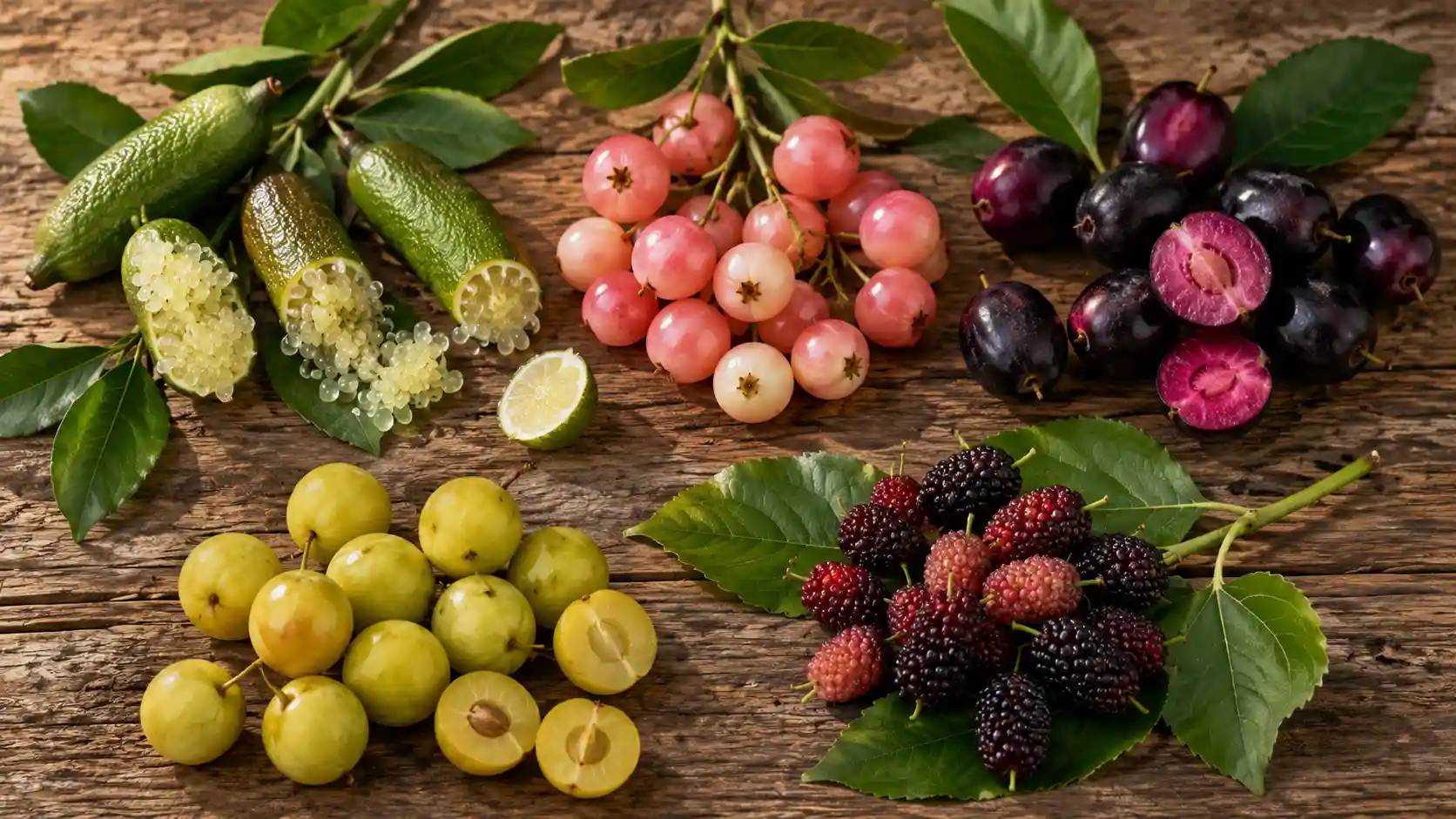
Australian native fruit trees remain one of the most overlooked categories for home gardeners, despite offering genuinely distinctive flavours, lower water requirements once established, and strong value for local pollinators and birds. Unlike introduced fruit trees bred primarily for fruit size and shelf life, most native species evolved for Australian soils and rainfall patterns, which generally makes them lower-maintenance once established.
| Native Fruit Tree | Botanical Name | Mature Height | Best Climate | Fruit Notes |
| Finger lime | Citrus australasica | 2–7 m (grows well in pots) | Warm temperate–subtropical, tolerates light frost if sheltered | Caviar-like citrus pulp; thorny |
| Lilly pilly | Syzygium spp. | Up to 12 m, but responds well to pruning | Subtropical–warm temperate | Tart, jam-quality berries; also used as a hedge |
| Davidson’s plum | Davidsonia spp. | 5–15 m | Subtropical, sheltered/part-shade | Tart plum-like fruit, best cooked into jam |
| Kakadu plum | Terminalia ferdinandiana | Varies, tree form | Tropical northern Australia | Exceptionally high in vitamin C |
| Native mulberry | Pipturus argenteus | Small tree/shrub | Subtropical–tropical, frost-sensitive | Sweet fruit, ripens May–July |
Finger lime and lilly pilly are the two most practical starting points for most home gardens: finger lime grows well in large pots and tolerates part shade better than most citrus, while lilly pilly is already widely planted as a hedge, meaning many Australian gardens already contain an unrecognised food source. Davidson’s plum needs more shelter and richer, moister soil than most native species, reflecting its rainforest origins, and its fruit is intensely tart — better suited to jam, sauce, or wine than fresh eating.
Native vs Exotic Fruit Trees — Which Should You Choose?
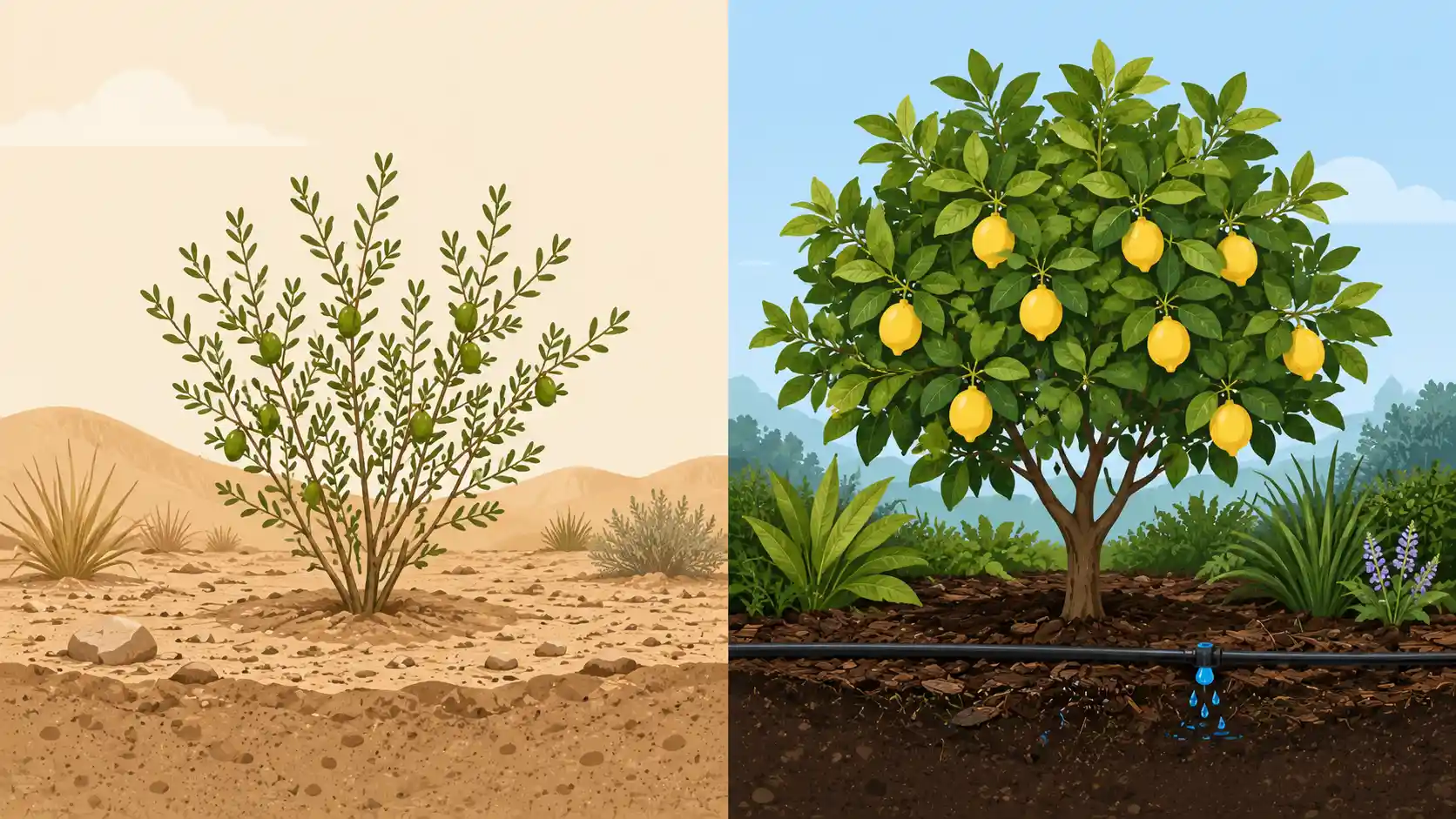
Many gardeners treat “native” and “dwarf” as interchangeable shortcuts to a small, low-maintenance garden, but they solve different problems. A dwarf or grafted exotic tree gives you familiar supermarket fruit — mangoes, mandarins, lemons — on a smaller frame. A native fruit tree gives you a plant already adapted to Australian rainfall and soil, generally at the cost of less familiar flavours and, in some cases, more preparation before the fruit is palatable.
Exotic fruit trees such as citrus, mango, and mulberry are more likely to need regular fertilising, consistent irrigation during establishment, and closer pest monitoring, particularly against fruit fly. Native species such as finger lime and lilly pilly generally tolerate poorer soils and drier conditions once established, and attract more local wildlife, but several — including Davidson’s plum — need more shelter and moisture than their drought-tolerant reputation as “natives” might suggest.
Verdict: choose exotic, grafted, or dwarf fruit trees if you want recognisable fruit and are prepared for a more conventional care routine; choose native fruit trees if lower long-term water use, habitat value, and a more distinctly Australian garden matter more than familiar flavour.
Small-Space and Dwarf Fruit Trees
Section focus: Covers dwarf and compact fruit tree options for small gardens, courtyards, and pots · Keywords/entities placed here: small fruit trees and edible plants for australian gardens, dwarf mango tree, best looking fruit trees
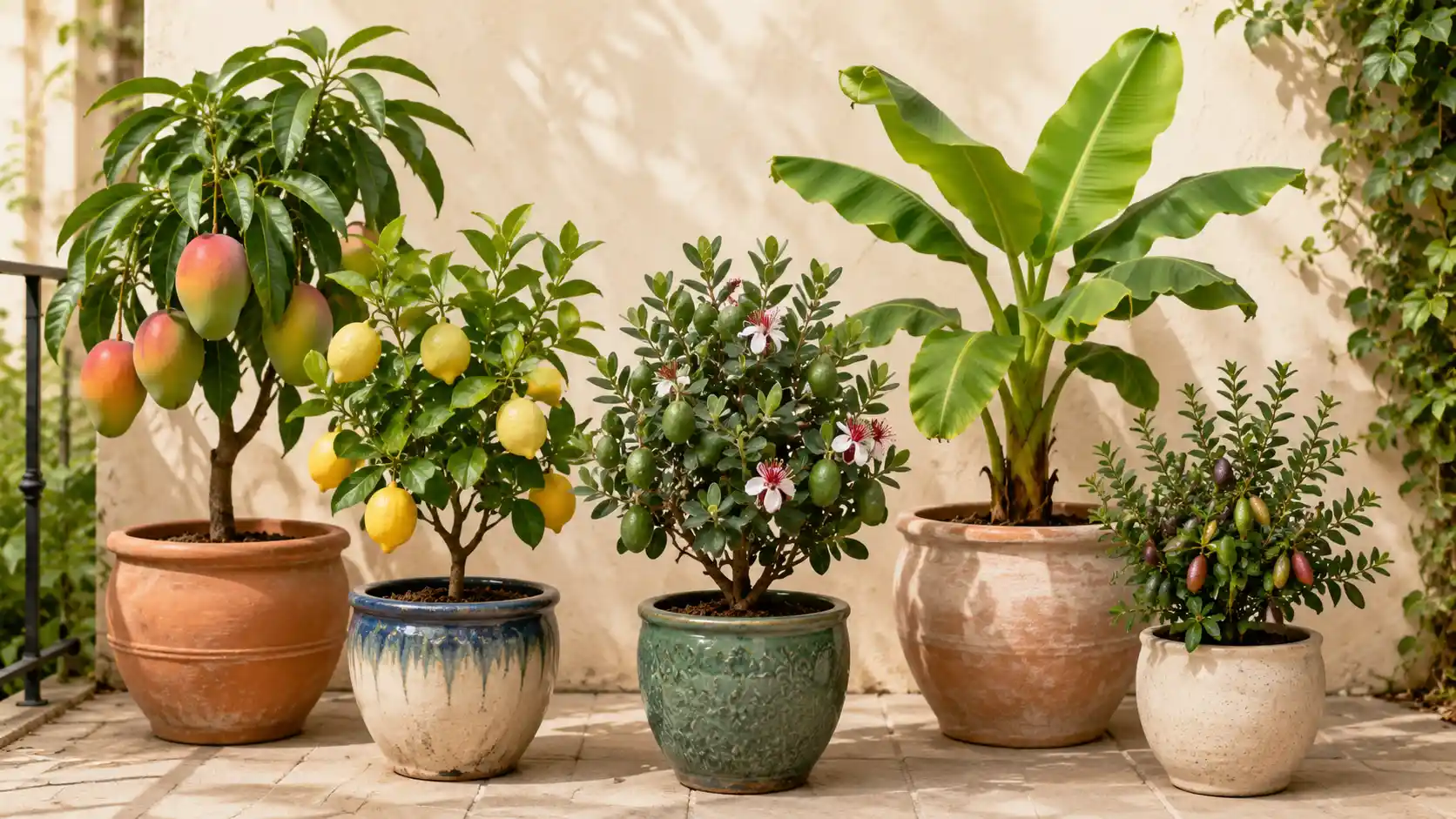
Small Australian gardens, courtyards, and balconies can still support a genuine harvest using dwarf or grafted varieties, several of which rival full-sized trees for fruit quality while staying under three metres.
| Tree | Mature Height | Container Suitable |
| Dwarf mango (e.g. Nam Doc Mai, Irwin) | 1.5–3 m | Yes, 50–100 L pot |
| Dwarf Meyer lemon | 1.5–2.5 m | Yes |
| Feijoa (pruned/hedge form) | 2–3 m | Yes, large container |
| Super dwarf Cavendish banana | 1–1.5 m | Yes, 50–70 L pot |
| Finger lime | 2–3 m (potted) | Yes |
Dwarf mango trees are genetically identical to standard varieties in fruit quality — the compact size comes from grafting onto dwarfing rootstock rather than any difference in the fruit itself, so a dwarf Kensington Pride or Irwin mango produces full-sized, full-flavoured fruit on a considerably smaller tree. For gardeners prioritising visual appeal alongside fruit, feijoa is frequently rated among the best-looking fruit trees for Australian gardens thanks to its silver-backed evergreen foliage and colourful edible flowers, which flower before most other backyard fruit trees have finished for the season.
Easiest Fruit Trees for Beginners
The easiest fruit trees to grow in Australia are generally self-fertile, tolerant of a range of soils, and resistant to the most common home garden pests. Citrus, feijoa, and mulberry are consistently the most forgiving choices for beginners: all three are self-fertile (needing no second tree for pollination in most varieties), tolerate moderate drought once established, and experience relatively few serious pest or disease problems compared with stone fruit or apples. Mango, by contrast, is genuinely easy to grow in warm climates but frost-sensitive, making it a poor beginner choice outside subtropical and tropical zones regardless of variety.
The easiest fruit trees to grow in Australia are generally self-fertile, tolerant of a range of soils, and resistant to the most common home garden pests. If you’re still working out the fundamentals — soil, watering, tool basics — our Beginner Gardening Guide Australia is a good place to start before choosing your first tree. Citrus, feijoa, and mulberry are consistently the most forgiving choices for beginners…
Choosing Pots and Rootstocks for Dwarf Fruit Trees
A dwarf fruit tree is a full-sized fruiting variety grafted onto a rootstock selected to limit vigour — Flying Dragon is the most common dwarfing rootstock for citrus, keeping mature trees to roughly 1.5–2.5 metres. Importantly, dwarf doesn’t mean miniature fruit: a dwarf lemon still produces full-sized lemons. As a starting point, use a pot at least 40–60 cm wide and deep, with full sun and a free-draining potting mix. Citrus, figs, and mulberries are the most forgiving container choices; apples, pears, and stone fruit need their winter chill-hour requirement matched to your climate before you commit to a variety. Full pot sizing, rootstock notes, and variety picks in Dwarf Fruit Trees for Pots Australia: Best Choices.
At-a-Glance: Fruit Trees by State and Region
| State/Region | Recommended Fruit Trees |
| Victoria / Melbourne | Meyer lemon, feijoa, black mulberry, apple, pear |
| South Australia / Adelaide | Citrus, fig, olive, grape, feijoa, mulberry |
| New South Wales / Sydney | Citrus, feijoa, mulberry, finger lime, passion fruit |
| Queensland / Brisbane, North QLD | Mango, lychee, soursop, banana, shahtoot mulberry |
Common Mistakes and How to Fix Them
- Choosing a tree for the wrong climate zone. This is the single most common cause of poor fruiting or tree death. A mango planted in Melbourne or a black mulberry planted for a Cairns garden will both struggle regardless of care quality. Fix: check chill-hour and frost tolerance requirements against your specific region before purchasing, not after.
- Underestimating mature size. Trees bought at nursery size rarely stay that size; a “small” mulberry can reach 8–15 metres unpruned. Fix: plan using mature height and canopy spread, and choose dwarf or grafted forms where space is limited.
- Planting seed-grown trees and expecting quick fruit. Seed-grown mango, mulberry, and feijoa can take five or more years longer to fruit than grafted or cutting-grown stock. Fix: buy grafted trees from a reputable nursery when an earlier harvest matters.
- Ignoring pollination requirements. Yellow passion fruit and several mandarin varieties need compatible pollen from a second plant or hand pollination to fruit reliably, while most citrus, mango, and self-fertile mulberry varieties do not. Fix: check each species’ pollination needs individually rather than assuming all fruit trees behave the same way.
Fruit Tree Care Calendar: Pollination, Pruning and Harvest Timing
Several of the mistakes above come back to timing — planting an incompatible pair, pruning at the wrong time of year, or picking before the fruit is ready. Three companion guides go deeper into each.
Pollination — Which Fruit Trees Need a Partner
Citrus, figs, and most peaches, nectarines, and apricots are self-fertile and will crop alone. Apples, pears, sweet cherries, and plums generally need a compatible cross-pollinator planted within around 10 metres, with bees carrying pollen between blooms. Avocados add a twist: their flowers are bisexual but open as female then male on a staggered schedule, so pairing a Type A variety (like Hass) with a Type B (like Shepard) improves fruit set, even though a single tree will still crop. Full compatibility charts for apples, plums, pears, and cherries in Fruit Tree Pollination Chart Australia: Best Pairs.
Fruit Tree Pruning Calendar
Pruning timing depends on fruit type, not a single calendar date. Apples and pears are pruned in winter (June–August) while dormant; stone fruit — peaches, plums, apricots, cherries — is pruned in summer after harvest, which reduces the risk of disease entering fresh wounds in cool, wet conditions. Citrus, being evergreen, only needs light trimming in late winter to early spring. Whatever the species, avoid removing more than 20–30% of the canopy in one season. Full month-by-month breakdown in Fruit Tree Pruning Calendar Australia.
When to Harvest Fruit Trees
Most Australian fruit trees are best picked by ripeness cues rather than a fixed date: stone fruit typically ripens November–February, citrus June–September, and apples and pears February–May. Look for full colour, slight give under gentle pressure, and fruit that separates easily from the branch. One key distinction: citrus and cherries won’t sweeten further once picked, so they need to reach full ripeness on the tree, while pears and persimmons are better picked slightly under-ripe and left to soften indoors. Full ripeness tests and regional timing in When to Harvest Fruit Trees Australia: Complete Guide.
Conclusion
The right fruit tree for an Australian garden is rarely the one with the prettiest photo — it’s the one matched to your specific climate zone, available space, and realistic care capacity. Evergreen options like feijoa and citrus suit gardeners wanting year-round structure alongside fruit; fast growers like passion fruit and mulberry reward patience with an earlier harvest; and native species like finger lime and lilly pilly offer a genuinely different, lower-water path into home fruit growing that most Australian gardens have yet to explore. Whichever category you start with, matching the tree to your local conditions before planting remains the single biggest factor in long-term success.
FAQs
- What are the best fruit trees for a small Australian garden?
Dwarf mango, dwarf Meyer lemon, feijoa (pruned), finger lime, and super dwarf Cavendish banana are among the best options, as all stay under three metres and perform well in large containers. - What is the fastest-growing fruit tree in Australia?
Passion fruit vines are generally the fastest to first harvest, often fruiting within one to three years, followed closely by grafted mulberry and dwarf banana varieties. - Are Australian native fruit trees easy to grow?
Many are, particularly finger lime and lilly pilly, which tolerate a range of soils and lower water once established. Others, such as Davidson’s plum, need more shelter and moisture, reflecting their rainforest origins. - What fruit trees grow best in Melbourne and Victoria?
Meyer lemon, feijoa, and black mulberry are the most reliable choices for Melbourne’s cool temperate climate, since they tolerate the region’s winter chill and occasional frost better than subtropical species like mango or soursop. - Do I need two fruit trees for pollination?
It depends on the species. Most citrus, mango, self-fertile mulberry varieties, and purple passion fruit are self-fertile and fruit alone, while yellow passion fruit and several mandarin varieties generally produce better with a compatible second plant or hand pollination. - Which fruit trees are best for beginners in Australia?
Citrus, feijoa, and mulberry are the most forgiving for first-time growers, thanks to their self-fertility, drought tolerance once established, and relatively low pest pressure. - Can I grow tropical fruit trees like mango or soursop outside Queensland?
Only with significant protection. Both are frost-sensitive and generally restricted to frost-free tropical and subtropical zones such as Far North Queensland, though container growing with winter protection can extend their range slightly further south in sheltered microclimates.
13 Comments