
Australian Plants Guide: Indoor Houseplants & Garden Design
Introduction
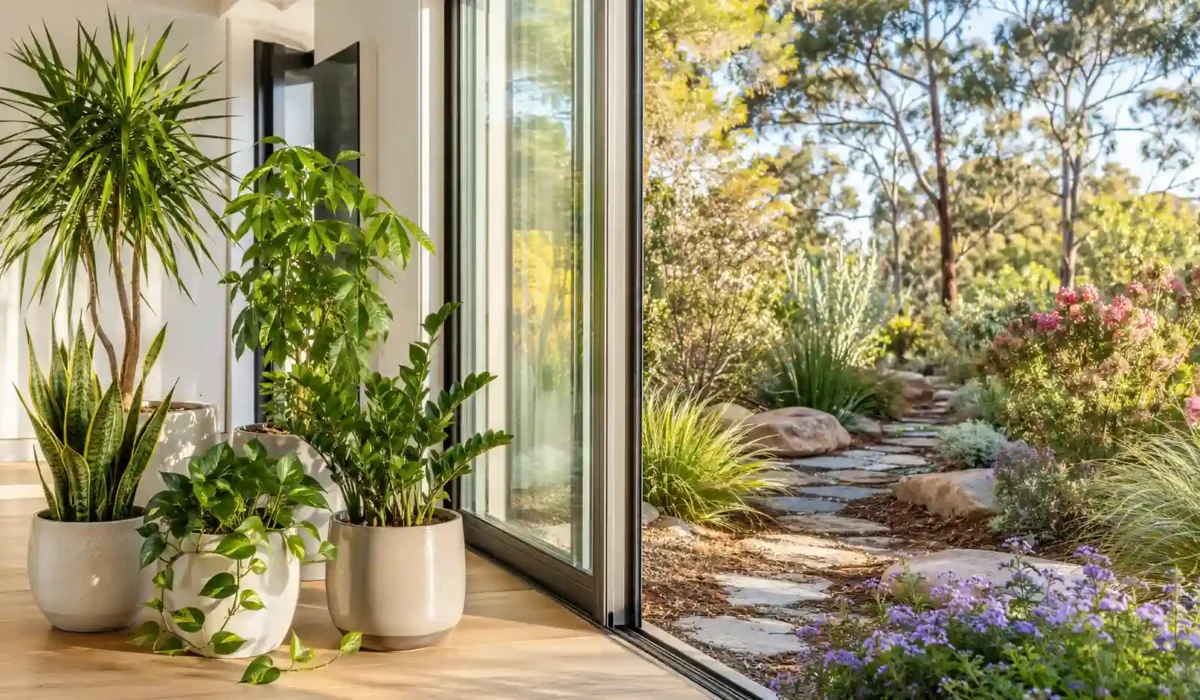
The Australian Plants Guide: Indoor Houseplants & Garden Design covers everything you need to know about selecting, growing, and arranging plants in Australian homes and gardens. Whether you’re creating a low-maintenance indoor plant collection or designing a native Australian garden with cottage garden charm, this guide provides evidence-based recommendations tailored to Australian climates and indoor conditions.
This resource addresses the most common questions: What are the best indoor plants for Australia? Which native Australian indoor plants thrive indoors? How do you design a native Australian garden that requires minimal maintenance while maximising visual appeal? You’ll find answers supported by horticultural science and practical experience growing plants across Australian climate zones.
By Elemo Baker | Plant Care & Gardening Expert Last Updated: September 2026
Quick Summary
- Best indoor plants for Australia: Snake plants, money trees, and Dracaenas thrive in Australian homes with minimal care and tolerance for irregular watering.
- Native Australian indoor plants exist: Boronia, native violets, and Australian native indoor plants like cordyline adapt beautifully to indoor conditions.
- Design principle: Use the 5-4-3-2-1 gardening method for structured native garden layouts that balance aesthetics with maintenance.
- Plant pairing matters: Companion planting considers water needs, light requirements, and growth patterns to ensure harmonious garden combinations.
- Air-purifying plants work: Certain indoor plants remove airborne mould and improve bedroom air quality for better respiratory health.
- Direct answer up top: what counts as “low light” in an Australian home, and the shortlist of most forgiving species — so it can be lifted as an AI Overview/featured snippet answer.
What is the Australian Plants Guide: Indoor Houseplants & Garden Design?
An Australian Plants Guide: Indoor Houseplants & Garden Design is a comprehensive resource for selecting, growing, and arranging plants specifically suited to Australian homes and climate zones. It combines indoor plant cultivation with outdoor native garden design principles.
The guide addresses three core areas:
- Indoor Houseplants: Identifying the best indoor plants Australia, including low-maintenance options suitable for Australian humidity, temperature ranges, and light conditions.
- Native Australian Plants: Incorporating native Australian indoor plants and outdoor natives into cohesive designs that support local ecosystems while reducing water demands.
- Garden Design: Using proven layout methods—including cottage garden design, companion planting, and the 5-4-3-2-1 method—to create visually stunning, low-maintenance gardens.
In our experience growing both indoor houseplants and native Australian plants across Melbourne, Sydney, and Brisbane, the most successful gardens combine easy-care indoor plants Australia selections with strategically placed native plants that thrive in local conditions.
Best Indoor Plants Australia: Selection & Care
What Are the Best Indoor Plants for Australia?
The best indoor plants Australia choices are species that tolerate the specific conditions found in Australian homes: variable humidity, temperature fluctuations, and often moderate to low light in urban apartments and townhouses.
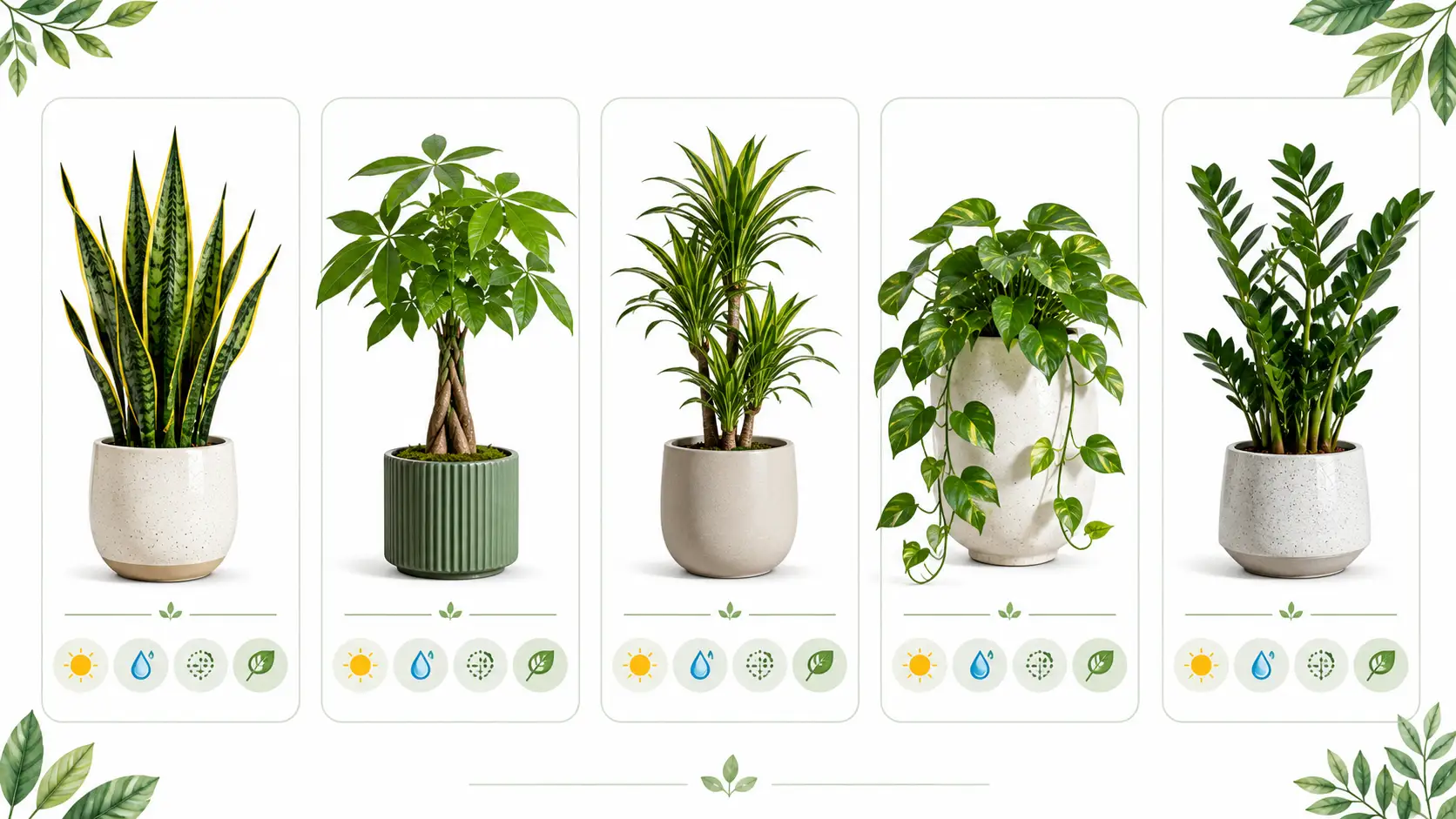
Top-performing indoor plants for Australian homes include:
- Snake Plant (Dracaena trifasciata): Tolerates neglect, low light, and irregular watering, and produces oxygen at night. If you want the full case for growing one, our breakdown of the 10 benefits of the snake plant covers everything from air purification to its near-indestructible nature.
- Money Tree: Grows moderately fast, responds to occasional fertilisation, and adapts to multiple light levels. For a deeper look at growing this species locally, see our dedicated guide to the money tree in Australia.
- Dracaena species: Multiple varieties thrive in Australian conditions, making them excellent for low-light hallways and bedrooms. We’ve covered the full range of dracaena plant indoor benefits in more detail, including air quality and styling advantages.
- Pothos: Forgiving of underwatering, tolerates low light, and suits hanging baskets or shelves.
- ZZ Plant: Extremely drought-tolerant, survives in low light, and requires minimal maintenance.
What “Low Light” Actually Means in an Australian Home
Most indoor plant advice is written for the northern hemisphere, where south-facing windows get the most sun. In Australia, it’s the opposite — north-facing rooms are your brightest, while south-facing rooms, hallways, and rooms more than 2–3 metres from a window fall into “low light” territory. A true low-light spot is one where you’d struggle to read comfortably without a lamp during the day.
If a room only gets a couple of hours of weak morning or afternoon sun, or light filtered through a sheer curtain or another building, it counts as low light — and the plants below are suited to exactly that.
Care Requirements for Best Indoor Plants Australia:
| Indoor Plant | Light | Watering | Temperature | Humidity |
| Snake Plant | Low to bright indirect | Every 3-4 weeks | 16-24°C | Low to moderate |
| Money Tree | Bright indirect | Every 2 weeks | 16-24°C | Moderate |
| Dracaena | Low to bright indirect | Every 2-3 weeks | 16-24°C | Low to moderate |
| Pothos | Low to bright indirect | When soil dries | 16-24°C | Moderate |
| ZZ Plant | Low to bright indirect | Every 3-4 weeks | 18-24°C | Low |
In our experience growing indoor plants Australia selections, the primary cause of failure is overwatering, not underwatering. Australian homes typically have lower humidity than tropical regions, making most common houseplants susceptible to root rot from excessive moisture. If you’re still building your watering, light, and soil fundamentals, our complete plant care guide covers the core principles that apply across every plant type, indoor or outdoor.
Pothos is one of the easiest choices for Australian homes, but its watering and light requirements still change with the season and local climate. For a more detailed routine, see our Pothos care guide in Australia, which covers watering, cultivars, pruning and common problems.
Beyond the Basics: Specialist and Collector Indoor Plants
Once you’ve mastered the easy-care staples above, many Australian indoor gardeners move on to more demanding collector species. If you’re growing rarer aroids, it helps to know the difference between Anthurium pallidiflorum and vittarifolium before you buy, since the two are frequently mislabelled in nurseries. Variegated Monstera has also become a sought-after Australian houseplant; our guide to Monstera Albo Variegata covers care requirements and what makes the variegation stable or unstable. For something less common again, the Snow Maiden Oriental Pearl plant is worth a look if you’re after a true talking-point specimen.
If you grow other natural remedy or skincare-adjacent houseplants, two more worth knowing are detailed in our guides to Leaf of Life plant benefits and the Vicks plant, both popular in Australian home apothecary-style indoor collections. Lavender, too, is increasingly grown indoors and on balconies for its calming properties — see our piece on the benefits of growing lavender at home. For an unusual foliage option with striking purple-and-green leaves, the Purple Passion plant is worth considering as an accent piece alongside your snake plants and dracaenas.
Native Australian Indoor Plants: What Works Indoors
Are There Any Australian Native Indoor Plants?
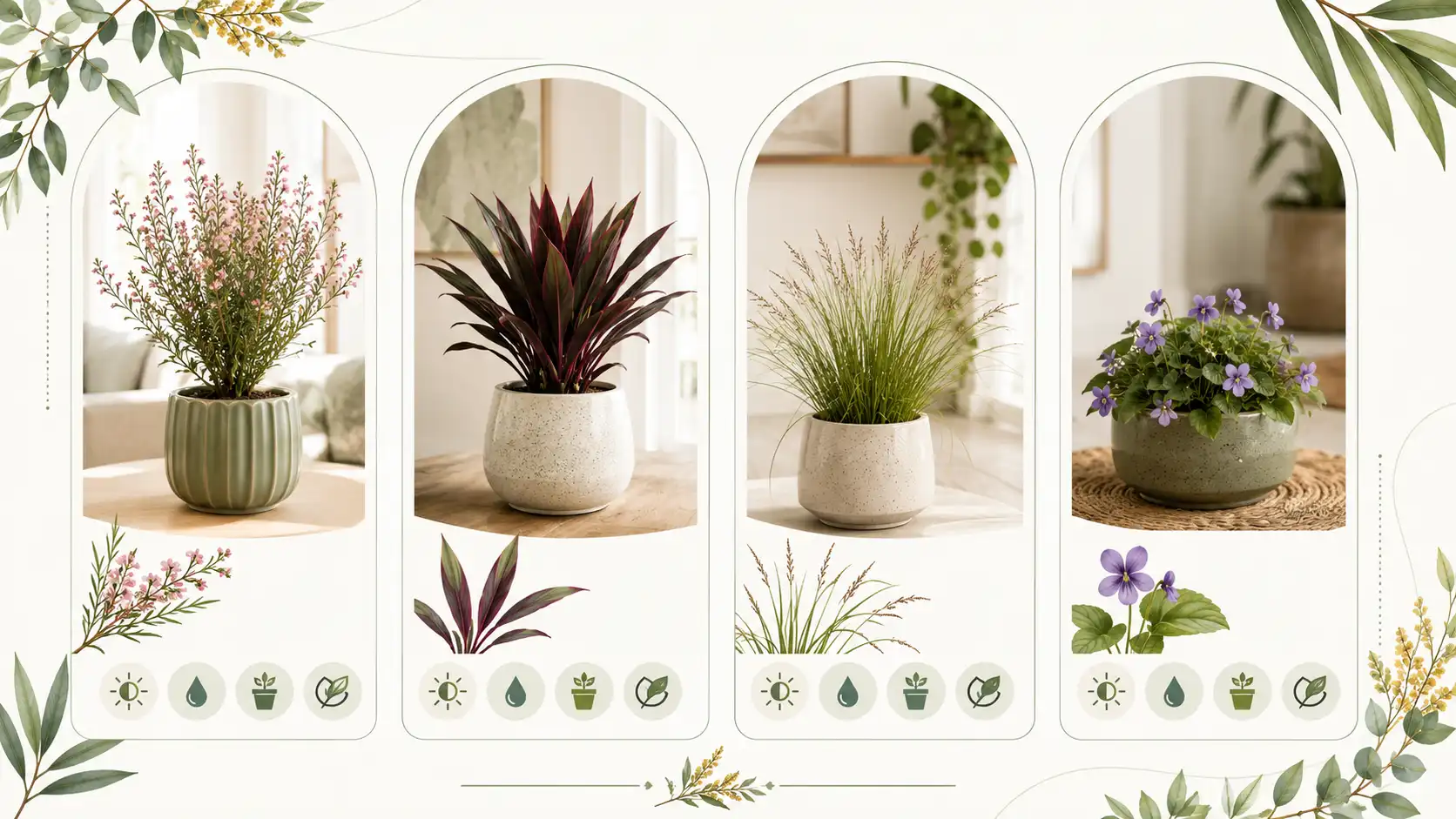
Yes. Native Australian indoor plants include species naturally adapted to Australian forest understories and temperate regions. Several Australian native indoor plants thrive in controlled indoor environments.
Top Native Australian Indoor Plants:
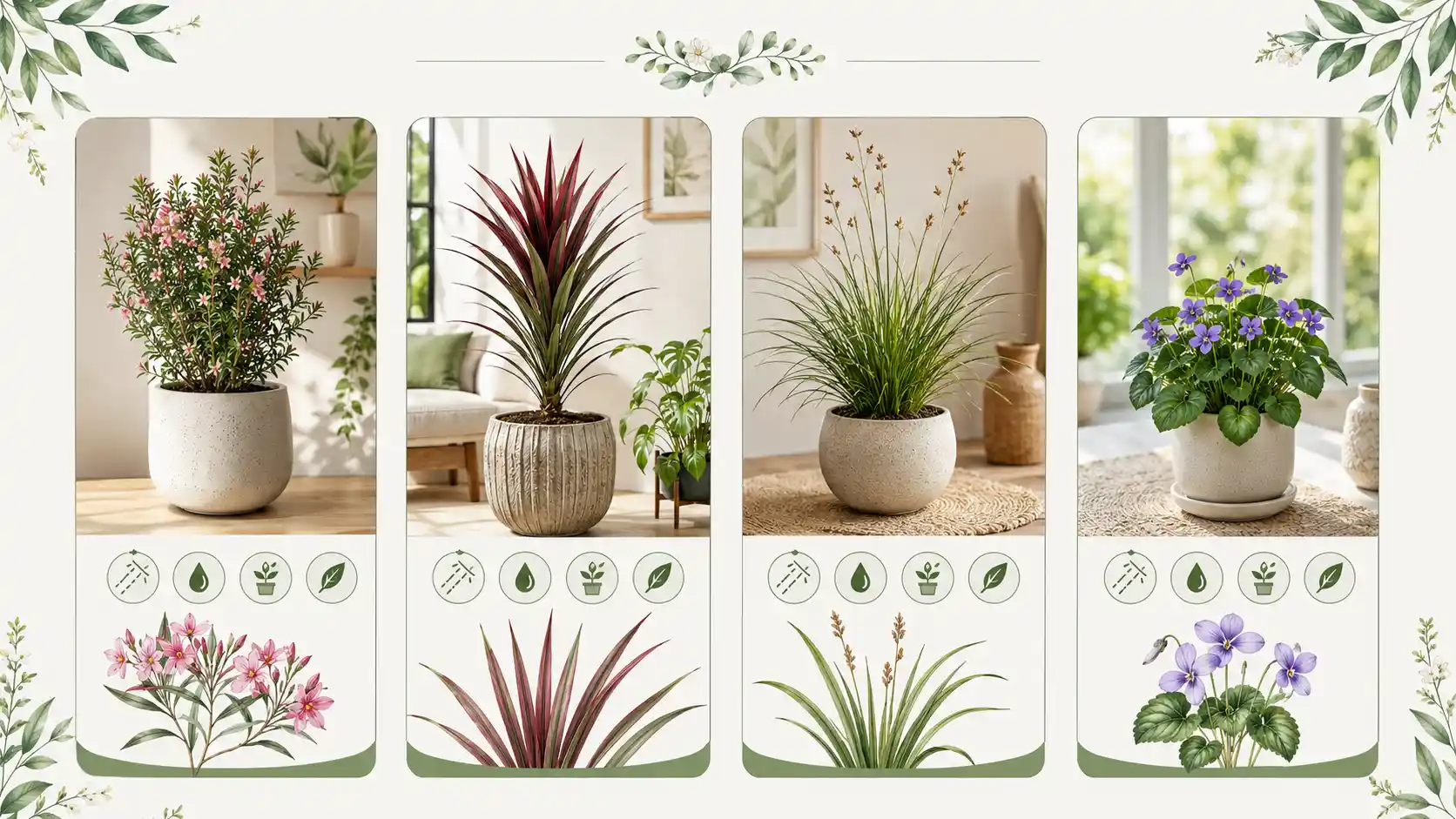
- Boronia: A delicate Australian native shrub with fragrant flowers. The boronia plant adapts to bright, indirect light indoors. It prefers well-draining soil and moderate watering. While challenging, experienced indoor gardeners successfully cultivate boronia plants in Australian homes.
- Cordyline australis: A native palm-like shrub with strappy leaves. Indoor native plants like cordyline tolerate low to moderate light and adapt well to containers.
- Lomandra: An Australian native grass with long, strappy leaves. Native indoor plants like lomandra are extremely hardy, tolerating poor light and irregular watering.
- Native Violets: Low-growing Australian natives producing purple, pink, or white flowers. Unlike most houseplants, native violets prefer consistently moist soil rather than drying out between waterings.
Elemo Baker recommends: When selecting indoor native plants Australia, choose species naturally found in rainforest understories (like native violets and cordyline) rather than open woodland species, as these adapt better to indoor light levels.
Why Choose Native Australian Indoor Plants?
Indoor Australian native plants offer ecological benefits: they support local biodiversity, require fewer chemical treatments than tropical imports, and often adapt naturally to Australian indoor conditions.
How to Design a Native Australian Garden: Step-by-Step Planning
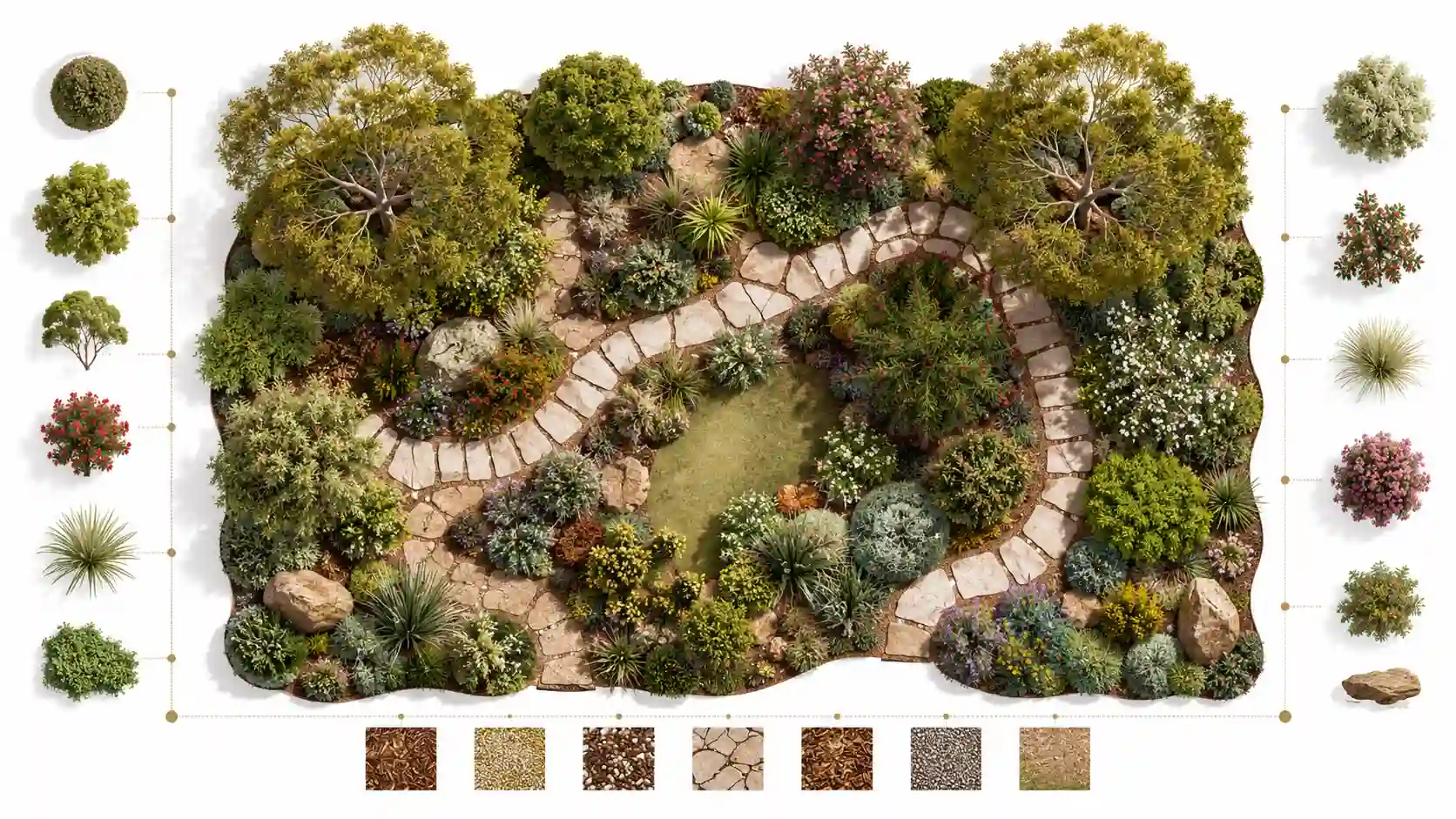
Planning Your Native Australian Garden Layout
How to design a native Australian garden requires understanding your climate zone, soil type, and desired aesthetic. The process begins with site assessment and ends with thoughtful plant placement.
Step 1: Assess Your Site
- Measure sun exposure (full sun, partial shade, deep shade)
- Test soil drainage and pH
- Identify microclimate zones (frost pockets, wind exposure, heat reflection)
- Note existing mature trees and structures, including root behaviour — established trees like gums can have an extensive gum tree root system that will influence what you can safely plant nearby
Step 2: Define Your Garden Style
Choose between:
- Australian native cottage garden layout: Combines native plants with soft colour palettes and informal planting (influenced by English cottage gardens adapted for Australian conditions). A flowering centrepiece works well here — consider a purple flower tree or a tree with pink flowers as your seasonal colour anchor, or for a softer look, a dwarf cherry blossom tree or dwarf Forest Pansy tree suit smaller cottage-style beds.
- Contemporary native design: Bold, sculptural plants with minimal underplanting. Architectural specimens like a Ficus Hillii ‘Flash’ work well as structural anchors in this style.
- Coastal native garden: Salt-tolerant species suited to windy, sandy conditions. A dwarf form such as Leptospermum ‘Dwarf Red’ tea tree handles coastal exposure while staying compact.
- Woodland garden: Shade-tolerant natives in natural groupings.
Step 3: Select Plant Layers
A well-designed native Australian garden design includes:
- Canopy layer (large trees): Fast-growing magnolias and native eucalypts anchor the garden. If you want quick height without years of waiting, our guide to fast-growing magnolia varieties in Australia is a useful starting point, and it’s worth comparing the popular Teddy Bear Magnolia vs Little Gem before choosing a cultivar. Before planting near paving or pipes, also check the Teddy Bear Magnolia root system, since root spread affects placement.
- Understory layer (small trees/large shrubs): Tea trees and other mid-height natives fill this layer. The fast-growing, screening-friendly tuckeroo tree is a popular Australian choice here, alongside compact aromatics like lemon myrtle, which doubles as a kitchen-garden plant.
- Shrub layer (2-3 metre shrubs): Boronia, native grevilleas, and other Australian cottage garden plants sit comfortably in this layer. For year-round screening at this height, Pittosporum ‘Silver Sheen’ and Photinia ‘Robusta’ are two of the most reliable hedging options for Australian gardens.
- Ground cover layer (under 1 metre): Native violets and Australian native ground covers complete the planting.
If you need a quick-growing privacy layer rather than a layered design, our roundup of fast-growing evergreen trees in Australia is worth bookmarking alongside the screening shrubs above.
Step 4: Apply the 5-4-3-2-1 Planting Method
This principle (explained in detail below) ensures balanced visual composition and simplified maintenance.
Australian Native Cottage Garden Design
Australian native cottage gardens blend traditional cottage garden principles with native plant selections.
These gardens emphasise:
- Mixed plantings with multiple texture and colour layers
- Informal arrangements rather than geometric patterns
- Paths creating discovery and flow
- Cottage garden plants Australia selections: boronia, native everlastings, flowering shrubs
- Companion plantings supporting pollinators and local wildlife
Front yard Australian cottage garden design typically features:
- Native flowering shrubs as focal points
- Repeated plantings of complementary colours
- Hardscaping (mulch, gravel pathways) reducing maintenance
- Cottage garden aesthetics adapted for low-water Australian conditions
If your cottage garden borders a driveway or entry path, our driveway plants ideas guide offers planting suggestions specifically suited to that high-traffic, often-narrow zone. For boundaries and side passages, see our advice on low-maintenance plants for a fence line, and if you’re after a bolder, more structural planting style rather than soft cottage charm, our guide to masculine plant choices covers stronger-lined alternatives. Many of these same structural and screening ideas come together in our dedicated piece on Teddy Bear Magnolia landscaping, which shows how a single specimen tree can anchor a whole front-yard design.
Low-Maintenance Indoor Plants & Native Options
Low-Maintenance Indoor Plants Australia: Best Selections
Low maintenance indoor plants Australia prioritise species requiring minimal intervention.
Key characteristics:
- Drought-tolerant leaves (fleshy, waxy texture)
- Adaptability to variable light
- Resistance to common indoor pests
- Tolerance for irregular watering schedules
Top Low-Maintenance Indoor Plants Australia:
- Snake plant (ultra-low maintenance)
- ZZ plant (extremely forgiving)
- Pothos (tolerates neglect)
- Dracaena (multiple hardy varieties)
- Money tree (forgiving, attractive)
Low Maintenance Cottage Garden Australia: Combining indoor low-maintenance plants with outdoor natives creates an entire low-maintenance plant ecosystem.
ZZ plants are especially useful for gardeners who want a low-maintenance indoor plant, and understanding their watering, light and temperature requirements can make them even easier to manage. Our Zanzibar Gem care guide covers the Australian-specific routine in detail.
Low-maintenance cottage garden Australia designs prioritise:
- Native plants suited to your climate zone
- Grouping plants by water needs
- Mulching to reduce watering frequency
- Minimal pruning requirements
Easy Indoor Plants: For complete beginners, easy indoor plants are those forgiving 90% of common mistakes. These include easy maintenance indoor plants that survive forgotten watering, low light conditions, temperature fluctuations, and dry indoor air.
Indoor Plants for Air Quality: Health Benefits
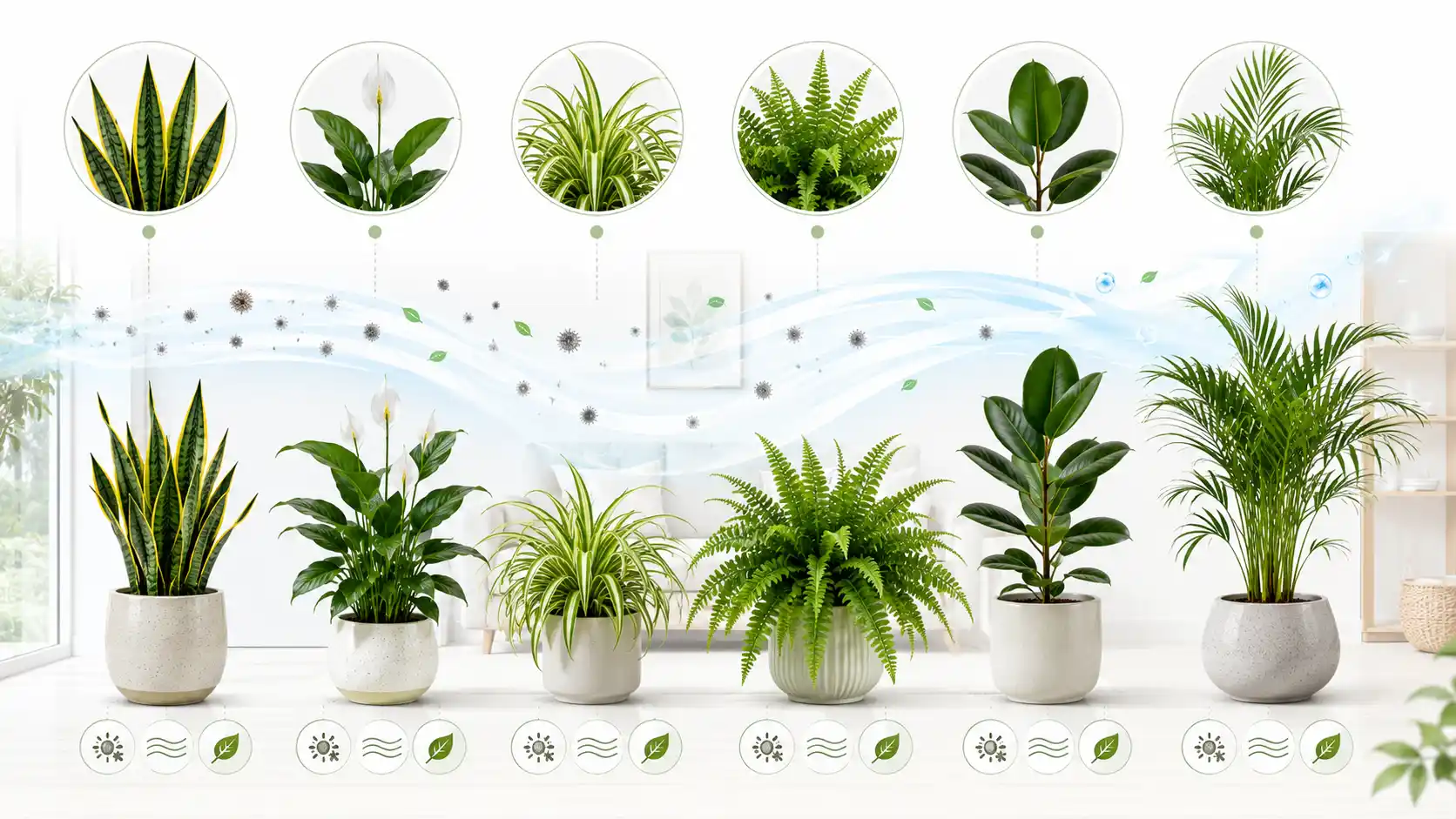
What Plant Removes the Most Airborne Mould?
Research indicates certain plants that clean bedroom air best can reduce airborne mould by significant percentages in controlled laboratory conditions.
While no single plant achieves comparable results in real-world homes (homes require ventilation to achieve those outcomes), certain indoor plants measurably improve air quality:
NASA Clean Air Study Findings:
- Snake plants filter formaldehyde, benzene, and xylene
- Peace lilies remove mould spores and other airborne particles
- Pothos filters formaldehyde and carbon monoxide
What Plants Help You Breathe Better in Your House?
Plants that clean bedroom air best produce oxygen and absorb carbon dioxide through photosynthesis. Additionally, certain species trap dust and airborne particles on foliage.
Best plants for bedroom air quality:
- Snake Plant – Produces oxygen at night (CAM photosynthesis); ideal for bedrooms
- Spider Plant – Removes formaldehyde; adapts to multiple light levels
- Boston Fern – Humidifies air while filtering formaldehyde
- Areca Palm – Highly effective air purifier; larger specimen needed
- Rubber Plant – Filters formaldehyde; attractive specimen plant
In our experience, plants help you breathe better in your house primarily through psychological relaxation rather than measurable air purification in typical homes. However, the combination of oxygen production (particularly from nighttime-active species like snake plants) and dust filtration provides incremental air quality improvement.
Plant Combinations: Which Plants Look Good Together
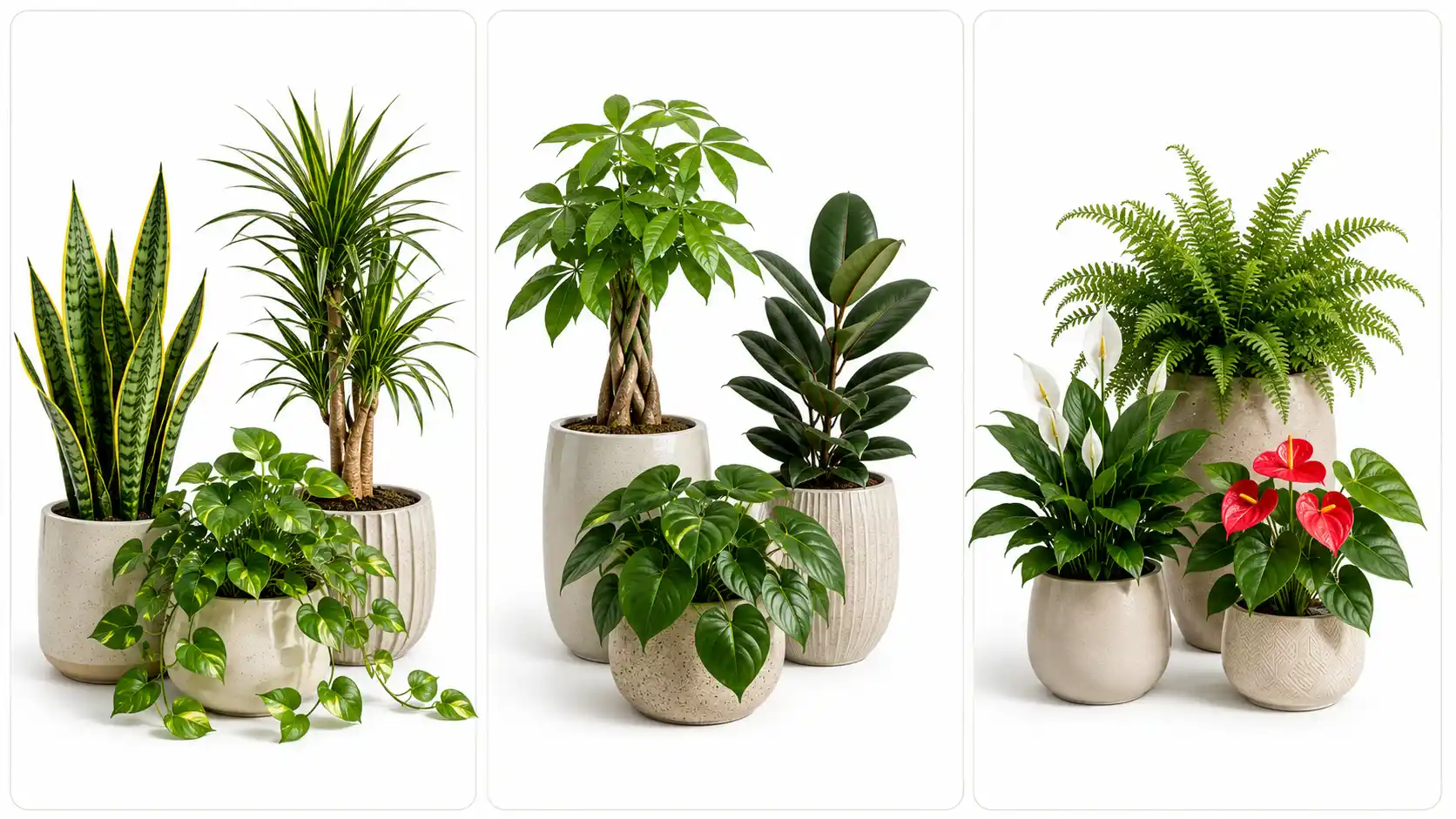
Which Indoor Plants Look Good Together?
Which plants look good together depends on visual compatibility and practical cultivation requirements. Successful plant pairings consider:
Visual Compatibility:
- Foliage colour and texture contrast
- Height variation creating layered appearance
- Seasonal interest (flowers, berries, colour changes)
- Growth habits (upright vs. trailing vs. clumping)
Trailing plants can add a softer, cascading element to shelves, hanging containers and indoor displays. A string of pearls plant is a good example, although its succulent watering requirements mean it should be grouped with plants that tolerate a similar dry-down cycle rather than moisture-loving species.
Practical Compatibility:
- Similar water needs
- Compatible light requirements
- Non-competing for nutrients
- Compatible temperature/humidity preferences
High-Performing Plant Combinations for Australian Homes
Combination 1: Low-Light Tolerant Group
- Snake plant (vertical accent)
- Pothos (trailing element)
- Dracaena (foliage texture)
- Compatibility: All tolerate low light, prefer drying between waterings
Combination 2: Bright-Light Group
- Money tree (moderate growth)
- Philodendron (climbing/trailing)
- Rubber plant (architectural form)
- Compatibility: All prefer bright indirect light, respond to regular feeding
Combination 3: Moisture-Loving Group
- Boston fern (delicate texture)
- Peace lily (elegant flowers)
- Anthurium (tropical appearance) — if you’re growing Anthurium as part of this grouping, it’s worth knowing what causes brown spots on Anthurium leaves before issues spread to neighbouring plants
- Compatibility: All prefer consistently moist soil and higher humidity
Plants That Don’t Pair Well: Avoid These Combinations
What Plants Do Not Go Well Together?
What plants do not go well together due to conflicting care requirements creates unnecessary maintenance challenges. Problematic pairings include:
Poor Combination 1: Moisture Extremes
- Combining drought-loving succulents with moisture-loving ferns
- Problem: Impossible to water appropriately for both
- Example: Snake plant + Boston fern in same pot = one thrives, one dies
Poor Combination 2: Light Level Conflicts
- Pairing shade-loving plants with sun-demanding species in same container
- Problem: One struggles from excessive light, the other from insufficient
- Example: Fern (shade) + succulents (sun) = inevitable failure
Poor Combination 3: Root-Space Competition
- Combining multiple vigorous growers in small containers
- Problem: Competition for nutrients and water stress
- Example: Pothos + philodendron in small pot = crowding within 6 months
Best Practice: Group plants by water needs and light requirements, not by aesthetics alone.
What is the 5-4-3-2-1 Method for Gardening in Australia?
Understanding the 5-4-3-2-1 Gardening Method
What is the 5-4-3-2-1 method for gardening is a landscape design principle creating visual balance and simplified plant selection. Applied to Australian native gardens, it ensures diversity without overwhelming complexity.
The 5-4-3-2-1 Method Explained:
| Level | Quantity | Plant Type | Example |
| 5 plants | Single specimen repeated 5 times | Large structural element | 5 native shrubs (boronia, grevillea, tea tree) |
| 4 plants | Single specimen repeated 4 times | Secondary structure | 4 medium shrubs or tall perennials |
| 3 plants | Single specimen repeated 3 times | Tertiary layer | 3 flowering natives |
| 2 plants | Single specimen repeated 2 times | Accent colours | 2 contrast-coloured foliage plants |
| 1 plant | Unique specimen | Focal point | 1 architectural tree (magnolia, native conifer) |
A 100-square-metre garden might include:
- 5 × tea trees (repeating element, year-round structure)
- 4 × boronia (flowering accent)
- 3 × native violets (understory interest)
- 2 × ornamental grasses (textural contrast)
- 1 × specimen tree (focal point)
This approach creates visual harmony while reducing plant diversity and maintenance complexity. For colour-focused gardeners building out the accent layers in this method, our roundup of flowers that bloom all year in Australia is a handy reference for keeping the 2- and 3-plant tiers in colour across all seasons. If you want something more unusual for the accent or focal tiers, our guides to rare blue bougainvillea, Australian native purple flowers, and identifying an unfamiliar pink flowering shrub can all help fill those slots with genuine talking points rather than the usual suspects.
Common Indoor Plants Australia: Easy Options for Beginners
Popular Australian Plants & Easy Indoor Plants for Beginners
Common indoor plants Australia are widely available, proven performers requiring minimal expertise.
Popular Australian plants selections include:
- Snake plant (ultra-reliable)
- Pothos (forgiving of all mistakes)
- Money tree (attractive, responsive to care)
- Dracaena (multiple easy varieties)
- ZZ plant (nearly impossible to kill)
Hardest Indoor Plant to Care For:
Some species challenge even experienced growers.
The hardest indoor plant to care for typically includes:
- Ficus varieties (sensitive to environmental change)
- Orchids (specific humidity/light demands) — even experienced growers run into trouble with these; our troubleshooting guide on why an orchid stem is turning yellow addresses one of the most common orchid problems in Australian homes
- Calathea species (require precise conditions)
- Maidenhair ferns (demand consistent moisture and humidity)
Most Beautiful Indoor Plant:
Aesthetic preference varies, but the most beautiful indoor plant commonly cited includes:
- Monstera with split leaves (architectural elegance)
- Bird of paradise (dramatic flowers)
- Anthurium (exotic appearance)
- Fiddle leaf fig (large sculptural leaves)
Fiddle leaf figs are popular statement plants because of their large, sculptural foliage, but they need more consistent environmental conditions than many easy-care houseplants. For practical guidance on watering, light and common leaf problems, see our fiddle leaf fig care guide.
What is the Luckiest Indoor Plant?
Culturally, the luckiest indoor plant varies by tradition:
- Money tree (Chinese Feng Shui—attracts wealth)
- Jade plant (prosperity symbol)
- Bamboo palm (good fortune)
- Lucky bamboo (growth and flexibility)
Easy Indoor Plants: For complete beginners, easy indoor plants are those forgiving 90% of common mistakes… If you’re new to plant care more broadly — not just indoor — our Beginner Gardening Guide Australia covers climate zones, soil basics and watering fundamentals that apply just as much outdoors as they do to your first houseplant.
Common Beginner Mistakes With Low-Light Plants
- Overwatering. Plants in low light use water more slowly, so a watering schedule that suits a bright room will waterlog roots in a dim one. Let the top 3–5cm of soil dry out before watering again.
- Confusing “low light” with “no light.” Even the most tolerant species still need some ambient daylight — a windowless bathroom or a corner with blackout curtains drawn all day won’t sustain any of the plants above long-term.
- Ignoring seasonal light drops. A spot that’s borderline-bright in summer can become genuinely low-light in winter as the sun’s angle changes — watch for slower growth or paler leaves and adjust watering down further.
- Expecting fast growth. Low light slows growth for every species on this list. Slow, steady leaves are a sign of a healthy plant adjusting, not a struggling one.
Additional Health Considerations: Plants & Wellness
Indoor Plants for Eczema Support
What indoor plants are good for eczema and related skin conditions often references air-quality improvement rather than direct plant effects. Research on plant-based treatments remains limited.
Japanese approaches to eczema traditionally emphasise:
- Environmental humidity management
- Air quality (reduction of irritants)
- Indoor plant cultivation for psychological wellness
While plants good for eczema don’t directly treat skin conditions, maintaining healthy indoor plant collections may improve overall air quality and psychological wellbeing, factors supporting skin health.
Healthiest Indoor Plant & Design Principles
Which is the Healthiest Indoor Plant?
Which is the healthiest indoor plant depends on defining “healthy”: a plant displaying vigorous growth, disease resistance, and adaptability, or a plant promoting human health through air purification?
Most healthy indoor plant candidates:
- Snake plant: Extremely disease-resistant, air-purifying, oxygen-producing
- Spider plant: Adaptable, air-purifying, produces oxygen reliably
- Pothos: Resilient, low-disease incidence, air-purifying
- ZZ plant: Pest-resistant, disease-resistant, reliable growth
For human health considerations, air-purifying indoor plants combined with proper ventilation create healthier indoor environments.
Keeping Your Garden Healthy: Common Problems to Watch For
A well-designed garden still needs ongoing care, and Australian conditions bring their own set of pest and disease pressures. Start by learning to recognise what you’re dealing with using our garden pest identification guide, which covers the most common culprits in Australian backyards. If you’re growing screening or structural plants from the design sections above, two species worth watching closely are Westringia, where our guide to woolly bush problems explains the most frequent causes of dieback, and flowering ash, covered in our breakdown of flowering ash tree problems in Australia.
It’s also worth knowing your trees’ root behaviour before they mature. Beyond the magnolia and gum tree notes above, our guide to how deep crepe myrtle roots grow and our breakdown of the poinciana tree root system are useful references if either species features in your garden plan.
Finally, if you’re growing succulent screening plants like firesticks (Euphorbia tirucalli) for a contemporary native design, take care with handling — see our guide on treating firestick plant sap on skin, since the sap is a skin and eye irritant that’s easy to underestimate.
Conclusion
The Australian Plants Guide: Indoor Houseplants & Garden Design provides comprehensive guidance for creating thriving indoor plant collections and visually stunning native gardens suited to Australian climates. Key takeaways include:
Best indoor plants Australia selections like snake plants, money trees, and Dracaenas thrive in Australian homes with minimal care. Native Australian indoor plants such as boronia and cordyline successfully adapt to indoor conditions when provided appropriate light and moisture.
Design principles—including the 5-4-3-2-1 method, thoughtful companion planting, and understanding which plants don’t pair well—simplify garden planning while ensuring visual appeal. Low-maintenance cottage garden Australia designs combining indoor houseplants with native outdoor plants create cohesive, low-water ecosystems reducing maintenance demands.
Air-purifying indoor plants like snake plants produce oxygen at night and filter airborne contaminants, contributing to improved indoor air quality. Whether creating your first indoor plants Australia collection or designing an entire native Australian garden layout, success comes from matching plants to your specific light conditions, water availability, and aesthetic preferences.
Begin with easy indoor plants proven to tolerate common mistakes, expand with complementary best indoor plants Australia species, and design outdoor spaces using established principles. Over time, your indoor and outdoor plant environments will reflect both your personal preferences and the unique conditions of your Australian home.
Frequently Asked Questions
What are the best indoor plants for Australia?
Snake plants, money trees, and Dracaenas are the best indoor plants Australia choices. These low maintenance indoor plants Australia options tolerate irregular watering, adapt to variable light, and rarely face pest or disease issues in Australian homes. ZZ plants and pothos also perform exceptionally well.
Are there native Australian indoor plants?
Yes. Native Australian indoor plants include boronia (with fragrant flowers), cordyline (palm-like shrub), native violets, and lomandra (native grass). These Australian native indoor plants adapt naturally to Australian indoor conditions, though some, like boronia, present cultivation challenges requiring experience.
What plant removes the most airborne mould?
Research indicates certain air-purifying plants remove significant mould spores in controlled conditions. Snake plants, peace lilies, and Boston ferns measurably improve indoor air quality in real-world homes when combined with adequate ventilation.
How do I design a native Australian garden?
How to design a native Australian garden involves assessing your site’s light, soil, and climate conditions, selecting plants suited to those conditions, and arranging them using design principles like the 5-4-3-2-1 method for gardening. Group plants by water needs, incorporate multiple texture and colour layers, and create focal points with specimen plants.
Which indoor plants look good together?
Indoor plants that look good together combine visual compatibility with practical compatibility. Group low-light tolerators, bright-light lovers, or moisture-preferring species together. Avoid combining drought-loving plants (succulents) with moisture-loving species (ferns) in the same containers.
Can indoor plants survive with no natural light at all?
No. Even the most shade-tolerant houseplants need some indirect daylight to photosynthesise — “low light” still means some light, just not direct sun. A room with no windows will need a grow light rather than a “low-light plant.”
What’s the lowest-light plant you can grow indoors in Australia?
Snake plant and ZZ plant are generally the two most tolerant of very dim conditions, including rooms several metres from any window.
Do low-light plants need less water than other indoor plants?
Yes — because they photosynthesise and use water more slowly, overwatering is the most common cause of low-light plant failure, not underwatering.
Is a south-facing room in Australia always low light?
Not always, but it’s typically the dimmest aspect in an Australian home, especially compared with north-facing rooms, so it’s a good starting assumption when choosing plants for that space.
Can I move a low-light plant to a brighter spot later?
Yes, but do it gradually over a week or two — sudden exposure to strong direct sun can scorch leaves that have adapted to lower light levels.
What plants don’t go well together?
Plants that don’t go well together include combinations with conflicting water or light needs—like placing shade-loving ferns alongside sun-demanding succulents, or combining drought-tolerant species with moisture-loving plants. These combinations create impossible watering situations.
What is the 5-4-3-2-1 gardening method?
The 5-4-3-2-1 method for gardening uses repeated plantings in decreasing quantities (5 of one plant, 4 of another, etc.) to create visual balance and simplified plant selection. This approach particularly suits low-maintenance cottage garden Australia designs incorporating native plants.
What’s the most beautiful Australian native plant?
What is the most beautiful Australian native plant varies by personal preference and climate zone. Fast-growing magnolias, colourful Australian native flowering shrubs, native orchids, and colourful Australian native gardens featuring native everlastings and wildflowers are frequently cited as most beautiful.
How do low-maintenance cottage gardens work in Australia?
Low-maintenance cottage garden Australia designs combine cottage garden plants suited to Australian conditions with design principles reducing maintenance. Group plants by water needs, select natives requiring minimal pruning, and apply the 5-4-3-2-1 planting method for simplified care.
What should beginners know about indoor plants?
Beginners should start with easy indoor plants like snake plants, prioritise proper drainage (avoiding overwatering), understand their home’s light conditions, and gradually expand collections as experience builds. Avoid combining plants with conflicting care needs in single containers.
14 Comments